







Key Points
- Career plateaus in Midtown are driven by neural prediction models, not lack of ambition
- The brain's hierarchy-tracking system reinforces ceilings built during earlier career stages
- Real-Time Neuroplasticity™ rewires the circuits that cap your career trajectory
- Changes are durable because the methodology targets the prediction itself
- The Strategy Call maps your specific advancement ceilings with Dr. Ceruto
Why Midtown Manhattan Careers Plateau Despite Ambition
Midtown Manhattan concentrates advancement pressure in a way no other neighborhood can. Between the corporate headquarters on Park Avenue, the media companies along Sixth Avenue, and the law and consulting firms stacked through the East 40s and 50s, every floor of every building contains a hierarchy. The brain processes these hierarchies automatically, and the predictions it generates determine whether you advance or stall.
The pattern is specific. The brain’s reward system learns to associate advancement with the signals present during your formative career wins. In Midtown, those signals are overwhelmingly institutional: promotions within existing structures, compensation increases tied to tenure, and visibility within established hierarchies. When advancement requires a different kind of move (lateral transition, industry pivot, or entrepreneurial launch) the brain cannot generate the same reward prediction. The opportunity is real, but it does not feel like advancement.
Hudson Yards and the Far West Side added a layer of complexity. Tech companies, media startups, and venture-backed firms created new advancement pathways that do not map to the Park Avenue model. Professionals crossing between these ecosystems carry prediction models calibrated to one that misfire in the other. The result is stalled momentum in an environment where movement should be constant.
The Times Square and Broadway district draws professionals in media, advertising, and entertainment where advancement is nonlinear by design. The brain struggles with nonlinear paths: it predicts trajectory based on pattern recognition, and when the pattern is irregular, the prediction defaults to caution. Professionals in these industries often have the talent for advancement but lack the neural architecture to pursue it aggressively.
East Midtown around Grand Central draws thousands of professionals daily whose careers have reached a plateau that ambition alone cannot resolve. The commute creates its own reinforcement (the same route, the same building, the same floor) and the brain reads repetition as confirmation that the current level is correct. Breaking the plateau requires breaking the prediction, and that happens at the neural level.
The Garment District and Chelsea boundary draw professionals in fashion, design, and creative services where advancement requires portfolio building, brand visibility, and market timing rather than organizational promotion. The brain struggles to predict advancement along these nonlinear paths and often defaults to inaction when the next move is not clearly defined. This creates talent-rich professionals who perform at high levels but never translate that performance into career momentum.
East Midtown’s legal and consulting firms create a specific bottleneck pattern. The partnership track filters thousands of professionals through a narrow advancement gate, and the brain begins predicting the outcome years before the decision arrives. Professionals who unconsciously predict rejection begin pulling back on the behaviors that drive advancement (business development, client relationship building, internal visibility) creating a self-fulfilling prophecy. Dr. Ceruto breaks this cycle at the neural level before the prediction determines the outcome.

Dr. Ceruto works with Midtown professionals across every industry and advancement pattern. Real-Time Neuroplasticity™ rewires the brain’s prediction model so advancement becomes the expected trajectory, not an exception that requires extraordinary effort to achieve.

Dr. Sydney Ceruto, PhD, Neuroscientist & Author, MindLAB Neuroscience
Dr. Ceruto holds a PhD in Behavioral & Cognitive Neuroscience from NYU and Master’s degrees in Clinical Psychology and Business Psychology from Yale University. She lectures at the Wharton Executive Development Program at the University of Pennsylvania and has been an Executive Contributor to the Forbes Coaching Council since 2019. Dr. Ceruto is the author of The Dopamine Code (Simon & Schuster, June 2026). She founded MindLAB Neuroscience in 2000 and has spent over 26 years leading it, pioneering Real-Time Neuroplasticity™, a methodology that durably rewires the neural pathways driving behavior, decisions, and emotional responses.
Also available in: Miami · Wall Street · Beverly Hills · Lisbon
Take the First Step
One hour with Dr. Sydney Ceruto. You leave knowing which neural pattern is actually driving this, and what to do about it.
One hour with Dr. Ceruto
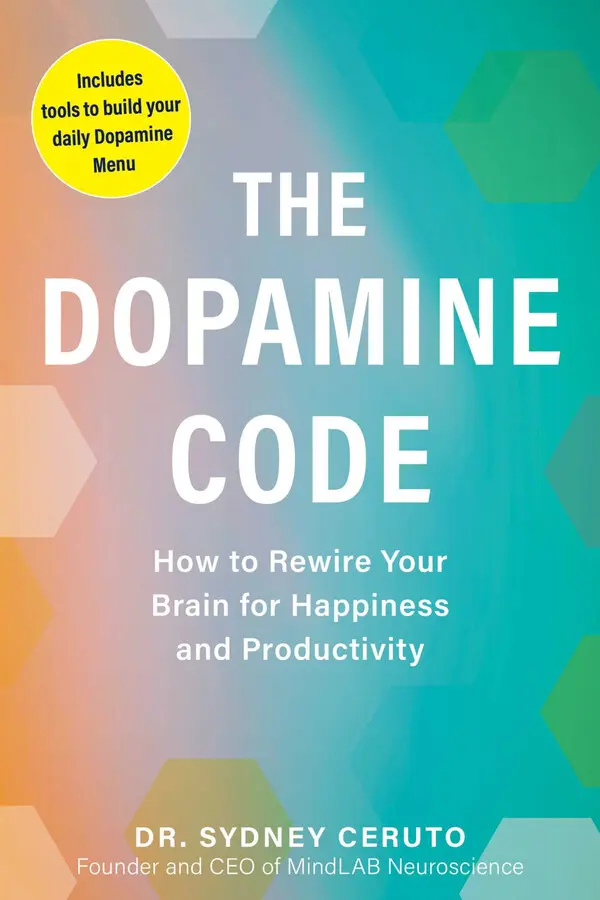
The Dopamine Code
Decode Your Drive
Why Your Brain Rewards the Wrong Things
Your brain's reward system runs every decision, every craving, every crash, and it was never designed for the life you're living. The Dopamine Code is Dr. Ceruto's framework for understanding the architecture behind what drives you, drains you, and keeps you locked in patterns that willpower alone will never fix.
Published by Simon & Schuster, The Dopamine Code is Dr. Ceruto's framework for building your own Dopamine Menu, a personalized system for motivation, focus, and enduring life satisfaction.
Order Now!Available now