Key Points
- Wall Street trains the brain to predict advancement along a single narrow track
- When the track changes, the neural model keeps you anchored to the old path
- Real-Time Neuroplasticity™ rewires the prediction circuits that cap trajectory
- Changes are durable because the methodology targets the prediction itself
- The Strategy Call maps your specific advancement ceilings with Dr. Ceruto
Why Wall Street Careers Hit Invisible Ceilings
Wall Street advancement operates on signals the brain internalizes faster and more deeply than almost any other professional environment. From the analyst program through the managing director track, every promotion, every bonus cycle, and every deal closing writes neural code that predicts where you belong in the hierarchy. By midcareer, that prediction is running automatically, and it does not update itself when the landscape changes.
The Financial District creates a specific advancement trap. The brain’s reward system, the dopamine circuitry that encodes what matters, gets calibrated to a narrow set of advancement markers: title progression, compensation benchmarks, and deal volume. When professionals consider advancement paths outside those markers (launching a fund, joining a platform, building something independent) the brain cannot generate the same reward signal. The new path may be objectively better, but it does not feel like advancement.
Lower Manhattan’s transformation amplified this dynamic. The post-pandemic migration scattered Wall Street professionals across fintech startups, crypto ventures, and family offices along Water Street and Broad Street. Traditional advancement hierarchies broke apart, and new ones formed that reward different skills. Professionals whose brains are still calibrated to the old hierarchy find themselves unable to advance even when the opportunity is directly in front of them.
The VP-to-MD bottleneck at major banks is a neural pattern as much as a structural one. Professionals who spend five or more years at the VP level often develop a prediction model that says this is where the track ends. The brain treats repeated non-promotion as evidence of a ceiling rather than a timing issue. By the time the promotion arrives or a better opportunity appears, the neural model has already capped the trajectory internally.
The pivot from sell-side to buy-side, from banking to private equity, or from institutional roles to independent ventures, these transitions require more than a new resume. They require a brain that predicts advancement along the new path with the same confidence it had on the old one. Without that neural recalibration, the strategic case for the move stays intellectual rather than felt.
The Seaport District and Fulton Street area now house family offices, boutique advisory firms, and independent practitioners who left institutional Wall Street. Advancement in this ecosystem follows entirely different rules: client acquisition, intellectual capital, and reputation rather than title and compensation. The brain built its model inside the institution and cannot predict trajectory outside of it. Every month of stalled momentum reinforces the neural ceiling.
Junior and midcareer professionals on Wall Street face advancement pressure from both directions. The analyst-to-associate path and the associate-to-VP track create intense selection environments where the brain rapidly learns whether it predicts promotion or rejection. Once the rejection prediction takes hold, it becomes self-reinforcing: the brain allocates fewer resources to advancement behaviors because it has already decided the outcome. Dr. Ceruto identifies and rewires these early-forming ceiling patterns before they define an entire career.

Dr. Ceruto works with Wall Street professionals whose careers have plateaued, stalled, or hit ceilings they cannot explain strategically. Real-Time Neuroplasticity™ rewires the prediction models that determine where your brain thinks you belong, so advancement becomes available along every viable path rather than locked to one.

Dr. Sydney Ceruto, PhD, Neuroscientist & Author, MindLAB Neuroscience
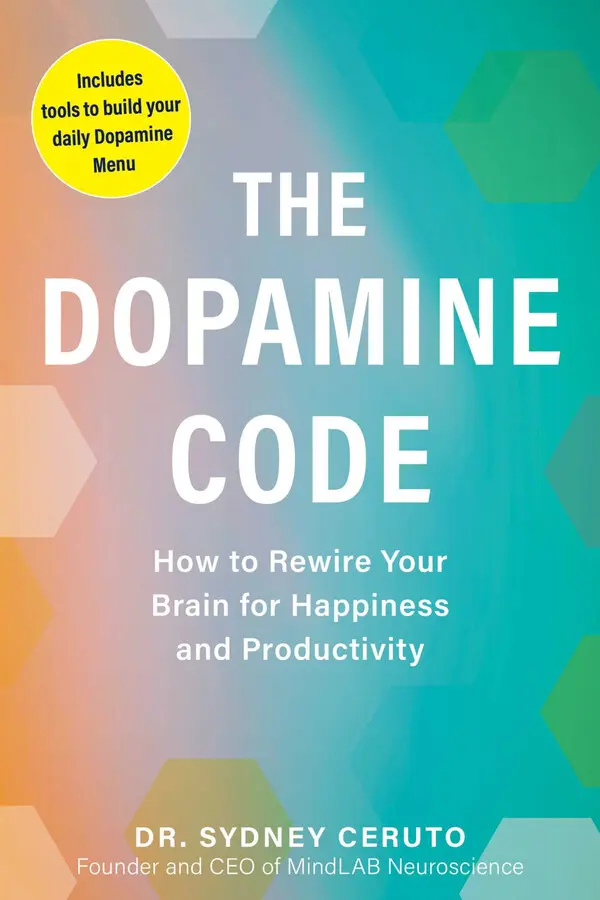
Dr. Ceruto holds a PhD in Behavioral & Cognitive Neuroscience from NYU and Master’s degrees in Clinical Psychology and Business Psychology from Yale University. She lectures at the Wharton Executive Development Program at the University of Pennsylvania and has been an Executive Contributor to the Forbes Coaching Council since 2019. Dr. Ceruto is the author of The Dopamine Code (Simon & Schuster, June 2026). She founded MindLAB Neuroscience in 2000 and has spent over 26 years leading it, pioneering Real-Time Neuroplasticity™, a methodology that durably rewires the neural pathways driving behavior, decisions, and emotional responses.
Also available in: Miami · Midtown Manhattan · Beverly Hills · Lisbon
Take the First Step
One hour with Dr. Sydney Ceruto. You leave knowing which neural pattern is actually driving this, and what to do about it.
One hour with Dr. Ceruto
The Dopamine Code
Decode Your Drive
Why Your Brain Rewards the Wrong Things
Your brain's reward system runs every decision, every craving, every crash, and it was never designed for the life you're living. The Dopamine Code is Dr. Ceruto's framework for understanding the architecture behind what drives you, drains you, and keeps you locked in patterns that willpower alone will never fix.
Published by Simon & Schuster, The Dopamine Code is Dr. Ceruto's framework for building your own Dopamine Menu, a personalized system for motivation, focus, and enduring life satisfaction.
Order Now!Available now