





Key Points
- Communication breakdowns persist because the brain's social-processing circuits generate threat-based responses before conscious thought can intervene.
- Real-Time Neuroplasticity™ rewires the neural architecture governing how you connect, so authentic communication becomes the default.
- Once the circuits are recalibrated, the old patterns of defensiveness, withdrawal, or bluntness no longer fire automatically.
- Dr. Sydney Ceruto maps your specific communication pattern during the Strategy Call to determine the precise approach.
- MindLAB's methodology produces structural neural change, no scripts, no devices, no indefinite maintenance.
| Marker | Traditional Approach | Neuroscience-Based Approach | Why It Matters |
|---|---|---|---|
| Target of Intervention | Surface communication behaviors | Neural circuits governing social response | Root-cause rewiring vs. surface techniques |
| Primary Method | Scripts, frameworks, active listening drills | Real-Time Neuroplasticity™ rewiring | Automatic responses change, not just habits |
| Duration of Results | Fades without ongoing practice | Durable neural pathway restructuring | Change that holds without rehearsal |
| Approach to Social Anxiety | Exposure practice and coping tools | Threat-circuit recalibration at the source | The brain stops generating the fear signal |
| Role of Conscious Effort | High: must remember and apply techniques | Minimal: the automatic circuit is rewired | Connection becomes effortless, not forced |
| Personalization | Generic communication models | Mapped to your specific neural architecture | Precision targeting for your exact pattern |
Why Communication & Interpersonal Skills Matters in Greenwich, CT
Greenwich is a community where interpersonal competence is both expected and rarely discussed. The social architecture of this town, from the back-country estates to the waterfront homes of Belle Haven to the shop-lined streets of Greenwich Avenue, runs on relationships that require constant calibration. A person who communicates with precision professionally but cannot land emotionally with their spouse inhabits a gap that widens the longer it goes unaddressed. Complex negotiations feel effortless. A difficult conversation with a teenager feels impossible.
The interpersonal culture of Greenwich carries specific pressures that amplify communication patterns. The town’s population of approximately 63,000 sustains one of the highest concentrations of financial services professionals in the Northeast. The hedge fund, private equity, and wealth management communities that cluster here bring a communication style shaped by decades of high-stakes, information-dense, adversarial environments. That style (analytical, guarded, outcome-oriented) is neurologically encoded. It becomes the brain’s default interpersonal mode across every context, including the ones where it causes the most damage.
The social density of Greenwich compounds the challenge. This is a community where reputations are built through relational networks. Country clubs along North Street, school boards at Greenwich Academy or Brunswick, paddle tennis at the Field Club. Every interaction carries social weight. For someone whose brain processes social encounters through a threat lens, this density creates a constant low-grade vigilance that depletes the neural resources needed for genuine connection. The person who appears composed at a Riverside gathering and then snaps at their partner in the car ride home is not being hypocritical. They have exhausted their social-processing capacity maintaining composure in public.
Greenwich families often present with a specific pattern: professional success and relational stagnation occurring simultaneously. One partner has optimized for achievement while the other has carried the emotional infrastructure of the family. Over years, this division creates neural specialization. One brain wires for strategic communication. The other wires for emotional processing. Neither can bridge the gap because the circuits now operate in fundamentally different modes. The partner who says everything is fine registers as emotionally absent to the one who reads between every line.
The generational dimension is significant in a community like Greenwich, where families often span multiple generations in the same town. Communication patterns passed from grandparents to parents to children become so deeply embedded that they feel like personality rather than learned circuitry. A family in Old Greenwich that has managed conflict through avoidance for three generations does not lack awareness. They lack the neural architecture for direct emotional communication because no one in the lineage ever built it.
Dr. Ceruto’s methodology addresses interpersonal difficulty at the circuit level where these patterns are encoded. Real-Time Neuroplasticity™ restructures the neural pathways governing how your brain processes social information and generates relational responses. The Strategy Call maps your specific patterns and identifies which mechanisms are driving the disconnect. It is a focused phone conversation that replaces years of unproductive effort with clarity.


Dr. Sydney Ceruto, PhD, Neuroscientist & Author, MindLAB Neuroscience
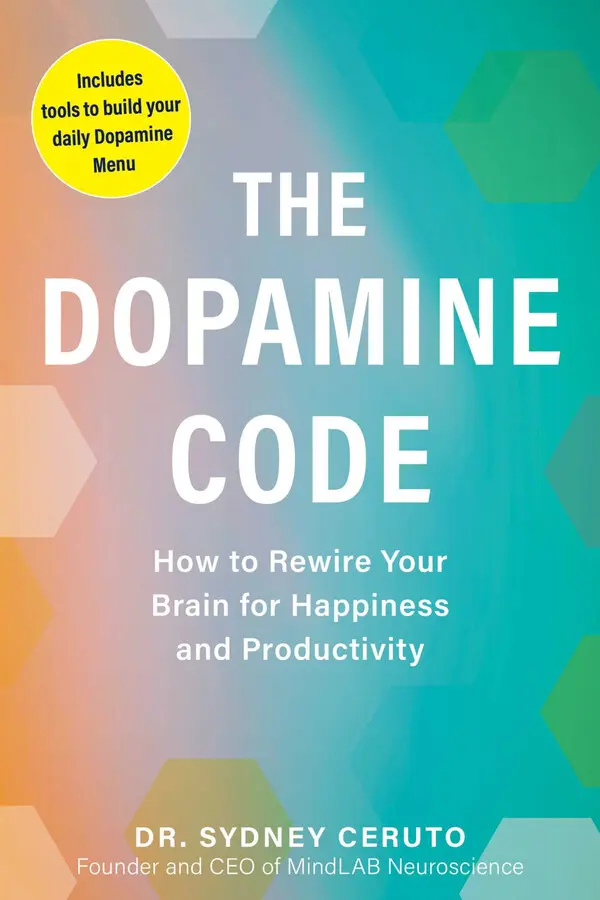
Dr. Ceruto holds a PhD in Behavioral & Cognitive Neuroscience from NYU and Master’s degrees in Clinical Psychology and Business Psychology from Yale University. She lectures at the Wharton Executive Development Program at the University of Pennsylvania and has been an Executive Contributor to the Forbes Coaching Council since 2019. Dr. Ceruto is the author of The Dopamine Code (Simon & Schuster, June 2026). She founded MindLAB Neuroscience in 2000 and has spent over 26 years leading it, pioneering Real-Time Neuroplasticity™, a methodology that durably rewires the neural pathways driving behavior, decisions, and emotional responses.
Frequently Asked Questions About Communication & Interpersonal Skills in Greenwich, CT
Why am I successful professionally but struggling in my closest relationships?
The brain optimizes its interpersonal circuits for the environments where the stakes are highest and the hours are longest. Professional communication patterns (strategic, analytical, emotionally restrained) become neurologically dominant. These circuits do not switch off in intimate settings. They run everywhere until the underlying architecture is restructured.
How does MindLAB's approach differ from traditional relationship counseling?
Relationship counseling facilitates dialogue between partners. MindLAB's methodology restructures the neural circuits generating one individual's automatic interpersonal responses. When your brain's default output changes, the relational dynamic shifts because the pattern that was triggering your partner's defensiveness no longer fires.
Can this help with emotional distance in a long marriage?
Yes. Emotional distance in long marriages typically reflects two neural systems that adapted to avoid the friction of direct communication. Over years, avoidance becomes the brain's default. Dr. Ceruto identifies the specific circuit driving the withdrawal pattern and recalibrates it so that emotional engagement becomes less costly to the brain than continued distance.
What happens during the Strategy Call?
The Strategy Call is a focused phone conversation with Dr. Ceruto. She maps the neural mechanisms behind your specific communication and interpersonal patterns and determines whether MindLAB's methodology is the right fit.
Is MindLAB accessible from Greenwich?
Yes. Dr. Ceruto works with clients by phone. The Strategy Call and ongoing engagement are conducted via phone-based conversation, making the full methodology accessible from Greenwich, Riverside, Old Greenwich, Cos Cob, or anywhere in Fairfield County.
How quickly do results appear?
Most clients notice meaningful shifts in their interpersonal responses within the first several weeks. The pace depends on how deeply encoded the pattern is and how many relational contexts it affects. Dr. Ceruto provides an honest assessment during the Strategy Call.
Why are interpersonal challenges common in high-achieving communities?
High-achievement environments reward communication styles (directness, emotional restraint, strategic framing) that are neurologically incompatible with the vulnerability and presence that intimate relationships require. The brain builds its strongest circuits around the most reinforced patterns, and professional success reinforces exactly the patterns that damage close relationships.
Can this address communication patterns inherited from my family of origin?
Yes. Communication patterns learned in childhood are encoded at the neural circuit level and persist into adulthood regardless of insight or intention. Real-Time Neuroplasticity™ restructures these inherited circuits so your brain produces the interpersonal responses you actually want rather than the ones it was built to deliver.
Do I need a referral?
No referral is required. If interpersonal patterns are creating persistent difficulty in your relationships or family life despite conscious efforts to improve them, that is sufficient to begin.
Is the change durable?
Real-Time Neuroplasticity™ produces structural changes in the neural pathways governing social processing and interpersonal response. Once recalibrated, the new patterns become the brain's default. Most clients do not need indefinite engagement to sustain their results.
Also available in: Miami · Wall Street · Midtown Manhattan · Beverly Hills · Lisbon
Take the First Step
One hour with Dr. Sydney Ceruto. You leave knowing which neural pattern is actually driving this, and what to do about it.
Book a Strategy Call
The Dopamine Code
Decode Your Drive
Why Your Brain Rewards the Wrong Things
Your brain's reward system runs every decision, every craving, every crash, and it was never designed for the life you're living. The Dopamine Code is Dr. Ceruto's framework for understanding the architecture behind what drives you, drains you, and keeps you locked in patterns that willpower alone will never fix.
Published by Simon & Schuster, The Dopamine Code is Dr. Ceruto's framework for building your own Dopamine Menu, a personalized system for motivation, focus, and enduring life satisfaction.
Order Now!Available now