






Pre-Marital Guidance in Lisbon

For Lisbon couples marrying across cultures, small misreadings can add up. Dr. Sydney Ceruto applies Real-Time Neuroplasticity™ to the patterns behind them.

When two cultures meet in one marriage, disagreements can carry more than their subject. The Pre-Marital Guidance program at MindLAB Neuroscience traces the patterns each of you brings to conflict and vulnerability. Dr. Ceruto's work with Real-Time Neuroplasticity™ aims to durably restructure the ones most likely to strain the marriage.

Book a Strategy Call
ForbesUSA TodayHuffPostNewsweekAssociated PressCosmopolitanBusiness InsiderForbesUSA TodayHuffPostNewsweekAssociated PressCosmopolitanBusiness Insider

The Argument You Have Had Before

“In a shared second language, a small misunderstanding can become an argument before either of you notices how.”

It starts with something small: a late reply, a family plan, a bill nobody mentioned. Ten minutes later neither of you is talking about the bill. One of you is pressing for an answer, and the other has gone quiet or left the room.

It looks like a communication problem, so the usual advice is about communication: listen, use “I” statements, take a break. Those skills are useful. The trouble is that the argument happens in a state where they are harder to reach.

What Happens in Two Brains During a Fight

A remark from your partner that lands as criticism is a moment of being judged, by the person whose judgment matters most. Being judged, in a situation you cannot control, is among the strongest psychological triggers of the body’s stress hormones. And even mild stress, when it is out of your control, can rapidly impair the prefrontal cortex, the brain’s center for planning and self-control.

Under stress, people also tend to shift away from deliberate choices and toward habit. So in the middle of an argument, each of you tends to do what you learned to do first. One pattern that research on couples has studied closely is demand and withdraw: one partner presses with requests, complaints or criticism, and the other retreats into defensiveness or silence. Which role you take often depends on which of you wants the change.

Many of those first moves were learned long before you met. How each of you handles closeness was likely shaped in part by your earliest relationships, which is part of why an argument with the person you love can feel older than the argument itself. None of this makes either of you the problem. Each move can be read as a brain protecting itself the way it learned to, and a learned response can be retrained.

Why Before the Wedding

Stress from outside a relationship can make what happens inside it count for more. In a study that followed couples over four years, everyday moments with a partner weighed more heavily on how satisfied each spouse felt when their stress ran higher than usual. The years after a wedding add more to carry: a shared home, shared money, careers that move, families that grow and need care. Preparing before the wedding means working on the loop the two of you make before those years add weight to it.

A partner can also be a source of calm. In a small study of married women, holding a husband’s hand quieted the brain’s response to a threat, and the effect was larger in stronger marriages. Part of the work is learning to reach for that calm instead of the old move.

How Dr. Ceruto Works With Couples

The work begins by mapping what each of you brings: the move you make under pressure, what sets it off, and how your two patterns feed each other. In the first conversations Dr. Ceruto looks past the topic you argue about (money, family, time) to the loop underneath it. She decides with you whether the work runs with both of you, with one partner, or with each of you in turn.

Real-Time Neuroplasticity™ then works on those patterns in live moments: the money conversation you keep postponing, the family visit that ends badly, the argument that starts over something small. A new response practiced in the heat of a disagreement can hold when the next one comes. Pre-marital counseling teaches the skills of a good conversation, while this works on what happens in each of you in the seconds before you reach for them.

It starts with a Strategy Call: an hour by phone with Dr. Ceruto, in which she maps the pattern the two of you keep repeating and what it would take to change it.

Marker Traditional Approach Neuroscience-Based Approach Why It Matters
Recurring Arguments Communication skills and turn-taking Working on each partner's reaction in the moment Even mild stress you cannot control can impair planning
Demand and Withdraw Agreements about how to disagree Mapping the loop your two patterns make together The role each partner takes often shifts with who wants the change
Family Patterns Discussing roles and expectations Tracing the reactions each partner learned early Adult closeness is likely shaped in part by early relationships
Outside Stress Scheduling time together Working on how a hard week carries into the relationship Outside stress can make everyday moments weigh more
Feeling Safe Reassurance and shared routines Working on how each of you reads the other under stress Wives holding a husband's hand showed quieter threat responses
Durability Skills practiced between disagreements Patterns worked on during disagreements, as they happen A response practiced mid-argument can hold next time

Why Lisbon Couples Need Neuroscience-Based Pre-Marital Guidance

Lisbon draws people from many countries who are building lives, and marriages, across cultures. One partner may be Portuguese and the other American, British, Brazilian or from elsewhere. Each partner brings a family of their own.

When one partner’s family expects to be closely involved in a couple’s married life and the other partner wants more distance, that expectation can set off reactions around autonomy and intrusion. The conflict can recur long before either of you sees the source, and a boundary can be read as rejection. A daily call from a parent, or a visit announced the day before, can be enough to start it.

Antique rosewood desk with crystal brain sculpture and MindLAB journal in warm amber Lisbon afternoon light with historic European wood paneling

Many couples in Lisbon came from somewhere else. Couples who relocated together, or met after relocating, can carry stress from the move itself: career disruption, social isolation, the identity questions that come with leaving your home country. That stress can land on the relationship, and a partner can become the target of frustrations that have little to do with the marriage.

Mapping the Patterns Lisbon Couples Bring

Cross-cultural marriages take more than goodwill. The way each partner handles disagreement can shape a conversation as much as the difference being discussed. Dr. Ceruto works with those ways of disagreeing as patterns that can be durably restructured.

Language and emotional expression can be part of the picture here. Meaning can slip in small ways when you speak a shared second language, or when one of you is direct and the other indirect. The work follows each slip back to the pattern producing it.

For one partner, that might be the reaction that turns a cultural difference into a personal slight. For the other, it might be the urge to withdraw when family expectations pile up. The two reactions tend to set each other off, so the protocol takes both into account, whether you come together or one of you comes alone.

What Can Shift When Cultures Meet

Disagreements over family involvement, holiday traditions or where to raise children can lose some of their heat, even while the questions stay open. What can change is whether a disagreement registers as a threat, and that reaction can be durably restructured. A visit from one partner’s family that used to send the other into retreat can then become easier to enjoy. A conversation about whether to stay in Lisbon or move can become a plan you make together instead of a standoff.

Starting before the wedding means each partner’s habits around family, conflict and closeness can be durably rewired while the marriage is still taking shape. In a marriage that joins two cultures, neither partner’s habits can be taken as the shared default. Working on both early can give the two of you ground that belongs to neither family alone.

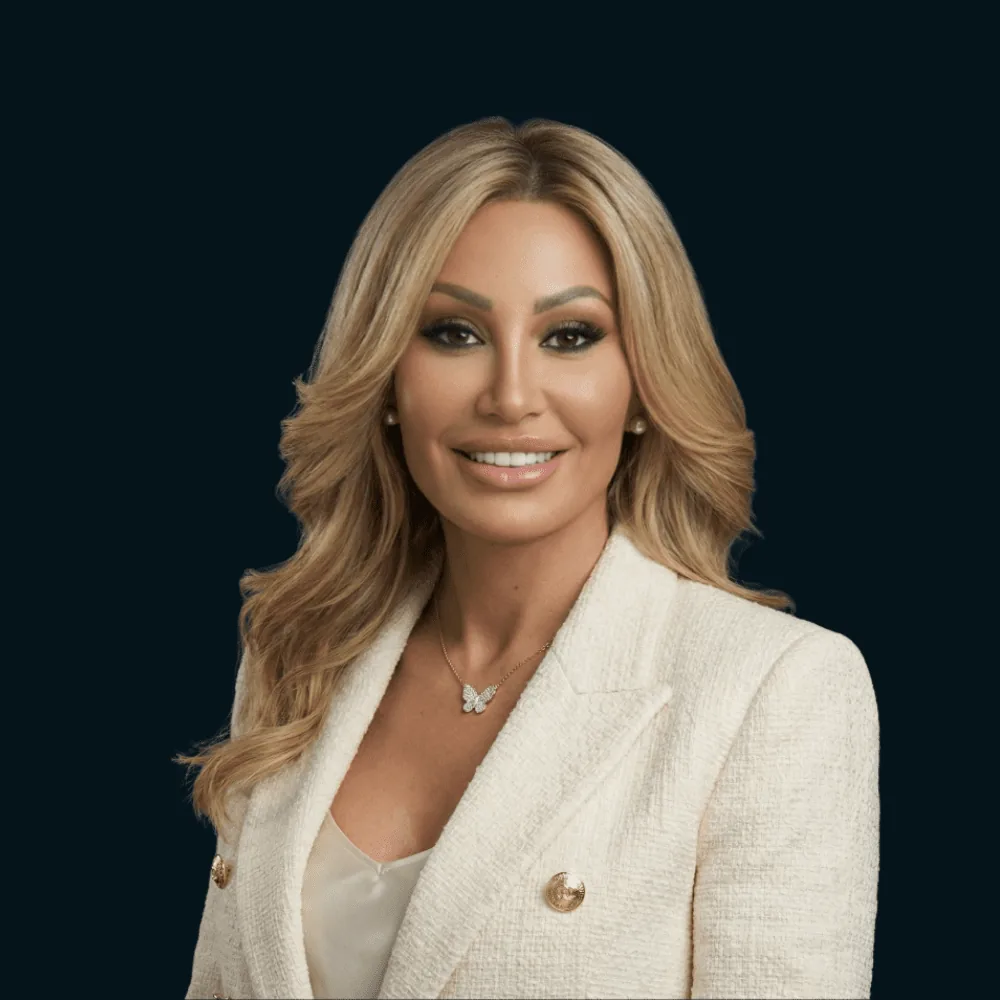
Dr. Sydney Ceruto, PhD, Neuroscientist & Author, MindLAB Neuroscience

Dr. Sydney Ceruto, PhD, Neuroscientist & Author, MindLAB Neuroscience

Dr. Ceruto holds a PhD in Behavioral & Cognitive Neuroscience from NYU and Master’s degrees in Clinical Psychology and Business Psychology from Yale University. She lectures at the Wharton Executive Development Program at the University of Pennsylvania and has been an Executive Contributor to the Forbes Coaching Council since 2019. Dr. Ceruto is the author of The Dopamine Code (Simon & Schuster, June 2026). She founded MindLAB Neuroscience in 2000 and has spent over 26 years leading it, pioneering Real-Time Neuroplasticity™, a methodology that durably rewires the neural pathways driving behavior, decisions, and emotional responses.

Success Stories

“Dr. Ceruto's neuroscience-backed methods transformed me from an accomplished executive struggling with presence to a visionary CEO. She sharpened my negotiation instincts, built mental resilience I didn't know I was missing, and fostered genuine likability. The difference shows up in how my team responds to me: trust, respect, and a willingness to follow I'd tried to manufacture for years. I stopped trying to project authority and started operating from it.”

Victoria W., WeWork New York, NY

“The same relational patterns my mother and grandmother lived through kept repeating in my own life, the hypervigilance, the emotional shutdown, the inability to feel safe even when nothing was wrong. Talking through it changed nothing. Dr. Ceruto and I worked on the inherited patterns I had been carrying, and she helped me rebuild them. The cycle that ran through three generations stopped with me.”

Gabriela W., Managing Partner, Immigration Law Miami, FL

“Dr. Sydney Ceruto transformed me from an overwhelmed Managing Director with leadership blind spots to a venerated leader with purpose and balance. Her insights and guidance honed my self-awareness, equipped me with situational leadership skills, and cultivated a magnetic executive presence, enabling me to master high-stakes conversations and leave a lasting leadership legacy. The way I process high-pressure interactions is fundamentally different now.”

Matteo R., Director of Investment Banking, Morgan Stanley London, UK

“Every close relationship I had eventually hit the same wall. I'd flood emotionally and shut down or explode, and nothing I'd tried gave me real control over it. Dr. Ceruto helped me see that I was dropping straight into fight-or-flight the moment real intimacy was on the line. She didn't give me coping tools. She helped me rebuild that default. The flooding eased because what set it off had changed.”

Simone V., Executive Director, Arts Nonprofit New York, NY

“I could perform at the highest level professionally and still feel hijacked emotionally in my closest relationships, and no conventional approach had ever explained why those two realities coexisted. My work with Dr. Ceruto surfaced an imprint from childhood that was running every intimate interaction I had. She didn't just help me understand it better. We took it apart. The reactivity isn't something I have to manage anymore. What was generating it has changed.”

Natasha K., Chief of Staff, Venture Capital Beverly Hills, CA

“Every system, every supplement, every productivity method I tried collapsed within weeks, and nothing held because nothing addressed why my attention kept fragmenting. Dr. Ceruto worked with me on what was pulling my attention apart every time I needed sustained focus. She didn't give me another workaround. She went after what was underneath instead. My focus holds now. That's not something I ever thought I'd be able to say.”

Derek S., VP of Product Design, Snap Inc. Beverly Hills, CA

Frequently Asked Questions About Pre-Marital Guidance

What does Pre-Marital Guidance at MindLAB actually address?
It targets the neural patterns each partner carries into the marriage, including pathways shaped in part by family of origin. Dr. Ceruto works on these patterns so they can support the marriage rather than generate recurring conflict.
How is this different from pre-marital counseling?
Pre-marital counseling teaches communication strategies and conflict-management exercises. Dr. Ceruto's methodology works on the neural architecture that produces the conflict. The change it works toward is structural and durable.
We are a cross-cultural couple living in Lisbon. Is this designed for our situation?
Yes. A cross-cultural couple often brings two family systems into one home, along with different ways of showing feeling and different expectations about marriage. Dr. Ceruto maps where your patterns meet and works on the ones that produce friction.
We argue about family involvement constantly. Can this address that?
Yes. Arguments about family involvement often start when one partner's sense of loyalty and closeness meets the other's need for autonomy and boundaries. Dr. Ceruto works on how each of you reacts when that happens, so family discussions can become collaborative rather than adversarial.
We relocated to Lisbon recently and the move has strained our relationship. Is this relevant?
Yes. The strain of a move can end up aimed at the person closest to you. Dr. Ceruto maps how each of you reacts to that strain and works on those reactions, so the marriage does not have to carry the weight of the move.
What happens during the Strategy Call?
The Strategy Call takes place by phone, and Dr. Ceruto uses it to look at how the two of you handle disagreement across two cultures. She maps the neural mechanisms driving your friction points, including cultural factors, and determines whether this protocol is the right path forward.
Do both partners need to participate?
Not always. After the Strategy Call, Dr. Ceruto recommends whether to begin together, with one partner first, or separately. What one partner changes, the other tends to feel, so one partner's work can loosen the pattern.
We communicate in a shared second language. Does that affect the protocol?
Language dynamics are part of the mapping. Couples who share a second language can develop patterns around misreading and frustration that build over time. Dr. Ceruto accounts for those patterns in the protocol design.
We are getting married in Lisbon next year. Is there time?
Dr. Ceruto sets the protocol against your wedding date after looking at your timeline on the Strategy Call. Beginning earlier gives the two of you more time to practice new responses before the wedding.
Is Dr. Ceruto the practitioner for every couple?
Yes. Dr. Ceruto personally conducts every Strategy Call and designs every protocol. MindLAB Neuroscience does not delegate to associates or junior practitioners. You work directly with Dr. Ceruto, a neuroscientist with a PhD from NYU, who founded MindLAB Neuroscience in 2000 and has led it for over 26 years.

Also available in: Wall Street · Midtown Manhattan · Beverly Hills

Take the First Step

One hour with Dr. Sydney Ceruto. You leave knowing which neural pattern is actually driving this, and what to do about it.

Book a Strategy Call
MindLAB Neuroscience strategy call setting

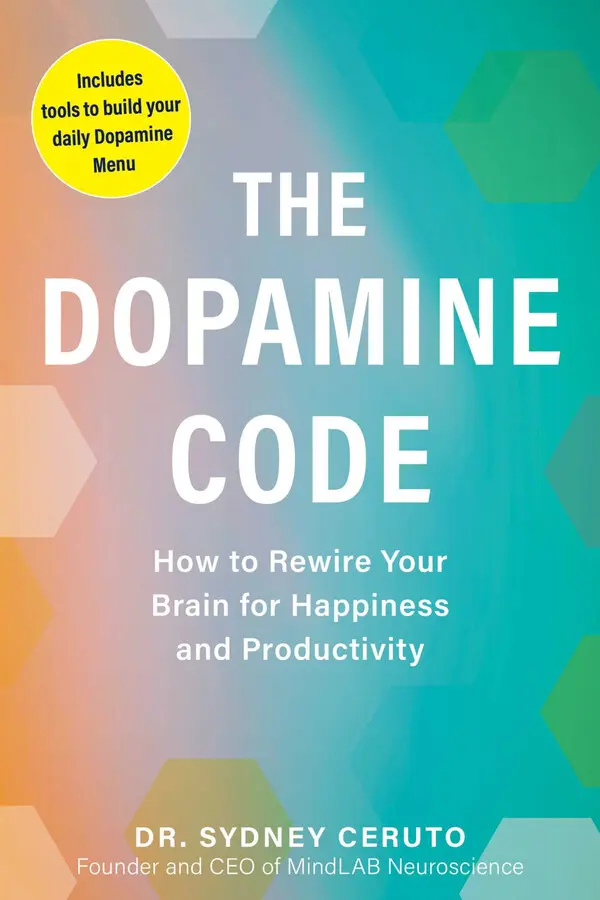
The Dopamine Code

Decode Your Drive

Why Your Brain Rewards the Wrong Things

Your brain's reward system runs every decision, every craving, every crash, and it was never designed for the life you're living. The Dopamine Code is Dr. Ceruto's framework for understanding the architecture behind what drives you, drains you, and keeps you locked in patterns that willpower alone will never fix.

Published by Simon & Schuster, The Dopamine Code is Dr. Ceruto's framework for building your own Dopamine Menu, a personalized system for motivation, focus, and enduring life satisfaction.

Order Now!

Available now

The Dopamine Code by Dr. Sydney Ceruto, Decode Your Drive
Locations