Key Points
- Nassau County professionals operate across multiple strategic contexts daily, each requiring different neural architecture that most leaders switch between inconsistently.
- Family businesses concentrate decision-making among members whose neural circuits were shaped by familial dynamics as much as business experience.
- Proximity to Manhattan calibrates self-assessment and risk circuits that can drive excellence or distort strategy depending on whether the architecture matches the local context.
- Real-Time Neuroplasticity™ maps decision architecture across all contexts and calibrates the circuits for the specific strategic demands each environment presents.
- Cross-industry professional networks circulate strategic assumptions that carry implicit neural frameworks which may not transfer between the sectors Nassau County spans.
| Marker | Traditional Approach | Neuroscience-Based Approach | Why It Matters |
|---|---|---|---|
| Foundation | Behavioral Strategy Development | Traditional Business Consulting | Executive Coaching |
| Focus | Neural decision architecture | Market and operational analysis | Leadership effectiveness |
| Method | Real-Time Neuroplasticity™ | Frameworks and recommendations | Conversational development |
| Durability | Durable circuit-level change | Requires ongoing engagement | Fades without reinforcement |
| Scope | All strategic contexts mapped | Single business or market | General leadership capacity |
| Execution Alignment | Architecture matched to context | Assumes rational execution | Does not address architecture |
How Nassau County’s Business Landscape Shapes Strategic Decision-Making
Nassau County occupies a unique position in the New York metropolitan economy. The professionals living in Garden City, Great Neck, Manhasset, and Roslyn carry the same caliber of experience found in Manhattan’s corner offices, but they operate in a business environment with fundamentally different dynamics. Many Nassau County leaders split their professional lives between Long Island enterprises and Manhattan-based roles, advisory positions, or client relationships. This dual-context existence creates neural architecture that must toggle between strategic modes multiple times per day. The circuits activated when leading a manufacturing firm headquartered in Hicksville differ substantially from those engaged when advising a private equity fund in midtown. Leaders who make this transition smoothly have neural architecture that supports rapid context-switching. Those who struggle carry decision circuits that default to one mode regardless of context, producing strategic output calibrated for the wrong environment.
Nassau County’s industry mix creates additional behavioral complexity. Healthcare systems, construction firms, professional services practices, and technology companies operate here alongside the financial professionals who form a significant portion of the county’s economic base. In communities like Jericho, Woodbury, and Old Brookville, it is common for a single professional network to span all of these sectors. The strategic advice exchanged across these networks carries implicit neural assumptions about risk, pace, and acceptable failure rates that may apply brilliantly to one industry and catastrophically to another. A financial executive whose neural architecture was built for Wall Street’s risk profile will process a real estate development opportunity through those same circuits, potentially missing the fundamentally different strategic calculus that industry demands.
Why Behavioral Strategy Development Addresses What Traditional Consulting Misses
The family business landscape in Nassau County represents one of the most complex strategic environments in the metropolitan area. Multi-generational enterprises in industries ranging from construction to healthcare to food distribution concentrate decision-making among family members whose neural architecture was shaped not just by business experience but by decades of familial dynamics. A succession strategy that looks sound on paper fails when the incoming generation’s decision circuits were built in opposition to the architecture of the generation handing over control. In communities like Mineola, Floral Park, and Rockville Centre, these businesses anchor local economies and employ thousands. The strategic decisions they make carry consequences that extend far beyond the family, making the neural alignment of the leadership team a matter of community-wide significance.
Nassau County’s proximity to Manhattan creates a particular neural pattern around ambition and self-assessment that shapes strategic behavior. Leaders here frequently benchmark themselves against the highest-performing professionals in the world’s most competitive market. This proximity produces neural circuits that can drive extraordinary achievement and also create strategic distortions. The executive in Great Neck who measures every decision against a Manhattan standard may over-engineer strategies for a Long Island market that rewards reliability and relationships over sophistication. Alternatively, the leader who has built a successful local enterprise may carry neural architecture that systematically undervalues their own strategic capability because the circuits governing self-assessment were calibrated by proximity to Manhattan’s scale.
Real-Time Neuroplasticity™ addresses these dynamics at the level where strategic behavior actually originates. Dr. Sydney Ceruto maps the decision circuits driving your strategic choices and identifies where those circuits serve your objectives and where they create misalignment between intent and execution. For Nassau County professionals navigating dual-context careers, multi-generational businesses, or the complex strategic terrain between Long Island’s markets and Manhattan’s gravity, this produces clarity and consistency that no amount of traditional strategic planning achieves on its own.


Dr. Sydney Ceruto, PhD, Neuroscientist & Author, MindLAB Neuroscience
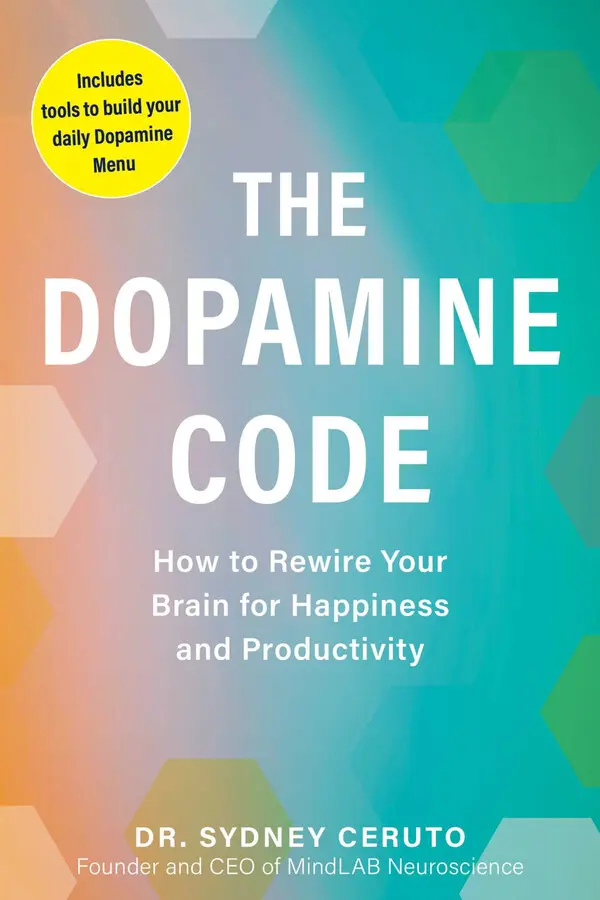
Dr. Ceruto holds a PhD in Behavioral & Cognitive Neuroscience from NYU and Master’s degrees in Clinical Psychology and Business Psychology from Yale University. She lectures at the Wharton Executive Development Program at the University of Pennsylvania and has been an Executive Contributor to the Forbes Coaching Council since 2019. Dr. Ceruto is the author of The Dopamine Code (Simon & Schuster, June 2026). She founded MindLAB Neuroscience in 2000 and has spent over 26 years leading it, pioneering Real-Time Neuroplasticity™, a methodology that durably rewires the neural pathways driving behavior, decisions, and emotional responses.
Frequently Asked Questions About Behavioral Strategy Development
What is Behavioral Strategy Development?
Behavioral Strategy Development maps the neural circuits driving how you make strategic decisions and builds frameworks aligned with that architecture. It works with your brain's actual decision system rather than assuming that expertise and intention automatically produce optimal strategic execution.
Why is Nassau County's business environment a specific strategic challenge?
Nassau County professionals frequently operate across multiple contexts: Long Island enterprises, Manhattan roles, board positions, and advisory relationships. Each activates different neural architecture. Without mapping these circuits, strategic output defaults to whichever mode dominates, regardless of context.
How does this apply to family businesses in Nassau County?
Family businesses concentrate decision-making among members whose neural architecture was shaped by decades of familial dynamics alongside business experience. Succession, growth, and strategic pivots all require alignment between family members whose circuits were built in very different conditions.
Can this help if I split my career between Long Island and Manhattan?
This is one of its most direct applications. The neural circuits activated in each environment serve different strategic purposes. Mapping both architectures and building the ability to switch cleanly between them produces measurably better strategic output in both contexts.
How does proximity to Manhattan affect strategic behavior?
Constant benchmarking against Manhattan's scale builds neural circuits that can drive excellence and also distort local strategy. Leaders may over-engineer approaches for markets that reward different qualities, or undervalue their own capability because their self-assessment circuits were calibrated by proximity to a different scale.
What does the process look like?
It begins with a Strategy Call where Dr. Ceruto maps the core decision architecture driving your strategic behavior. She then identifies the circuits creating bottlenecks or misalignment and designs a rewiring protocol calibrated to your specific professional and industry context in Nassau County.
How quickly do results appear?
Most leaders notice measurable shifts in decision-making patterns within the first several weeks. Real-Time Neuroplasticity™ works at the circuit level, producing faster change than strategic coaching or advisory relationships that address behavior without modifying the underlying architecture.
Is this relevant for established business owners or primarily for executives in transition?
Both. Established owners often carry neural architecture that was optimal when the business was smaller and operates as a constraint at current scale. Executives in transition need recalibration for new contexts. The underlying principle is the same: match the architecture to the strategic demand.
How does cross-industry networking in Nassau County affect strategy?
When professionals from finance, healthcare, construction, and technology exchange strategic thinking across networks, the advice carries implicit neural assumptions that may not transfer between industries. A risk framework that serves a financial executive brilliantly can distort a healthcare leader's strategic calculus.
How is Dr. Ceruto qualified for this work?
Dr. Ceruto holds a PhD in Behavioral and Cognitive Neuroscience from NYU and two Master's degrees from Yale. She lectures at the Wharton Executive Development Program at the University of Pennsylvania and has spent over 26 years applying Real-Time Neuroplasticity™ to individual and organizational performance.
Also available in: Miami · Wall Street · Midtown Manhattan · Beverly Hills · Lisbon
Take the First Step
One hour with Dr. Sydney Ceruto. You leave knowing which neural pattern is actually driving this, and what to do about it.
Book a Strategy Call
The Dopamine Code
Decode Your Drive
Why Your Brain Rewards the Wrong Things
Your brain's reward system runs every decision, every craving, every crash, and it was never designed for the life you're living. The Dopamine Code is Dr. Ceruto's framework for understanding the architecture behind what drives you, drains you, and keeps you locked in patterns that willpower alone will never fix.
Published by Simon & Schuster, The Dopamine Code is Dr. Ceruto's framework for building your own Dopamine Menu, a personalized system for motivation, focus, and enduring life satisfaction.
Order Now!Available now