Consultant in Nassau County

Strategy consulting grounded in how the brain actually works, not theory, not assumptions.

In my practice, I work with executives across Nassau County's financial services, real estate, and technology sectors who face a recurring problem: traditional strategy frameworks treat the brain as irrelevant. They focus on markets, data, and organizational structures, but they ignore the neurobiology that governs how decisions are actually made under pressure.

Real-Time Neuroplasticity™ changes that equation. My approach to strategy consulting integrates neuroscience evidence (the same mechanisms that govern attention, emotional regulation, and cognitive flexibility) directly into how you build strategy and lead through execution. The result is a consulting engagement that moves faster, sticks longer, and produces measurable shifts in both decision-making quality and team performance.
Schedule a Strategy Call
ForbesUSA TodayHuffPostNewsweekAssociated PressCosmopolitanBusiness InsiderForbesUSA TodayHuffPostNewsweekAssociated PressCosmopolitanBusiness Insider

Strategy Consulting

In my practice, Strategy Consulting is not about building beautiful PowerPoint decks or assembling market data into a three-year plan. It’s about identifying the decision-making blind spots that cause executives to miss signals, second-guess sound judgment, or fail to execute the strategy they’ve already built.

The mechanism is straightforward. Under pressure and cognitive load, the prefrontal cortex (the region governing long-term planning, pattern recognition, and flexible thinking) becomes less efficient. Research demonstrated that sustained stress directly compromises the PFC’s capacity for cognitive control and mental set shifting. This means the conditions that most demand clear strategic thinking are the same conditions that make it hardest.

I help you map the assumptions underlying your strategic direction, identify where cognitive bias and emotional reactivity are driving decisions, and design your decision-making process so it holds up under pressure rather than breaking down in it. The engagement includes direct guidance on how to structure your leadership and team interactions to preserve cognitive clarity through execution.

Strategy Consulting at MindLAB is distinct because it makes your team’s capacity to think clearly under pressure part of the strategy rather than an assumption behind it. The deliverable is not just a better strategy; it’s your team’s documented capacity to execute it under the conditions where execution actually happens: pressure, uncertainty, and competing demands.


Learn more about Strategy Consulting in Nassau County →

Leadership Training

Leadership Training rooted in neuroscience looks fundamentally different from the standard executive development model. Instead of teaching leadership competencies or building communication skills in a classroom, I train you, and your team, to operate more effectively under the exact conditions where leadership is tested.

The pattern is consistent: executives who excel in low-pressure environments often struggle when stakes rise, because the same stress response that once protected your ancestors now narrows attention, amplifies threat perception, and locks you into habitual patterns. Research found that affect plays a driving role in managerial decision-making, not as a distraction, but as the mechanism that determines which information gets processed and which gets ignored.

Rather than teaching you about leadership, I help you develop the flexibility to lead more decisively when circumstances demand it. This includes training in attention regulation, emotional pattern interruption, and the capacity to shift mental frameworks rapidly in response to new information.

The multimodal approach (combining behavioral rehearsal and guided reflection) produces improvements. Research demonstrated that multimodal training produces significant gains in decision-making competence, which directly correlates with leadership effectiveness across contexts.

Your team leaves with tangible shifts in how they process information under pressure and make decisions that stick.

Learn more about Leadership Training in Nassau County →

Performance Improvement Consulting

Performance Improvement Consulting addresses a problem I see repeatedly in Nassau County’s scaled organizations: teams are working harder, not smarter. They’re executing tasks at high volume but not adapting quickly enough to shifting market conditions, and their cognitive load is climbing steadily toward burnout.

The neuroscience here is critical. Research reviewed 64 studies and found consistent evidence that work conditions (including task complexity, time pressure, and decision volume) directly affect cognitive function. As these pressures accumulate, working memory becomes fragmented, attention span narrows, and decision quality degrades. Research demonstrated that chronic stress specifically degrades the frontostriatal circuits, the planning-to-action link that governs working memory, explaining why high-performing teams often stall under scaling.

My approach to Performance Improvement begins with an assessment: I look at where performance is being constrained not by lack of effort, but by how the work itself is designed.

The intervention recalibrates your workflow, decision-making cadence, and team interaction patterns to protect clarity and follow-through. The outcomes are faster iteration cycles, fewer decision reversals, and sustainable high performance without burnout.

This is especially relevant for scaling organizations where velocity matters as much as precision.

Learn more about Performance Improvement Consulting in Nassau County →

Organizational Development Consulting

Organizational Development Consulting grounded in neuroscience is a departure from the standard OD playbook. Rather than diagnosing culture issues through surveys and then prescribing structural changes, I examine how your organization actually processes information, makes decisions, and coordinates action.

Here’s what I’ve learned: organizational dysfunction is often a reflection of collective cognitive constraints, not character flaws or misaligned values. When leaders don’t communicate clearly, it’s frequently because the organization’s structure creates information silos that make integrated thinking impossible. When change initiatives stall, it’s often because the speed of change exceeds the organization’s capacity to absorb it.

My OD methodology includes an assessment, mapping of organizational decision-making pathways, and redesign of how information flows and decisions get made. The focus is on creating organizational structures that match how people actually take in information and coordinate action.

The deliverable is a development pathway: not a consultant’s report, but a documented approach to evolving how your organization thinks and decides alongside its business strategy.

Learn more about Organizational Development Consulting in Nassau County →

Corporate Training

Corporate Training at MindLAB is built on a single principle: skills don’t transfer to real-world performance unless the training changes how people actually behave under pressure. Standard corporate training programs teach competencies in a low-stakes classroom environment, then assume those skills will activate in high-stakes situations. They don’t, because what a person can do in a low-stakes room is not what they can do when the stakes are real.

Corporate Training uses multimodal methodology (combining behavioral rehearsal and guided reflection) to embed learning in the situations that actually matter in your work.

Across engagements, teams trained on decision-making frameworks using this methodology show immediate improvement in decision speed and quality. A study tracked 193 employees who completed brain health training, finding significant improvements in BrainHealth Index scores, with 75% of completers showing gains.

Corporate Training programs I design are customized to your specific decision contexts: whether negotiation, crisis response, or cross-functional problem-solving. The program includes assessment, multimodal skill development, and real-world application.

Your team develops skills that activate precisely when the stakes are highest.

Learn more about Corporate Training in Nassau County →

Executive Coaching

Executive Coaching through a neuroscience lens is distinct from the standard coaching model. Rather than working primarily on mindset or motivation, I help you see the patterns that actually drive your decision-making, attention, and emotional regulation, and then change them deliberately.

In my practice, I work with executives on specific performance challenges: the founder who struggles to delegate because she reads ordinary risk as danger; the CFO whose perfectionism locks him into analysis paralysis; the COO who makes excellent strategic decisions but struggles to communicate them persuasively to his board.

Executive coaching produces a moderate effect on skill development but a large effect on goal attainment. What distinguishes my approach is that it targets the patterns underlying the goal, not just the goal itself.

My methodology includes an assessment, identification of the specific patterns constraining performance, and direct guidance on reshaping those patterns through deliberate practice and behavioral rehearsal.

The outcomes are sustained behavioral change, improved decision-making under pressure, and genuine shifts in how you lead. Your engagement is documented and focused on outcomes that matter to your organization.

Learn more about Executive Coaching in Nassau County →

Why This Matters in Nassau County

Nassau County’s professional landscape demands a consulting approach built on the same precision that its residents apply to every other domain of their lives. The executive in Great Neck, the entrepreneur in Garden City, the senior professional in Manhasset: these individuals did not arrive at their current position through approximation. They operate in environments where the margin between optimal and adequate performance translates directly into measurable outcomes. A consulting engagement that offers generalized frameworks without addressing the specific neurological and environmental architecture of Nassau County life produces advice that sounds reasonable in the conference room and fails on the LIRR platform at six-thirty in the morning.

The consulting challenge specific to Nassau County involves the interaction between professional performance and the total demand architecture of this environment. The person seeking consulting here is not managing a single-domain problem. They are operating inside a system where professional output, family demands in high-pressure school districts, community obligations, financial architecture, area logistics, and identity management all draw from the same pool of prefrontal resources. A consulting approach that addresses one domain while ignoring the others will optimize a subsystem while the total system continues to degrade. The executive who improves professional decision-making but depletes the regulatory resources needed for family engagement has not solved a problem: they have relocated it.

Dr. Ceruto’s consulting work with Nassau County professionals applies neuroscience-grounded methodology to the complete architecture of performance and decision-making. This means understanding how the specific structure of Nassau County life (the area, the achievement-indexed community, the multi-domain performance demands, the cultural complexity of communities like Great Neck and Manhasset) shapes the neural systems that produce professional output. The consulting engagement examines how the executive’s decision-making architecture actually operates under the real conditions of their daily life, identifies where that architecture is producing suboptimal outputs, and designs specific interventions that account for the total demand environment rather than pretending that professional performance exists in isolation.

The result is consulting that works because it is built on the same foundation that governs all human performance: the neural architecture that produces every decision, every interaction, and every outcome that matters.

Dr. Sydney Ceruto, PhD, Neuroscientist & Author, MindLAB Neuroscience

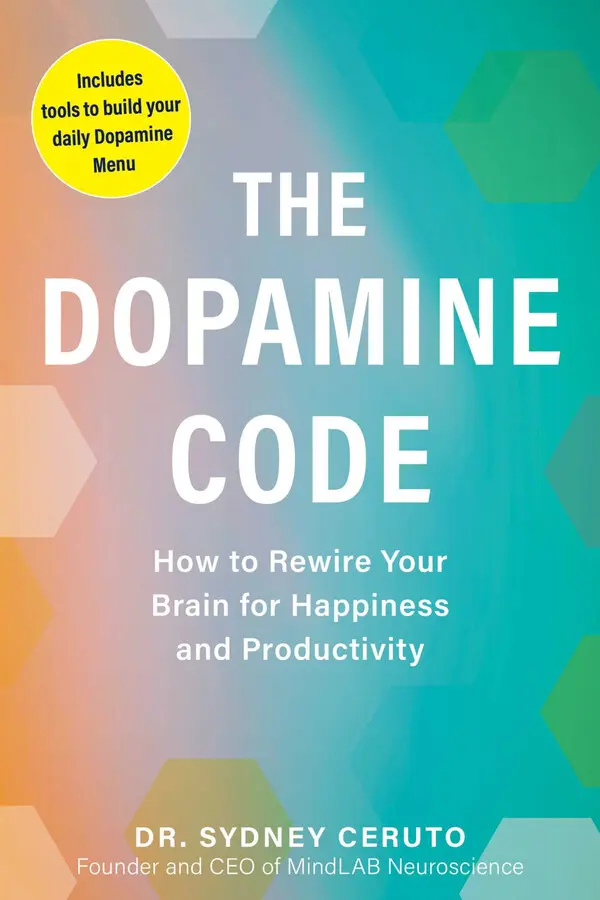
Dr. Sydney Ceruto holds a PhD in Behavioral & Cognitive Neuroscience from NYU and Master’s degrees in Clinical Psychology and Business Psychology from Yale University. She is a Lecturer in the Wharton Executive Development Program at the University of Pennsylvania, an Executive Contributor to Forbes Coaching Council. Dr. Ceruto founded MindLAB Neuroscience in 2000 and has spent more than 26 years leading it, developing and refining her proprietary methodology, Real-Time Neuroplasticity™. She is the author of The Dopamine Code (Simon & Schuster, June 2026).

References

Diamond, A. (2013). Executive functions. Annual Review of Psychology, 64, 135–168. https://doi.org/10.1146/annurev-psych-113011-143750

Arnsten, A. F. T. (2009). Stress signalling pathways that impair prefrontal cortex structure and function. Nature Reviews Neuroscience, 10(6), 410–422. https://doi.org/10.1038/nrn2648

Lövdén, M., Bäckman, L., Lindenberger, U., Schaefer, S., & Schmiedek, F. (2010). A theoretical framework for the study of adult cognitive plasticity. Psychological Bulletin, 136(4), 659–676. https://doi.org/10.1037/a0020080

Success Stories

“Dr. Ceruto's neuroscience-backed methods transformed me from an accomplished executive struggling with presence to a visionary CEO. She sharpened my negotiation instincts, built mental resilience I didn't know I was missing, and fostered genuine likability. The difference shows up in how my team responds to me: trust, respect, and a willingness to follow I'd tried to manufacture for years. I stopped trying to project authority and started operating from it.”

Victoria W., WeWork New York, NY

“Certain meetings would send my heart racing for no reason I could point to, and I'd spend the rest of the day recovering from a conversation that objectively went fine. Dr. Ceruto drew out what those meetings were setting off in me, and worked with me to change it. Those same meetings don't touch me anymore.”

Priscilla M., Head of Compliance, Financial Services Edinburgh, UK

“Shopping had become a private ritual I couldn't explain to anyone, not the items themselves, just the moment right before buying. Therapy treated it as a willpower problem for years. Working with Dr. Ceruto, it became clear that the anticipation was driving the behavior, separate from the purchase itself. Once we worked on that directly, the urge eased.”

Sofia R., Creative Director Milan, IT

“When my youngest left for college, I didn't just feel sad. I felt erased. My entire sense of self had been wired to caregiving for two decades, and I didn't know who I was without it. Years of talk-based approaches hadn't touched it. Dr. Ceruto and I worked on the identity that had fused with the role, and she helped me rebuild it. I didn't find a new purpose. I found the one that had been underneath the whole time.”

Diane L., Senior Partner, Management Consulting Chicago, IL

“My body had simply stopped knowing when to sleep. Crossing time zones weekly for over two years had broken something fundamental, and every protocol, supplement, and device I tried couldn't hold longer than a few days. Dr. Ceruto and I worked out what had thrown my body clock off, and corrected it. Within weeks, my sleep timing locked back in. I sleep now. Consistently. Regardless of where I land.”

Jonathan K., VP of Global Operations, Maersk Geneva, CH

“Excellent experience working with Dr. Ceruto. Very effective method that gave me the results I was looking for to improve my professional relationships. I loved the neuroscience woven into the art of higher-level communication and relationship building. Dr. Ceruto is extremely astute and does not require you to go back in history over and over to understand what’s going on. Her attention to detail, dedication to follow-up, and breadth of knowledge in my industry is truly unparalleled. I can’t recommend her highly enough.”

Dan G., Director of Strategy, Technology Startup Greenwich, CT

Frequently Asked Questions About Neuroscience-Based Organizational Excellence

How does neuroscience-based organizational advisory differ from traditional consulting?

Traditional consulting optimizes systems, processes, and structures: the organizational hardware. This approach works on the judgment and habits of the individuals operating those systems: the human software. When organizational performance is bounded by how well key people think and decide rather than by process design, working at that level produces improvements that process optimization alone cannot achieve.

What types of organizational challenges respond best to this approach?

Challenges where human cognitive quality is the binding constraint: leadership development that must produce behavioral change rather than knowledge acquisition, organizational transformations that require leaders to sustain clarity under ambiguity, performance improvement initiatives that have plateaued at the human capacity ceiling, and culture change that depends on the signals leaders actually send rather than the values they articulate.

Can this approach improve organizational training effectiveness?

Yes. Conventional training delivers information to the conscious mind, but lasting behavioral change requires reaching the habits that operate below deliberate attention. Dr. Ceruto advises on training architecture that works with how people actually learn: attention cycles, spacing and consolidation, and the conditions under which new behavior sticks. The result is retention and real-world transfer that standard programs struggle to produce.

How does this work complement existing leadership development programs?

Leadership programs develop knowledge and frameworks. Dr. Ceruto works on what determines whether that knowledge translates into behavior under real organizational conditions. Leaders frequently report that insights from development programs become actionable after this work, because the habits that were getting in the way are no longer doing so.

What is the typical engagement structure for organizational work?

Organizational engagements typically begin with the Strategy Call for each key leader, followed by individualized work tailored to each person's specific constraints and the organizational demands they face. The engagement duration depends on the scope and the number of key individuals involved. Dr. Ceruto works directly with each leader: this is individualized work, not group programming.

How do you know this work is affecting organizational performance?

Through what changes in the leaders who did the work: decision speed and quality, performance consistency, how they hold up under pressure, communication effectiveness, and the downstream effects on their teams and organizational units. These are changes the people around them notice.

Is this approach appropriate for organizations of any size?

The approach is most impactful in organizations where a small number of individuals at key decision nodes disproportionately affect organizational outcomes. This describes most organizations regardless of size, from startups where the founder's cognitive quality determines everything, to large enterprises where 5-10 senior leaders set the cognitive tone for thousands of employees.

What does the initial Strategy Call cover for organizational leaders?

The Strategy Call looks at how each leader is actually operating under their specific organizational demands: where attention holds, how decisions get made under pressure, and how they read the people around them. It identifies where intervention will produce the greatest return for both the individual leader and the organization.

Ready to Perform at Your Highest Level?

Whether you're leading a merger, entering a new market, or restructuring under pressure, the neuroscience doesn't change. Let's explore how Real-Time Neuroplasticity™ can transform your strategic decisions and team performance.

Schedule a Strategy Call
MindLAB Neuroscience strategy call setting

The Dopamine Code

Decode Your Drive

Why Your Brain Rewards the Wrong Things

Your brain's reward system runs every decision, every craving, every crash, and it was never designed for the life you're living. The Dopamine Code is Dr. Ceruto's framework for understanding the architecture behind what drives you, drains you, and keeps you locked in patterns that willpower alone will never fix.

Published by Simon & Schuster, The Dopamine Code is Dr. Ceruto's framework for building your own Dopamine Menu, a personalized system for motivation, focus, and enduring life satisfaction.

Order Now!

Available now

The Dopamine Code by Dr. Sydney Ceruto, Decode Your Drive
Locations
Secret Link