Business Development Service in Nassau County

When your brain is operating under sustained threat, your prefrontal cortex yields executive authority to faster, reactive systems. It's not a willpower issue — it's neurological.

Most executive coaches build external systems—accountability structures, strategic planning templates, communication frameworks. These typically fail because the underlying neural mechanisms don't support sustained execution. My methodology operates at the neurobiological level. I restructure how your brain encodes strategic decisions under time pressure, ambiguity, and high stakes—not through willpower, but through the same neuroplastic (related to the brain's ability to rewire itself) mechanisms your brain used to learn your first language. This is what Real-Time Neuroplasticity — the brain's ability to rewire itself —™ addresses.
Schedule a Strategy Call
ForbesUSA TodayHuffPostNewsweekAssociated PressCosmopolitanBusiness InsiderForbesUSA TodayHuffPostNewsweekAssociated PressCosmopolitanBusiness Insider

Founder Coaching

For founders in capital raise cycles, market pivots, or team scaling phases, this engagement restructures how your brain encodes strategic decisions under pressure. What I observe across clients is that the founders who navigate successful fundraising cycles maintain prefrontal cortex activation even when amygdala threat systems activate. This is trainable. Egana-delSol, Sun & Sajda (2023) published an RCT in Scientific Reports demonstrating that targeted entrepreneurship training improved emotion regulation at the brain level, with neurophysiological biomarkers predicting long-term decision quality where self-report measures did not.

Over 8-12 weeks, I work with you on the specific high-pressure scenarios you’ll face: investor meetings, pivotal hiring decisions, competitive threats, capital runway decisions. Each session restructures your response patterns through real-time feedback. You leave with measurable shifts in how your brain prioritizes information under pressure and tangible improvements in the clarity of your strategic thinking. This engagement is suited for early-stage to growth-stage founders (seed through Series B), operators managing market pivots, and founders navigating investor diligence or fundraising cycles.

Learn more about Founder Coaching in Nassau County →

Business Growth Consulting

For established businesses with clear market presence but plateauing decision-making velocity, this engagement addresses the neural infrastructure underlying strategic stagnation. The problem isn’t usually strategy—it’s the cognitive flexibility and error-awareness required to execute strategy under changing conditions. Chang et al. (2020) conducted a meta-analysis of 26 fMRI studies and found that sustained professional training induces structural and functional brain changes: stronger activation in prefrontal planning regions, increased gray matter in language and semantic processing areas, and enlarged motor learning consolidation zones.

In my Nassau County practice, I work with established operators navigating the transition from scrappy startup to scaled business on the cognitive demands of that shift. The mindsets that built a $10M business often create friction at $50M. The pattern-recognition shortcuts that worked at 20 people fail at 150. Over 10-16 weeks, I rebuild your decision-making framework to handle increased complexity, delegation, and stakeholder management without losing the speed that got you here. This engagement is suited for established founders and operators ($10M-$100M+ revenue), executives transitioning to leadership, and teams managing multi-geography or multi-product scaling.

Learn more about Business Growth Consulting in Nassau County →

Investor Relations Coaching

For founders preparing for institutional investor engagement, this engagement optimizes the neural and communicative patterns that drive persuasion and trust during high-stakes pitch and diligence cycles. Ntoumanis et al. (2024) published fMRI data in PNAS showing that successful persuasion activates the ventromedial prefrontal cortex, which negatively correlates with investor resistance. Your pitch isn’t primarily about slides or story—it’s about activating specific neural systems in your audience while managing your own stress response.

Over 6-10 weeks, I work with you on the micro-patterns of presence, framing, and real-time responsiveness that shift investor perception at the neural level. You’ll prepare for actual investor meetings—with Brickell family offices, Nassau County-based VCs, and the institutional investors now flooding South Florida—using pressure-exposure methodology. You’ll learn to maintain strategic clarity and authentic presence during diligence, term sheets, and negotiation cycles. This engagement is suited for founders in active fundraising, executives preparing for investor board interactions, and growth-stage operators managing multiple investor stakeholder relationships.

Learn more about Investor Relations Coaching in Nassau County →

Business Development Service in Nassau County

Business development in Nassau County operates through a relationship architecture that differs fundamentally from urban markets. The professional building a practice or growing an enterprise on Long Island’s North Shore is working within a referral ecosystem where every connection carries social memory. In Manhattan, business development is largely transactional — the pitch, the proposal, the close. In Nassau County, business development is relational at a depth that changes the entire approach. The attorney in Garden City, the physician in Manhasset, the financial advisor in Great Neck — their business growth is a function of community trust accumulated over years of visible presence, consistent performance, and social integration. The neural architecture required for this kind of sustained relational investment is fundamentally different from what transactional business development demands.

Nassau County’s market has structural characteristics that shape business development strategy. The wealth concentrated in communities like Old Westbury, Brookville, and the Gold Coast estates represents substantial potential revenue, but access to that market is gated by social architecture that does not respond to conventional outreach. The affluent Nassau County client evaluates providers through community networks, personal referrals, and observed reputation — not through marketing funnels. Business development in this environment requires understanding how trust architecture operates in relationship-dense communities and how to build genuine authority within those networks.

The multi-cultural dimension of Nassau County business development adds strategic complexity. Great Neck’s Persian-Jewish business community operates through tight referral networks with specific trust signals. The South Asian professional communities in Hicksville and Westbury have their own business development architecture built on cultural affinity and community reputation. The Korean-American business networks carry distinct relationship protocols. Effective business development in Nassau County requires the capacity to read and operate within multiple cultural frameworks simultaneously — a cognitive demand that generic business development training does not address.

Dr. Ceruto’s business development consulting applies neuroscience-grounded methodology to the specific challenges of growing a professional practice or enterprise in Nassau County — addressing the relational cognition, trust-building architecture, cultural fluency, and sustained executive function that business development in this uniquely relationship-driven environment demands.


Dr. Sydney Ceruto, PhD — Founder, MindLAB Neuroscience

Dr. Sydney Ceruto holds a PhD in Behavioral & Cognitive Neuroscience from NYU and Master’s degrees in Clinical Psychology and Business Psychology from Yale University. She is a Lecturer in the Wharton Executive Development Program at the University of Pennsylvania, an Executive Contributor to Forbes Coaching Council, and an inductee in Marquis Who’s Who in America. Dr. Ceruto founded MindLAB Neuroscience in 2000 and has spent more than 26 years developing and refining her proprietary methodology, Real-Time Neuroplasticity™. She is the author of The Dopamine Code (Simon & Schuster, June 2026).

References

Berridge, K. C., & Kringelbach, M. L. (2015). Pleasure systems in the brain. Neuron, 86(3), 646–664. https://doi.org/10.1016/j.neuron.2015.02.018

Schultz, W. (2015). Neuronal reward and decision signals: from theories to data. Physiological Reviews, 95(3), 853–951. https://doi.org/10.1152/physrev.00023.2014

Arnsten, A. F. T. (2009). Stress signalling pathways that impair prefrontal cortex structure and function. Nature Reviews Neuroscience, 10(6), 410–422. https://doi.org/10.1038/nrn2648

Success Stories

“It took years and many other professionals — not to mention tens of thousands of dollars — before I was recommended to Dr. Ceruto. I’d been suffering with chronic anxiety, OCD, and distorted thinking. After just two sessions, I started to see positive change. By the time my program ended, I had my sanity and my life back. Sydney creates a warm, supportive atmosphere where I found myself sharing things I’ve never told anyone. She is there for you anytime you need her.”

Nicholas M. — Private Equity Hong Kong

“When I started working with Dr. Ceruto, I was feeling stuck, not happy whatsoever, detached from family and friends, and definitely not confident. I’d never tried a neuroscience-based approach before, so I wasn’t sure what to expect — but I figured I had nothing to lose. My life has completely changed for the better. I don’t feel comfortable discussing publicly why I sought help, but I was made to feel safe, secure, and consistently supported. Just knowing I could reach her day or night was a relief.”

Algo R. — Fund Manager Dubai, UAE

“Dr. Ceruto's methodology took me from a founder on the verge of quitting to a leader capable of building the team and culture that drove Liquid IV's success. Her ability to restructure how I make decisions and lead under pressure changed the trajectory of the entire company. I don't say that lightly. The company I built after working with her was fundamentally different from the company I was building before — because I was fundamentally different.”

Brandin C. — Tech Founder Los Angeles, CA

“I'd relocated internationally before, but this time my nervous system wouldn't settle. Everything unfamiliar registered as danger — new people, new routines, even the sound of a different language outside my window. Pushing through it only deepened the pattern. Dr. Ceruto identified that my nervous system was coding unfamiliarity itself as threat and restructured the response at its source. The world stopped feeling hostile. I stopped bracing.”

Katarina L. — Gallerist Zurich, CH

“My communication was damaging every relationship in my professional life and I couldn't see it. Dr. Ceruto's neuroscience-based approach didn't just improve how I communicate — it rewired the stress response that was driving the pattern in the first place. The people around me noticed the change before I fully understood what had happened. That tells you everything.”

Bob H. — Managing Partner London, UK

“The way I was processing decisions under pressure had a cost I couldn't see — until Dr. Ceruto mapped it. She identified the neural pattern driving my reactivity in high-stakes situations and restructured it at the root. I don't just perform better under pressure now. I think differently under pressure. That's not something any executive coach or performance program ever came close to delivering.”

Rob W. — Portfolio Manager Manhattan, NY

Frequently Asked Questions About Neuroscience-Based Business Growth Advisory

How does neural architecture affect business growth decisions?

Growth decisions are processed through the same prefrontal circuits that handle every other cognitive demand — meaning operational load directly reduces growth decision quality. Loss aversion causes leaders to systematically underinvest in expansion. Cognitive load from managing current operations depletes the strategic resources needed for growth planning. These are biological constraints that better strategy frameworks cannot compensate for.

How does this approach differ from traditional business growth consulting?

Growth consulting provides strategic frameworks, market analysis, and implementation plans. Dr. Ceruto expands the neural capacity of the leaders applying those frameworks. When strategic decisions are processed through depleted prefrontal circuits, even excellent frameworks are applied with degraded cognitive quality. Expanding the biological infrastructure supporting strategic processing improves the quality of every growth decision.

What specific growth challenges does this neuroscience-based approach address?

The highest-impact applications include: growth-stage decision-making under resource constraints, founder neural architecture that was built for startup survival but constrains at scale, risk calibration that systematically produces overly conservative growth decisions, and the cognitive demands of managing current operations while planning expansion simultaneously.

Can this approach help founders who are scaling beyond their current cognitive capacity?

Yes — this is one of the most common applications. The decision patterns encoded during startup founding are often precisely the patterns that constrain growth. The founder's neural architecture was built for conditions that no longer apply, and those patterns activate automatically under pressure. Dr. Ceruto restructures founder neural architecture to support scaled leadership while preserving the pattern recognition and risk tolerance that created value during founding.

How does this work support investor relations and fundraising?

Investor communications require the neural architecture to maintain composure, strategic clarity, and authentic confidence under social evaluation pressure. When the brain's social threat-detection system activates during investor interactions, it directly degrades communication quality. Dr. Ceruto builds the neural infrastructure that supports composed, strategic investor engagement across all communication contexts.

At what stage of business growth is this intervention most valuable?

The highest-return window is when business complexity has begun to exceed the leader's current neural capacity but before the resulting decision degradation has produced compounding strategic errors. Indicators include increasing decision fatigue, growing reliance on pattern-matching from earlier stages, and difficulty maintaining strategic perspective alongside operational demands. Earlier intervention prevents degradation; later intervention reverses it.

Does this approach add another advisory relationship to manage?

No. Unlike advisory services that add input the leader must process — consuming already-strained cognitive resources — this approach expands the neural capacity available for processing all input. The leader does not acquire another voice offering opinions. The biological infrastructure supporting their own decision-making is strengthened.

What does the Strategy Call assess for growth-stage leaders?

The Strategy Call maps the leader's neural architecture against the specific cognitive demands of their growth stage — evaluating strategic processing capacity, risk calibration accuracy, cognitive endurance under compound demand, and the decision patterns encoded during earlier phases that may now constrain growth-stage leadership quality.

Ready to Perform at Your Highest Level?

Miami's growth economy — from Brickell's venture ecosystem to South Florida's cross-border deal flow — does not lack capital or opportunity. What remains systematically underaddressed is the cognitive architecture of the individuals making the growth decisions. The brain behind the business is the variable that determines every outcome.

Schedule a Strategy Call
MindLAB Neuroscience consultation room

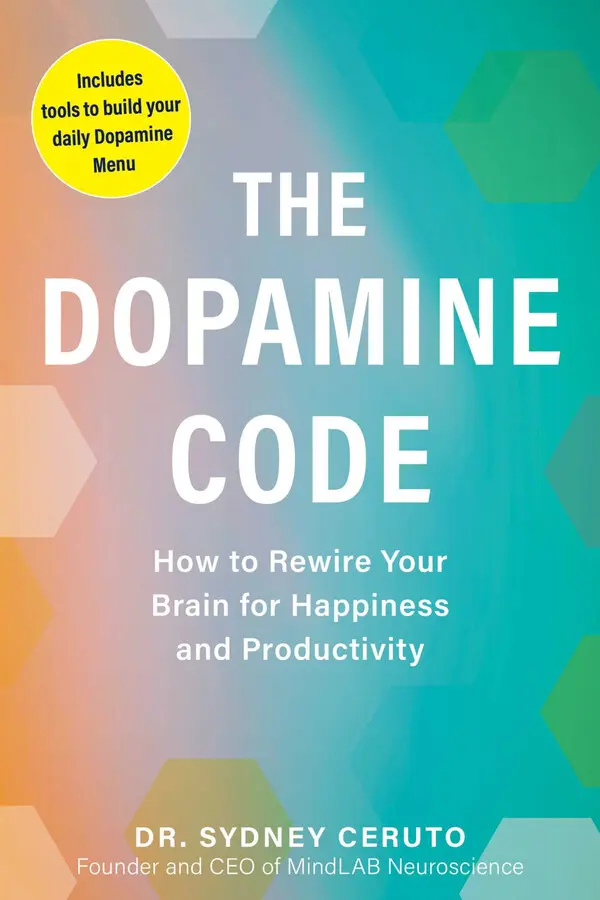
The Dopamine Code

Decode Your Drive

Why Your Brain Rewards the Wrong Things

Your brain's reward system runs every decision, every craving, every crash — and it was never designed for the life you're living. The Dopamine Code is Dr. Ceruto's framework for understanding the architecture behind what drives you, drains you, and keeps you locked in patterns that willpower alone will never fix.

Published by Simon & Schuster, The Dopamine Code is Dr. Ceruto's framework for building your own Dopamine Menu — a personalized system for motivation, focus, and enduring life satisfaction.

Order Now

Ships June 9, 2026

The Dopamine Code by Dr. Sydney Ceruto — Decode Your Drive
Locations

The Intelligence Brief

Neuroscience-backed analysis on how your brain drives what you feel, what you choose, and what you can’t seem to change — direct from Dr. Ceruto.