Key Points
- Westchester's residential separation from Manhattan does not produce neurological recovery. The commute extends cognitive activation rather than interrupting it.
- Professionals who function well at work but feel depleted at home are experiencing degraded mode-switching architecture: the circuits that transition between professional and personal activation have been overridden.
- Real-Time Neuroplasticity™ rebuilds the neural systems governing sustained performance and recovery, producing durable capacity rather than temporary boundary-setting.
- Business owners in Westchester carry cognitive load without structural boundaries, producing a degradation pattern distinct from salaried professionals but equally invisible until it manifests.
- The calm of Westchester often makes the neural cost of sustained professional performance more noticeable, not because the environment is the problem, but because it removes the distractions that previously masked the degradation.
| Marker | Traditional Approach | Neuroscience-Based Approach | Why It Matters |
|---|---|---|---|
| Primary Focus | High-Stakes Performance Consulting | Executive Coaching | Work-Life Balance Programs |
| Target | Neural architecture and recovery | Behavior and accountability | Schedule and boundaries |
| Methodology | Real-Time Neuroplasticity™ | Conversational frameworks | Time management strategies |
| Durability | Durable neural rewiring | Requires ongoing sessions | Requires ongoing discipline |
| Scope | Full cognitive performance profile | Professional behavior only | Scheduling only |
| Speed of Results | Shifts within weeks | Months of consistent effort | Immediate but fragile |
Why Westchester County Professionals Face a Performance Challenge That Geography Cannot Solve
Westchester County draws some of the most accomplished professionals in the New York metropolitan area. Scarsdale, Bronxville, and Larchmont concentrate families where at least one partner, and frequently both, operates at the highest levels of finance, law, medicine, or corporate leadership in Manhattan. The decision to live here is often framed as a quality-of-life choice: excellent schools, leafy residential streets, and the physical separation from the city that should, in theory, provide the reset that sustained professional performance requires. The problem is that theory and neural architecture do not agree.
The Metro-North ride from Scarsdale to Grand Central takes thirty-eight minutes. From Bronxville, thirty-three. From White Plains, forty. These are not recovery windows. They are extensions of the cognitive activation that began at six in the morning and will continue through dinner, bedtime routines, and the email check that happens at eleven at night. The professional who boards the train in Scarsdale after a day of high-stakes decision-making at a Midtown law firm or financial institution carries every unresolved cognitive thread onto that platform. The scenery changes from marble lobbies to suburban platforms. The neural activation does not change at all. By the time the commute has been repeated for years (and for most Westchester professionals, it has been repeated for a decade or more) the architecture governing recovery has been systematically overridden.
Rye, Harrison, and Chappaqua draw a similar professional profile with a slightly different character: more corporate leadership, more C-suite and board-level professionals who may travel nationally or internationally and use Westchester as a residential anchor. The performance challenge here is compounded by the expectation that home should be a sanctuary when the neural systems governing decompression have been degraded by years of sustained professional demand. The executive who walks through the front door in Rye and cannot be present with their family is not choosing work over home. Their brain has lost the capacity to shift between operating modes because the circuits that manage that transition have been chronically overloaded.
The entrepreneurial population in Westchester adds another dimension. White Plains’ commercial district, New Rochelle’s redevelopment district, and Tarrytown’s growing creative-professional community include business owners whose performance demands never had the structural boundaries that employment provides. A business owner in Mamaroneck whose company has grown beyond their original capacity carries every operational, financial, and personnel decision in working memory simultaneously. There is no separation between professional and personal cognitive load because the business does not recognize evenings or weekends. The neural architecture governing sustained decision-making under these conditions degrades in a pattern that is distinct from the salaried executive but equally invisible until it manifests as flattened judgment, narrowed creativity, or diminished capacity for the strategic thinking that growth requires.
Dr. Sydney Ceruto’s Real-Time Neuroplasticity™ approach identifies the specific neural degradation patterns that Westchester’s professional population carries and rebuilds the architecture that sustained performance has compromised. The engagement does not require someone to work less or change their commute. It restructures the brain’s capacity to perform, recover, and sustain quality across the demands that Westchester professionals have chosen. NeuroConcierge™ manages scheduling continuity across the demands of the commute, the workday, and the family obligations that define life in this community.


Dr. Sydney Ceruto, PhD, Neuroscientist & Author, MindLAB Neuroscience
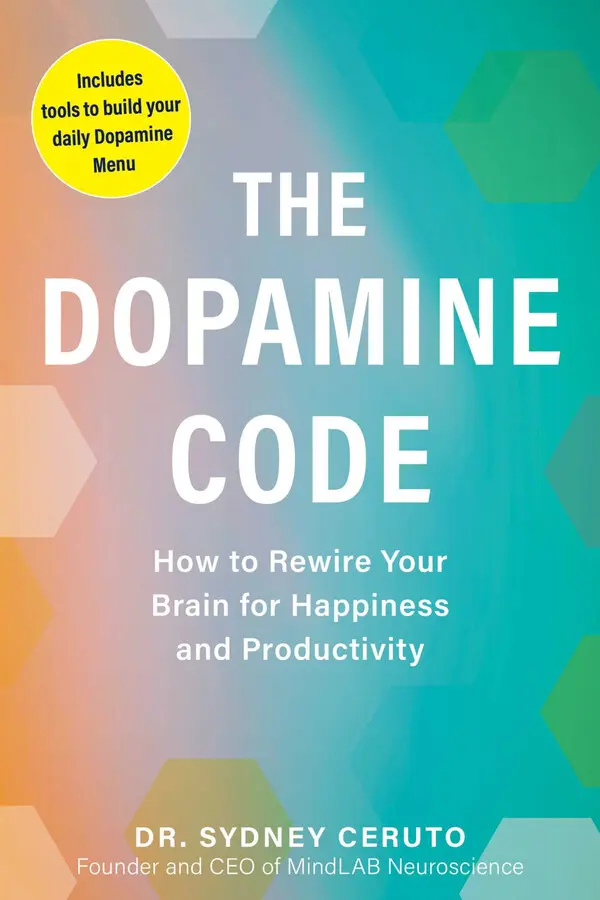
Dr. Ceruto holds a PhD in Behavioral & Cognitive Neuroscience from NYU and Master’s degrees in Clinical Psychology and Business Psychology from Yale University. She lectures at the Wharton Executive Development Program at the University of Pennsylvania and has been an Executive Contributor to the Forbes Coaching Council since 2019. Dr. Ceruto is the author of The Dopamine Code (Simon & Schuster, June 2026). She founded MindLAB Neuroscience in 2000 and has spent over 26 years leading it, pioneering Real-Time Neuroplasticity™, a methodology that durably rewires the neural pathways driving behavior, decisions, and emotional responses.
Frequently Asked Questions About High-Stakes Performance Consulting
What is High-Stakes Performance Consulting?
It is a neuroscience-grounded engagement that identifies the neural circuits degraded by years of sustained professional pressure and rebuilds them using Real-Time Neuroplasticity™. The focus is on the architecture governing decision quality, recovery capacity, and leadership presence.
How does the Westchester-to-Manhattan commute affect neural performance?
The commute extends cognitive activation rather than interrupting it. Unresolved decision threads from the workday travel with you. Over years, the brain loses its capacity to use transit time for neurological recovery, and the architecture governing the shift between professional and personal modes degrades.
I feel fine at work but depleted at home. Is that related?
Directly. When the neural systems governing professional performance have consumed the architecture that personal presence depends on, the result is someone who functions well in their professional role but has no remaining capacity for the relationships and family life they moved to Westchester to prioritize.
Is this relevant for business owners in Westchester?
Particularly. Business owners carry every operational and strategic decision without the structural boundaries that employment provides. The neural architecture governing sustained decision-making under these conditions degrades in patterns that are invisible until judgment quality or creative capacity has already shifted.
How does this differ from executive coaching?
Executive coaching works at the level of behavior and strategy. This engagement operates at the neurological level, addressing the architecture that produces behavior rather than attempting to modify behavior through external frameworks or accountability.
Can this help with the feeling that my career has plateaued?
What feels like a plateau is often degraded neural architecture. The circuits governing ambition, creative problem-solving, and strategic vision narrow under sustained load. Dr. Ceruto maps the specific pattern producing that narrowing and rebuilds the capacity that has been compromised.
How long does the engagement take?
Duration depends on the specific patterns involved. Most professionals notice meaningful shifts in decision clarity and sustained presence within the first several weeks. Full scope is determined during the Strategy Call.
What is the Strategy Call?
A focused conversation with Dr. Ceruto where she assesses the neural patterns driving your current experience and determines whether her methodology is the right fit for what you are navigating.
How does NeuroConcierge™ work for Westchester professionals?
NeuroConcierge™ manages scheduling across the commute, workday, and family obligations that define professional life in Westchester. The logistical layer ensures the engagement fits within the existing rhythm rather than competing with it.
What are Dr. Ceruto's qualifications?
Dr. Ceruto holds a PhD in Behavioral and Cognitive Neuroscience from NYU and two Master's degrees from Yale. She lectures at the Wharton Executive Development Program, has been a Forbes Coaching Council Executive Contributor since 2019, and founded MindLAB Neuroscience in 2000 with over 26 years developing Real-Time Neuroplasticity™.
Also available in: Miami · Wall Street · Midtown Manhattan · Beverly Hills · Lisbon
Take the First Step
One hour with Dr. Sydney Ceruto. You leave knowing which neural pattern is actually driving this, and what to do about it.
Book a Strategy Call
The Dopamine Code
Decode Your Drive
Why Your Brain Rewards the Wrong Things
Your brain's reward system runs every decision, every craving, every crash, and it was never designed for the life you're living. The Dopamine Code is Dr. Ceruto's framework for understanding the architecture behind what drives you, drains you, and keeps you locked in patterns that willpower alone will never fix.
Published by Simon & Schuster, The Dopamine Code is Dr. Ceruto's framework for building your own Dopamine Menu, a personalized system for motivation, focus, and enduring life satisfaction.
Order Now!Available now