





Key Points
- Professional identity in Westchester draws from career, community, and family domains
- Multi-domain identity pressure requires neural-level intervention
- Real-Time Neuroplasticity™ rewires the circuits defining professional self-concept
- Corporate-to-independent transitions require identity recalibration, not just strategy
- The Strategy Call maps your specific neural architecture with Dr. Sydney Ceruto
How Westchester’s Professional Landscape Creates Identity Pressure
Westchester County concentrates one of the highest densities of senior corporate professionals in the Northeast. White Plains hosts regional headquarters for major firms, including the corporate offices of companies that relocated from Manhattan over the past two decades. Professionals who built their identities inside these organizations carry neural patterns calibrated to institutional cultures that are rapidly changing or no longer exist.
The Westchester pattern is distinct. Unlike Manhattan, where professional identity is reinforced primarily by work context, Westchester professionals experience identity pressure from multiple domains simultaneously. The brain integrates signals from career performance, community standing in towns like Scarsdale, Bronxville, and Rye, and family expectations into a single identity construct. When one domain shifts, the entire structure feels unstable.
Purchase and Armonk have become centers for professionals in financial services and technology who chose Westchester for proximity to Manhattan without the daily grind. Many built identities as Manhattan professionals who happen to live in the suburbs. When careers evolve (especially post-pandemic, when remote and hybrid arrangements changed the daily rhythm) the brain struggles to update an identity that was never anchored to Westchester in the first place.
Midcareer professionals across Westchester face a specific version of this challenge. By the time careers plateau in the late forties, the professional identity built during the ascent becomes a ceiling. The prefrontal cortex, your brain’s executive planning center, can clearly model the next chapter, but the threat-detection system resists any move that departs from the known identity. Board seats, advisory roles, and entrepreneurial ventures all require an identity the brain has not yet built.
Tarrytown and the Route 9 stretch have attracted a growing population of professionals transitioning out of large corporate roles into consulting, advisory work, and independent ventures. The skills transfer. The neural identity rarely does without intervention. The brain keeps expecting the infrastructure of a large organization and generates anxiety in its absence.
The Larchmont and Mamaroneck waterfront communities draw professionals in media, publishing, and creative industries who chose Westchester for family reasons while maintaining Manhattan-based careers. The brain built professional identities in creative environments that reward spontaneity, visibility, and cultural currency. The suburban context provides none of those signals, and the identity erodes quietly over time unless the neural patterns are actively recalibrated.
Chappaqua and Bedford draw professionals who reached the highest levels of their fields and now face the question of what comes after peak achievement. The brain’s identity model has no prediction for the phase beyond maximum output. Advisory work, philanthropy, and scaled-back practice all represent genuine professional identity, but the neural model does not recognize them as such without rewiring.

Dr. Ceruto works with Westchester professionals navigating identity transitions driven by career evolution, organizational change, and the intersection of professional and personal demands. Real-Time Neuroplasticity™ rewires the patterns so your professional identity reflects where you are going, not where you have been.

Dr. Sydney Ceruto, PhD, Neuroscientist & Author, MindLAB Neuroscience
Dr. Ceruto holds a PhD in Behavioral & Cognitive Neuroscience from NYU and Master’s degrees in Clinical Psychology and Business Psychology from Yale University. She lectures at the Wharton Executive Development Program at the University of Pennsylvania and has been an Executive Contributor to the Forbes Coaching Council since 2019. Dr. Ceruto is the author of The Dopamine Code (Simon & Schuster, June 2026). She founded MindLAB Neuroscience in 2000 and has spent over 26 years leading it, pioneering Real-Time Neuroplasticity™, a methodology that durably rewires the neural pathways driving behavior, decisions, and emotional responses.
Also available in: Miami · Wall Street · Midtown Manhattan · Beverly Hills · Lisbon
Take the First Step
One hour with Dr. Sydney Ceruto. You leave knowing which neural pattern is actually driving this, and what to do about it.
Book a Strategy Call
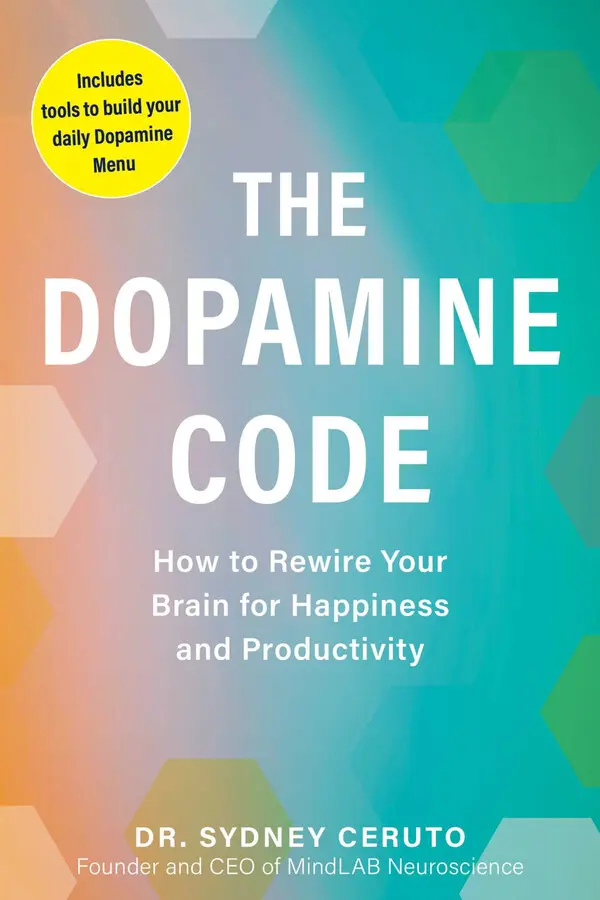
The Dopamine Code
Decode Your Drive
Why Your Brain Rewards the Wrong Things
Your brain's reward system runs every decision, every craving, every crash, and it was never designed for the life you're living. The Dopamine Code is Dr. Ceruto's framework for understanding the architecture behind what drives you, drains you, and keeps you locked in patterns that willpower alone will never fix.
Published by Simon & Schuster, The Dopamine Code is Dr. Ceruto's framework for building your own Dopamine Menu, a personalized system for motivation, focus, and enduring life satisfaction.
Order Now!Available now