







Perfectionism is widely misunderstood as a virtue: the mark of someone who simply cares more about quality. The neuroscience reveals a fundamentally different picture. Perfectionism is a pattern of dysregulated neural computation involving three interdependent systems. An overactive standard-setting circuit generates impossible benchmarks. A hypersensitive error-detection system treats every imperfection as a crisis. And a reward system fails to register satisfactory outcomes as genuinely rewarding.
The Impossible Standard Machine
“Perfectionism is not the mark of someone who cares more about quality. It is a pattern of dysregulated neural computation: an overactive standard-setting circuit generates impossible benchmarks, a hypersensitive error-detection system treats every imperfection as a crisis, and a reward system fails to register satisfactory outcomes as genuinely rewarding.”
The orbitofrontal cortex, outcome-evaluation center, generates predictions about how good a result should be, then compares that prediction against the actual result. In healthy functioning, this system enables adaptive goal-setting. The brain sets a reasonable target, evaluates performance against it, and generates a positive signal when the target is met.
In perfectionism, this expected-value computation becomes chronically inflated. Standards are internally calibrated so high that virtually no real-world output can match them.
The orbitofrontal cortex generates a persistent “disappointment signal” when performance falls short of expectation. It encodes the reward that could have been obtained rather than the reward that was. In perfectionists, this signal is chronically active. Objectively strong performance does not generate the reward signal the brain would normally provide. Satisfaction is structurally blocked at the neural source.
The Error Alarm That Never Resets
The anterior cingulate cortex, error-detection and performance-monitoring hub, is designed to fire briefly following an error, initiate a correction, then reset. In perfectionism, this system is chronically overactive. Research consistently documents an amplified error response in perfectionists, indicating that the anterior cingulate treats each imperfection as a high-stakes event requiring crisis-level neural resources.

The error signal does not stay contained. It radiates outward, triggering cognitive control responses, registering bodily distress, and assigning emotional weight to the mistake. In perfectionism, this network becomes hypersensitive to threat. Errors are not information to be processed but dangers to be feared, avoided, or suppressed.
The Reward System Blindspot
The striatum, core reward-processing structure, encodes the difference between expected and actual outcomes. Dopamine neurons fire when outcomes exceed expectations, remain silent for fully predicted outcomes, and are suppressed when outcomes disappoint.
In perfectionism, the orbitofrontal cortex has set the reference point so high that even strong performance produces a zero or negative dopamine signal. The brain is calibrated to register only “perfect” as rewarding, and since perfect is a moving target, the reward signal never arrives.
The result is a functional inability to experience satisfaction from personal achievement that is specific to performance domains. The perfectionist produces high-quality work, receives no neurochemical reward from it, and must immediately raise the standard or pursue the next challenge to keep the system from feeling chronically under-stimulated.
Perfectionism as Threat Response
The neuroscience distinguishes between two fundamentally different motivational architectures that produce superficially similar behavior. Excellence-seeking is approach-motivated, driven by pursuit of mastery. Maladaptive perfectionism is avoidance-motivated, driven by fear and threat circuit.
Fear of failure fully mediates the relationship between perfectionism and procrastination. Research across tens of thousands of participants confirms that it is not high standards but fear-based perfectionism that drives task avoidance. The brain’s cost-benefit system, when operating under threat, assigns inflated costs to performance while deflating the anticipated reward. The neural arithmetic consistently produces a negative expected value for starting, making inaction the path of least resistance.
The Rising Epidemic
Research tracking college students across the United States, Canada, and the United Kingdom found that all dimensions of perfectionism have linearly increased since 1989. The largest increase has been in socially prescribed perfectionism: belief that others demand perfection. This reflects an intensifying external pressure environment that the brain’s threat-detection system cannot ignore.
Among high-perfectionism lawyers, over sixty percent report elevated stress and half report elevated depression. Among physicians, self-critical perfectionism is the only perfectionism dimension that uniquely predicts both emotional exhaustion and depersonalization burnout.
How Dr. Ceruto Addresses Perfectionism
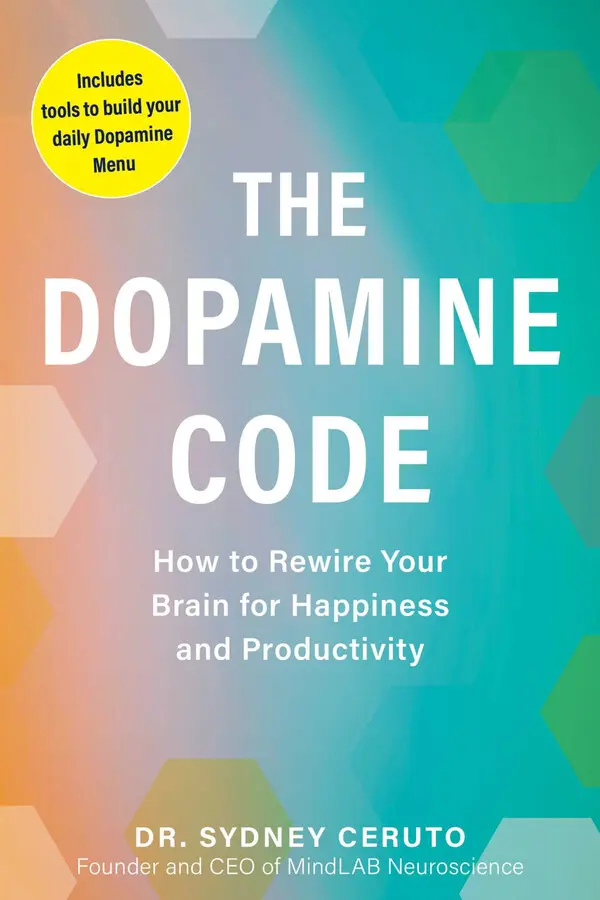
Dr. Ceruto’s approach identifies which component of the perfectionism circuit is dominant: orbitofrontal standard inflation, anterior cingulate error hypersensitivity, reward blockade, or threat-driven motivation. The methodology does not attempt to lower standards through cognitive persuasion, which fails because the standard-setting circuit operates largely below conscious awareness. Instead, it targets the neural systems maintaining the dysfunction.

For standard inflation, the work recalibrates the expected-value computation so that adequate performance generates a genuine positive signal. For error hypersensitivity, the intervention adjusts the error-detection threshold, recalibrating when errors warrant attention versus when the alarm reflects circuit noise.
For reward blockade, the focus shifts to retraining the reward system to register incremental progress as genuinely rewarding. For threat-dominant presentations, the work shifts the motivational foundation from avoidance back toward approach.
For deeper context, explore the dark side of perfectionism in the brain.