Theory of Mind is the brain's capacity to read other minds. Learn the mentalizing network behind it and how to...
Read article : Theory of Mind: A Neuroscientific ExplanationSocial Skills
The mechanics of interpersonal influence. We examine the neural basis of "Theory of Mind," the decoding of non-verbal signals, and protocols to calibrate behavior for rapport and hierarchy navigation.
14 articlesThe Default Setting
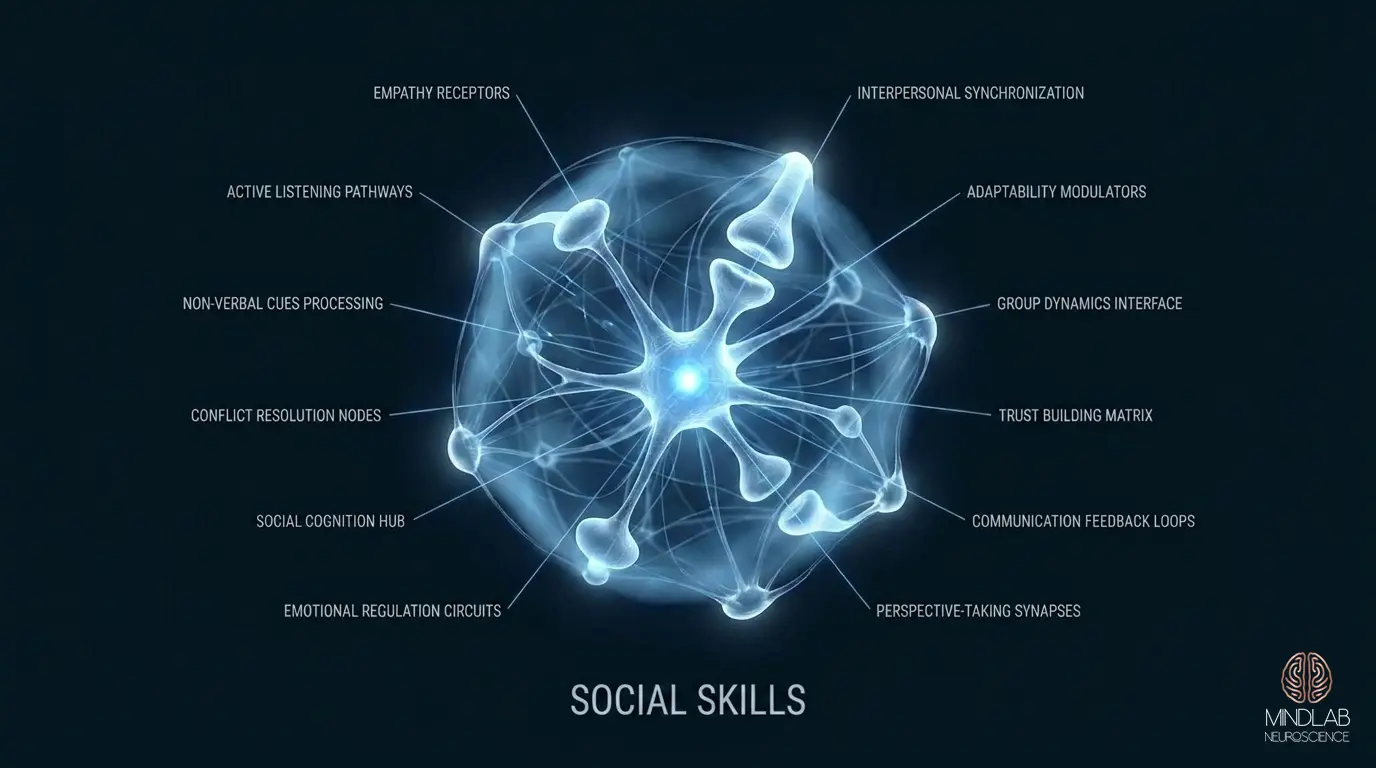
The human brain is socially wired by default. When not engaged in a specific task, the brain reverts to the Default Mode Network (DMN), which largely overlaps with the “social brain.” Evolutionarily, social exclusion was a death sentence, so the brain invests massive metabolic energy into tracking status, allies, and group dynamics. Social skills are not “soft skills”; they are the survival algorithms of a tribal species.
Theory of Mind (ToM)
The core cognitive mechanism behind social competence is Theory of Mind: the ability to attribute mental states—beliefs, intents, desires—to others and understand that they differ from one’s own.
-
The TPJ Hub: This process is centered in the Temporoparietal Junction (TPJ). It acts as a simulator, allowing you to run a mental model of how someone else will react to your words before you speak them.
-
The Prediction Gap: Social awkwardness often stems from a “prediction error” in this system—failing to accurately simulate the other person’s perspective, leading to behavior that feels “out of sync.”
Signal Calibration
Effective social interaction requires high-frequency “calibration”—the continuous adjustment of behavior based on real-time feedback.
-
Salience Detection: The Anterior Insula reads internal bodily cues (gut feelings) while the amygdala scans external faces. High social intelligence is the integration of these two data streams.
-
Synchrony: Rapport is biologically measurable as neural synchrony. By matching tone, tempo, and posture (mirroring), you reduce the other person’s “threat detection” load, signaling that you are “same” (safe) rather than “other” (unpredictable).

Latest Articles
The liking principle works because genuine liking releases oxytocin and opioids that quiet the brain's threat-detection circuitry, making people neurologically...
Read article : Liking Principle Neuroscience: How Your Brain Decides Who to TrustAre you tired of feeling lonely in a world that seems more connected than ever? You're not alone. Millions struggle...
Read article : Lonely? The Incredible Science of ConnectionThere aren’t too many of us out there who enjoy being resented or avoided. The desire to be well-liked and...
Read article : Enhance Your Likability: 11 Neuroscience-Backed Ways to Transform Your Reputation TodayDelve into the brain's secrets behind social anxiety. Witness how neuroscience lights the way to a life unburdened by overwhelming...
Read article : Social Anxiety Disorder Demystified: How Neuroscience Reveals the Path to FreedomEmotional intelligence is not fixed. It is not a trait you were born with or a capacity that stops developing...
Read article : Emotional Intelligence (EQ): The Neuroscience-Based Blueprint to Optimize Life and RelationshipsLearn how to 'Communicate Fearlessly' as we delve into the benefits of life coaching for communication anxiety. This post unravels...
Read article : Optimizing Communication: Addressing Anxiety and Resolving Social Interaction Fears through Life CoachingIn today's culture, meeting someone can feel like an uphill battle. With the advent of social media and dating apps,...
Read article : Why Can’t I Meet Anyone? The Neuroscience Behind Social ConnectionReading other people accurately is a trainable neural skill run by the brain's social-cognition network. Develop it for stronger leadership...
Read article : Addressing Emotional Intelligence to Effectively Read OthersProjection is a common bias that we all fall victim to at times. It’s the opposite of empathy – it’s...
Read article : Projection vs Empathy: Understanding the Psychological ContrastIn psychology, mind-reading is when we try to infer what is going on in someone’s mind without asking them to...
Read article : The Mind Reading Mirage: Common Mistakes in Understanding OthersYour brain forms a first impression in milliseconds, before conscious thought. A neuroscientist explains the prediction system behind it and...
Read article : Mastering First Impressions: The Psychology and Power of What Your Brain Decides Before You Speak