Social Anxiety on Wall Street

Finance's explicit hierarchy makes every client meeting and deal dinner a social evaluation event. The threat circuit running that assessment has a structural solution.

Walking into a room and feeling the weight of every pair of eyes. Replaying a conversation from three days ago, still finding the sentence that sounded wrong. Declining the invitation because the relief of not going is greater than whatever might happen if you did. These are not personality quirks or shyness. They are a specific neural pattern — one in which the brain has been trained to read other people's judgment as a threat equivalent to physical danger.

At MindLAB Neuroscience, I work with the threat-detection circuits that drive social anxiety patterns at their source. Not the surface behaviors, not the avoidance strategies, not the conversation scripts — the underlying neural architecture that makes social evaluation register as danger in the first place.

Book a Strategy Call

Why Social Situations Feel Dangerous

Social anxiety patterns are not a version of general anxiety. They are neurologically specific. The brain’s threat-detection system — the amygdala — has distinct response pathways for physical threat and social threat, and in people experiencing social anxiety patterns, the social pathway is running at a calibration that treats other people’s attention, evaluation, and potential judgment as genuine danger signals.

This is not metaphor. Neuroimaging research consistently shows heightened amygdala activation in response to social evaluation cues — a face that might be disapproving, an interaction that might have gone wrong, an environment where being assessed is possible. The brain’s threat signal fires before conscious thought engages. The reading of the room, the inventory of who noticed, the post-conversation replay — none of that is a choice. It is threat-detection doing its job with the wrong calibration.

The question worth asking is not why you are anxious in social situations. The question is what, specifically, the threat-detection architecture is doing — and how it can be updated to match the environment you are actually in.

The Social Threat Signal

Human beings are profoundly social. Belonging to a group was, for most of human history, a survival condition. Exclusion from the group meant exposure to threats that could not be managed alone. The brain built and preserved a threat-detection pathway specifically for social evaluation because being judged negatively — being found inadequate, disloyal, or unworthy — carried real survival consequences in ancestral environments.

What has changed is the environment. Modern social evaluation rarely carries survival stakes. The colleague who noticed you stumble over a sentence in a meeting is not a threat to your safety. The networking event where you do not know anyone does not endanger your physical survival. But the amygdala’s threat pathway does not update automatically when environmental stakes change. It runs the calibration it was built with — or, more precisely, the calibration it was shaped into through experience — regardless of whether the threat is proportionate.

The result is a system that fires a full threat response to social cues that do not warrant it. Heart rate elevates before a presentation. The mind goes blank at a critical moment because the prefrontal cortex — the part of the brain responsible for complex social behavior and language retrieval — loses access to its full capacity when the amygdala’s alarm is running loud. The approach behavior that would allow for genuine social connection gets suppressed, because the threat signal is telling the brain to protect, not engage.

Approach Suppression: Why Avoidance Feels Right

The prefrontal cortex has a specific function in social behavior: it modulates approach and withdrawal, weighing the potential rewards of social engagement against the perceived costs. Under normal threat-detection calibration, the prefrontal evaluation comes online and can determine that the situation is safe enough to approach. In social anxiety patterns, the amygdala fires fast enough and loud enough that the prefrontal evaluation is compromised before it can complete.

This is the mechanism behind avoidance. The approach behavior — walking into the room, starting the conversation, staying at the event — requires a prefrontal override of the threat signal. When that override is consistently outpaced by the amygdala, avoidance wins. And avoidance is immediately rewarded: the anxiety drops, the relief arrives, the nervous system settles. The brain encodes that reward. The next avoidance is easier to choose. The pattern deepens.

This is why willpower does not solve social anxiety patterns. Every act of forcing yourself into situations without changing the underlying calibration is an act of running the full threat response and enduring it. That is exposure, not change. Meaningful change requires working at the level of the threat-detection circuit itself — recalibrating the amygdala’s response threshold for social cues and rebuilding the prefrontal capacity to complete its evaluation before the avoidance response locks in.

The Post-Event Replay

One of the most distinctive features of social anxiety patterns is what happens after social situations end. The event is over. The stakes are resolved. The review begins anyway — scanning the interaction for evidence of negative evaluation, locating the moment that sounded wrong, rehearsing what should have been said instead.

This replay is not useful self-assessment. It is the threat-detection system completing a cycle it could not complete in real time. During the actual social situation, the threat response was running too fast for accurate evaluation. Afterward, the system is still trying to determine: was I judged? Did I fail the evaluation? Is the threat resolved? The replay is a threat-assessment loop, not a quality-control mechanism. And it does not resolve the question it is asking — which is why it can run for hours or days without arriving at a conclusion that brings relief.

When the threat-detection circuit is recalibrated, this loop diminishes — not because the memory of the event disappears, but because the circuit is no longer treating resolved social situations as ongoing threat events requiring continued monitoring.

What Changes When the Circuit Changes

The changes people describe after working with social anxiety patterns at the neural level are often surprising in their specificity. The room stops feeling like a test. The conversation gets more interesting and less monitored — the internal observer that was tracking every word and facial response quiets enough to allow genuine attention to the other person. The post-event replay shortens. The decision to accept the invitation becomes available where it wasn’t before — not because the situation becomes risk-free, but because the threat signal is no longer the loudest input in the decision.

Social comfort is not the same as social confidence. Confidence is a presentation. Comfort is a state. The goal of this work is not to make you perform ease you do not feel. It is to build the neurological conditions under which ease is actually available — where the room is information rather than threat, and social engagement is a choice you can make rather than a gauntlet you must survive.

The Work

My approach begins by mapping the specific social threat signals that are most active for you — the contexts, the relationship types, the evaluation stakes where the amygdala fires hardest. The threat-detection calibration is not uniform. It was shaped by specific experiences, specific environments, and specific relationships where social judgment carried real consequences. Understanding that architecture is the first step toward changing it.

From there, the work is systematic and neurologically grounded. We rebuild the prefrontal capacity to complete its evaluation of social situations before the avoidance response locks in. We recalibrate the amygdala’s threshold for what counts as a threat signal. And we change the reward signal that has been reinforcing avoidance — so that approach behavior, rather than withdrawal, becomes the response the brain is organized around.

This is not fast work. A threat-detection circuit calibrated by years of experience does not recalibrate in weeks. But the change is structural — which means it holds in the situations where the old pattern used to run hardest.

Mahogany desk with crystal brain sculpture and MindLAB journal in warm lamp light surrounded by leather-bound volumes in institutional Wall Street study

Why Social Anxiety Matters in Wall Street

Social Anxiety on Wall Street: Performance Under a Hierarchy That Watches

Few professional environments are designed as precisely as financial services to make social evaluation continuous, high-stakes, and structurally inescapable. The hierarchy is explicit. The audience for your performance is always present — on the floor, in the conference room, at the client dinner, in the deal meeting where three managing directors are watching how you handle yourself when it matters. For the social anxiety circuit, this is not a workday. It is a sustained evaluation event with career consequences attached.

The return-to-office mandates that swept through major financial institutions in 2024 and 2025 removed the structural relief that remote work had quietly provided. Physical distance from the evaluation audience turns out to matter neurologically. The forty feet between your desk and the managing director’s door is an active input to the threat-detection circuit — not a large distance, but a continuous one. The amygdala running a social-evaluation alarm does not stand down when the source of evaluation is visible all day.

Client Meetings and Deal Dinners

The social performance required for client-facing work in finance is specific and demanding. A client meeting is not just a professional task — it is a social evaluation event with financial stakes attached. The client is assessing you personally: do I trust this person, do I believe they are competent, do I want to be in business with them. For the social anxiety brain, this evaluation framing activates the threat circuit before the meeting starts. The preparation that should be cognitive becomes consumed by the pre-event threat loop.

Deal dinners carry a different texture. The unstructured social conversation — over drinks, over a meal, in the hour when the business topic has been tabled and the relationship is supposed to develop organically — is precisely the terrain where social anxiety patterns run hardest. There is no agenda to follow. The evaluation is ambient. The performance metric is likability and ease, which are exactly the things the threat circuit makes inaccessible. The managing director who handles client dinners effortlessly is not more socially skilled. Their amygdala is not reading the table as a threat evaluation.

Hierarchical Visibility

Financial services has one of the most legible status hierarchies of any industry. Analyst, associate, VP, director, MD — the ranks are known, the transitions are tracked, and the social dynamics of any room are shaped by where everyone sits in that sequence. For the social anxiety brain, explicit hierarchy is an explicit evaluation structure: there are people in this room whose opinion of me directly affects what happens next in my career.

This is the circumstance where social anxiety patterns and performance anxiety overlap. The fear is not merely social — it is social in a context where social evaluation has professional consequences. The amygdala does not run separate threat assessments for social and professional risk. It runs one. When the stakes are professional and the medium is social, the threat signal compounds.

The Year-End Visibility Problem

Year-end in financial services is a period of concentrated social performance anxiety for a specific reason: it is the moment when the social currency accumulated across the year is counted. Who knows you, who says good things about you, who advocates for you in the room where the number is decided — these are all social-relational outcomes that were built or failed to build across the previous twelve months. For someone whose social anxiety patterns limited their visibility, their networking, their capacity to be present and at ease in the rooms that matter, year-end is when the cost of the avoidance becomes numerically legible.

If social situations in financial services — the client meetings, the deal dinners, the floor dynamics, the networking that advancement actually requires — are costing you more than they should, a Strategy Call is a one-hour phone conversation about what the pattern looks like and what working with it at the neural level involves. $250. No commitment beyond that.

Dr. Sydney Ceruto, PhD — Founder, MindLAB Neuroscience

Dr. Sydney Ceruto, PhD — Founder & CEO, MindLAB Neuroscience

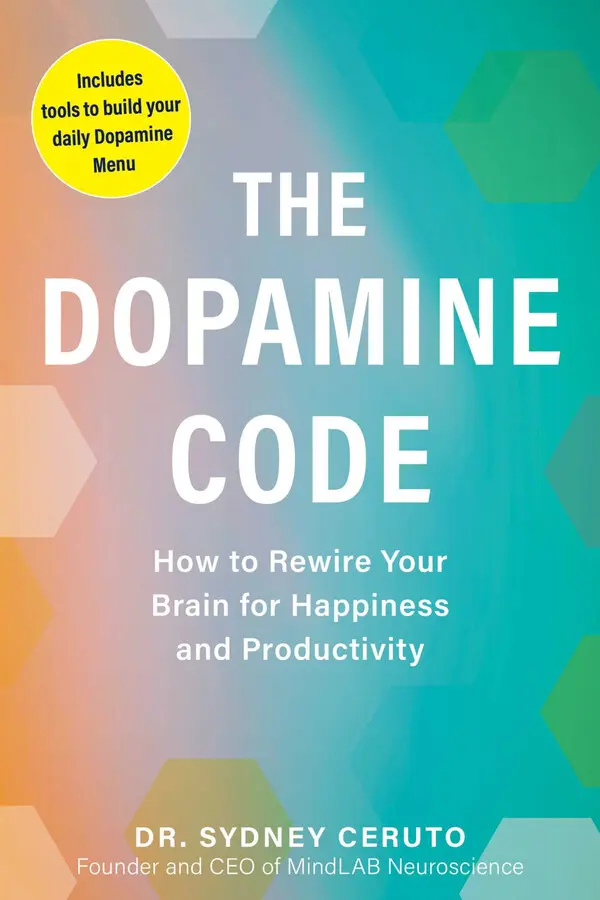
Dr. Ceruto holds a PhD in Behavioral & Cognitive Neuroscience from NYU and two Master’s degrees from Yale University. She lectures at the Wharton Executive Development Program at the University of Pennsylvania and has been an Executive Contributor to the Forbes Coaching Council since 2019. Dr. Ceruto is the author of The Dopamine Code (Simon & Schuster, June 2026). She founded MindLAB Neuroscience in 2000 and has spent over 26 years pioneering Real-Time Neuroplasticity™ — a methodology that permanently rewires the neural pathways driving behavior, decisions, and emotional responses.

References

Cremers, H. R., Demenescu, L. R., Aleman, A., Renken, R., van Tol, M. J., van der Wee, N. J., Veltman, D. J., & Roelofs, K. (2010). Neuroticism modulates amygdala-prefrontal connectivity in response to negative emotional facial expressions. *NeuroImage*, 49(1), 963–970. https://doi.org/10.1016/j.neuroimage.2009.08.023

Etkin, A., & Wager, T. D. (2007). Functional neuroimaging of anxiety: A meta-analysis of emotional processing in PTSD, social anxiety, and specific phobia. *American Journal of Psychiatry*, 164(10), 1476–1488. https://doi.org/10.1176/appi.ajp.2007.07030504

Lieberman, M. D., Eisenberger, N. I., Crockett, M. J., Tom, S. M., Pfeifer, J. H., & Way, B. M. (2007). Putting feelings into words: Affect labeling disrupts amygdala activity in response to affective stimuli. *Psychological Science*, 18(5), 421–428. https://doi.org/10.1111/j.1467-9280.2007.01916.x

Shin, L. M., & Liberzon, I. (2010). The neurocircuitry of fear, stress, and anxiety disorders. *Neuropsychopharmacology*, 35(1), 169–191. https://doi.org/10.1038/npp.2009.83

Success Stories

“I'd relocated internationally before, but this time my nervous system wouldn't settle. Everything unfamiliar registered as danger — new people, new routines, even the sound of a different language outside my window. Pushing through it only deepened the pattern. Dr. Ceruto identified that my nervous system was coding unfamiliarity itself as threat and restructured the response at its source. The world stopped feeling hostile. I stopped bracing.”

Katarina L. — Gallerist Zurich, CH

“Four hours a night for over two years — that was my ceiling. Supplements, sleep protocols, medication — nothing touched it because nothing addressed why my brain wouldn't shut down. Dr. Ceruto identified the cortisol loop that was keeping my nervous system locked in a hypervigilant state and dismantled it. I sleep now. Not because I learned tricks — because the pattern driving the insomnia no longer exists.”

Adrian M. — Hedge Fund Manager New York, NY

“My communication was damaging every relationship in my professional life and I couldn't see it. Dr. Ceruto's neuroscience-based approach didn't just improve how I communicate — it rewired the stress response that was driving the pattern in the first place. The people around me noticed the change before I fully understood what had happened. That tells you everything.”

Bob H. — Managing Partner London, UK

“The moment two priorities competed for bandwidth, my attention collapsed — and I'd convinced myself my brain was fundamentally broken. Dr. Ceruto identified the specific attentional pattern that was causing the collapse and restructured it. My prefrontal cortex wasn't broken. It was misfiring under competing demands. Once that pattern changed, everything I was trying to hold together stopped requiring so much effort.”

Rachel M. — Clinical Researcher Boston, MA

“My kids had been sleeping through the night for three years, but my brain hadn't caught up. I was still waking every ninety minutes like clockwork — no amount of sleep hygiene or supplements touched it. Dr. Ceruto identified the hypervigilance loop that had hardwired itself during those early years and dismantled it at the source. My brain finally learned the threat was over. I sleep through the night now without effort.”

Catherine L. — Board Director Greenwich, CT

“Three months. That's how long it took to go from debilitating panic to leading with clarity. Years of conventional approaches hadn't moved the needle — Dr. Ceruto identified the root neural pattern and eliminated it. She didn't teach me to manage the panic. She made it unnecessary. I didn't know that was possible.”

Ella E. — Media Executive Manhattan, NY

“Endocrinologists, sleep clinics, functional medicine — every specialist cleared me, and no one could tell me why I was exhausted every single day. Dr. Ceruto identified that my HPA axis was locked in a low-grade stress activation I couldn't feel consciously. Once that pattern was disrupted at the neurological level, my energy came back in a way that felt completely foreign. I'd forgotten what it was like to not be tired.”

Danielle K. — Luxury Hospitality Beverly Hills, CA

“Anxiety and depression had been running my life for years. Dr. Ceruto helped me see them not as permanent conditions but as neural patterns with identifiable roots. Once I understood the architecture, everything changed.”

Emily M. — Physician Portland, OR

“Willpower, accountability systems, cutting up cards — none of it worked because none of it addressed what was actually driving the behavior. Dr. Ceruto identified the reward prediction error that had been running my purchasing decisions for over a decade. Once the loop was visible, it lost its power. The compulsion didn't fade — it stopped.”

Priya N. — Fashion Executive New York, NY

Frequently Asked Questions About Social Anxiety

Is what I experience really social anxiety, or am I just introverted?

Introversion is a preference — a nervous system that finds social interaction more draining than stimulating and needs solitude to recover. Social anxiety patterns are something different: an active threat response to social evaluation, producing avoidance not because you prefer solitude but because the anticipated discomfort of evaluation feels dangerous enough to escape. The distinction that matters is whether the pattern is limiting your life — whether there are rooms you want to be in but cannot make yourself enter, relationships you want to build but cannot initiate, situations you avoid at a cost you are aware of. That is not introversion. That is a threat circuit running with the wrong calibration.

Why does the anxiety spike most in the moments when I most need to be at ease?

Because the stakes of the evaluation are highest in exactly those moments — and the amygdala's threat-detection system scales its response to perceived stakes. The client presentation, the first dinner with someone you want to impress, the networking event where the right conversation could change what happens next: these are the situations where social evaluation carries the most consequence, which is precisely the information that drives the threat signal higher. The prefrontal cortex — the part of the brain responsible for social cognition and language — loses access to its full capacity when the amygdala's alarm is running loudest. The blank mind, the flushed face, the voice that catches: these are symptoms of a threat response at maximum activation in the moment of maximum need.

I replay social interactions for days afterward. Is that part of the same pattern?

Yes. The post-event replay is the threat-detection system attempting to complete an evaluation cycle it could not resolve in real time. During the social situation, the threat signal was running too fast for accurate assessment. Afterward, the circuit is still running the question: was I judged negatively? Did the evaluation fail? Is the threat resolved? The replay is not useful self-assessment — it is a threat-assessment loop searching for a resolution it cannot produce, because the question it is asking cannot be answered by reviewing the evidence one more time. When the threat circuit is recalibrated, this loop does not disappear immediately, but it shortens significantly. The resolved situation stops being processed as an ongoing threat event.

I know intellectually that the situation is not dangerous. Why doesn't knowing that help?

Because the threat response fires before intellectual evaluation engages. The amygdala's alarm pathway is faster than conscious thought — by design. In an environment where threats were real, you needed the alarm to fire before you had time to think about it. What this means for social anxiety patterns is that knowing the situation is safe is not the same as the threat circuit registering it as safe. The knowledge operates at the level of the prefrontal cortex, which is downstream of the amygdala. The alarm fires, the body responds, and then the prefrontal evaluation arrives to find that the response is already running. Changing this requires working at the level of the circuit itself, not adding more knowledge to the deliberate-thought layer that is already being outpaced.

Why does avoidance feel so right even though I know it makes things worse?

Because avoidance is immediately rewarded. When you decline the invitation or leave the event early, the anxiety drops. The threat signal resolves. The nervous system settles. The brain registers that outcome as relief, and relief is a reward signal. The circuit that produced the avoidance behavior gets reinforced. The next avoidance is a little easier to choose. Over time, the avoidance pattern deepens not because you lack willpower but because the brain has been consistently taught that avoidance produces relief and approach produces threat activation. Changing this requires changing the reward signal, not exerting more force against a circuit that has been reinforced thousands of times.

How is this different from social skills training or exposure therapy?

Social skills training assumes the problem is a skill deficit. Social anxiety patterns are not usually a skill problem — most people experiencing them know perfectly well how to have a conversation. The problem is that the conversation triggers a threat response that compromises access to the skills they have. Exposure approaches assume that repeated confrontation with the feared situation will reduce the response over time. Sometimes they are right. But exposure without changing the underlying calibration is systematic endurance of a threat response — not recalibration of the circuit that produces it. My work addresses the threat-detection architecture directly: the amygdala's calibration threshold, the prefrontal capacity to complete its evaluation, and the reward signals that have been maintaining the avoidance pattern.

Is this connected to perfectionism or fear of making mistakes in public?

Often, yes. The link is in the evaluation threat. Perfectionism in social contexts is frequently the threat-detection circuit's strategy for avoiding negative evaluation: if I perform without error, I give the evaluation audience no material to judge me on. The social anxiety and perfectionism patterns share the same root — the amygdala reading social judgment as danger and organizing behavior around avoiding it. Perfectionism is an approach strategy; avoidance is a withdrawal strategy. Both are attempts to manage the same threat signal. The work addresses the threat signal, not just the strategy the circuit has chosen to manage it.

How does the Strategy Call work?

The Strategy Call is a one-hour phone conversation — not a session and not a consultation, but a precise, unhurried conversation about what you are navigating, how your specific social anxiety patterns are structured, and whether my approach is the right fit for what you need. The fee is $250. Investment details for the work itself are discussed during the call.

Can social anxiety patterns change if they have been there my whole life?

Yes. The fact that the pattern has been present for a long time means the circuit is well-established — which affects the timeline of change, not the capacity for it. Neural circuits are not fixed structures. They change through experience, and they can be changed deliberately when the work is precise enough to reach them at the level where they actually operate. What tends to be true about long-standing patterns is that surface-level approaches have typically been tried and have not produced durable change — because they addressed the behavior without reaching the circuit. Work that reaches the circuit can produce change that holds under the conditions where the old pattern used to run hardest.

What if social anxiety is only a problem in certain situations — work events but not personal ones, or the reverse?

That specificity is useful information, not a complication. The social threat signal is not uniform across situations — it was calibrated by specific experiences in specific contexts, and it runs harder in situations that share the relevant features with those experiences. The pattern being situation-specific does not mean it is less real or less neurological. It means the threat-detection architecture is precise about what it reads as danger. Understanding that precision is part of how the work is structured — mapping the specific contexts where the circuit fires, the specific evaluation stakes that activate the alarm, and the specific reward history that has been maintaining the avoidance. That precision makes the work more efficient, not more complicated.

Also available in: Miami · Midtown Manhattan · Beverly Hills · Lisbon

Take the First Step

The Strategy Call is a focused conversation with Dr. Ceruto that maps the specific neural mechanisms driving your concerns and determines the right path forward.

Book a Strategy Call
MindLAB Neuroscience consultation room
Locations

The Intelligence Brief

Neuroscience-backed analysis on how your brain drives what you feel, what you choose, and what you can’t seem to change — direct from Dr. Ceruto.