Key Takeaways
- Emotional intelligence is a neural architecture, the prefrontal-amygdala regulatory circuit, not interpersonal competencies from workshops.
- The prefrontal cortex and amygdala signal bidirectionally; connectivity strength predicts capacity for measured emotional response.
- Chronic stress degrades prefrontal-amygdala calibration: catecholamines raise amygdala reactivity while impairing prefrontal regulation.
- Standard emotional intelligence training teaches behaviors without restructuring the circuit; they collapse under pressure.
- The EQ Architecture Protocol™ targets emotional signal resolution, regulatory pathway strengthening, and social-emotional calibration.
Every executive coaching firm, leadership development program, and corporate training department teaches emotional intelligence as if it were a behavioral repertoire, a set of competencies you acquire through practice and repetition. Listen more carefully. Pause before you react. Consider the other person’s perspective. The assumption behind this entire industry is that emotional intelligence is something you do, and that doing it repeatedly eventually makes you someone who does it naturally, a premise reexamined in the neuroscience of emotional intelligence.
That assumption is wrong. And it explains why emotional intelligence training produces so little durable change in the people who need it most.
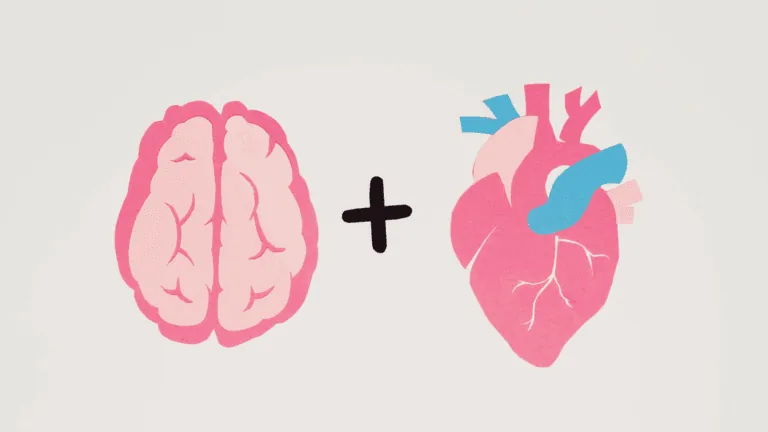
Emotional intelligence is not a behavioral repertoire. It is a neural architecture. The behaviors people associate with high EQ, measured responses, accurate empathy, composure under pressure, the ability to separate what you feel from what the situation requires, are outputs of the prefrontal-amygdala circuit operating at high calibration. When this circuit functions well, those behaviors emerge naturally. When this circuit is poorly calibrated, no amount of behavioral training produces them reliably, because the architecture generating the response has not changed.
The EQ Architecture Protocol™ is the neuroscience framework I developed to address this gap. It does not train emotional intelligence behaviors. It restructures the prefrontal-amygdala regulatory circuit that generates them, producing EQ that is architectural rather than performed, and that persists under the exact conditions where trained behaviors fail.
Standard emotional intelligence training teaches behaviors without rebuilding the circuit that produces them, which is why trained responses collapse under pressure exactly when they are needed most.
The Neural Basis of Emotional Intelligence
The prefrontal cortex and the amygdala are connected through bidirectional neural pathways that form the core regulatory circuit of emotional response. The amygdala detects emotionally salient stimuli, threat, opportunity, social signals, environmental changes, and generates rapid activation patterns that prepare the organism for response. The prefrontal cortex receives these signals, evaluates them against stored contextual information, and generates modulatory feedback that adjusts the intensity, duration, and behavioral expression of the emotional response.
Research on the cognitive control of emotion has demonstrated that this regulatory process depends on interactions between prefrontal and cingulate regions responsible for cognitive control and subcortical systems including the amygdala and insula that drive emotional responding. The strength of this prefrontal-amygdala connectivity is not a fixed trait. It varies across individuals, fluctuates with physiological state, and can be deliberately modified through targeted intervention.
In individuals with well-calibrated prefrontal-amygdala circuits, the regulatory process operates with both speed and precision. The amygdala generates an emotional signal. The prefrontal cortex receives it, evaluates the triggering context, accesses relevant memory and social knowledge, and produces a regulatory response, all within the temporal window between stimulus and behavioral output. The person experiences the emotion fully. They are not suppressing it. They are processing it through a regulatory pathway that adds contextual evaluation before emotion becomes action.
The result is a response that is proportional to the situation, appropriate to the social context, and strategically effective. This is what people observe and label as emotional intelligence. But they are observing the output. The architecture producing it is the prefrontal-amygdala circuit operating at sufficient calibration to perform contextual regulation in real time.
What Happens When the Circuit Fails
When the prefrontal-amygdala circuit is poorly calibrated, which is the more common condition, particularly under chronic stress or after developmental disruption, the amygdala’s emotional signals bypass or overwhelm prefrontal regulation. The person reacts before they process. The emotion dictates the response. The temporal window between stimulus and action collapses, and the contextual evaluation that characterizes measured emotional response does not occur.
This produces the behaviors people associate with low emotional intelligence: disproportionate reactions, missed social cues, emotional contagion without regulation, and the inability to separate what they feel from what the situation requires. The critical insight is that these are not character failures. They are circuit failures. The person’s prefrontal cortex is not performing the regulatory function that would produce a calibrated response, not because they lack the intention to regulate, but because the pathway connecting regulation to emotional activation is insufficient for the task.
Neurobiological research has demonstrated precisely how this degradation occurs. Chronic stress activates neurochemical pathways that simultaneously strengthen amygdala function and impair prefrontal regulatory capacity. High levels of catecholamines, noradrenaline and dopamine released during stress responses, enhance amygdala activation and fear conditioning while weakening prefrontal network connectivity. The result is a neural environment in which the amygdala operates with increased sensitivity and the prefrontal cortex operates with decreased regulatory power.
This creates what researchers have described as a vicious cycle: stress impairs the prefrontal circuits responsible for regulating the stress response itself, which allows stress activation to escalate unchecked, which further degrades prefrontal function. Under sustained stress, the brain shifts from reflective to reflexive control of behavior, from prefrontal-mediated contextual evaluation to amygdala-driven reactive responding.
The structural consequences of this pattern extend beyond temporary functional impairment. Chronic stress produces measurable remodeling of both brain regions, atrophy of neurons in the prefrontal cortex with simultaneous hypertrophy of neurons in the amygdala. The brain physically restructures itself in a direction that favors reactivity over regulation. This is not a metaphor. It is a measurable architectural change that explains why patterns of emotional reactivity become increasingly entrenched over time and why behavioral interventions alone cannot reverse them.
Why Standard EQ Training Fails Under Pressure
Standard emotional intelligence training operates on an implicit assumption: that the behaviors associated with high EQ can be taught directly and that practicing them produces durable change. The training teaches people to pause before reacting, to label their emotions accurately, to listen actively, to consider others’ perspectives before responding.
These are legitimate descriptions of what emotionally intelligent behavior looks like. The problem is that they describe the outputs of a well-calibrated prefrontal-amygdala circuit, not the inputs required to build one. Teaching someone the behavioral outputs of emotional intelligence without restructuring the circuit that generates those outputs is like teaching someone the answers to an exam without building the knowledge that produces them. In controlled conditions, low stress, adequate cognitive resources, no time pressure, the learned behaviors can be performed. Under examination conditions, they collapse.
This is precisely what happens with standard EQ training in professional environments. In calm, low-stakes settings, the trained individual demonstrates improved emotional regulation. They pause. They listen. They respond with apparent empathy. But under stress, when a negotiation becomes adversarial, when a team member challenges their authority, when a deadline creates sustained cognitive and emotional pressure, the trained behaviors vanish and the underlying circuit takes over.
This is not a failure of effort or commitment. It is a neurological inevitability. The prefrontal cortex, which mediates the conscious application of learned behavioral strategies, is precisely the brain region that stress degrades. The amygdala, which drives the reactive responses those strategies are designed to override, is precisely the region that stress strengthens. Under sufficient pressure, the regulatory circuit defaults to its baseline architecture, and that architecture determines the response, regardless of what behavioral strategies have been trained on top of it.
The comprehensive review of emotion regulation neuroscience has established that the brain employs both explicit and implicit regulatory processes. Explicit regulation, the conscious, effortful application of strategies like cognitive reappraisal, depends on lateral prefrontal and parietal cortical resources that are vulnerable to stress-induced degradation. Implicit regulation, which operates automatically without conscious effort, depends on ventral prefrontal and anterior cingulate circuits that require architectural development rather than behavioral training to function effectively. Standard EQ training addresses only explicit regulation. The EQ Architecture Protocol™ targets both.
The Three Dimensions of the EQ Architecture Protocol™
The Protocol strengthens the prefrontal-amygdala circuit across three measurable dimensions, each targeting a distinct neural mechanism that contributes to emotional intelligence. These are not abstract conceptual categories. They are specific, quantifiable aspects of circuit function that can be assessed at baseline, targeted through intervention, and measured for change.
Emotional Signal Resolution
The amygdala produces emotional signals in response to environmental stimuli, rapid activation patterns that encode the emotional significance of what the organism has encountered. In a well-calibrated system, these signals are differentiated: distinct emotional states produce distinguishable activation patterns, with sufficient resolution for the prefrontal cortex to identify what the emotion is, what triggered it, and what category of response it warrants.
In a poorly calibrated system, emotional signals are coarse. Multiple distinct emotional states produce overlapping or nearly identical amygdala activation patterns, reducing the prefrontal cortex’s ability to distinguish and process them accurately. Anger and anxiety generate similar signals. Disappointment and rejection register as the same undifferentiated negative activation. Frustration and grief blur together. The prefrontal cortex receives data it cannot resolve into distinct emotional categories, which degrades every downstream regulatory process that depends on accurate emotional identification.
The Protocol trains emotional signal differentiation, systematically improving the resolution of amygdala output so the prefrontal cortex receives clearer, more distinct emotional data. This involves controlled exposure to conditions that elicit specific emotional states, progressive discrimination training that teaches the neural system to generate increasingly distinct signals for increasingly similar emotional states, and feedback mechanisms that reinforce accurate differentiation. As signal resolution improves, the entire regulatory cascade becomes more precise, because the prefrontal cortex is working with higher-quality data from its primary emotional input.
Regulatory Pathway Strengthening
The connection between the amygdala and the prefrontal cortex is bidirectional. The amygdala sends emotional signals upward through ascending pathways, and the prefrontal cortex sends regulatory signals downward through descending pathways. In individuals with high emotional intelligence, this descending regulatory pathway is strong: the prefrontal cortex can modulate the amygdala’s activation intensity, extend the processing time between stimulus and response, and integrate contextual information into the emotional response before behavioral output occurs.
In individuals with low emotional intelligence, this pathway is weak, slow, or easily overwhelmed. The ascending emotional signal reaches behavioral expression before the descending regulatory signal can intervene. The person acts on the raw emotional impulse rather than on the contextually modulated response that a stronger regulatory pathway would have produced.
The autonomic nervous system provides the physiological foundation upon which this regulatory capacity operates. Research on polyvagal theory has demonstrated that vagal tone, the capacity of the vagus nerve to regulate cardiac function and autonomic state, is directly linked to the capacity for emotional regulation and adaptive social behavior. When the autonomic nervous system is dysregulated, the physiological substrate that supports prefrontal-amygdala coordination is compromised, reducing regulatory capacity independent of the circuit’s structural strength.
The Protocol strengthens the descending regulatory pathway through progressive regulatory challenges: controlled conditions in which the prefrontal cortex is required to regulate increasingly intense emotional signals. The mechanism is use-dependent plasticity, the same principle that strengthens any neural circuit through repeated, targeted activation. Each successful regulatory event strengthens the synaptic connections in the descending pathway, increases the speed and reliability of regulatory signal transmission, and builds the pathway’s capacity to function under higher levels of emotional activation. Over time, the regulatory pathway becomes capable of maintaining function under conditions that would previously have overwhelmed it.
Social-Emotional Calibration
Emotional intelligence is not only about regulating your own emotional responses. It is equally about accurately perceiving and responding to the emotional states of others, the interpersonal dimension that determines how your emotional regulation functions in social contexts where other people’s states, needs, and reactions are part of the equation.
The neuroscience of empathy has identified the neural systems responsible for this capacity: a network involving the mirror neuron system, the temporoparietal junction, the medial prefrontal cortex, and the anterior insula, which collectively support the processes of experience sharing, mentalizing, and empathic accuracy. These systems work together to produce the capacity to perceive another person’s emotional state, understand their perspective, and generate a response calibrated to their needs rather than driven solely by your own internal state.
Social neuroscience research has further demonstrated that empathy involves both automatic components, rapid, bottom-up sharing of observed emotional states through mirror and sensorimotor systems, and deliberate components, including perspective-taking and cognitive appraisal that engage prefrontal and temporoparietal regions. Both components are necessary for accurate social-emotional calibration: the automatic component provides the raw emotional data about others’ states, while the deliberate component contextualizes and refines that data into an accurate understanding of what the other person actually experiences.
The Protocol trains the social-emotional calibration system across three specific functions. First, perception accuracy, improving the capacity to distinguish what the other person actually feels from what you project onto them based on your own emotional state. Second, perspective-taking pathway development, strengthening the neural capacity to simulate another person’s mental state while maintaining the self-other distinction that prevents empathic overwhelm. Third, response calibration, building the capacity to generate interpersonal responses that are proportional and appropriate to the perceived emotional context, rather than responses driven by your own reactive emotional state.
When the EQ Architecture Protocol™ Is Indicated
The Protocol is designed for specific presentations where traditional emotional intelligence approaches have produced insufficient results, not because the individual lacks motivation or cognitive capacity, but because the underlying neural architecture requires direct intervention rather than behavioral overlay.
The primary indication is a pattern in which cognitive intelligence and professional competence are intact but emotional reactivity consistently undermines effectiveness. The individual performs well in controlled conditions and deteriorates under pressure. They have received feedback about their emotional responses repeatedly and have been unable to change the pattern despite genuine effort and investment in conventional EQ training.
A second common presentation is the stress-dependent gap: emotional regulation that functions adequately in low-stakes interactions but fails visibly under pressure. The individual presents as composed, empathic, and measured in calm conditions. Under stress, adversarial negotiations, public accountability, interpersonal conflict, sustained deadline pressure, a different person appears. The gap between these two presentations is the gap between what their trained behavioral overlay produces and what their underlying circuit architecture produces. When stress degrades the prefrontal resources maintaining the overlay, the architecture becomes visible.
A third presentation involves behavioral EQ training that has produced surface-level competency without durable change. The individual can demonstrate active listening, emotional labeling, empathic responding, and conflict de-escalation techniques when they are conscious of performing them. But these trained behaviors disappear precisely when they matter most, under time pressure, emotional activation, or cognitive load, because they depend on prefrontal resources that stress degrades. The individual experiences this as a personal failure. It is, in fact, a predictable consequence of building behavioral capacity on top of unchanged neural architecture.
In all three presentations, the intervention target is not behavior but architecture. The prefrontal-amygdala circuit requires restructuring, not the addition of new behavioral strategies, but the strengthening of the neural pathways that generate calibrated emotional response as their natural output.
The Architectural Difference
The distinction between behavioral EQ training and architectural EQ intervention is not a matter of degree. It is a difference in kind. Behavioral training adds a conscious regulatory layer on top of an unchanged circuit. Architectural intervention changes the circuit itself.
The practical implications are significant. Behavioral EQ depends on cognitive resources, working memory, executive attention, conscious effort, that are finite and degradable. Under stress, fatigue, cognitive load, or emotional activation, these resources deplete, and the behavioral overlay fails. The person reverts to whatever their baseline architecture produces.
Architectural EQ operates at the circuit level, below the threshold of conscious effort. When the prefrontal-amygdala circuit is well-calibrated, the regulatory process occurs automatically, not because the person is trying to regulate, but because the circuit’s default function is regulation. Stress may increase the intensity of the emotional signal, but a strong regulatory pathway can accommodate increased intensity without losing function. The response remains calibrated not because the person is effortfully controlling it, but because the architecture generating it produces calibrated output as its natural mode of operation.
This is the difference between performed emotional intelligence and genuine emotional intelligence. Performed EQ is effortful, resource-dependent, and fragile under pressure. Genuine EQ is architectural, automatic, and durable. The EQ Architecture Protocol™ produces the latter by targeting the neural substrate directly rather than training the behavioral symptoms of its healthy function.
What is the EQ Architecture Protocol?
The EQ Architecture Protocol is a neuroscience-based framework developed by Dr. Sydney Ceruto at MindLAB Neuroscience for building emotional intelligence as a neural architecture rather than a behavioral skill set. It targets the prefrontal-amygdala regulatory circuit across three measurable dimensions, emotional signal resolution, regulatory pathway strengthening, and social-emotional calibration, using neuroplasticity-based interventions to produce durable change in the circuit that generates emotional response, rather than training behavioral outputs that collapse under stress.
Why does emotional intelligence training fail under pressure?
Standard emotional intelligence training teaches behavioral strategies, pausing, active listening, empathic responding, that depend on prefrontal cortex resources for conscious implementation. Stress activates neurochemical pathways that simultaneously impair prefrontal regulatory function and strengthen amygdala reactivity. Under pressure, the prefrontal resources maintaining trained behaviors are degraded, and the underlying neural circuit reverts to its baseline architecture. If the baseline architecture is reactive, the person becomes reactive regardless of their training.
How does the prefrontal-amygdala circuit control emotional intelligence?
The amygdala detects emotionally salient stimuli and generates rapid activation signals. The prefrontal cortex receives these signals, evaluates them against contextual information, and sends regulatory signals back to modulate the emotional response before it becomes behavioral output. When this bidirectional circuit is well-calibrated, the result is proportional, contextually appropriate emotional responses. When the circuit is poorly calibrated, due to chronic stress, developmental factors, or insufficient pathway strength, emotional signals bypass regulation and drive reactive behavior.
Can emotional intelligence be changed in adulthood?
Yes. The prefrontal-amygdala circuit can be restructured at any age through targeted neuroplastic intervention. Use-dependent plasticity, the principle that neural circuits strengthen through repeated, targeted activation, applies to the regulatory pathways that produce emotional intelligence. The EQ Architecture Protocol uses progressive regulatory challenges to systematically strengthen these pathways, building circuit capacity that produces calibrated emotional response as its natural output rather than requiring conscious behavioral effort.
Who is the EQ Architecture Protocol designed for?
The Protocol is designed for individuals whose cognitive intelligence and professional competence are intact but whose emotional reactivity consistently undermines their effectiveness, particularly under pressure. Common presentations include leaders whose emotional regulation works in calm conditions but fails under stress, professionals who have received repeated EQ feedback without being able to change the pattern, and individuals whose behavioral EQ training produces surface-level competency that collapses when it matters most. The intervention targets the neural architecture generating the reactive pattern rather than adding behavioral strategies on top of it.
References
- Arnsten, A.F.T. (2009). Stress signalling pathways that impair prefrontal cortex structure and function. Nature Reviews Neuroscience, 10(6), 410-422.
- Decety, J. and Lamm, C. (2006). Human empathy through the lens of social neuroscience. The Scientific World Journal, 6, 1146-1163.
- Etkin, A., Buchel, C. and Gross, J.J. (2015). The neural bases of emotion regulation. Nature Reviews Neuroscience, 16(11), 693-700.
- McEwen, B.S. (2007). Physiology and neurobiology of stress and adaptation: central role of the brain. Physiological Reviews, 87(3), 873-904.
- Ochsner, K.N. and Gross, J.J. (2005). The cognitive control of emotion. Trends in Cognitive Sciences, 9(5), 242-249.
- Porges, S.W. (2022). Polyvagal theory: a science of safety. Frontiers in Integrative Neuroscience, 16, 871227.
- Zaki, J. and Ochsner, K. (2012). The neuroscience of empathy: progress, pitfalls and promise. Nature Neuroscience, 15(5), 675-680.
Build the Architecture
If you recognize the gap between the emotionally regulated person you intend to be and the reactive person who appears when it matters most, if you have invested in emotional intelligence training that works in calm conditions and collapses under pressure, the issue is not effort, intention, or commitment. It is architecture. The prefrontal-amygdala circuit that generates calibrated emotional response requires direct intervention, not another layer of behavioral training on top of an unchanged substrate.
A strategy call is where we assess your prefrontal-amygdala regulatory circuit, identify the specific dimensions, signal resolution, pathway strength, social-emotional calibration, that are limiting your emotional intelligence, and determine what building genuine EQ architecture would require for your specific neural profile.