Key Points
- Westchester provides the external structure for an integrated life: the neural architecture often does not match it.
- The professional system trained in Manhattan continues to claim priority even after the move to the suburbs.
- Physical transitions between environments do not produce the neural transitions that genuine presence requires.
- Real-Time Neuroplasticity™ builds the internal architecture that makes the external life accessible.
- Integration allows full career performance and full personal engagement from the same expanded resource base.
| Marker | Traditional Approach | Neuroscience-Based Approach | Why It Matters |
|---|---|---|---|
Why Personal & Professional Integration Matters in Westchester County
How Westchester Reveals the Integration Gap That Manhattan Masked
The move to Westchester is often framed as the integration decision: trading the intensity of Manhattan for a life that has room for family, space, community, and something beyond the career. Scarsdale, Bronxville, Rye, Chappaqua: each town represents a version of this promise. The house with the yard. The school district that means something. The weekend that is not consumed by the city’s demands. On the surface, the pieces of an integrated life are in place. Underneath, the neural architecture tells a different story.
The professional who boards the Metro-North at Scarsdale or Bronxville each morning and arrives at Grand Central is physically transitioning between two environments. But the brain does not execute a matching transition. The professional operating system that activated during the morning email check continues running through the train ride, through the workday, through the evening train, and often through the front door. The family that was supposed to receive a present, engaged parent receives instead the residual processing capacity of a brain that spent its best resources at the office. This is not a choice. It is architecture.
The stay-at-home parents in Westchester face the inverse pattern. A career that once consumed all available neural resources was replaced by a domestic and community role that demands different capacities. But the brain was never rewired for the transition. The executive who became a full-time parent in Chappaqua may have left the office, but the neural system still craves the specific reward patterns of professional achievement: measurable outcomes, clear metrics, external validation. Parenting provides none of these in the same form. The result is a person who is physically present in the personal domain but neurally oriented toward a professional mode that no longer has an outlet.
Westchester’s community structure adds a social layer to the integration challenge that is distinct from the city. The school board, the club membership, the charity gala, the sports league: each carries social stakes that activate a quasi-professional operating mode. The parent at the Rye Country Day benefit is not simply attending a school event. Their brain is processing social positioning, reputation management, and community status through the same circuits that handled professional networking in Manhattan. The personal domain has been colonized by a performance-oriented system that wears different clothing but runs the same software.
The hybrid and remote work professionals who now spend significant time working from Westchester homes face a specific challenge. The home office in Larchmont or Pelham is supposed to blend work and life. In practice, it creates a permanent neural conflict. The professional system activates when the laptop opens. The personal system activates when a child walks through the door. Both fire in the same room, in the same hour, and the brain cannot fully serve either one. The result is the specific Westchester version of integration failure: always partially at work and partially at home, never fully present in either domain.
The financial pressure embedded in Westchester’s standard of living intensifies the professional system’s grip. The mortgage, the property taxes, the school tuition, the expectations that come with a specific zip code: all of these create a sustained reward signal for the professional system. The brain interprets financial obligation as reinforcement for career prioritization. The personal life that Westchester was supposed to enable is structurally dependent on the professional system’s dominance. The architecture becomes self-reinforcing: the lifestyle requires the income, the income requires the professional intensity, and the professional intensity prevents genuine personal engagement.
Dr. Sydney Ceruto works with professionals and families across Westchester who have built the external structure of an integrated life but cannot access it neurally. The house is there. The family is there. The community is there. What is missing is the internal architecture that would allow genuine presence in all of it. Real-Time Neuroplasticity™ targets the circuits that maintain the professional system’s dominance, building an integrated foundation where career performance and personal depth are not competing allocations. A Strategy Call is a phone conversation: the starting point for mapping the gap between the life you built in Westchester and the neural system that is preventing you from inhabiting it.


Dr. Sydney Ceruto, PhD, Neuroscientist & Author, MindLAB Neuroscience
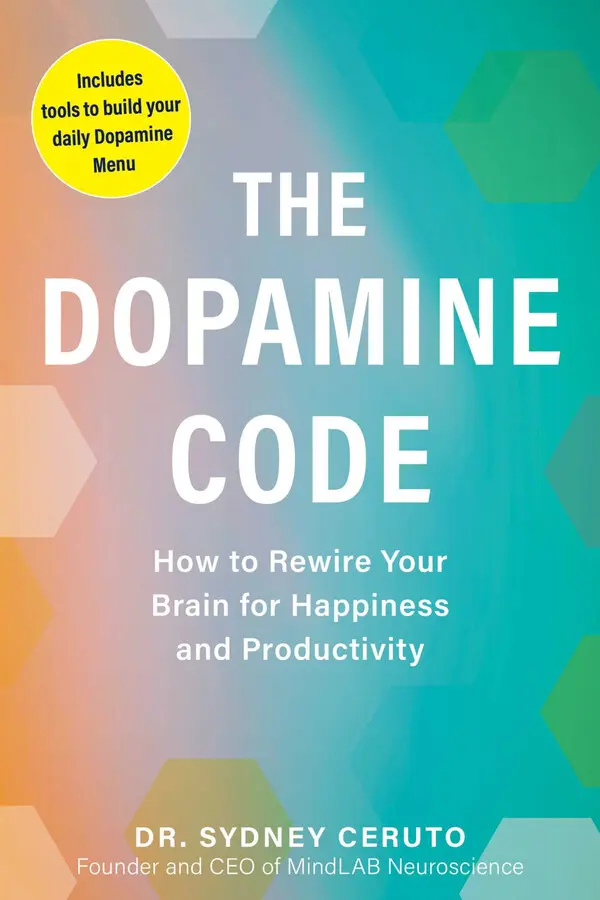
Dr. Ceruto holds a PhD in Behavioral & Cognitive Neuroscience from NYU and Master’s degrees in Clinical Psychology and Business Psychology from Yale University. She lectures at the Wharton Executive Development Program at the University of Pennsylvania and has been an Executive Contributor to the Forbes Coaching Council since 2019. Dr. Ceruto is the author of The Dopamine Code (Simon & Schuster, June 2026). She founded MindLAB Neuroscience in 2000 and has spent over 26 years leading it, pioneering Real-Time Neuroplasticity™, a methodology that durably rewires the neural pathways driving behavior, decisions, and emotional responses.
Frequently Asked Questions About Personal & Professional Integration in Westchester County
Also available in: Miami · Wall Street · Midtown Manhattan · Beverly Hills · Lisbon
Take the First Step
One hour with Dr. Sydney Ceruto. You leave knowing which neural pattern is actually driving this, and what to do about it.
Book a Strategy Call
The Dopamine Code
Decode Your Drive
Why Your Brain Rewards the Wrong Things
Your brain's reward system runs every decision, every craving, every crash, and it was never designed for the life you're living. The Dopamine Code is Dr. Ceruto's framework for understanding the architecture behind what drives you, drains you, and keeps you locked in patterns that willpower alone will never fix.
Published by Simon & Schuster, The Dopamine Code is Dr. Ceruto's framework for building your own Dopamine Menu, a personalized system for motivation, focus, and enduring life satisfaction.
Order Now!Available now