Key Points
- Financial environments train the brain's dopamine system around short feedback loops: creating neural architecture that resists the strategic thinking senior roles require.
- Real-Time Neuroplasticity™ recalibrates the prefrontal and reward circuits that govern career-related decision-making at their neurological source.
- The same neural wiring that produces exceptional market instincts often becomes the invisible ceiling on broader professional advancement.
- Dr. Sydney Ceruto maps your specific neural architecture during the Strategy Call to identify which circuits are constraining your trajectory.
- MindLAB's methodology produces durable structural change: eliminating the need for ongoing motivational maintenance or accountability frameworks.
| Marker | Traditional Approach | Neuroscience-Based Approach | Why It Matters |
|---|---|---|---|
| Target of Intervention | Surface-level career strategies and goal-setting | Neural circuits governing professional behavior | Root-cause rewiring vs. strategy overlay |
| Approach to Stagnation | New tactics, accountability, motivation techniques | Recalibration of dopamine and executive function pathways | Structural brain change, not behavioral tips |
| Duration of Results | Fades when external accountability ends | Durable neural pathway restructuring | Change that holds without constant reinforcement |
| Personalization | Standardized career frameworks and assessments | Mapped to your specific neural architecture | Precision targeting for your exact pattern |
Why Career Coaching for Professionals Matters in Wall Street
Wall Street selects for a specific type of neural architecture: fast pattern recognition, high stress tolerance, and the ability to execute under conditions that would paralyze most people. These cognitive traits are not just professional advantages; they are neural circuits that the Financial District’s relentless demands forge and reinforce over years. But the same architecture that makes someone exceptional at reading markets or structuring deals often becomes the invisible constraint on their broader career trajectory. The managing director who can process information at extraordinary speed but cannot slow down enough to think strategically about the next decade. The portfolio manager whose risk calibration is flawless for trades but wildly miscalibrated for career decisions. The analyst who has outperformed every metric for seven years and still cannot articulate why the promotion feels impossible to pursue. These are not personality limitations. They are neural patterns operating exactly as they were built: optimized for the demands that created them, blind to the demands that have changed.
The neuroscience behind career stagnation in financial environments is specific and measurable. The prefrontal cortex, responsible for long-term planning and strategic reasoning, becomes chronically subordinated to the brain’s faster, more reactive circuits when a professional spends years in high-frequency decision environments. The dopamine system, which governs motivation and reward prediction, recalibrates around the short feedback loops of trading floors and deal cycles. Over time, this creates a neural profile that is brilliant at tactical execution and structurally unable to engage in the slower, more ambiguous thinking that career advancement at senior levels requires. A vice president near Water Street who knows they should be pursuing a managing director role but keeps finding reasons to defer is not lacking ambition. Their dopamine circuitry has been shaped by years of immediate-feedback environments and now struggles to sustain motivation toward goals with longer time horizons.
Dr. Ceruto’s methodology addresses these patterns at the neurological level where they actually operate. Real-Time Neuroplasticity™ does not layer career strategies on top of existing neural architecture. It recalibrates the architecture itself, restructuring the dopamine pathways that govern professional motivation, rebalancing the prefrontal-amygdala circuits that determine how risk is perceived in career contexts versus market contexts, and rewiring the executive function patterns that either enable or prevent strategic career thinking. For professionals throughout the Financial District, Battery Park City, and Tribeca, this represents a fundamentally different approach to career advancement: one that starts with the brain rather than the resume.
The culture of Lower Manhattan’s financial sector creates additional neurological complexity. The implicit hierarchy, the performance metrics that define worth in quarterly increments, the social dynamics of firms where perception management is as important as actual output, these conditions shape the brain in ways that conventional career guidance does not account for. A professional whose anterior cingulate cortex has been conditioned to detect political threats in every interaction may be experiencing a neural pattern, not a personality trait. A trader whose stress response has been trained by years of market volatility may find that the same cortisol circuit that kept them sharp during drawdowns now produces chronic anxiety when they consider a career transition. These are specific, identifiable neural configurations, and they respond to specific, targeted intervention.
Wall Street professionals are accustomed to precision. They expect specificity, not generalities. The Strategy Call reflects that standard: it is a focused phone conversation with Dr. Ceruto that maps the exact neural mechanisms constraining your professional trajectory. No frameworks, no personality assessments, no accountability structures that assume the problem is effort. Instead, a precise identification of which circuits are running programs that no longer serve your career, and a clear assessment of what restructuring those circuits would look like. For professionals in FiDi and the surrounding Financial District who have accomplished everything the conventional metrics measure and still feel stalled, this is where the actual architecture of the problem becomes visible.


Dr. Sydney Ceruto, PhD, Neuroscientist & Author, MindLAB Neuroscience
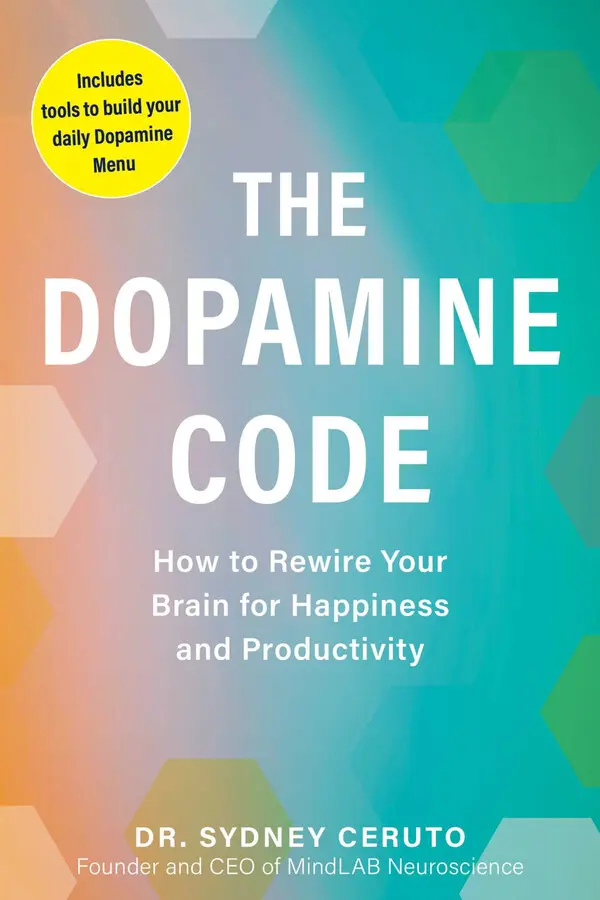
Dr. Ceruto holds a PhD in Behavioral & Cognitive Neuroscience from NYU and Master’s degrees in Clinical Psychology and Business Psychology from Yale University. She lectures at the Wharton Executive Development Program at the University of Pennsylvania and has been an Executive Contributor to the Forbes Coaching Council since 2019. Dr. Ceruto is the author of The Dopamine Code (Simon & Schuster, June 2026). She founded MindLAB Neuroscience in 2000 and has spent over 26 years leading it, pioneering Real-Time Neuroplasticity™, a methodology that durably rewires the neural pathways driving behavior, decisions, and emotional responses.
Frequently Asked Questions About Career Coaching for Professionals
Why do successful financial professionals experience career stagnation?
High-frequency decision environments train the brain's dopamine system around short feedback loops. Over time, this creates neural architecture that excels at tactical execution but structurally resists the slower, more strategic thinking that senior-level advancement requires. The stagnation is neurological, not motivational.
How does neuroscience-based career advancement differ from executive coaching?
Executive coaching works at the level of strategy and accountability. MindLAB works at the level of neural architecture: recalibrating the dopamine pathways, prefrontal circuits, and threat-response patterns that actually govern professional behavior. We rewire the source, not manage the symptoms.
Can this approach help with career transitions out of finance?
Yes. Career transitions often stall because the brain's reward and risk circuits have been calibrated to a specific professional environment. Restructuring those circuits allows genuine cognitive flexibility: the ability to evaluate new paths without the distortion of neural patterns built for a different context.
What happens during the Strategy Call?
The Strategy Call is a focused phone conversation with Dr. Ceruto. She maps the specific neural mechanisms constraining your professional trajectory and determines whether MindLAB's methodology fits your situation. It replaces guesswork with precision about why the pattern has persisted.
Is this approach available to professionals in the Wall Street area?
Yes. MindLAB Neuroscience works with professionals across the Financial District, Battery Park City, Tribeca, and broader Lower Manhattan. The Strategy Call is conducted by phone to begin the process.
Also available in: Miami · Midtown Manhattan · Beverly Hills · Lisbon
Take the First Step
The Strategy Call is a focused conversation with Dr. Sydney Ceruto that maps the specific neural mechanisms constraining your career trajectory and determines the right path forward.
Book a Strategy Call
The Dopamine Code
Decode Your Drive
Why Your Brain Rewards the Wrong Things
Your brain's reward system runs every decision, every craving, every crash, and it was never designed for the life you're living. The Dopamine Code is Dr. Ceruto's framework for understanding the architecture behind what drives you, drains you, and keeps you locked in patterns that willpower alone will never fix.
Published by Simon & Schuster, The Dopamine Code is Dr. Ceruto's framework for building your own Dopamine Menu, a personalized system for motivation, focus, and enduring life satisfaction.
Order Now!Available now