Key Points
- Sustained cognitive dual-load across professional and personal domains depletes the prefrontal resources that career advancement requires: producing stagnation that resembles a choice but is neural.
- Real-Time Neuroplasticity™ recalibrates the executive function and dopamine circuits that govern career-related decision-making under sustained cognitive demand.
- Social cognition circuits can encode community norms as neural reference points that constrain career decisions entirely below conscious awareness.
- Dr. Ceruto maps your specific neural architecture during the Strategy Call to identify which circuits are running career-limiting programs.
- MindLAB's methodology produces permanent structural change: restructuring the root architecture rather than adding strategies on top of overloaded circuits.
| Marker | Traditional Approach | Neuroscience-Based Approach | Why It Matters |
|---|---|---|---|
| Target of Intervention | Surface-level career strategies and goal-setting | Neural circuits governing professional behavior | Root-cause rewiring vs. strategy overlay |
| Approach to Stagnation | New tactics, accountability, time management | Recalibration of executive function and dopamine pathways | Structural brain change, not scheduling tips |
| Duration of Results | Fades when external accountability ends | Permanent neural pathway restructuring | Change that holds without constant reinforcement |
| Personalization | Standardized career frameworks and assessments | Mapped to your specific neural architecture | Precision targeting for your exact pattern |
Why Career Coaching for Professionals Matters in Westchester County
Westchester County is home to one of the highest concentrations of senior-level corporate professionals in the country: executives, directors, and partners who have built demanding careers while maintaining roots in communities like Scarsdale, Bronxville, Rye, Chappaqua, and White Plains. The professional trajectory of a Westchester executive involves navigating a cognitive dual-load that conventional career guidance almost never addresses. The brain must maintain peak performance in Manhattan boardrooms or corporate campuses while simultaneously processing the cognitive demands of family, community, and the integration of professional identity with personal life. Over time, this sustained dual-load creates specific neural patterns: circuits that produce exceptional professional output during working hours but generate career-limiting behaviors when the context shifts. The executive in Scarsdale who is strategic and decisive at the office but cannot make a clear decision about their own career trajectory. The corporate director in Rye whose professional relationships are impeccable but who cannot stop deferring their own advancement to manage competing demands. These are not time-management problems. They are neural architecture problems.
The neuroscience behind career stagnation for Westchester professionals involves the brain’s resource allocation systems operating under sustained load. The prefrontal cortex has a finite capacity for deliberate, strategic thinking. When that capacity is perpetually divided between high-stakes professional demands and the equally complex cognitive work of managing a life that spans multiple domains, the brain’s executive function networks begin to deprioritize activities that lack immediate urgency. Career planning, which by nature involves long-horizon thinking and ambiguity tolerance, is precisely the type of cognitive work that gets suppressed when the prefrontal cortex is under sustained load. A partner in White Plains who knows they should be pursuing a C-suite transition but keeps postponing the effort is not procrastinating. Their brain is allocating executive function resources to immediate demands and systematically deprioritizing the strategic thinking that long-term career advancement requires. The dopamine system compounds this: calibrated to the immediate feedback loops of daily professional execution, it fails to generate adequate motivation toward goals with uncertain timelines.
Dr. Ceruto’s methodology addresses career stagnation for Westchester professionals at the neurological level. Real-Time Neuroplasticity™ does not add another layer of strategy on top of already-overloaded executive function circuits. It recalibrates those circuits, restructuring the neural patterns that govern how the brain allocates cognitive resources, rebalancing the dopamine pathways that determine which professional activities register as rewarding, and rewiring the prefrontal-amygdala circuits that either enable bold career moves or produce the subtle risk aversion that keeps talented professionals locked into roles they have outgrown. For the executive in Bronxville whose career has plateaued at a level well below their capability, the intervention targets the exact neural mechanisms producing the ceiling, not the external circumstances they often blame.
Westchester’s professional culture creates an additional layer of neurological complexity that rarely surfaces in career discussions. The communities here (Scarsdale, Chappaqua, Larchmont, Pelham) are built around a set of implicit standards about what successful professional life looks like. The brain’s social cognition networks internalize these standards and encode them as neural reference points against which career decisions are evaluated. When a professional considers a career move that deviates from the established pattern (leaving a stable corporate position to pursue a more fulfilling trajectory, pivoting industries, taking a perceived step back to enable a larger leap forward) the anterior cingulate cortex, the brain’s error-detection center, flags the deviation as social conflict, producing anxiety that has nothing to do with the actual merits of the decision. This social-evaluation circuit can become the single most powerful constraint on career advancement, yet it operates entirely below conscious awareness.
For professionals throughout Westchester County (from the corporate executives of Scarsdale and Rye to the finance professionals of White Plains to the senior leaders in Bronxville, Chappaqua, and Larchmont) the Strategy Call represents a fundamentally different approach to career advancement. Dr. Ceruto maps the specific neural mechanisms constraining your trajectory in a focused phone conversation. No personality assessments, no motivational frameworks, no accountability structures that assume the problem is effort or time management. Instead, a precise identification of which circuits are running career-limiting programs, and what restructuring those circuits would actually require. In communities where professionals have access to every conventional career resource, the differentiator is addressing the neural architecture that determines whether those resources translate into actual advancement.


Dr. Sydney Ceruto, PhD, Neuroscientist & Author, MindLAB Neuroscience
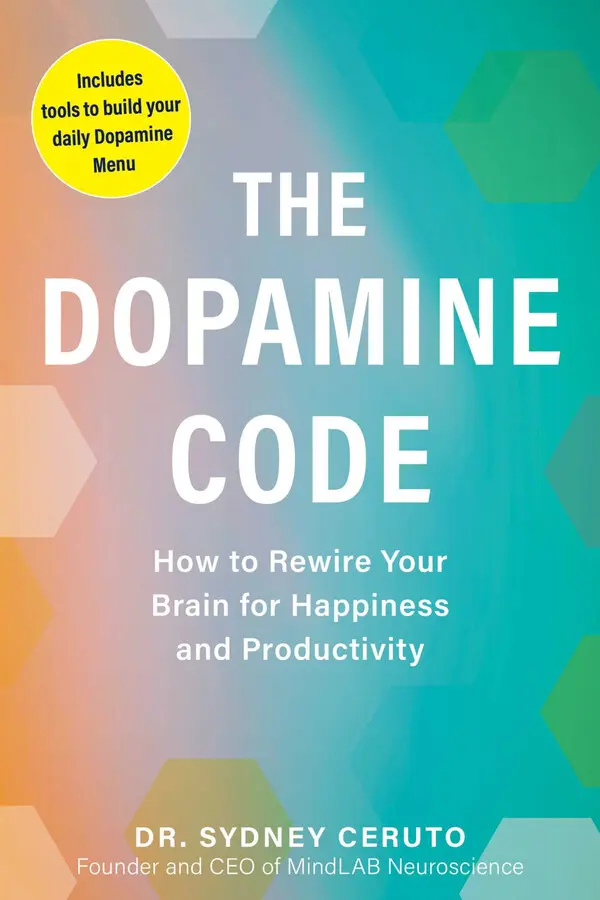
Dr. Ceruto holds a PhD in Behavioral & Cognitive Neuroscience from NYU and Master’s degrees in Clinical Psychology and Business Psychology from Yale University. She lectures at the Wharton Executive Development Program at the University of Pennsylvania and has been an Executive Contributor to the Forbes Coaching Council since 2019. Dr. Ceruto is the author of The Dopamine Code (Simon & Schuster, June 2026). She founded MindLAB Neuroscience in 2000 and has spent over 26 years leading it, pioneering Real-Time Neuroplasticity™, a methodology that durably rewires the neural pathways driving behavior, decisions, and emotional responses.
Frequently Asked Questions About Career Coaching for Professionals
Why do high-performing Westchester professionals experience career stagnation?
Sustained cognitive dual-load, managing peak professional performance alongside complex life demands, taxes the prefrontal cortex beyond its capacity for long-horizon strategic thinking. The brain deprioritizes career planning in favor of immediate demands, producing stagnation that looks like a choice but is actually a neural resource allocation pattern.
How does neuroscience address the specific career challenges of senior professionals?
Senior professionals face neural patterns built over decades of specific career conditioning. MindLAB recalibrates the dopamine circuits calibrated to familiar reward patterns, the executive function networks overloaded by competing demands, and the social cognition circuits that flag career changes as threats to established identity.
Can this approach help with career transitions for established professionals?
Yes. Career transitions stall for established professionals because the brain's identity and reward circuits have been deeply calibrated to a specific role. Restructuring those circuits creates genuine cognitive flexibility: the ability to evaluate new paths without the distortion of neural patterns anchored to a previous professional context.
What happens during the Strategy Call?
The Strategy Call is a focused phone conversation with Dr. Ceruto. She maps the specific neural mechanisms constraining your professional trajectory and determines whether MindLAB's methodology fits your situation. It provides clarity about why the pattern has persisted and what restructuring looks like.
Is MindLAB's approach available to Westchester County professionals?
Yes. MindLAB Neuroscience works with professionals throughout Westchester County including Scarsdale, Rye, Bronxville, White Plains, Chappaqua, Larchmont, and the broader county area. The Strategy Call is conducted by phone.
Also available in: Miami · Wall Street · Midtown Manhattan · Beverly Hills · Lisbon
Take the First Step
The Strategy Call is a focused conversation with Dr. Ceruto that maps the specific neural mechanisms constraining your career trajectory and determines the right path forward.
Book a Strategy Call
The Dopamine Code
Decode Your Drive
Why Your Brain Rewards the Wrong Things
Your brain's reward system runs every decision, every craving, every crash, and it was never designed for the life you're living. The Dopamine Code is Dr. Ceruto's framework for understanding the architecture behind what drives you, drains you, and keeps you locked in patterns that willpower alone will never fix.
Published by Simon & Schuster, The Dopamine Code is Dr. Ceruto's framework for building your own Dopamine Menu, a personalized system for motivation, focus, and enduring life satisfaction.
Order Now!Available now