Key Points
- Westchester careers advance rapidly then plateau when the brain's model stops updating
- The shift from title-based to influence-based advancement confuses the prediction model
- Real-Time Neuroplasticity™ rewires the circuits capping your career trajectory
- Community and career identity are neurally intertwined, compounding the ceiling
- The Strategy Call maps your specific advancement ceilings with Dr. Sydney Ceruto
Why Westchester Professionals Hit Career Advancement Ceilings
Westchester County concentrates a professional population that reached senior levels early and often. White Plains corporate offices, the financial services cluster, and the healthcare administration and pharmaceutical presence across the county create an environment where career advancement was the defining narrative for decades. When that advancement slows or stops, the brain does not process it as a temporary plateau. It processes it as a new prediction about where you belong.
The specific Westchester pattern compounds the challenge. Professionals who advanced rapidly in their thirties and early forties built prediction models calibrated to that pace. By the late forties, when advancement naturally shifts from title progression to influence, advisory capacity, and scope expansion, the brain interprets the change as deceleration. The old model keeps expecting the signals that drove the early ascent, and when those signals stop arriving, it predicts a ceiling.
Scarsdale, Bronxville, and Rye draw professionals whose career advancement and community identity are deeply intertwined. The brain integrates both domains into its prediction model, making career plateaus feel like a broader identity crisis rather than a single-domain challenge. This multi-domain reinforcement makes the ceiling harder to break through conventional career planning.
Purchase and Armonk concentrate professionals in financial services and technology who built advancement models inside large organizations. When these professionals consider moves to smaller firms, advisory roles, or independent ventures, the brain cannot predict advancement along the new path because it has no reference data. The opportunity may be exceptional, but the prediction model treats unfamiliar paths as uncertain, and uncertainty registers as risk.
The post-pandemic restructuring affected Westchester professionals acutely. Remote and hybrid arrangements changed which signals the brain uses to predict advancement. Visibility, presence, and in-office relationships that once drove promotion decisions now carry less weight, but the brain has not updated its model. Professionals performing at high levels feel invisible to the advancement mechanism because the neural prediction relies on signals that no longer operate.
The Larchmont and Mamaroneck waterfront draws professionals in creative industries who maintain Manhattan careers while raising families. The brain’s advancement model was built in high-visibility urban environments and does not account for the reduced visibility of suburban professional life. Over time, the neural prediction downgrades the career trajectory because the signals it relies on (office presence, networking density, and face-to-face exposure to leadership) have diminished.
Chappaqua and Bedford concentrate professionals who reached peak positions and now face the question of what advancement means beyond the traditional apex. The brain has no prediction model for this phase. Board governance, advisory roles, and philanthropic leadership all represent genuine advancement but use signals the brain was never trained to recognize. Dr. Ceruto builds the neural framework for next-chapter advancement from the ground up.

Dr. Ceruto works with Westchester professionals whose careers have plateaued at every level: from midcareer professionals hitting their first ceiling to established leaders planning their final chapter. Real-Time Neuroplasticity™ rewires the prediction model so advancement reflects your actual capability rather than an outdated neural forecast.

Dr. Sydney Ceruto, PhD, Neuroscientist & Author, MindLAB Neuroscience
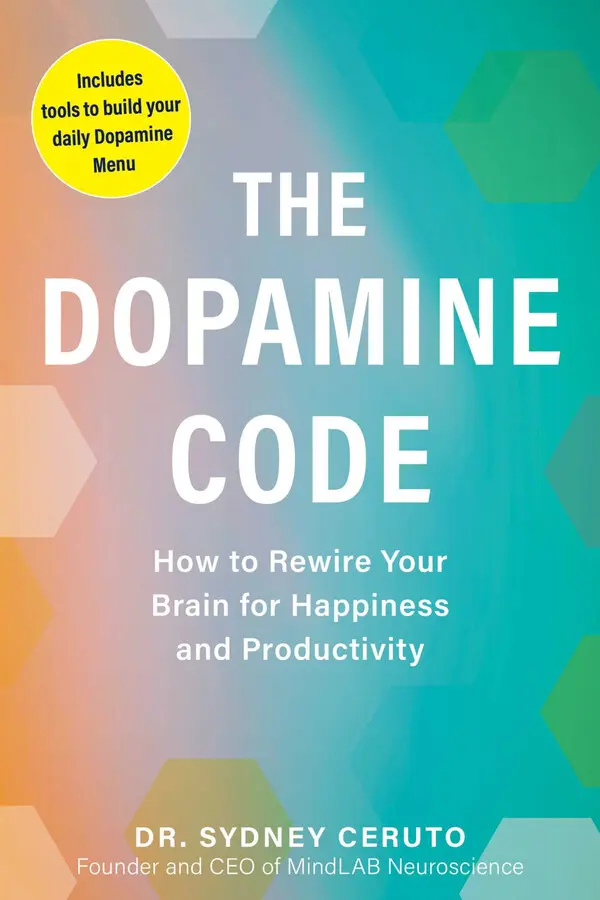
Dr. Ceruto holds a PhD in Behavioral & Cognitive Neuroscience from NYU and Master’s degrees in Clinical Psychology and Business Psychology from Yale University. She lectures at the Wharton Executive Development Program at the University of Pennsylvania and has been an Executive Contributor to the Forbes Coaching Council since 2019. Dr. Ceruto is the author of The Dopamine Code (Simon & Schuster, June 2026). She founded MindLAB Neuroscience in 2000 and has spent over 26 years leading it, pioneering Real-Time Neuroplasticity™, a methodology that durably rewires the neural pathways driving behavior, decisions, and emotional responses.
Also available in: Miami · Wall Street · Midtown Manhattan · Beverly Hills · Lisbon
Take the First Step
One hour with Dr. Sydney Ceruto. You leave knowing which neural pattern is actually driving this, and what to do about it.
Book a Strategy Call
The Dopamine Code
Decode Your Drive
Why Your Brain Rewards the Wrong Things
Your brain's reward system runs every decision, every craving, every crash, and it was never designed for the life you're living. The Dopamine Code is Dr. Ceruto's framework for understanding the architecture behind what drives you, drains you, and keeps you locked in patterns that willpower alone will never fix.
Published by Simon & Schuster, The Dopamine Code is Dr. Ceruto's framework for building your own Dopamine Menu, a personalized system for motivation, focus, and enduring life satisfaction.
Order Now!Available now