Key Takeaways
- The prefrontal cortex (PFC) is the brake system that holds back a cue-triggered response long enough for evaluation. In addiction, that brake does not vanish, it miscalibrates at the level of specific inhibitory circuits.
- The iRISA model (Goldstein and Volkow) frames PFC dysfunction in addiction as a dual failure: impaired Response Inhibition (the brake fires late) and impaired Salience Attribution (the substance’s perceived value inflates beyond natural rewards).
- Inside the PFC, parvalbumin-positive (PV) interneurons regulate the excitation/inhibition balance that determines whether a cue-triggered signal is gated or released to the midbrain reward circuit. Diminished PV-interneuron function is sufficient to generate symptom sequelae across psychiatric conditions.
- The miscalibration is substance-specific. Drug-cue reactivity in the ventromedial PFC and orbitofrontal cortex correlates with craving severity, while reactivity to non-drug rewards remains intact in the same individual.
- Recovery is architectural, not moral. Imaging studies of sustained abstinence and circuit-targeted neuromodulation show measurable normalization of PFC function, the brake can be re-set, but the work has to land at the live cue-trigger window.
The prefrontal cortex addiction impulse control mechanism is not a willpower failure. The PFC, the brain’s brake system, is the cortical region that holds back a triggered response long enough to evaluate it. In addiction that brake does not disappear; it miscalibrates. A specific class of inhibitory circuits stops gating signals to the reward pathway, and the brake fails before conscious awareness arrives.
This article belongs to our hub on addiction and reward architecture, where the brain’s motivation circuitry is mapped in depth.
In addiction the brake does not vanish. It miscalibrates. A specific set of inhibitory circuits stops gating the signal, and the brake fails before conscious awareness arrives to apply it.
Does the Prefrontal Cortex Help With Impulse Control?
The prefrontal cortex is the brain’s brake system, the cortical region that holds back a triggered response long enough to evaluate it. In addiction, that brake does not disappear. It miscalibrates. A specific class of inhibitory circuits stops gating signals to the reward pathway, and the brake fails before conscious awareness arrives.
Cognitive control, the capacity to override a primed action and select a context-appropriate alternative, is the canonical function of lateral and medial prefrontal regions. Friedman and Robbins (2021) frame the PFC as the substrate of a common-factor cognitive control closely related to response inhibition; impairments in that common factor map onto dimensional impulsivity across psychiatric populations.
In my practice, I consistently observe that clients arrive describing the failure as moral. They believe they should have been able to stop. The composite picture across 26 years of practice is the opposite: the brake fires, but it fires late, and the cue has already been delivered to the reward circuit before the cortical override arrives. The architecture is doing what it was trained to do, too well, in the wrong direction.
What Role Does the Prefrontal Cortex Play in Addiction?
The PFC plays a dual role in addiction, captured by the iRISA model from Goldstein and Volkow: impaired Response Inhibition and impaired Salience Attribution. Both dimensions fail simultaneously. Top-down control over substance-related impulses weakens, and the substance’s perceived value inflates beyond what natural rewards can match.
It sits within the broader work on neural recalibration that tracks how disrupted circuits are retrained.
References
Heilig, M., MacKillop, J., Martínez, D., Rehm, J., & Leggio, L. (2021). Addiction as a brain disease revised: Why it still matters, and the need for consilience. Neuropsychopharmacology, 46(10), 1715–1723. https://doi.org/10.1038/s41386-020-00950-y
Huang, Y., Ceceli, A. O., Kronberg, G., King, S. G., Malaker, P., et al. (2023). Association of cortico-striatal engagement during cue reactivity, reappraisal, and savoring of drug and non-drug stimuli with craving in heroin addiction. American Journal of Psychiatry, 180(10), 712–722. https://doi.org/10.1176/appi.ajp.20220759
The value signal this brake is meant to check is explained in how reward prediction errors reprogram the brain.
Konova, A. B., Ceceli, A. O., Horga, G., Moeller, S. J., & Alia-Klein, N. (2023). Reduced neural encoding of utility prediction errors in cocaine addiction. Neuron, 111(24), 4058–4070. https://doi.org/10.1016/j.neuron.2023.09.015
Mehta, D., Praecht, A., Ward, H. B., Sanches, M., & Sorkhou, M. (2023). A systematic review and meta-analysis of neuromodulation therapies for substance use disorders. Neuropsychopharmacology, 49(4), 825–836. https://doi.org/10.1038/s41386-023-01776-0
This article explains the neuroscience underlying prefrontal cortex circuit failure in addiction. For personalized neurological assessment and intervention, contact MindLAB Neuroscience directly.
How an impulse hardens into a circuit is detailed in the difference between a habit and an addiction.
What the First Conversation Looks Like
The clients who reach out about an addiction pattern rarely arrive with the right question. They describe a substance they cannot put down, a behavior that no longer matches the person they recognize, or a brake that fails in one specific direction while every other capacity stays intact. Inside the first conversation we begin mapping the circuit, what the cue cluster actually is, where the PV-gated signal is firing too freely, where the live-moment intervention point sits inside the day. From there the engagement takes shape. The work does not start with techniques. It starts with an accurate picture of what the cortical brake is doing, and a plan for intervening when the plasticity window opens.
Frequently Asked Questions
Is addiction a moral failure or a brain wiring problem?
It is a wiring problem that mimics a moral failure from the outside. The prefrontal cortex’s brake does not vanish in addiction, it miscalibrates at the level of specific inhibitory circuits, and the failure is delivered before conscious choice arrives. The person can have intact insight, intact intelligence, and intact intentions, and still find that the cue cluster bypasses the override system. Calling that a moral problem misreads the architecture and misses the intervention point.
Why does the prefrontal cortex fail for the substance but work for everything else?
The miscalibration is substance-specific. Drug-cue reactivity in the ventromedial PFC and orbitofrontal cortex is tuned to a learned stimulus class, the substance and its associated cues. Reactivity to non-drug rewards in the same individual stays within normal ranges. The brake is functional everywhere except where the cue cluster has been trained into it. This asymmetry is the diagnostic signature of the circuit-level pattern, not a contradiction in the person’s character.
What are parvalbumin interneurons and why do they matter for addiction?
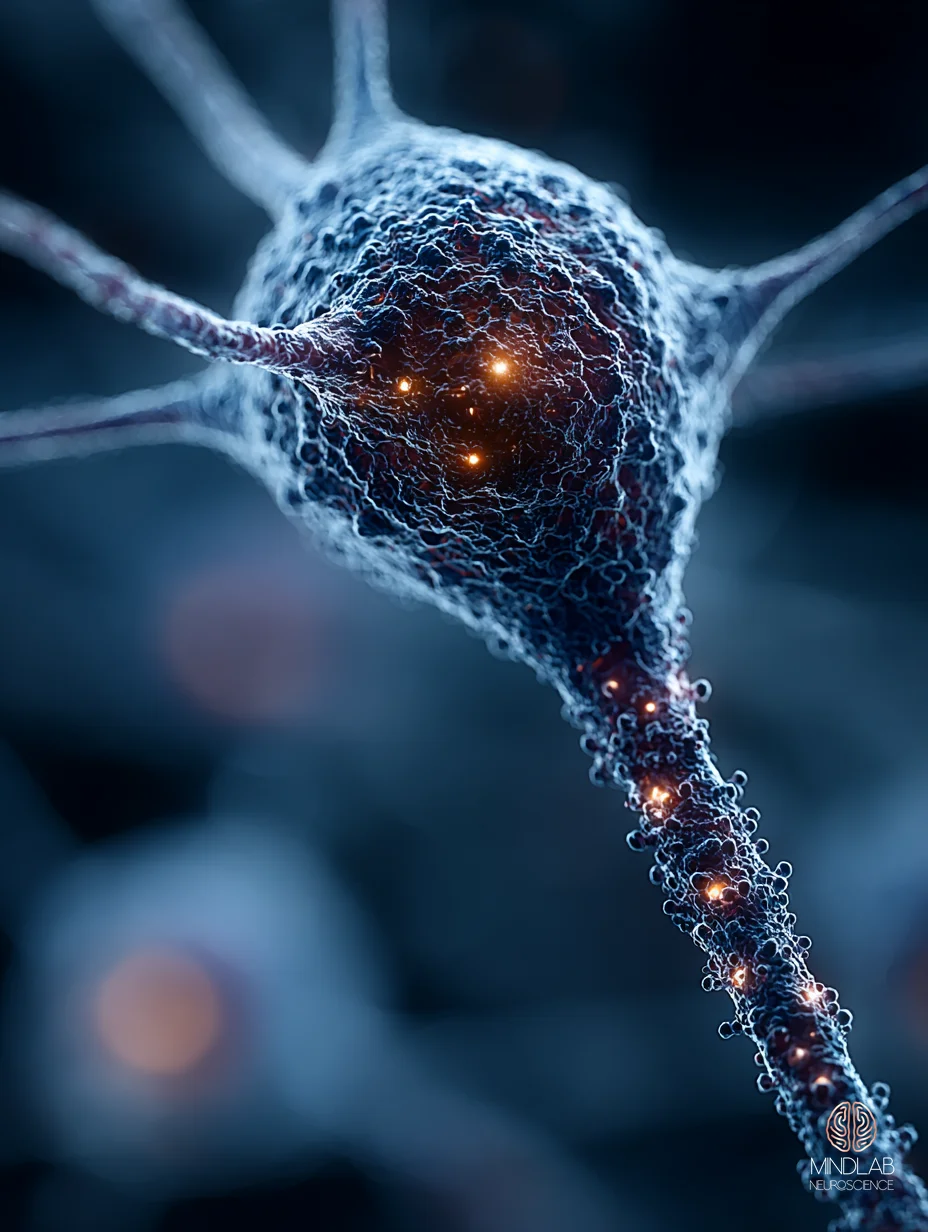
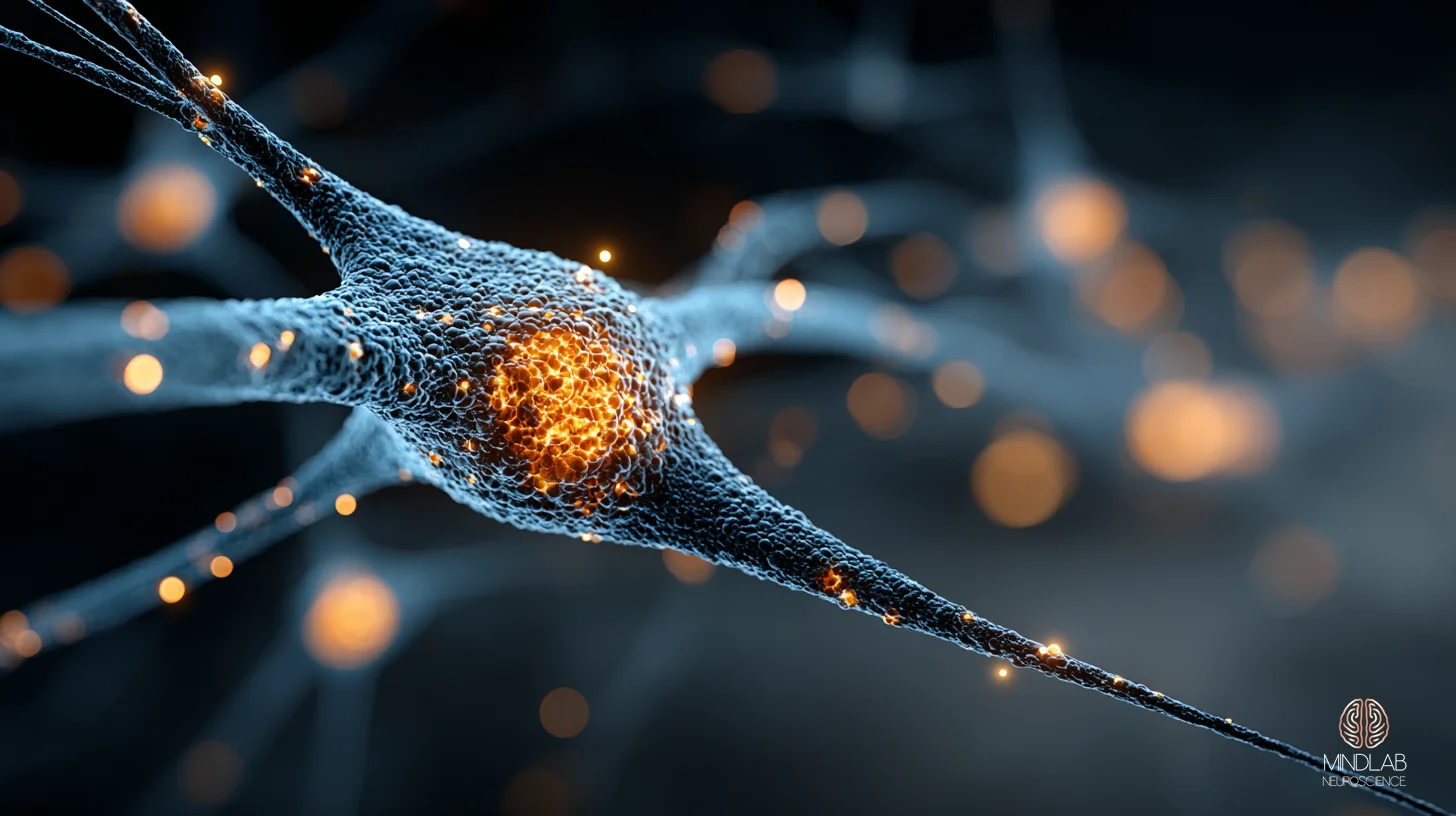
Parvalbumin-positive (PV) interneurons are the cortex’s fastest inhibitory cells, they synapse onto pyramidal-neuron cell bodies and clamp their output within milliseconds. Inside the prefrontal cortex they regulate the excitation/inhibition balance that determines whether a cue-triggered signal is gated or released to the midbrain reward pathway. When PV gating weakens, cue-triggered drive arrives at the reward circuit with less constraint than it would in a non-addicted brain.
Can the prefrontal cortex actually recover after years of substance use?
The architecture supports recovery. PV-interneuron dysfunction is not a permanent lesion, it is a state of the inhibitory network that responds to the conditions it operates in. Sustained abstinence, extinction-based interruption of cue-conditioned firing, and circuit-targeted neuromodulation produce measurable normalization of cortical activity and inhibitory function. Recovery is uneven and slow, but the substrate cooperates with restoration in a way that makes the long arc of change achievable rather than aspirational.
Why don’t general PFC-strengthening approaches like cognitive training or mindfulness work for addiction?
Treating the prefrontal cortex as a single muscle produces generic gains that do not target the addiction-specific circuit. The miscalibration is in a defined cell class, PV interneurons, within a defined pathway. Restoration has to be that specific, and it has to land at the live cue-trigger window when the circuit is most plastic. General interventions reach the cortex but not the gate. The plasticity opens when the gate fires, not when the conversation about the gate fires.