Key Takeaways
- Likes, comments and new posts arrive at unpredictable times, a reward pattern psychologists call a variable schedule
- In monkeys, dopamine cells showed a slow rise in activity while waiting for a reward that was most uncertain
- In a study of more than one million posts, people spaced their posts in the way reward-learning models predict
- Brain-scan studies of social media users are small, and they show both overlaps with and differences from other addictions
- In a randomized experiment, people who deactivated Facebook for four weeks reported higher well-being
Losing an hour to your feed does not mean your willpower is broken. Social media apps hand out rewards at moments you cannot predict. A like, a comment or a funny clip can show up on any refresh. The link between dopamine and social media starts there. Dopamine is a brain chemical that helps you learn which actions pay off. In a review of reward research, Wolfram Schultz describes dopamine cells sending a learning signal to reward and planning areas of the brain. Those cells also respond to rewards that are uncertain. The underlying research is covered in the neural patterns behind dopamine architecture protocol.
I have worked with individuals across virtually every behavioral pattern the brain produces, and the compulsive pull of digital platforms ranks among the most neurologically efficient traps I have encountered. This connects directly to the neuroscience of sex addiction.
The scroll runs on the same unpredictable reward that keeps a gambler at the machine long after the fun is gone.
How Does Social Media Tap Your Brain’s Reward System?
You open Instagram to check one thing. Twenty minutes later you are still scrolling, and you cannot recall what you originally opened it for. Part of that pull may come from the way the feed hands out rewards.
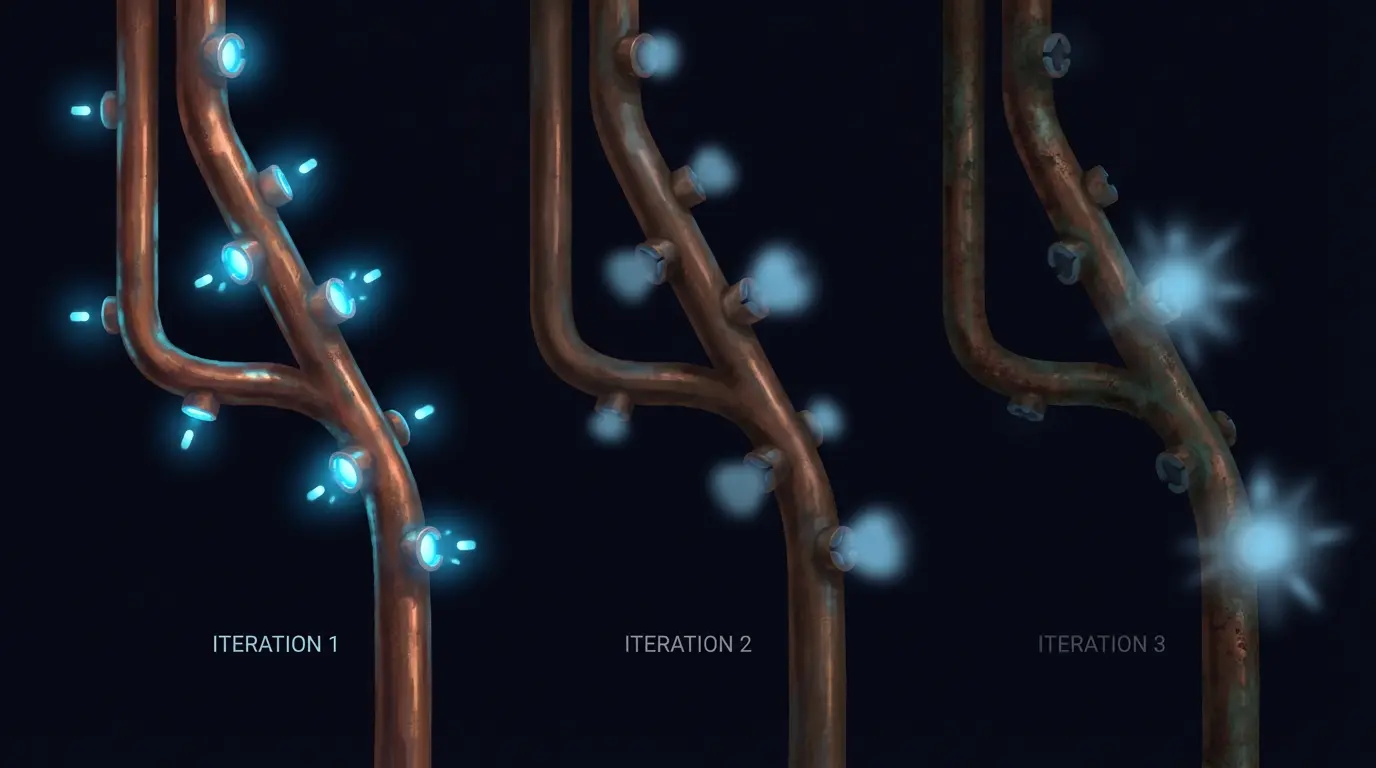
Social media rewards you on what psychologists call a variable schedule. You cannot tell which refresh will bring a new like, comment or interesting post. Slot machines pay out on a similar unpredictable schedule. In a study of more than one million posts from over 4,000 people on several platforms, Björn Lindström and colleagues found that posting followed the rules of reward learning. People spaced their posts in a way that collected the most likes over time, weighing the effort of posting against the cost of waiting. A follow-up online experiment with 176 people showed that the likes themselves changed how people behaved.
Your ventral tegmental area (VTA) is a small region deep in the brain that holds dopamine cells. Schultz’s review describes these cells sending their signal to the striatum, a reward area, and to the frontal cortex. In a 2003 study in Science, Christopher Fiorillo, Philippe Tobler and Wolfram Schultz recorded dopamine cells in monkeys. Different signals told the monkeys how likely a reward was. The quick burst of activity when a signal appeared grew with the odds of reward. A second, slower response built up while the monkeys waited, and it was strongest when the reward was most uncertain. For a deeper look, see what the research reveals about YouTube Shorts reward loops.
Likes also register in the human brain. In a brain-scan study of teenagers, Lauren Sherman and colleagues showed photos set up to look like Instagram posts. The teens were more likely to like a photo that already had many likes. Photos with many likes drew more activity in brain areas tied to reward, social thinking and attention than photos with few likes.
Pull-to-refresh works a bit like a slot machine handle. You pull, then wait to see what comes up. Notification badges add another cue that something new might be waiting. The studies cited here did not test how any one app is designed.
The Anticipation-Reward Gap
In the Fiorillo study, the slow dopamine response built up during the wait, before any reward came. Scientists call the difference between the reward you expected and the one you got a prediction error. In 1996, Read Montague, Peter Dayan and Terrence Sejnowski proposed a model in which dopamine cells signal these errors by rising above or falling below their usual activity. The quick dopamine burst in the Fiorillo study fit that idea. Restless checking while you wait can feel like boredom. Whether waiting for likes drives the same dopamine response in people has not been measured in the studies cited here.
What Happens in the Dopamine Feedback Loop?
You tell yourself you will just check notifications. Then you are scrolling. Then the screen dims because it has been too long. You feel vaguely worse than before you picked up the phone. Ten minutes later, you pick it up again almost without deciding to.
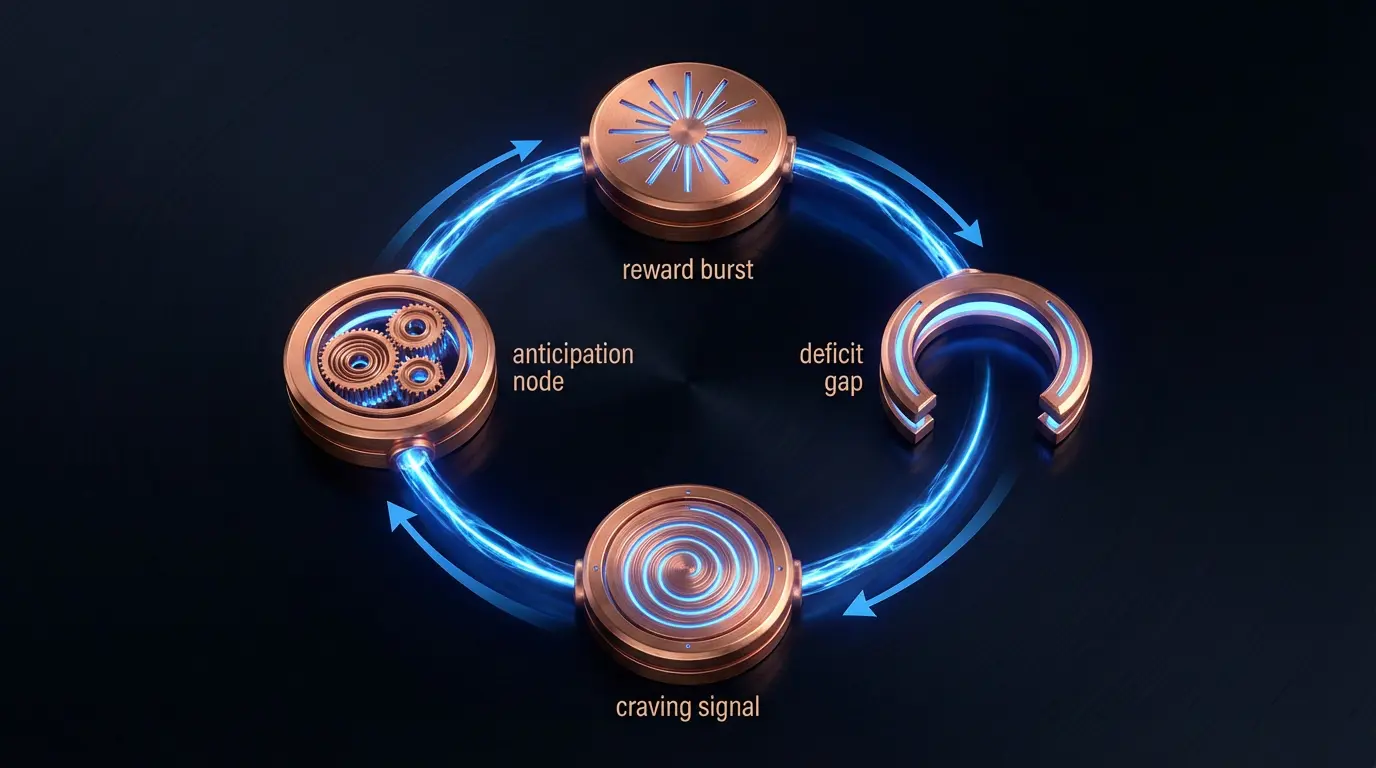
The loop can be described in four stages.
Stage 1: Trigger. A notification, a vibration or simply the time since your last check acts as a cue that something new might be waiting.
Stage 2: Anticipation. The cue signals a possible reward, and the urge to check builds. In the monkey study, dopamine cells responded to cues that predicted a reward, before the reward arrived.
Stage 3: Checking. Scrolling delivers rewards at random: a liked post, an interesting image, a provocative comment. In reward learning, each payoff makes the next check more likely.
Stage 4: Return. The good feeling fades, and the next cue starts the loop again.
Some accounts of this loop add a stage where heavy use drains dopamine and leaves a low mood that pulls you back. The studies cited here did not measure dopamine in social media users, so that stage is left out.
Brain scans of social media users show a mixed picture. In a 2014 study, Ofir Turel and colleagues scanned 20 Facebook users while they responded to Facebook images and traffic signs. People with more addiction-like symptoms shared some brain features with substance and gambling addictions. They also differed from those addictions in how the brain’s self-control system worked.
In my practice, I see this loop operating beneath nearly every digital behavior pattern clients present. The language they use (“I know I should stop but I can’t,” “I pick up my phone without deciding to”) is the language of a circuit that has automated itself below conscious control. What strikes me most is how much shame accompanies it. People feel broken. They compare themselves to others who seem to manage their devices without effort and conclude the problem is personal. The problem is architectural, and recognizing that is often the first moment of relief a client experiences in our work together.
Does Social Media Physically Change Your Brain?
You used to read books for an hour without effort. Now you lose the thread after two paragraphs. You used to fall asleep in minutes. Now your mind races with content fragments until 2 AM. These changes are not a sign of laziness. Whether heavy scrolling changes the brain itself is a harder question.
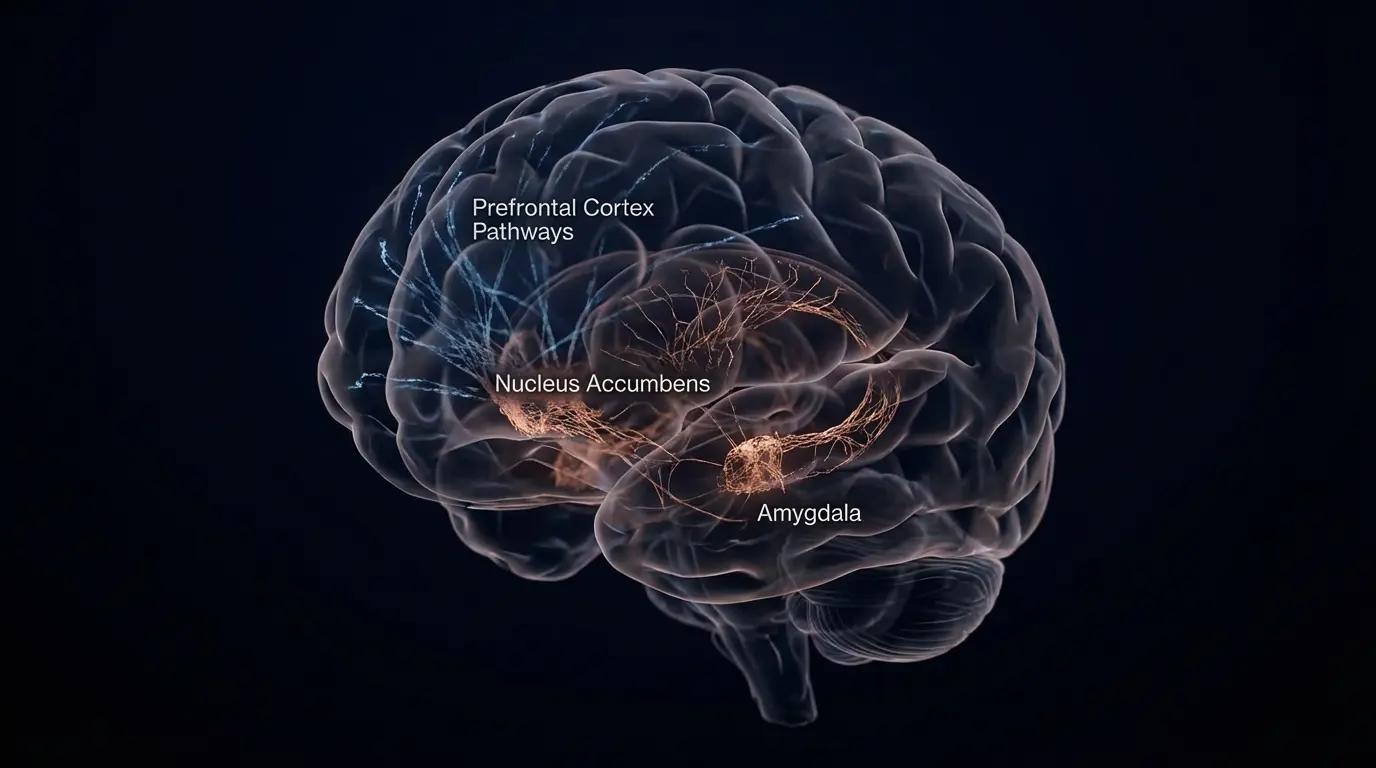
A few brain-scan studies have looked, and they are small. Each one measured people at a single point in time. That means they show what goes together, and they cannot show what caused what.
Nucleus accumbens. This region is a key reward hub in the brain. In a 2017 study of 20 social networking site users, Qinghua He, Ofir Turel and Antoine Bechara found no structural differences in this region linked to addiction scores.
Amygdala. The amygdala helps the brain react to emotional events. In the same study, higher addiction scores went with less gray matter (brain tissue made mostly of nerve cell bodies) in the amygdala on both sides of the brain. The authors read this as a sign of a more efficient impulsive system, a pattern also seen in other addictions.
Cingulate cortex. The authors note that in other addictions, a control region called the anterior and middle cingulate cortex has less gray matter. The authors judged this region to be healthy in their sample. Its gray matter volume was larger in people with higher addiction scores.
In the He and Turel studies, some brain differences went with higher addiction scores. They cannot tell us whether scrolling caused those differences, or whether people with those brains were drawn to heavier use. White matter and long-term brain damage were not measured in the studies cited here.
One pattern I encounter frequently in my practice is what I call the “phantom scroll”: clients report the physical sensation of scrolling even when their phone is not in their hands. Their thumb moves. Their eyes track downward across a page as if expecting new content to load. The motor pattern has embedded itself so deeply that it runs independent of the device. When I see that, I know the reinforcement loop has crossed from behavioral into somatic territory, and the intervention has to address both layers.
When someone sits across from me describing their inability to concentrate, their constant sense that time is disappearing, the digital consumption pattern is usually the first place I look. Not because I assume it is the cause, but because in the majority of cases I have worked, it is the accelerant. In those cases, the scroll cycle is making it worse, and it is the one variable we can restructure immediately.
Does Your Brain Build a Tolerance to Social Media?
You used to enjoy scrolling. A funny video, a friend’s vacation photo: it genuinely brightened your afternoon. Now the same content barely registers, yet you cannot stop consuming it, and you may wonder whether this is tolerance.
Tolerance means you need more of something to get the same effect. A related change is described in a review of drug and food addiction by Nora Volkow, Roy Wise and Ruben Baler. They describe what repeated drug use, or heavy intake of energy-rich foods, does over time. The brain links the reward to the cues that predict it. The dopamine response to other rewards weakens, and so does top-down self-control.
Whether the same happens with social media was not tested in the studies cited here. The studies cited here did not measure dopamine receptors (the proteins on nerve cells that receive dopamine) in social media users. The studies cited here do not show what in the brain causes the fading pleasure you may notice.
Some people describe a kind of numbing, where the phone feels less rewarding but more necessary.
Time away from the phone can also bring restlessness or a sense that something is missing. Some people call that feeling withdrawal. The studies cited here did not measure dopamine during time away, so they cannot say whether the feeling comes from a reward system running below normal. One experiment did test time away. In the Facebook study described below, people who stepped away for four weeks reported higher well-being by the end.
I often ask clients to describe the last time they finished a scroll session feeling genuinely better than when they started. Most cannot. The silence that follows that question is more telling than any tool I use: it reveals the moment a person recognizes the gap between what the behavior promises and what it delivers. That recognition, uncomfortable as it is, is the beginning of change.
None of this is a moral failure. Habits learned through reward can change when the rewards change.
Can These Neurological Patterns Be Reversed?
If you have read this far, you probably recognize yourself in at least some of what has been described. And if you are like most of the people I work with, a part of you is wondering whether the damage is done, whether you have permanently altered something that cannot be restored.
Neuroplasticity is the brain’s ability to change with experience. The same reward learning that shaped your checking habit can shape new habits when the rewards around you change. Your brain is not broken for having learned this habit.
One randomized experiment tested stepping back. Hunt Allcott and colleagues asked some Facebook users to deactivate their accounts for the four weeks before the 2018 US midterm election. Compared with people who kept their accounts, they spent more time offline, including with family and friends, and reported higher well-being. Afterward, they placed a lower value on Facebook. The study measured behavior and mood, not the brain, so it gives no timeline for brain changes.
Habits learned through reward depend on cues and rewards. Changing those, for example by turning off notifications or making other rewarding activities easier to reach, may give the habit less to feed on. The studies cited here did not test those specific steps.
In my practice, I do not start by telling clients to put their phones down. I start by mapping which specific reinforcement loops are running, because the executive who compulsively checks LinkedIn operates on a different pattern of cues and rewards than the college student locked into TikTok, even though the dopamine mechanics look similar at the surface. The intervention that works is the one matched to the architecture, not the one applied generically. That precision is what distinguishes neurological restructuring from another round of advice you already know has not worked.
This article is part of MindLAB’s Addiction & Reward Architecture hub, within the Neural Recalibration pillar.
This article explains the neuroscience underlying dopamine and social media.
What the First Conversation Looks Like
If you recognize yourself in the patterns described above, you may have already tried reducing screen time through app timers, grayscale settings, digital detoxes, or sheer determination. These approaches address the behavior without changing the cues and rewards that keep it going, which is why the pattern can return.
A consultation with Dr. Sydney Ceruto is a standalone conversation, not a sales call, and it requires no commitment. It is a full hour with a neuroscientist who will map the specific reinforcement loops sustaining your pattern and evaluate whether this work fits your situation.
If the compulsive pull toward your phone has started affecting your focus, your relationships, or your capacity to be present in your own life, this is not a willpower problem. It is an engineering problem, and engineering problems have engineering solutions.
Book Your ConsultationWhy does social media feel more addictive than other screen activities?
Social media rewards come at unpredictable times, and they are social. A like or comment can show up on any refresh. In monkeys, dopamine cells showed a slow rise in activity while waiting for an uncertain reward. In a study of more than one million posts, people spaced their posts in a way that collected the most likes over time. In a brain-scan study of teenagers, photos with many likes drew more activity in reward-related brain areas than photos with few likes.
Can dopamine levels return to normal after reducing social media use?
The studies cited here did not measure dopamine levels in social media users, so they give no answer about dopamine itself. What has been tested is stepping away. In a randomized experiment, people who deactivated Facebook for four weeks spent more time offline, including with family and friends. They also reported higher well-being than people who kept using it. Afterward, they valued Facebook less, though the study did not measure brain changes.
Is social media addiction a real addiction in a neurological sense?
The research is still small and mixed. In a brain-scan study of 20 Facebook users, people with more addiction-like symptoms shared some brain features with substance and gambling addictions. They differed in how the brain’s self-control system worked. In another study of 20 users, higher addiction scores went with less gray matter in the amygdala, as in other addictions, and with no structural change in the nucleus accumbens. Both studies were small, and each measured people at a single point in time.
Do digital detoxes work long-term?
The studies cited here did not follow people for months after a break, so they give no long-term answer. In one randomized experiment, people who deactivated Facebook for four weeks reported higher well-being and valued Facebook less afterward. A short break also leaves the cues that built the habit in place, such as notifications and the app on your home screen. That may be one reason old habits can return, though the studies cited here did not test it.
How does heavy social media use affect attention and sleep over time?
The studies cited here did not measure attention or sleep, so they cannot answer this directly. In brain scans of 20 users, higher addiction scores went with less gray matter in the amygdala, while the authors judged a control region to be healthy. Those scans were taken at one time, so they cannot show that scrolling caused any change. If your focus or sleep slipped as your scrolling rose, cutting back is a fair test. In one experiment, four weeks off Facebook raised reported well-being.
References
Allcott, H., Braghieri, L., Eichmeyer, S., and Gentzkow, M. (2020). The welfare effects of social media. American Economic Review, 110(3), 629-676. https://doi.org/10.1257/aer.20190658
Fiorillo, C. D., Tobler, P. N., and Schultz, W. (2003). Discrete coding of reward probability and uncertainty by dopamine neurons. Science, 299(5614), 1898-1902. https://doi.org/10.1126/science.1077349
He, Q., Turel, O., and Bechara, A. (2017). Brain anatomy alterations associated with Social Networking Site (SNS) addiction. Scientific Reports, 7, 45064. https://doi.org/10.1038/srep45064
Lindström, B., Bellander, M., Schultner, D. T., Chang, A., Tobler, P. N., and Amodio, D. M. (2021). A computational reward learning account of social media engagement. Nature Communications, 12(1), 1311. https://doi.org/10.1038/s41467-020-19607-x
Montague, P. R., Dayan, P., and Sejnowski, T. J. (1996). A framework for mesencephalic dopamine systems based on predictive Hebbian learning. Journal of Neuroscience, 16(5), 1936-1947. https://doi.org/10.1523/JNEUROSCI.16-05-01936.1996
Schultz, W. (2015). Neuronal reward and decision signals: From theories to data. Physiological Reviews, 95(3), 853-951. https://doi.org/10.1152/physrev.00023.2014
Sherman, L. E., Payton, A. A., Hernandez, L. M., Greenfield, P. M., and Dapretto, M. (2016). The power of the like in adolescence: Effects of peer influence on neural and behavioral responses to social media. Psychological Science, 27(7), 1027-1035. https://doi.org/10.1177/0956797616645673
Turel, O., He, Q., Xue, G., Xiao, L., and Bechara, A. (2014). Examination of neural systems sub-serving Facebook “addiction.” Psychological Reports, 115(3), 675-695. https://doi.org/10.2466/18.PR0.115c31z8
Volkow, N. D., Wise, R. A., and Baler, R. (2017). The dopamine motive system: Implications for drug and food addiction. Nature Reviews Neuroscience, 18(12), 741-752. https://doi.org/10.1038/nrn.2017.130