

Key Takeaways
- When people recalled a breakup, those who had been ghosted reported worse outcomes than those who had been rejected directly, in two separate studies
- In an online dating experiment, ghosted and openly rejected people both felt bad, but the ghosted group stayed more attached and kept planning to check on the person
- In the brain studies cited here, rejection and physical pain activated some of the same broad areas, though a closer look found separate patterns of activity for each
- A brain-imaging study of people rejected in love found activity in reward areas, but no study cited here measured dopamine in people who were ghosted
- In a series of experiments, people who ghosted cared about the other person more than the ghosted person realized
Ghosting, the abrupt end of all communication without explanation, leaves the other person with the hurt of a breakup and no answer to go with it. When someone is told “this isn’t working,” they at least know the relationship is over. When someone simply vanishes, the question stays open. Ghosting has only recently become a research topic, as Pancani and colleagues note. The ghosting studies on this page used surveys, memories of past breakups and simulated online dating. The brain studies looked at related experiences, such as being left out of a game or seeing a photo of an ex. The neuroscience of ghosting draws on both kinds of study to help explain why silence can hurt more than a direct rejection, and why it can be so hard to stop thinking about.
Does Ghosting Hurt Like Physical Pain?
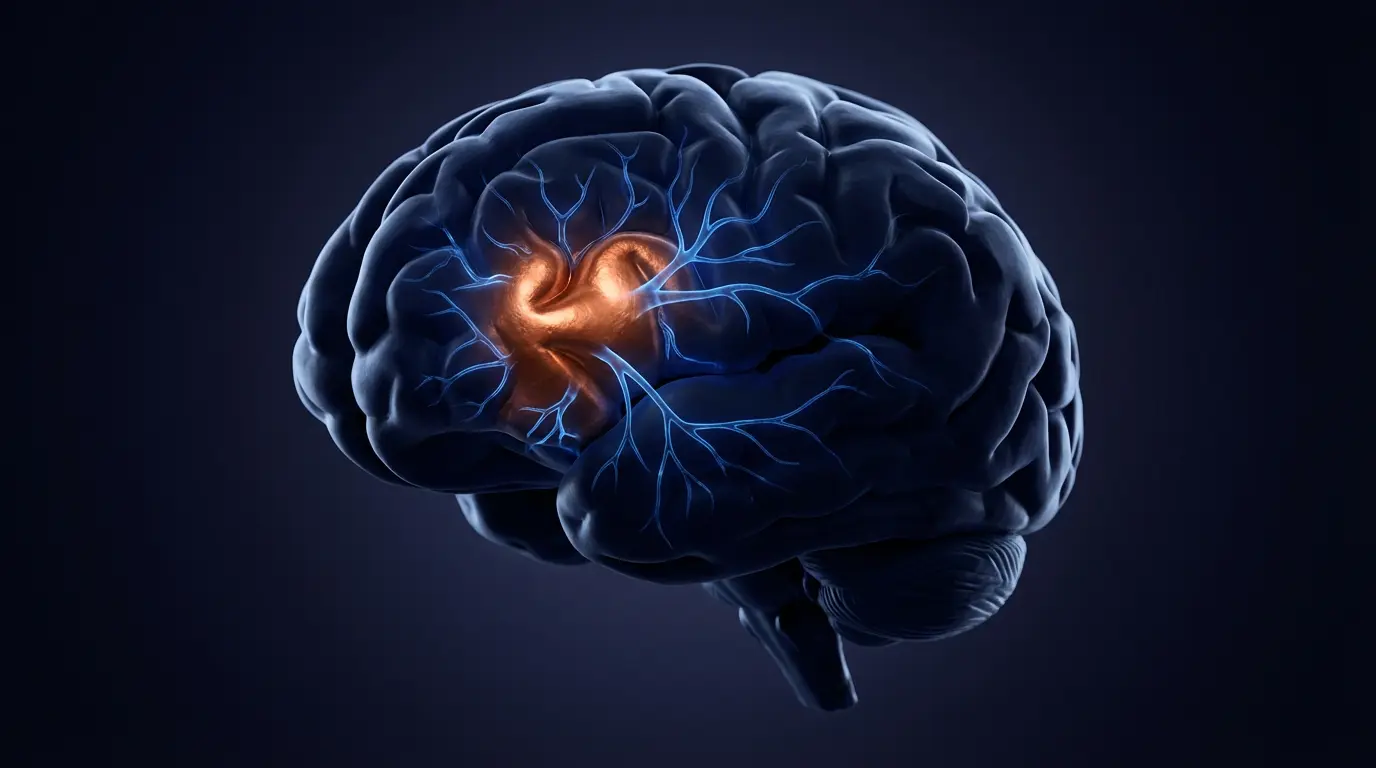
Being left out does seem to register in the brain in ways that overlap with pain. In a study published in Science, Eisenberger, Lieberman, and Williams scanned people with functional MRI (fMRI), a brain scan that tracks blood flow, while they played a computer ball-tossing game called Cyberball. When the other players left them out, activity rose in the anterior cingulate cortex (ACC), an area also active in studies of physical pain. The more distressed people said they felt, the higher that activity was. The study did not test physical pain itself.
A later study by Kross and colleagues went further. People who had recently gone through a breakup they didn’t want looked at a photo of their ex while thinking about the rejection. The same people were also scanned during physical pain. Both experiences activated the secondary somatosensory cortex and the dorsal posterior insula, areas that handle the body-sensation side of pain.
Then a team that included two of the same researchers took a closer look. Using a method that reads fine-grained patterns of brain activity, Woo and colleagues found that pain and rejection produced different patterns, even inside areas they share, such as the dorsal ACC. A pattern that picked out rejection could not pick out pain, and the reverse was also true. Rejection and pain overlap in the broad areas they use, and the brain still keeps them apart.
None of these studies looked at ghosting. What sets ghosting apart from other kinds of rejection is the missing answer. Pancani, Aureli, and Riva asked 176 people to recall being ghosted, being rejected directly, or being “orbited,” where the person who left keeps following you on social media. The researchers treated ghosting as a form of ostracism, which means being ignored and shut out. The researchers measured emotions, basic psychological needs, how people made sense of the breakup and aggressive feelings. On most of these, ghosting led to worse outcomes than direct rejection. In a separate study of 545 young adults by Leckfor and colleagues, those who recalled being ghosted said their basic needs, such as belonging and control, were less met than people who recalled a direct rejection.
The silence can feel like it is physically crushing you. The tightness in your chest, the nausea that arrives without warning, the headache that sets in every evening. These are not signs that something is wrong with you.
In my practice, I consistently observe that clients who have been ghosted report these somatic symptoms at rates far exceeding those who received direct rejection.
A direct rejection gives you an answer. Ghosting withholds it, and it can be harder to let the person go.
What Happens in the Brain When There Is No Closure?
Ambiguity makes ghosting hard to put down. Closure here means a clear answer about what happened. Ghosting withholds it. In two studies by Szczesniak, Pierce, and Spielmann, people went through a simulated online dating exchange that ended in ghosting, a direct rejection, or acceptance. The ghosted and the openly rejected groups both reported strong negative feelings and lower self-esteem. The difference was in what came next. Ghosted people stayed more emotionally attached to the other person than people who were openly rejected. The researchers read this as a lack of closure.

Not knowing can be stressful in its own right. In a lab study by de Berker and colleagues, people learned which images predicted an electric shock. The researchers measured stress three ways: how people rated it, pupil size and skin sweat response. All three rose and fell with how uncertain people were about the shocks. That study was about shocks rather than relationships. It does show that uncertainty itself can drive stress. Dickerson and Kemeny reviewed 208 lab studies of the stress hormone cortisol. It rose most during tasks that people could not control and in which others could judge them. Being ghosted is out of your control, though no study cited here measured cortisol in people who were ghosted.
The loss can also feed rumination, which means going over the same thoughts again and again. You may replay conversations, search for signals you missed, and build and discard explanations. A review by Nolen-Hoeksema, Wisco, and Lyubomirsky found that rumination can make depression worse, feeds negative thinking and gets in the way of solving problems.
What the studies cited here don’t capture is how rapidly this rumination degrades decision-making in other domains. I have worked with executives, physicians, and attorneys who were making sound professional decisions in every area of their lives while simultaneously losing hours each day to obsessive review of a relationship that ended without explanation.
All of this can make you feel like you’re losing your mind. You’re not. You are running a brain that was handed an unsolvable equation and told to keep solving it. The replaying, the analyzing, the 2 a.m. inventory of everything you said and did. None of that means you’re weak. Your mind keeps working on a question that matters to you and has no answer.
Closure can come from outside, when the other person finally explains. It can also come from inside, when you settle on an account of what happened that you can live with, even if that account is that you may never know why. The idea that the brain’s threat system stays switched on until one of these happens has not been tested in the studies cited here.
Is Ghosting a Form of Dopamine Withdrawal?
Dopamine is a chemical messenger in the brain tied to reward and motivation. A brain-imaging study by Fisher and colleagues scanned 15 people who had recently been rejected by a partner but said they were still intensely in love. Looking at a photo of the person who left them activated the ventral tegmental area (VTA), a core part of the brain’s reward system, along with the ventral striatum and other areas. Some of the regions involved are also linked with cocaine craving. The authors suggested this may help explain the obsessive behavior that can follow rejection in love.

That study used fMRI, so it tracked blood flow and didn’t measure dopamine. It also studied breakups rather than ghosting. No study cited here measured dopamine in people who were ghosted, so calling ghosting a “dopamine withdrawal” goes beyond what these studies show. Being ignored and being rejected do seem to push people in different directions. In four studies by Molden and colleagues, people who recalled or went through being ignored tended to seek social contact again and felt more dejected. People who were openly rejected tended to pull back and felt more agitated.
In 26 years I’ve found that the most effective first step is naming the mechanism explicitly. When a client understands that their compulsive phone-checking is a predictable response to losing contact without an answer, the shame layer dissolves and the actual rewiring work can begin.
If you keep checking your phone even though you know nothing is coming, you are doing what one experiment found. In the dating experiment above, ghosted people said they planned to keep checking the other person’s social media and dating-app status, and to keep texting or calling, about as much as people who had been accepted.
No study cited here measured how long this checking lasts after ghosting. In the dating experiment, ghosting left people hurt and still attached, with no closure.
This pattern (the rumination loop) is exactly what I map in a consultation. Not in theory. In your specific brain, with your specific pattern, down to what is keeping the loop running and where the work would have the most effect.
How Does the Brain Recover From Being Ghosted?
The studies cited here did not track how many weeks recovery takes. The closest map comes from people’s own accounts. In a study by Pancani, Mazzoni, Aureli, and Riva, 208 young adults described being ghosted, orbited or rejected directly. Their accounts moved through four stages. First came surprise and confusion. Next came anger, sadness and guilt. Then came attempts to repair the relationship. Last came acceptance.
That study described stages in people’s stories. It did not measure changes in the brain.
Some habits of mind seem to help. In the review by Nolen-Hoeksema and colleagues, dozens of experiments found that turning attention to something pleasant lifted low mood, though studies of people’s everyday habits found a less consistent link. The same review separates rumination from more useful kinds of self-reflection.
One pattern I have documented across hundreds of ghosting cases that I have not seen in the published literature: the recovery timeline is not linear. It typically includes a “false resolution” window around week three or four, where the client reports feeling significantly better, only to experience a sharp relapse triggered by an incidental cue (a song, a restaurant, a mutual friend’s social media post). This is not a setback. The relapse is shorter and less intense each time, but clients who do not expect it often misinterpret it as evidence that they are not healing, which restarts the rumination cycle unnecessarily.
People also differ in how much they need closure, the wish to avoid ambiguity. In the study by Leckfor and colleagues, people with a higher need for closure reported their basic needs were less met after being ghosted, and also after a direct rejection. If not knowing bothers you more than most, that may be part of why ghosting hit you so hard.
Why Do People Ghost?
If you are still asking why (why they disappeared, what you did, what you missed), understanding the ghoster’s side doesn’t undo what happened to you. But it may take some of the force out of the question that keeps you replaying it.
A review by Freedman and Powell describes several reasons people give for ghosting. Some believe it is the most fitting way to end things in a digital setting. Some want an easy exit. Some have concerns about their safety. Ghosting is common, and people tend to see it as a poor way to end a relationship. The people who ghost can feel guilt as well as relief.
Ghosting is not always cold. In experiments by Park and Klein, people who ghosted cared about the other person’s well-being more than the ghosted person realized. Part of why they ghosted was to end the tie without hurting the other person’s feelings. People who had been ghosted underestimated that motive.
In a large study of recent breakups by Koessler, Kohut, and Campbell, people who were broken up with felt more distress than the people who ended things. People who ended things by ghosting reported less distress than people who ended things in a direct conversation. Ghosting can spare the person who leaves an uncomfortable conversation, while the person left behind carries the uncertainty. None of that changes what you’re going through. It does give you some possible answers to the question of why, and that can make it easier to stop searching for one.
This article is part of MindLAB’s The Neurobiology of Separation hub, within the Relationship Intelligence pillar.
References
- de Berker, A. O., Rutledge, R. B., Mathys, C., Marshall, L., Cross, G. F., Dolan, R. J., and Bestmann, S. (2016). Computations of uncertainty mediate acute stress responses in humans. Nature Communications, 7, 10996. https://doi.org/10.1038/ncomms10996
- Dickerson, S. S., and Kemeny, M. E. (2004). Acute stressors and cortisol responses: A theoretical integration and synthesis of laboratory research. Psychological Bulletin, 130(3), 355-391. https://doi.org/10.1037/0033-2909.130.3.355
- Eisenberger, N. I., Lieberman, M. D., and Williams, K. D. (2003). Does rejection hurt? An fMRI study of social exclusion. Science, 302(5643), 290-292. https://doi.org/10.1126/science.1089134
- Fisher, H. E., Brown, L. L., Aron, A., Strong, G., and Mashek, D. (2010). Reward, addiction, and emotion regulation systems associated with rejection in love. Journal of Neurophysiology, 104(1), 51-60. https://doi.org/10.1152/jn.00784.2009
- Freedman, G., and Powell, D. N. (2024). Ghosting: A common but unpopular rejection strategy. Social and Personality Psychology Compass, 18(12), e70026. https://doi.org/10.1111/spc3.70026
- Koessler, R. B., Kohut, T., and Campbell, L. (2019). When your boo becomes a ghost: The association between breakup strategy and breakup role in experiences of relationship dissolution. Collabra: Psychology, 5(1), 29. https://doi.org/10.1525/collabra.230
- Kross, E., Berman, M. G., Mischel, W., Smith, E. E., and Wager, T. D. (2011). Social rejection shares somatosensory representations with physical pain. Proceedings of the National Academy of Sciences, 108(15), 6270-6275. https://doi.org/10.1073/pnas.1102693108
- Leckfor, C. M., Wood, N. R., Slatcher, R. B., and Hales, A. H. (2023). From close to ghost: Examining the relationship between the need for closure, intentions to ghost, and reactions to being ghosted. Journal of Social and Personal Relationships, 40(8), 2422-2444. https://doi.org/10.1177/02654075221149955
- Molden, D. C., Lucas, G. M., Gardner, W. L., Dean, K., and Knowles, M. L. (2009). Motivations for prevention or promotion following social exclusion: Being rejected versus being ignored. Journal of Personality and Social Psychology, 96(2), 415-431. https://doi.org/10.1037/a0012958
- Nolen-Hoeksema, S., Wisco, B. E., and Lyubomirsky, S. (2008). Rethinking rumination. Perspectives on Psychological Science, 3(5), 400-424. https://doi.org/10.1111/j.1745-6924.2008.00088.x
- Pancani, L., Aureli, N., and Riva, P. (2022). Relationship dissolution strategies: Comparing the psychological consequences of ghosting, orbiting, and rejection. Cyberpsychology: Journal of Psychosocial Research on Cyberspace, 16(2). https://doi.org/10.5817/cp2022-2-9
- Pancani, L., Mazzoni, D., Aureli, N., and Riva, P. (2021). Ghosting and orbiting: An analysis of victims’ experiences. Journal of Social and Personal Relationships, 38(7), 1987-2007. https://doi.org/10.1177/02654075211000417
- Park, Y., and Klein, N. (2024). Ghosting: Social rejection without explanation, but not without care. Journal of Experimental Psychology: General, 153(7), 1765-1789. https://doi.org/10.1037/xge0001590
- Szczesniak, A. L., Pierce, M. E., and Spielmann, S. S. (2025). Give up the ghost: Emotional and behavioral responses to ambiguous rejection. Personal Relationships, 32(3), e70018. https://doi.org/10.1111/pere.70018
- Woo, C.-W., Koban, L., Kross, E., Lindquist, M. A., Banich, M. T., Ruzic, L., Andrews-Hanna, J. R., and Wager, T. D. (2014). Separate neural representations for physical pain and social rejection. Nature Communications, 5, 5380. https://doi.org/10.1038/ncomms6380
How long does the brain take to recover from being ghosted?
The studies cited here did not measure how many weeks recovery takes. In one study, people’s accounts of being ghosted, orbited or rejected moved through four stages: surprise and confusion, then anger, sadness and guilt, then attempts to repair the relationship, and finally acceptance. People with a higher need for closure, the wish to avoid ambiguity, reported their basic needs were less met after being ghosted, and also after a direct rejection.
Why does ghosting hurt more than a direct breakup?
In two studies where people recalled a breakup, those who were ghosted reported worse outcomes than those who were rejected directly, including on basic psychological needs such as belonging. In one dating experiment, ghosted and openly rejected people both reported strong negative feelings, but the ghosted group stayed more attached to the other person. A direct rejection at least settles that the relationship is over, while ghosting leaves that question open.
Can ghosting cause long-term psychological damage?
The studies cited here did not follow ghosted people over months, so they cannot say. They do show that being ghosted can hurt and leave people without closure. Rumination, going over the same thoughts again and again, can make depression worse and get in the way of solving problems. If the replaying is hard to put down, it is worth talking it through with someone qualified to help.
Is checking your phone obsessively after being ghosted a sign of addiction?
The studies cited here do not show that. No study cited here measured dopamine or addiction in people who were ghosted. Checking does fit what researchers have seen. In an online dating experiment, ghosted people planned to keep checking the other person’s social media and dating-app status, and to keep texting or calling, about as much as people who had been accepted. A brain-imaging study of people rejected in love found activity in reward areas, some of which are also linked with cocaine craving, though it did not measure dopamine.
What the First Conversation Looks Like
A consultation with Dr. Sydney Ceruto is a private, one-hour conversation, not a sales call.
Dr. Ceruto begins by mapping the specific neural patterns driving your current experience: the rumination loops, the compulsive checking, the somatic symptoms that followed the loss of contact. She identifies what is maintaining the distress and where the work would have the most effect.
From there, the conversation shifts to mechanism. You will understand exactly why your brain is responding the way it is, what is keeping you locked in the ambiguity cycle, and where the work would focus to rewire those patterns. This is not reassurance. It is not advice. It is an architectural read of your neural landscape with a clear map of what needs to change and how.
Most clients describe it as the first time the experience made neurological sense, and the first time they saw a concrete path out of it.