
Key Takeaways
- The glymphatic system, the brain’s only known waste-clearance pathway, operates almost exclusively during slow-wave sleep.
- Interstitial space expands roughly 60% during sleep, letting cerebrospinal fluid flush waking metabolic byproducts.
- Aquaporin-4 water channels on astrocytic endfeet drive the convective flow that removes beta-amyloid and tau.
- One night of sleep deprivation impairs glymphatic clearance, and one recovery night does not compensate.
- Chronic slow-wave sleep restriction is a leading candidate mechanism for protein accumulation preceding Alzheimer’s-spectrum decline.
- Side sleeping (lateral position) is associated with more efficient glymphatic transport than back or stomach.
The glymphatic system is the brain’s overnight clearance network: a perivascular pathway that flushes metabolic waste, including beta-amyloid and tau, only during slow-wave sleep. When you skip deep sleep, no other system substitutes for it. Clearance reduces, waste accumulates, and the deficit does not reverse the next time you sleep in.
This article is part of our hub on sleep and circadian optimization, where the brain’s nightly maintenance is mapped in depth.
How much deep sleep do you need for the glymphatic system to work?
The glymphatic system reaches peak efficiency during the slow-wave (N3) sleep that concentrates in the first half of the night. For most adults, that means at least 60 to 90 minutes of slow-wave activity within a 7- to 9-hour sleep window. Below that threshold, clearance falls quickly, and a normal-length night of fragmented sleep can leave the brain functionally undetoxed.
The trigger for clearance is not how long you sleep but how deep you go. In a 2013 Science study by Xie and colleagues, the brain’s interstitial space expanded by approximately 60% as animals transitioned into natural sleep, and convective fluxes of interstitial fluid carried β-amyloid out at a rate that could not be matched while awake. Anesthesia produced the same effect; partial sleep did not.
This is why a 7-hour night of broken, REM-heavy, anxiety-driven sleep can produce next-day cognitive symptoms identical to a 4-hour night. The total sleep duration looks normal on a wearable. The slow-wave architecture, the actual driver of glymphatic flushing, has been silently truncated. In my practice, I consistently observe that high-functioning clients tracking sleep duration alone miss the architecture problem entirely; their dashboards say “good night,” and their cognition says otherwise.
The corollary matters for recovery. Adding sleep duration alone (going to bed earlier, sleeping in) does not automatically restore slow-wave activity if the underlying cause is sympathetic-tone elevation, alcohol, late caffeine, or chronic stress. Architecture is the lever.
What is the glymphatic system and why does it only activate during sleep?
The glymphatic system is a perivascular fluid-transport network that uses cerebrospinal fluid as a flushing agent. CSF enters the brain along spaces surrounding penetrating arteries, exchanges with interstitial fluid through aquaporin-4 channels on astrocytic endfeet, and carries soluble waste, including β-amyloid and tau, back out via paravenous drainage.
The network’s existence depends on architectural conditions that the awake brain does not allow.
The first reason it activates only during sleep is the interstitial-space change Xie quantified: a roughly 60% volume expansion that creates the low-resistance hydraulic conduit clearance requires. Wakefulness keeps that space compressed because active neurons need tight extracellular geometry to maintain firing precision. The second reason is biochemical: noradrenergic tone, which tonically suppresses the convective drivers of clearance, drops sharply during slow-wave sleep, releasing the system to operate.
The third reason is rhythmic. Cardiac pulsation, respiration, and slow vasomotion together pump CSF through perivascular spaces, and these drivers shift their timing during sleep in ways that match AQP4’s own rest-phase peak. The architecture is built to flush during the rest window and to throttle back during waking: it is one system, not two.
The practical implication is uncomfortable. The brain has no daytime backup for the glymphatic system. There is no clearance stand-in that runs while you work, exercise, or meditate. If the rest-phase machinery does not engage, the day’s metabolic waste sits in the interstitium until the next opportunity, and the deficit is not paid back at 1.5x the following night.
“The brain has no daytime backup for the glymphatic system: clearance is a rest-phase event, and the deficit is not paid back the following night.”
Can you reverse brain toxin buildup from chronic poor sleep?
Partial reversal is possible, but the assumption that “I’ll catch up on sleep this weekend” is biologically incorrect. In a human MRI study by Eide (2020) at Brain, one night of total sleep deprivation impaired tracer clearance across cortex, white matter, and limbic structures, and a subsequent night of free sleep did not compensate.
It sits within the broader work on stress resilience and regulation that frames how recovery protects cognition.
That study used intrathecal contrast and serial T1-weighted MRI to follow tracer movement through 85 brain regions. The results were specific. Clearance was the affected variable, not enrichment. The brain still admitted the tracer normally; it simply failed to remove it on schedule. And free sleep on day two did not reset the clock: the clearance window was missed, and the cumulative burden carried forward.
Reversibility, where it does occur, depends on rebuilding consistent slow-wave architecture across weeks of nights, not on a weekend recovery. The protein species most readily reduced are the soluble forms of β-amyloid and tau: the molecules still in solution in the interstitial space. Once those molecules aggregate into plaques and tangles, the glymphatic system has limited ability to disassemble and clear them; that’s a different recovery problem entirely.
This is why I will not let high-capacity clients trade nightly slow-wave sleep for daytime nootropics, modafinil, or extended caffeine. The trade is asymmetric. The drug compensates for cognitive symptoms; nothing compensates for missed glymphatic flushing.
Does sleeping position affect glymphatic drainage?
Yes: measurably. In rodent dynamic-contrast-enhanced MRI work, glymphatic transport was most efficient in the lateral (side) position, less efficient in the supine (back) position, and least efficient in the prone (face-down) position. The same rank order held when β-amyloid clearance was measured directly.
The likely mechanism is mechanical. Lateral-position drainage aligns with the dominant CSF efflux routes along the cervical lymphatics and the geometry of the perivascular spaces feeding them. Supine drainage works, but tracer movement is slower and shows more retention. Prone position appears to recruit larger-caliber cervical vessels less efficiently, producing the slowest measured clearance.
For the reader, the practical translation is modest but real. Side sleeping is not a wellness fashion; it is the posture under which the rodent glymphatic system performs best in controlled measurement. Whether that translates to humans at the same effect size remains an open question, but until it is settled, lateral is the default-prefer position when slow-wave architecture is otherwise normal.
The position effect is small relative to the architecture effect. A perfectly lateral sleeper getting fragmented slow-wave sleep will still clear poorly. Position optimizes a system that is already running; it does not start one that has been throttled.
How does the glymphatic system relate to Alzheimer’s risk?
Glymphatic failure is now considered a leading candidate for the upstream mechanism in Alzheimer’s-spectrum neurodegeneration. The argument has three components: the system clears the proteins that aggregate in Alzheimer’s, the system declines with age in parallel with disease onset, and disrupting the system in animal models accelerates pathology.
The same system is examined from another angle in how the brain cleans itself during sleep.
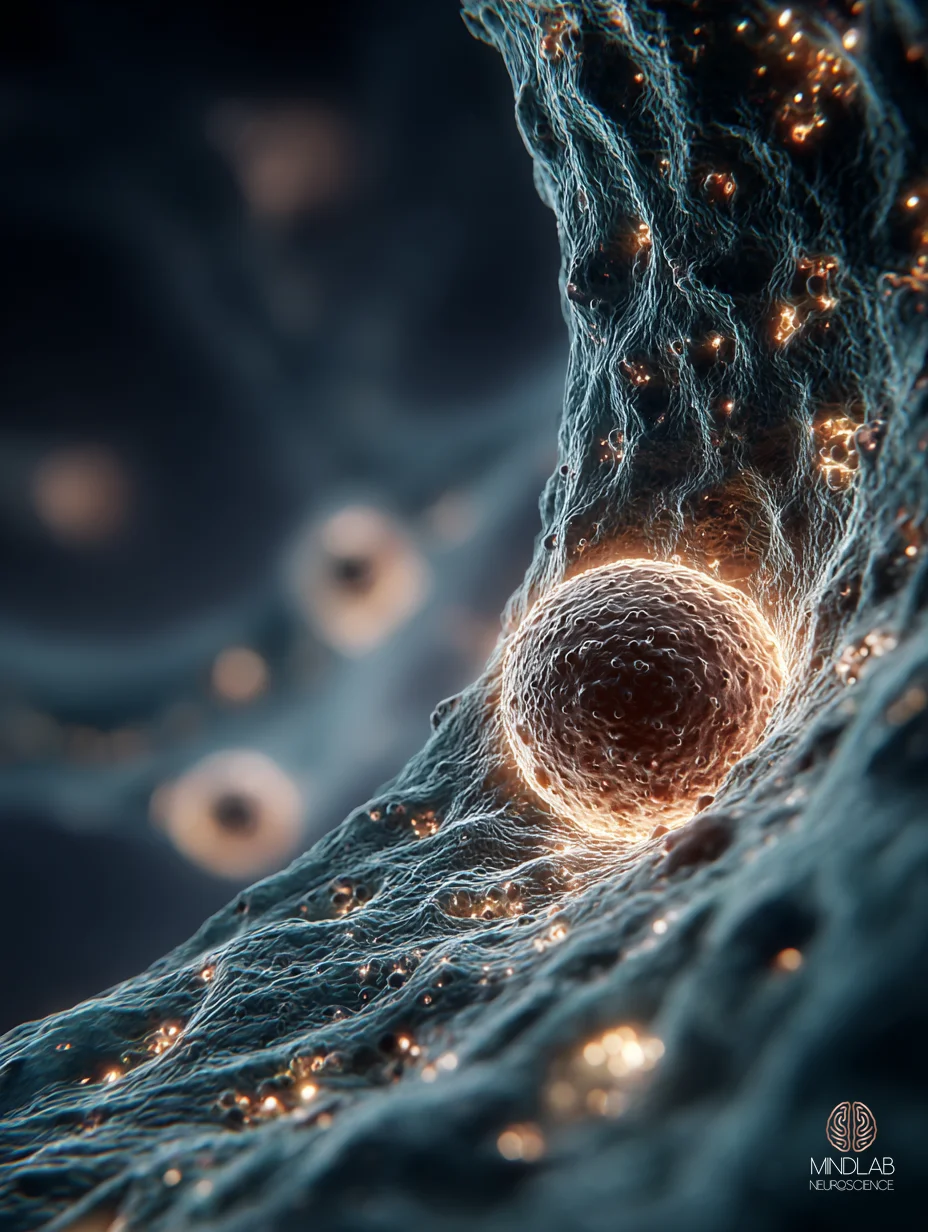
The protein evidence is direct. β-amyloid and tau both clear along glymphatic routes; both accumulate when the routes are disrupted. The aging evidence is correlational but consistent: AQP4 polarization at astrocytic endfeet decreases with age, perivascular pulsatility falls, and clearance efficiency drops in parallel. The disease-progression evidence comes from animal models in which AQP4 deletion or paravascular obstruction worsens tau pathology and amyloid burden.
What makes the glymphatic frame useful is that it integrates pieces previous models could not connect. Sleep disruption precedes dementia onset by years in epidemiological data. Slow-wave fragmentation correlates with elevated CSF amyloid in healthy adults long before diagnostic markers appear. Aging glymphatic decline matches the timeline of preclinical Alzheimer’s pathology. The system does not “cause” Alzheimer’s, but a brain whose nightly clearance has been quietly failing for a decade is a brain in which protein accumulation has had a structural runway.
For the reader who has watched a parent or grandparent decline, the takeaway is sober but actionable: protecting slow-wave architecture in midlife is one of the few mechanisms with a credible link to long-arc cognitive trajectory. It is not a guarantee. It is a leverage point, and it is one of the leverage points we can act on now.
“Protecting slow-wave architecture in midlife is one of the few mechanisms with a credible link to the long-arc cognitive trajectory: not a guarantee, but one of the leverage points we can act on now.”
What happens to your brain when you skip deep sleep for weeks?
Cumulative slow-wave restriction produces a compounding clearance deficit. The acute pattern shows up after one night of sleep loss; the chronic pattern adds soluble tau, white-matter changes, and sustained neuroinflammatory tone. A 2025 Cell study by Hauglund identified norepinephrine-driven slow vasomotion as the physiological pump powering nightly clearance.
Extending the Nedergaard lab’s earlier work, the finding means fragmented sleep architecture is not merely “less sleep”: it is a direct mechanical disruption of the flush itself.
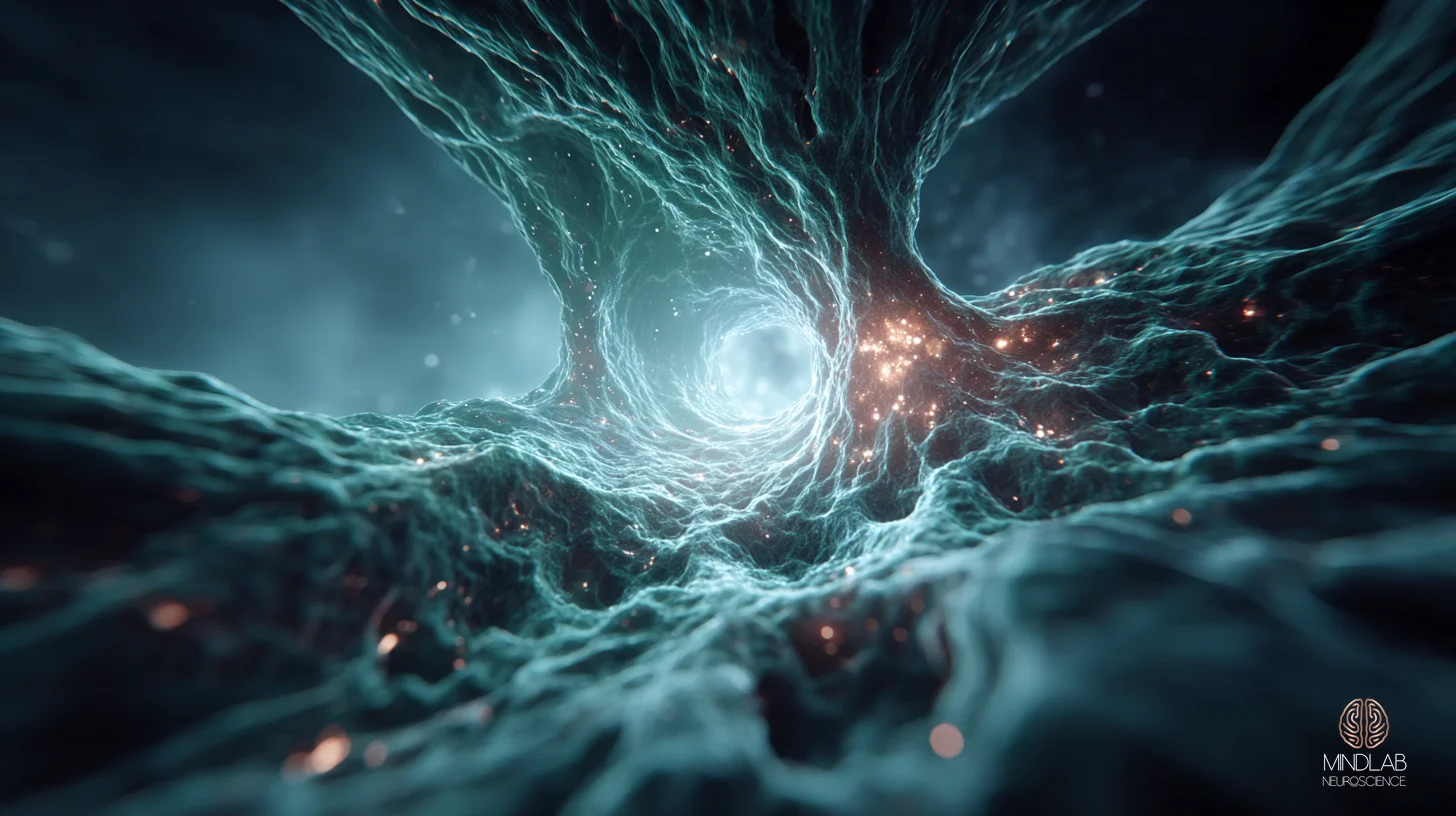
The early signs are subtle. Working-memory variability rises within four to seven nights of restricted slow-wave sleep. Intrusive cognition becomes more common. Emotional reactivity climbs. By two to three weeks, the cumulative tau and amyloid signal in CSF studies of partial-restriction protocols has typically risen above pre-restriction baseline, and recovery requires longer than the deprivation period: not equal time, more time.
By week six or eight of chronic sub-threshold slow-wave sleep, the picture changes from acute symptom to architectural drift. White-matter integrity, which depends on overnight glial maintenance, begins to show measurable change. Decision-making slows. The phrase clients use most often: “I’m not the same person” is a real description of an architectural state, not a metaphor. The good news is that the drift, caught early, is largely reversible. The bad news is that “early” means weeks, not months, and weekend catch-up sleep is not a substitute.
The cognitive cost of its failure is detailed in how glymphatic failure produces executive brain fog.
When I work with clients who have spent years with one ear half-open for a child, an aging parent, or a pre-dawn obligation, the cumulative slow-wave deficit looks identical to the executive’s, but the cause is invisible labor, not ambition. The brain does not care which one truncated the architecture. The clearance debt accrues either way.
References
Iliff, J. J., Wang, M., Liao, Y., Plogg, B. A., Peng, W., et al. (2012). A Paravascular Pathway Facilitates CSF Flow Through the Brain Parenchyma and the Clearance of Interstitial Solutes, Including Amyloid β. Science Translational Medicine. https://doi.org/10.1126/scitranslmed.3003748
Lee, H. J., Xie, L., Yu, M., Kang, H., Feng, T., et al. (2015). The Effect of Body Posture on Brain Glymphatic Transport. Journal of Neuroscience. https://doi.org/10.1523/jneurosci.1625-15.2015
Holth, J. K., Fritschi, S. K., Wang, C., Pedersen, N. P., Cirrito, J. R., et al. (2019). The sleep-wake cycle regulates brain interstitial fluid tau in mice and CSF tau in humans. Science. https://doi.org/10.1126/science.aav2546
Nedergaard, M., & Goldman, S. A. (2020). Glymphatic failure as a final common pathway to dementia. Science. https://doi.org/10.1126/science.abb8739
What the First Conversation Looks Like
Most clients who reach me about cognition and sleep do not arrive with “I have a glymphatic problem.” They arrive with a year of brain fog, a job that requires precision they no longer trust, and a sleep tracker that says they get seven hours. The first conversation is where we trace the actual architecture: slow-wave fraction, sympathetic-tone elevation, the invisible obligations that fragment the rest window. It is also where we start work that is built on Real-Time Neuroplasticity™: engaging the brain during the live moments when slow-wave-recovery and strategic myelination are biologically primed for change. It is a strategy call, not a fix. But it is where the architecture problem becomes addressable.
Can naps activate the glymphatic system?
Naps activate glymphatic clearance only when they reach slow-wave sleep, which typically requires a sleep latency of 30 minutes or more: uncommon in shorter naps. A 20-minute nap rarely produces measurable clearance. A 90-minute nap that includes a slow-wave cycle produces partial clearance, but it does not substitute for nightly architecture; it supplements it for adults running an existing slow-wave deficit.
Does alcohol disrupt glymphatic clearance?
Yes. Even moderate alcohol intake suppresses slow-wave architecture in the first half of the night and elevates noradrenergic tone during the rebound: both of which directly impair glymphatic flushing. The wearable may show “sleep” while the slow-wave fraction is reduced by 30–50%. Clients who eliminate alcohol four to six hours before bed routinely report cognitive recovery within two to three weeks.
Can exercise improve glymphatic function?
Indirectly, yes. Aerobic exercise increases slow-wave sleep depth and consolidation in randomized trials, and resistance training improves vascular pulsatility: one of the physiological drivers of perivascular CSF flow. The effect is on architecture, not on the glymphatic system directly. Exercise that disrupts sleep (late evening, high-intensity, near bedtime) produces the opposite effect and should be timed earlier in the day.
How does sleep apnea affect glymphatic clearance?
Severely. Obstructive sleep apnea fragments slow-wave architecture, sustains sympathetic activation, and elevates noradrenergic tone: three mechanisms that each independently suppress glymphatic flushing. CSF amyloid-β and tau levels are elevated in untreated apnea cohorts. Effective CPAP or positional management partially restores clearance over weeks, though baseline architecture rarely returns to pre-apnea levels without sustained intervention.
Is there any way to measure glymphatic function in living humans?
Yes, in research settings. Intrathecal contrast MRI tracks CSF tracer movement through perivascular spaces over 24–48 hours and has been used in published human studies to quantify clearance. Diffusion-tensor MRI along perivascular spaces (DTI-ALPS) is a noninvasive proxy gaining adoption. Neither is yet routine in consumer or general healthcare contexts; both remain primarily research-grade for now.