
Key Takeaways
- Goal shelving is deliberate, temporary withdrawal from a currently unrealistic goal, preserving the return option.
- Unlike goal disengagement (permanent abandonment), shelving avoids perceived failure’s emotional toll and keeps pathways open.
- Shelving reduces internal conflict between competing goals, freeing attentional resources for your current priorities.
- Written records of shelved goals prevent cognitive loss and allow periodic reassessment as circumstances evolve.
- Framing pauses as strategic, not defeat, shifts neural response from threat-based avoidance to goal-directed planning.
We all have goals we want to achieve, but sometimes life gets in the way. We may find that our priorities and circumstances change, making it difficult or even impossible to pursue certain goals. While popular advice says to never give up on your goals, the truth is that sometimes it makes sense to temporarily put them on hold. In this article, we’ll explore the concept of goal shelving, when to use it, and how it can help you achieve success.
Why Goals Don’t Always Get Accomplished
Most goals we set for ourselves never get accomplished, not because of weakness, but because we generate ideas far faster than we can act on them. Every person operates with finite time, money, resources, and willpower, making it nearly impossible to pursue every aspiration simultaneously. Recognizing this constraint is the starting point for smarter goal management, a cornerstone of systematic peak performance.
The brain encodes goals as active intention structures, and permanently abandoning one triggers a grief-like response in reward circuitry.
We all have defined period, money, resources, and willpower, so it’s nearly impossible to achieve every single goal we think of. Neuroscientific research confirms that the prefrontal cortex, the seat of executive function, has measurable capacity limits that constrain how many competing objectives we can pursue with quality attention. Emerging evidence demonstrates that strategic pausing enhances goal attainment by allowing unconscious processing to consolidate priorities. When cognitive load exceeds these limits, performance on all active goals deteriorates. This is not something to be ashamed of, just something to be aware of.
Research has demonstrated that strategic goal disengagement, deliberately shelving unachievable goals, reduces cortisol reactivity and protects hippocampal integrity compared to continued frustrated pursuit, providing neurobiological evidence that goal shelving is a cognitively protective strategy rather than a form of failure.
Research suggests selective goal prioritization recruits anterior cingulate cortex conflict-monitoring systems that protect motivational resources, meaning that the neural efficiency gained by shelving lower-priority goals directly amplifies commitment and performance on focal objectives.
The Importance of Focusing on What Matters
Focusing on the goals that matter most is not about giving up on everything else. It is about directing finite neural resources toward the objectives most aligned with your current values and circumstances. A success-focused mindset helps clarify which goals deserve your energy.
The nervous system responds to overcommitment the same way it responds to threat: with a stress cascade that undermines the very motivation needed to follow through. Individuals who practice goal shelving are better able to concentrate their effort and follow through on their primary goal. Strategically narrowing your active goal list is, therefore, not a limitation. It is a neurologically sound approach to sustained performance. Research on goal conflict suggests that individuals who actively manage their goal load tend to complete their primary objectives more reliably than those who pursue multiple competing goals without prioritization.
Goal Shelving: When to Put Projects on Hold
When we have multiple goals, they are all competing for our time, attention, and energy. Due to this, we need to choose which goals to pursue and which to put on hold. Goal shelving is the practice of temporarily withdrawing from a goal that isn’t currently realistic or attainable, to shift our time and energy to more important things.
Goal Disengagement vs. Goal Shelving
Goal disengagement and goal shelving are two distinct responses to conflicting objectives, and understanding the difference can preserve both emotional wellbeing and future opportunity. Goal disengagement involves permanently withdrawing from a goal, a step that may be necessary in some cases but can be emotionally taxing and may close the door to future possibilities.
The brain encodes goals as active intention structures, and permanently abandoning one can trigger a grief-like response in the reward circuitry. Shelving, by contrast, preserves the goal’s neural representation without the ongoing cognitive cost of active pursuit, making it a neurologically gentler and strategically smarter option in many circumstances.

The Benefits of Goal Shelving
Goal shelving works because the brain treats every unfinished goal as an open loop. Unresolved intentions keep firing low-level reminders, the tension the Zeigarnik effect first described, and each open loop draws on the same limited prefrontal working-memory bandwidth you need for focused execution. Reframing “I quit” as “I am shelving this for now” does something measurable: it closes the loop deliberately instead of leaving it to nag in the background, which frees executive resources for the goals you have actively chosen to pursue. The emotional cost falls because shelving is a decision rather than a failure, and the cognitive cost falls because the brain stops spending attention guarding a goal it has been told to hold.
How to Implement Goal Shelving
When reviewing your goals, identify which ones are no longer realistic or attainable. Instead of abandoning them altogether, shelve them temporarily. Keep notes and records of these goals, so that you can return to them when the time is right.
Examples of Goal Shelving
In our own lives, we can likely think of multiple goals we’ve had over the years that we simply never followed through on. Temporarily placing these goals on hold is a healthy and strategic response to changing circumstances. For example, if you’re short, middle-aged, with a job and family, you’re likely not going to be.
Conclusion: Achieve More by Shelving Goals
Goal shelving is a powerful tool for managing competing priorities and sustaining peak performance over time. Goals and priorities naturally evolve over time, and temporarily placing certain goals on hold is sometimes the most effective path forward. By doing so, we can focus our time and energy on what matters most and increase our chances of success.
Remember, goal shelving is not about giving up on a goal completely. Recognizing when a goal is not currently realistic or attainable, and pausing pursuit while focusing on other important objectives, allows us to avoid spreading ourselves too thin and stay motivated to achieve our most important goals.
Don’t be afraid to shelve a goal if it’s not currently feasible. Using goal shelving as a strategy for success, we can achieve more in the long run. Understanding how the brain enters a flow state can further amplify your progress. Keep notes and records of shelved goals, and revisit them periodically to assess whether it’s time to return to them. By using goal shelving as a tool for success, we can achieve more and live a fulfilling life.
The following questions address common concerns about the neuroscience concepts discussed in this article. Each answer draws on current research findings to provide practical, evidence-informed perspectives that can support your understanding of how the brain shapes behavior, emotion, and everyday experience across different life contexts.
Goal shelving raises many practical questions about when to pause, how to stay motivated, and what to do with goals that no longer fit current circumstances. The following answers draw on neuroscience and behavioral research to address the most common concerns about managing goals strategically and returning to shelved objectives when the time is right.
- Is it okay to give up on a goal completely? Permanently disengaging from a goal depends on the goal and the circumstances. In some cases, full disengagement may be necessary. However, in many cases, goal shelving is a more effective strategy for managing competing priorities, preserving future options while shifting focus to what matters most right now.
- How do I know when to shelve a goal? A goal is worth shelving when it is not currently realistic or attainable, or when other objectives carry greater importance at the moment. Listening to your own assessment of priorities and evaluating whether consistent progress is possible given current resources are the most reliable guides for making this decision.
- How can I keep track of shelved goals? Maintaining written notes and records of shelved goals is the most effective approach, allowing you to return to them when the time is right. Documentation can take the form of written notes, digital files, or structured journaling, whatever format makes periodic review easy and reliable.
- How can I stay motivated when I’ve shelved a goal? Concentrating on the goals that are most important at the moment, while keeping in mind that shelved goals remain accessible, sustains motivation effectively. Goal shelving functions as a way to manage competing priorities rather than as abandonment, preserving the sense of agency that fuels continued effort.
- What if I’m not sure whether to shelve a goal or not? Consulting a trusted friend, mentor, or professional support provider for guidance can provide valuable perspective. An outside viewpoint often surfaces priorities and constraints that are difficult to see clearly from within, making it easier to reach an informed and confident decision about shelving.
- Can goal shelving be applied to all types of goals? Goal shelving applies broadly across personal, professional, creative, and health-related objectives. Whether the goal involves fitness, career advancement, or a creative project, the same principle holds: temporarily redirecting resources toward higher-priority objectives allows better performance on the goals you choose to actively pursue.
- How long should I shelve a goal? The appropriate duration depends on the specific goal and your current circumstances, it may range from a few weeks to several months or longer. Keeping detailed notes and records ensures that when you return, you can resume from where you left off rather than rebuilding from the start.
- Can goal shelving help me achieve more in the long run? Temporarily placing lower-priority goals on hold allows time and energy to concentrate on what matters most, reducing cognitive overload and improving the quality of effort on active goals. Avoiding overextension in this way consistently leads to stronger long-run outcomes across multiple domains of life.
- Is it possible to achieve all of my goals? Achieving every goal set over a lifetime is unlikely, given the finite nature of time, energy, and attention. Focusing on what matters most and using goal shelving to manage competing priorities, however, makes it possible to achieve significantly more of what is genuinely important and live a fulfilling life.
- How can I make sure I don’t forget about shelved goals? Keeping structured notes and records, and scheduling periodic reviews to reassess whether circumstances have changed, is the most reliable method for keeping shelved goals accessible. Regular reassessment also ensures that returning to a goal happens at a moment of genuine readiness rather than by accident.
What is goal shelving and how does it differ from giving up?
Goal shelving is the intentional, strategic decision to pause pursuit of a goal temporarily so you can redirect resources toward higher-priority objectives. Unlike giving up, shelving preserves the goal for future action and involves a conscious evaluation of timing and capacity rather than an emotional surrender.
How does goal shelving benefit the brain’s performance?
The brain has finite cognitive and emotional bandwidth, and pursuing too many goals simultaneously depletes the prefrontal cortex’s executive function capacity. Strategic shelving frees up these neural resources, allowing deeper focus and better performance on the goals you choose to actively pursue.
When is the right time to shelve a goal?
The right time is when a goal consistently competes with other priorities for limited attention, energy, or time, and progress on multiple fronts is stalling. Key signals include feeling overwhelmed, making little progress despite effort, or recognizing that external circumstances have shifted the goal’s urgency or feasibility.
How do you return to a shelved goal without losing momentum?
Before shelving, document your progress, next steps, and key insights so your future self can resume without starting from scratch. When you’re ready to return, begin with a small re-engagement action to reactivate the relevant neural networks before ramping back up to full effort.
References
- Davidson, R. J. (2012). The Emotional Life of Your Brain: How Its Unique Patterns Affect the Way You Think, Feel, and Live, and How You Can Change Them. Plume.
- Porges, S. W. (2011). The Polyvagal Theory: Neurophysiological Foundations of Emotions, Attachment, Communication, and Self-Regulation. W. W. Norton.
- Siegel, D. J. (2020). The Developing Mind: How Relationships and the Brain Interact to Shape Who We Are (3rd ed.). Guilford Press.
- Sapolsky, R. M. (2023). Determined: A Science of Life Without Free Will. Penguin Press.
- Wrosch, C., Scheier, M. F., Miller, G. E., Schulz, R., and Carver, C. S. (2003). Adaptive self-regulation of unattainable goals: Goal disengagement, goal reengagement, and subjective well-being. Personality and Social Psychology Bulletin, 29(12), 1494-1508. https://doi.org/10.1177/0146167203256921
From Reading to Rewiring
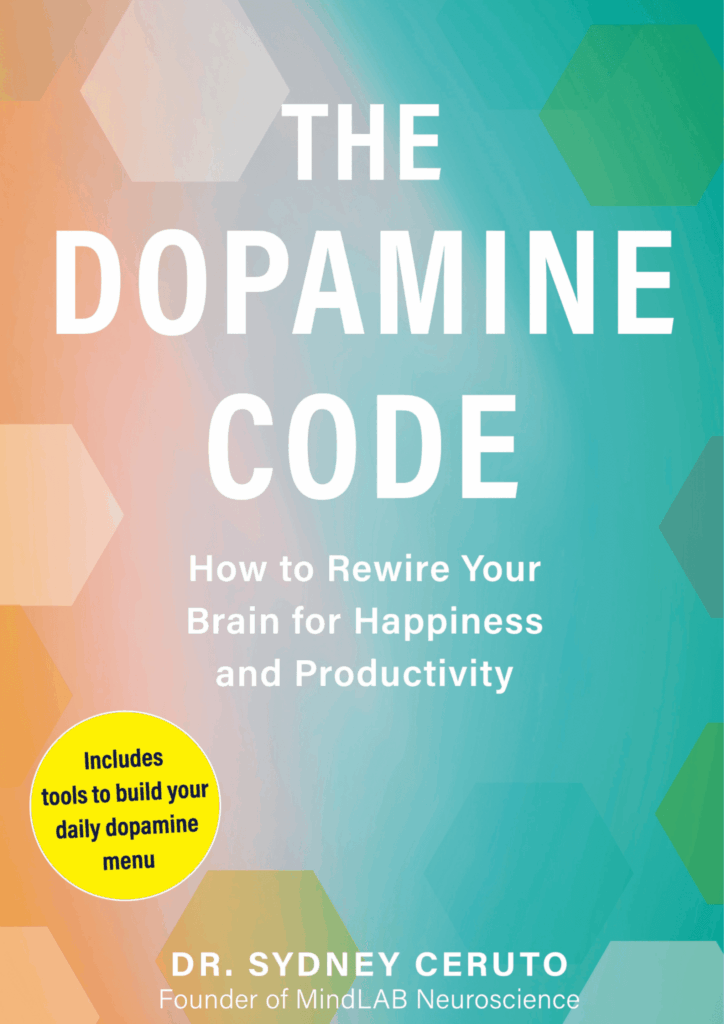
Goal-setting strategies grounded in neuroscience produce measurably better outcomes than conventional approaches. Dr. Sydney Ceruto works directly with individuals to design goal structures that align with how the brain actually encodes intention and sustains motivation. Book a Strategy Call to build a goal architecture matched to your specific neural wiring.
One hour with Dr. Ceruto