
The Neuroscience of Goal Achievement: Why Willpower Fails and What Actually Sustains Pursuit
Key Takeaways
- Goal failure is architectural, not motivational: dopamine runs on prediction error, which most frameworks eliminate.
- The messy middle is predictable: weeks 4-8 motivation collapse is reward prediction completing, not indiscipline.
- Identity goals outlast outcome goals: self-concept activates dissonance resolution, unlike reward prediction, which does habituate.
- Environmental design outperforms willpower: reducing initiation cost is 3-5x more effective at dopamine’s cost-benefit level.
Goal failure is an architectural problem, not a character flaw. It originates in the brain’s cognitive operating systems. The dopamine system that generates motivation operates on prediction error: the gap between what the brain expects and what actually happens, and most goal-setting frameworks inadvertently eliminate the very uncertainty that keeps the system firing. In my practice, the clients who struggle most with sustained goal pursuit are not the undisciplined ones. They are the high-performers who have mapped every step so precisely that their brain has already completed its reward prediction model and stopped investing neurochemical resources in the outcome. The fix is not more willpower. It is restructuring the goal itself to maintain the prediction errors the dopamine system requires.
Why Does Motivation Collapse Between Weeks Four and Eight?
The predictable death zone for most goal pursuits sits between weeks four and eight: a window reflecting the timeline required for the brain’s reward prediction system to complete its model of the daily effort-to-outcome relationship. Understanding this mechanism is the first step toward building goal architectures that sustain motivation through that collapse point and beyond.
Wolfram Schultz’s foundational research on dopamine neurons established that these cells fire most intensely when reward is unexpected, and actively suppress output when reward becomes predictable. At the start of any new pursuit, everything generates prediction error: the planning phase, the first actions, the early results.
Identity-based goal structures activate the prefrontal cortex’s self-concept maintenance network rather than habituating dopamine reward prediction, making them measurably more durable under sustained motivational pressure.
I describe this to clients as the Prediction Completion Trap. The better you understand your goal and the process required to reach it, the less dopamine the pursuit generates, because clarity eliminates the prediction error that fuels the system. This is why vague, exciting visions feel more motivating than detailed, realistic plans. The vision produces uncertainty. The plan resolves it.
The individual does not experience this as neuroscience. They experience it as “losing steam.” But what has actually happened is that the brain’s cost-benefit calculator has concluded it already knows the outcome and is redirecting motivational resources toward newer, more uncertain pursuits.
What happens in the brain during the messy middle
The messy middle, that stretch where novelty is exhausted and the finish line remains too distant to generate proximity-driven dopamine, is where the brain’s resource allocation system becomes adversarial. The prefrontal cortex must carry the effort without support from the reward prediction circuit, a metabolically expensive state that depletes within hours, not weeks.
In 26 years of working with high-performing individuals, I have never once seen raw discipline sustain a goal through the messy middle without structural support. Not once. The individuals who power through this phase all share one trait: they have built systems that reintroduce genuine uncertainty into a pursuit the brain has already modeled as predictable. Immordino-Yang has shown that meaning-making and self-relevant narrative engagement can restore motivational signal during precisely these depleted phases, providing a neurological basis for the identity-reframing strategies described below.
How Do You Structure Goals the Dopamine System Will Sustain?
The intervention is not to make goals vaguer. It is to engineer genuine prediction error at regular intervals within a clear overall direction. Current neuroscience research suggests that this phenomenon emerges from coordinated activity across multiple brain networks, involving regions responsible for emotional processing, memory consolidation, attention regulation.
Uncertain milestones replace fixed sub-steps. Instead of breaking a large goal into predictable checkpoints, where the brain completes its model early and reduces output, you introduce measurement points whose results you genuinely cannot predict. “Run a 5K in under 25 minutes by March” is a fixed prediction the brain resolves and loses interest in. “Test my 5K time every two weeks and observe how the training responds” introduces real uncertainty at each measurement point. Each test generates fresh prediction error because the result is unknown.
Skill challenge replaces task novelty. When I work with clients who have plateaued (writers who have lost engagement with a book project, executives who have gone flat on a strategic initiative) the goal is always intact. The brain has simply stopped treating the process as interesting. Shifting the challenge dimension restarts the signal. A writer whose chapter production has become routine shifts to craft and structural challenges within the same chapters. An executive whose quarterly targets have become predictable introduces a constraint (time, resource, or scope) that creates genuine uncertainty about whether the target can still be met. The goal stays fixed. The path becomes unpredictable again.
Why social accountability generates sustained prediction error
The dopamine system responds to social evaluation as a uniquely potent prediction error generator. Public commitment to milestones, where an audience will observe whether you delivered, creates ongoing uncertainty because social outcomes are genuinely unpredictable. You cannot model with precision how others will respond to your success or failure, and that irreducible uncertainty sustains dopamine output.
In my practice, I find that clients who build real social accountability into their goal architecture sustain effort through the messy middle at dramatically higher rates than those relying on self-monitoring alone. The accountability must involve authentic relationships and genuine consequences. App-based tracking and anonymous accountability platforms do not generate sufficient social prediction error to register.
Why Is Identity Architecture More Durable Than Outcome Goals?
The most resilient motivational structures I observe in practice are organized around identity, not outcomes. This distinction is not semantic. It engages a fundamentally different neural system. Multiple brain regions contribute to this process through synchronized neural firing patterns that emerge during both resting and active cognitive states.
“I want to lose 30 pounds” activates the dopamine system’s outcome-prediction machinery, which will habituate. “I am someone who moves their body every day” activates the prefrontal cortex’s self-concept maintenance network: a system that operates through cognitive dissonance rather than reward prediction. When behavior deviates from identity, the brain generates an aversive signal it seeks to resolve by performing the behavior. This mechanism does not habituate the way reward prediction does. Schore has documented how early relational experience shapes the neural substrate of self-concept, explaining why identity-based motivational structures prove more robust than externally reinforced outcome goals.
Deci and Ryan’s self-determination theory documents this distinction rigorously: when behavior is integrated into self-concept, what they term “identified regulation”, motivation becomes self-sustaining because it originates from who the person is rather than what they expect to receive. The behavior generates its own fuel.
Building an Achievement Identity Map
I work with clients to construct what I call an Achievement Identity Map: a structured definition of who they are becoming, expressed in behavioral terms rather than outcome terms. “I will publish a book by December” becomes “I am a writer who produces daily.” “I will hit revenue targets this quarter” becomes “I am.
What the research does not fully capture is the speed at which this reframe takes hold. In my experience, clients who adopt identity-framed goals report a shift in motivational quality within two to three weeks. The daily effort stops feeling like discipline and starts feeling like self-expression. That is the signature of identity integration, and it is the most reliable predictor of long-term goal achievement I have observed across 26 years.
What Makes Environmental Design 3-5x More Effective Than Motivation?
Every decision to initiate a goal-relevant behavior requires the dopamine system to generate sufficient motivational signal to overcome the initiation cost: the metabolic expense of activating the prefrontal cortex, suppressing competing impulses, and tipping the cost-benefit calculation toward action. Environmental design reduces that initiation cost directly.
This is not metaphor. Remove the distraction and you remove a competing impulse the prefrontal cortex would have to suppress. Place materials in immediate proximity and you lower the physical barrier. Link the behavior to an existing environmental trigger and you prime the motor sequence before conscious decision-making is required.
I consistently observe that clients who build robust environmental architecture around their goals achieve at rates three to five times higher than those relying on motivational strategies, even when the motivation-focused group reports higher initial enthusiasm. Enthusiasm is a dopamine spike. It habituates. A structural reduction in the cost of action does not.
The person who keeps their running shoes by the door and their phone in another room will outperform the person with perfect goals and zero environmental support. Every time.
Sleep is infrastructure, not strategy
Sleep restriction is the most common unrecognized driver of goal failure in the high-functioning population I work with. Volkow and colleagues demonstrated that even moderate sleep deprivation reduces D2 receptor sensitivity in the ventral striatum, blunting the motivational reward signal required to act on it.
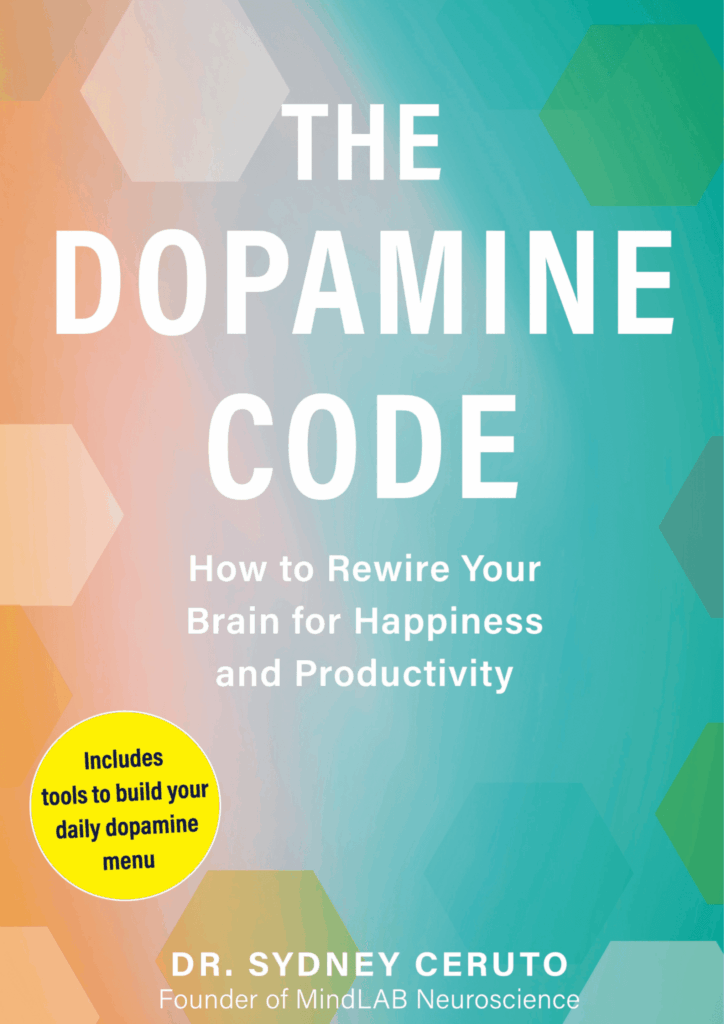
For a comprehensive framework on restructuring your reward architecture for sustained pursuit, including the dopamine system management that makes long-term achievement possible, the full science is covered in my book The Dopamine Code (Simon & Schuster, June 2026).
For the full picture, explore the Dopamine & Motivation hub.
Design Your Achievement Architecture
Goal achievement is one of the most common challenges high-performing individuals bring to my practice. The questions below address the neuroscience mechanisms that most directly determine whether sustained pursuit is possible, and what structural interventions produce durable results when motivation alone has already failed.
Why do I always lose motivation around week six of a new goal?
Week four to eight is when the Prediction Completion Trap activates. Your brain has completed its model for what the daily effort produces. The reward remains too distant to generate proximity-driven dopamine. The intervention is to introduce genuine uncertainty at this point, change the measurement cadence, shift the skill challenge, or test a new approach within the same direction. The dopamine system needs prediction error to sustain output.
How do I maintain motivation when results are slow?
Changing the measurement granularity is the most effective approach. Instead of measuring the distant final outcome, measure leading indicators, process metrics that produce immediate feedback. If the goal is revenue growth, measure daily outreach volume rather than monthly revenue. Leading indicators produce frequent prediction errors that sustain dopamine output between larger outcome markers and keep the brain’s reward system engaged throughout.
What is the single most effective neuroscience-based strategy for goal achievement?
Environmental design is the most reliable intervention available. Reducing the initiation cost of goal-relevant behavior through structural changes to your physical and digital environment is more effective than any motivational or planning strategy, because it operates at the level of the dopamine system’s cost-benefit calculation rather than trying to override it through willpower alone.
Does accountability really help, or is it just social pressure?
Accountability works through a specific mechanism: social evaluation creates genuine prediction error because you cannot predict exactly how others will respond to your success or failure. That uncertainty generates dopamine-driven motivation that self-monitoring cannot produce. The accountability must involve real relationships with real stakes, not anonymous tracking platforms, to generate sufficient prediction error to sustain output.
How can neuroscience strategies help optimize goal achievement?
Neuroscience strategies leverage the brain’s natural reward and motivation systems to make goal pursuit more effective and sustainable. By aligning goals with dopamine-driven motivation circuits and breaking them into manageable steps, individuals can maintain momentum and reduce the neural resistance that typically derails progress.
Why does the brain often sabotage long-term goals in favor of short-term rewards?
The brain’s limbic system is wired to prioritize immediate rewards because this preference provided survival advantages throughout human evolution. Overriding this default requires strengthening prefrontal cortex engagement through visualization, implementation intentions, and environmental design that reduces the friction between current actions and future goals.
What is the neuroscience behind effective goal visualization?
When you vividly visualize achieving a goal, the brain activates many of the same neural networks that would fire during the actual experience, essentially priming the motor and motivational circuits for success. This mental rehearsal strengthens synaptic connections and increases dopamine release associated with the anticipated reward, making follow-through more neurologically natural.
How does accountability leverage brain science to support goal completion?
Accountability activates the brain’s social monitoring systems, which evolved to maintain group standing and avoid social disapproval, adding a powerful motivational layer beyond personal willpower. Sharing goals with others also engages the consistency principle at a neural level, where the brain experiences cognitive dissonance when actions don’t align with publicly stated intentions.
References
- Barrett, L. F. (2020). Seven and a Half Lessons About the Brain. Houghton Mifflin Harcourt.
- Deci, E. L., & Ryan, R. M. (2000). The “What” and “Why” of Goal Pursuits: Human Needs and the Self-Determination of Behavior. Psychological Inquiry, 11(4), 227-268.
- Doidge, N. (2007). The Brain That Changes Itself: Stories of Personal Triumph from the Frontiers of Brain Science. Penguin.
- Immordino-Yang, M. H. (2016). Emotions, Learning, and the Brain: Exploring the Educational Implications of Affective Neuroscience. W. W. Norton.
- Schore, A. N. (1994). Affect Regulation and the Origin of the Self: The Neurobiology of Emotional Development. Lawrence Erlbaum.
- Schultz, W. (2015). Neuronal Reward and Decision Signals: From Theories to Data. Physiological Reviews, 95(3), 853-951.
- Volkow, N. D., Tomasi, D., Wang, G. J., et al. (2012). Evidence That Sleep Deprivation Downregulates Dopamine D2R in Ventral Striatum in the Human Brain. Journal of Neuroscience, 32(19), 6711-6717.
If the patterns described here (repeated messy-middle collapse, goals that start strong and fade, or consistent underperformance relative to your capabilities) sound familiar, a strategy call with Dr. Sydney Ceruto maps your specific motivational architecture in one conversation. The process identifies where in the dopamine system the signal is failing and what structural interventions will produce sustained pursuit.
From Reading to Rewiring
Reading about neuroscience builds understanding. Applying it builds a different brain. Dr. Ceruto works directly with individuals to map their specific neural architecture, identifying which circuits are driving current patterns and designing a targeted strategy for measurable change. The gap between knowing and rewiring requires a personalized approach grounded in your neurological profile, not generic advice.
One hour with Dr. Ceruto