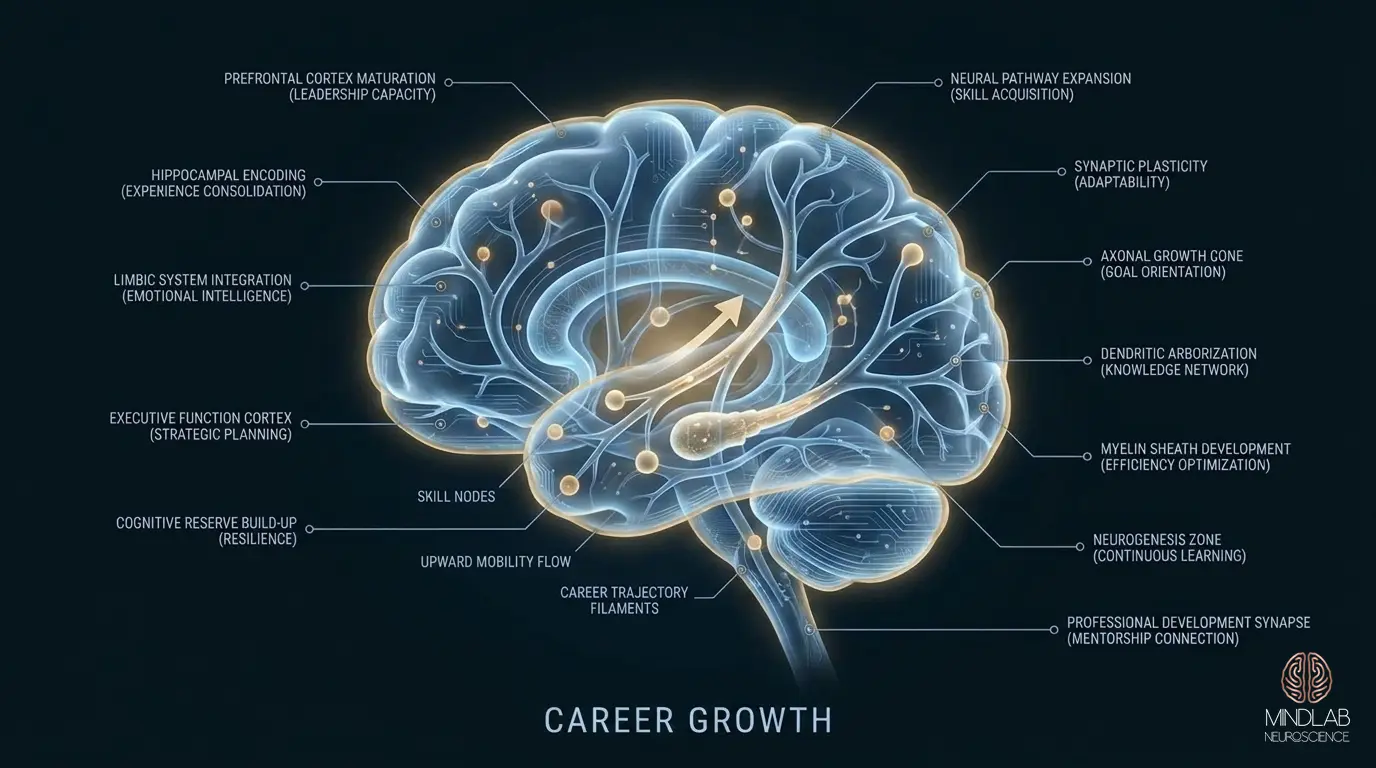
Negative thoughts about career growth activate the brain's threat response, redirecting energy from advancement to self-protection. Here is the neuroscience,...
Read article : Addressing the Impact of Negative Thoughts on Career GrowthCareer Growth
The strategic application of cognitive resources. We apply game theory and neural optimization to accelerate skill acquisition, navigate social hierarchies, and engineer the feedback loops required for rapid advancement.
33 articlesThe Serotonin Hierarchy
From a neurobiological perspective, career growth is the navigation of social dominance hierarchies. The neurotransmitter Serotonin tracks your perceived status within a group.
-
The Winner Effect: When you achieve a small win or gain recognition, serotonin levels rise. This reduces anxiety and increases social dominance signaling (posture, eye contact), which in turn makes others more likely to trust and promote you. This creates a positive feedback loop: perceived status drives actual competence.
Accelerated Acquisition
Rapid career growth relies on maximizing “myelination”—the insulation of neural circuits that turns slow, conscious effort into fast, automatic mastery. This requires Deliberate Practice.
-
The Comfort Trap: Most people practice what they are already good at (maintenance). Growth only occurs at the edge of ability, where the error rate is high. This “struggle” triggers the release of acetylcholine, which marks specific neurons for strengthening during sleep.
The Reticular Activating System (RAS)
“Luck” in a career is often a function of the Reticular Activating System—a bundle of nerves at the brainstem that filters out unnecessary data.
-
Gating Information: Your brain processes millions of bits of data per second but filters 99% of it out.
-
Priming the Filter: When you set specific, high-definition career goals, you reprogram the RAS to let in data related to those goals. Opportunities that were always there (but ignored as “noise”) suddenly become “signal,” allowing you to spot connections and openings that others miss.

Latest Articles
Uncover the neuroscience behind imposter syndrome and self-doubt. As a neuroscientist and author, I reveal why the brain mistakes success...
Read article : Unmasking Imposter Syndrome: A Neuroscience Guide to Addressing Self-DoubtBrain based learning applies neuroplasticity research to professional growth, showing how encoding, consolidation, and retrieval turn effort into durable, transferable...
Read article : Brain Based Learning: A Neuroscience Guide to Professional GrowthDiscover how thinking dispositions, such as open-mindedness, curiosity, and truth-seeking, shape decision-making, fuel growth, and matter more than IQ for...
Read article : Thinking Dispositions: The Secret Drivers of Exceptional Reasoning, Leadership, and GrowthUnlock how alpha vs beta traits are rooted in brain structure and chemistry. This deep dive reveals the neuroscience, evolutionary...
Read article : Alpha vs Beta Traits Neuroscience: Power, Connection, and the BrainBeing a young professional means carrying more pressure than your brain evolved to handle. A neuroscientist explains why, and the...
Read article : Young Professionals: The Neuroscience of Pressure, Burnout, and Thriving at WorkWhen the noise stops after a win, a capable brain can turn on you. This letter-style story follows a high...
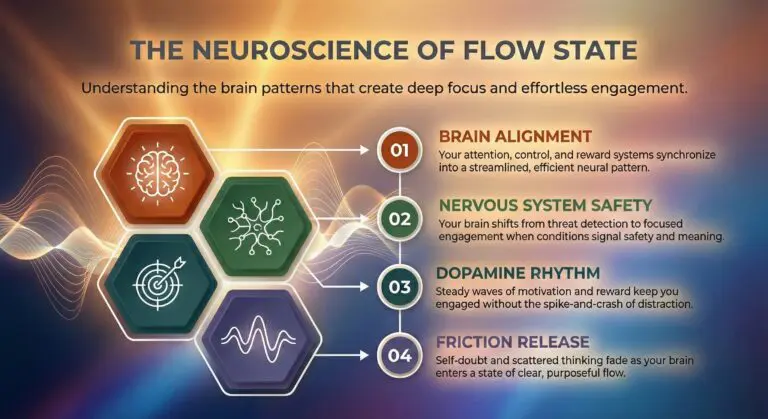
Read article : Impostor Feelings in the Quiet: A Letter for the Successful Client Who Still Feels Like a FraudLearn what a real flow state is, how your brain builds it, and how to use neuroscience-based tools to access...
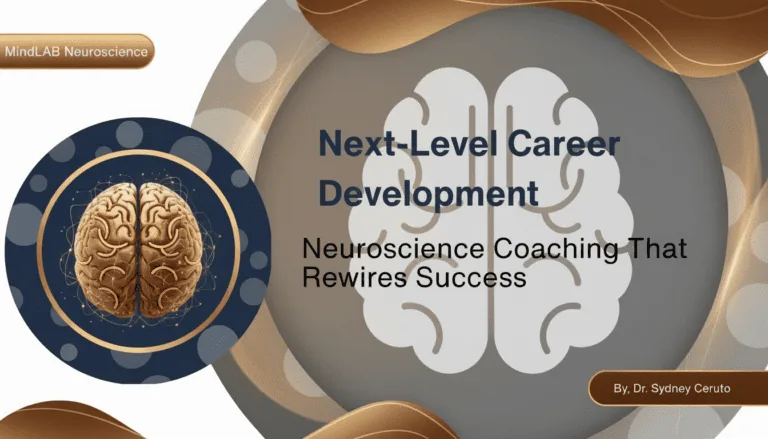
Read article : Flow State Neuroscience: A Complete Guide to Triggering Peak PerformanceCareer development through neuroscience coaching rewires your brain for clarity, confidence, and bold professional decisions, not just a better resume.
Read article : Next-Level Career Development: Neuroscience Coaching That Rewires SuccessRising to the top of your field while crushing ambitious goals should feel triumphant. Yet many high-achieving professionals experience persistent...
Read article : Anxiety Relief for High Performers: Optimizing Performance and Addressing FearFeeling stuck has a neurological basis: a dopamine signal going quiet. The brain science of stagnation, and how to rebuild...
Read article : Feeling Stuck in Your Career? Breakthrough Strategies in NeuroscienceA growth mindset is neuroplasticity in action. Here is how long-term potentiation, dopamine, and stress physiology rewire the brain, and...
Read article : Growth Mindset: How Your Brain Actually Changes