The neuroscience of a purpose-driven career change: why the brain craves meaningful work, the signals it is time to pivot,...
Read article : Beyond the Paycheck: How a Purpose-Driven Career Change Can Transform Your LifeCareer Growth
The strategic application of cognitive resources. We apply game theory and neural optimization to accelerate skill acquisition, navigate social hierarchies, and engineer the feedback loops required for rapid advancement.
33 articlesThe Serotonin Hierarchy
From a neurobiological perspective, career growth is the navigation of social dominance hierarchies. The neurotransmitter Serotonin tracks your perceived status within a group.
-
The Winner Effect: When you achieve a small win or gain recognition, serotonin levels rise. This reduces anxiety and increases social dominance signaling (posture, eye contact), which in turn makes others more likely to trust and promote you. This creates a positive feedback loop: perceived status drives actual competence.
Accelerated Acquisition
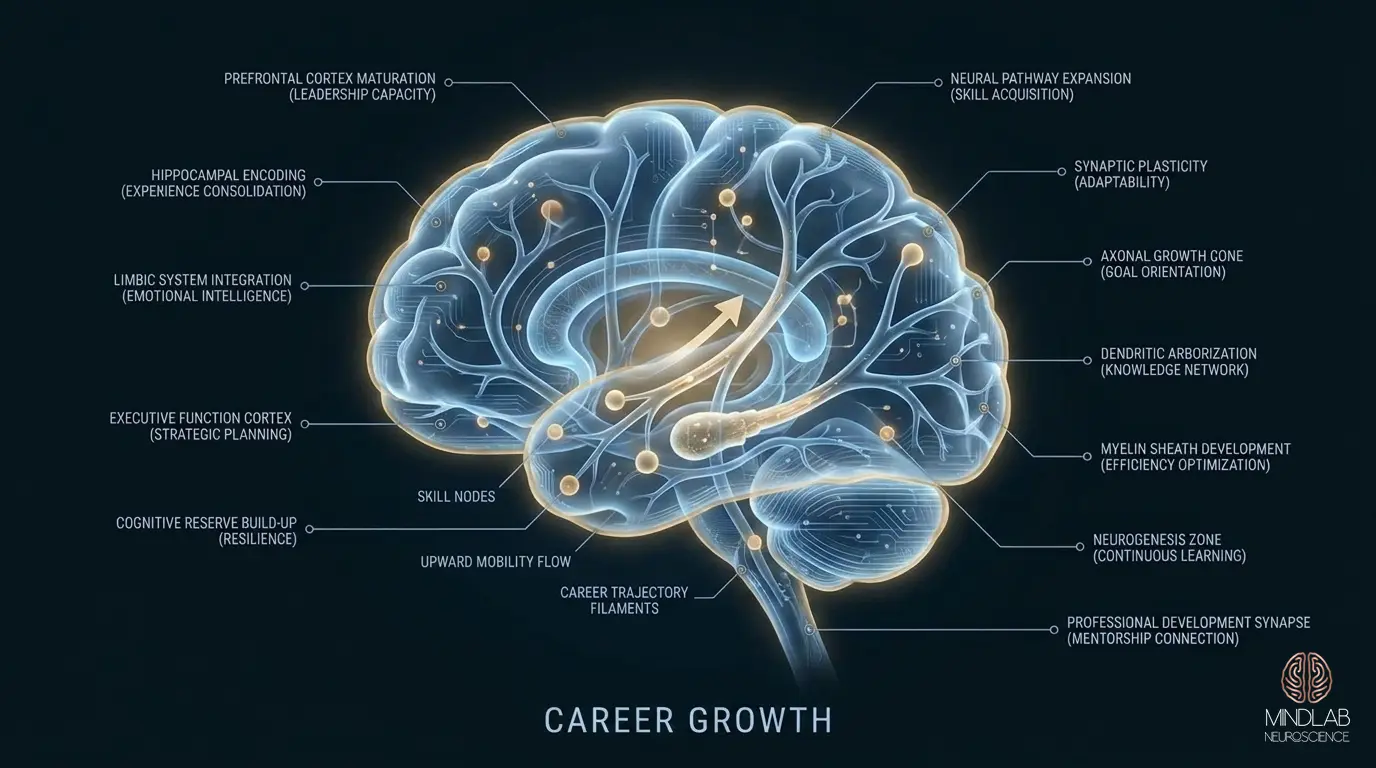
Rapid career growth relies on maximizing “myelination”—the insulation of neural circuits that turns slow, conscious effort into fast, automatic mastery. This requires Deliberate Practice.
-
The Comfort Trap: Most people practice what they are already good at (maintenance). Growth only occurs at the edge of ability, where the error rate is high. This “struggle” triggers the release of acetylcholine, which marks specific neurons for strengthening during sleep.
The Reticular Activating System (RAS)
“Luck” in a career is often a function of the Reticular Activating System—a bundle of nerves at the brainstem that filters out unnecessary data.
-
Gating Information: Your brain processes millions of bits of data per second but filters 99% of it out.
-
Priming the Filter: When you set specific, high-definition career goals, you reprogram the RAS to let in data related to those goals. Opportunities that were always there (but ignored as “noise”) suddenly become “signal,” allowing you to spot connections and openings that others miss.

Latest Articles
Resistance to change is a neural protection mechanism, not a character flaw. Six neuroscience-backed techniques to move a team from...
Read article : Resistance to Change: Transforming Change in the Workplace with NeuroscienceReskilling is how you stay employable when your job changes underneath you: a neuroscience guide to retraining the adult brain...
Read article : Reskilling Strategies for Career SuccessA success-focused mindset is a structural outcome, not a decision. Neuroscience shows belief change takes 60 to 90 days of...
Read article : The Neuroscience of a Success Focused Mindset: Why Motivation Fades and What Rewires BeliefFeeling underappreciated at work? Discover neuroscience insights and actionable strategies to reclaim your confidence and career satisfaction today!
Read article : The Neuroscience of Feeling Underappreciated at Work: Why It Happens and How to Overcome ItThe best careers for work-life balance fit your brain's wiring, not just your resume: how cognitive alignment and flexible structure...
Read article : The Best Careers for Work-Life Balance: A Neuroscience-Backed GuideProfessional development that lasts is neuroscience-backed: how neuroplasticity, emotional intelligence, and habit formation rewire your brain for career growth.
Read article : Professional Development Ideas That Actually WorkDive into the fascinating world of Type A personality traits through the lens of neuroscience. Uncover the driving forces behind...
Read article : Powerful Benefits of Type A Personality TraitsPromotion readiness is a brain state, not just a resume. The neuroscience of wiring your mind for the next role,...
Read article : Is Your Brain Promotion-Ready? Neuroscience Blueprints for Career DominationRevolutionize your goal-crushing strategy with "How to Crush Your Goals: 7 Neuroscience Hacks". This cutting-edge guide unveils scientifically-backed brain optimization...
Read article : Optimize Your Goals: 7 Neuroscience-Based StrategiesCareer decisions activate a complex neural network, prefrontal cortex for strategic planning, limbic system for emotional processing, and dopamine circuits...
Read article : Career Decisions Neuroscience: How Your Brain Shapes Professional ChoicesHow the brain actually makes career decisions, why high-stakes pressure derails them, and the practical neuroscience of choosing well.
Read article : Explosive Tactics to Enhance Your Decision-Making Skills for Career Advancement