Key Takeaways
- Durable professional development works with the brain’s ability to adapt and learn, not against it.
- Seminars target what you know; durable growth lives in cognitive flexibility, emotional intelligence, habit formation.
- The mechanism is neuroplasticity: neural pathways reorganize with experience, so deliberate practice physically rebuilds capability.
- Most development fails: it engages classroom memory, never the circuits driving behavior under pressure.
- Change comes from encoding behavior through spaced repetition, emotional engagement, and practice in real moments.
Most professional development advice fails for one reason: it ignores how the brain actually changes. Skill lists and weekend seminars target what you know, but durable growth depends on cognitive flexibility, emotional intelligence, and habit formation, capacities built into your neural wiring that can be deliberately retrained. In my work, the gap is almost never knowledge. It is that new knowledge never reaches the circuits that fire when the stakes are high. The ideas below work because they are designed around that biology rather than against it.
Most professional development targets what you know. Durable growth lives one layer beneath that, in the neural wiring that decides whether a new skill ever becomes automatic.
Why Most Professional Development Never Sticks
Here is the pattern I see constantly. Someone reads the books, attends the workshop, takes the notes, and nothing durable changes. That is not a discipline problem. Traditional programs run on information transfer, which engages declarative memory but rarely touches the procedural and emotional circuits that actually drive behavior. Under stress or heavy cognitive load, the brain defaults to its established patterns no matter what was covered in a classroom. Lasting growth requires encoding new behavior into the basal ganglia and prefrontal cortex through spaced repetition, emotional engagement, and practice under real pressure, conditions most programs never create. Once you understand that, professional development stops being about collecting more and starts being about rewiring what you already carry.
By building on that biology, you can sharpen decision-making, sustain productivity, and grow real resilience, which are the factors that actually predict long-term career success. Whether you are moving toward a leadership role, working toward better balance, or trying to think more clearly under pressure, the science of how behavior changes is the lever. It is the foundation of Strategic Career Architecture.
Emotional Intelligence Is a Neural Skill, Not a Personality Trait
Emotional intelligence is the skill I watch move careers the most, and it is frequently misunderstood as something you either have or you do not. It is the ability to recognize, understand, and regulate emotion in yourself and others, and it is central to how the brain processes and manages emotion. Research consistently shows it predicts professional success more reliably than technical skill or raw IQ, which makes it one of the highest-leverage capacities to develop for real career growth.
The workplace keeps tilting toward collaboration, adaptability, and leadership. People with strong emotional intelligence manage interpersonal dynamics better, make steadier decisions under pressure, and build healthier environments around them. It matters most in leadership, where emotional awareness directly shapes motivation, conflict, and culture.

The Four Components Worth Building
Emotional intelligence develops over a lifetime, and it starts with four core components:
- Self-awareness. The foundation. Recognizing your emotions and how they shape your behavior and decisions. People high in self-awareness know their strengths, own their blind spots, and manage their reactions better.
- Self-regulation. Managing emotional responses constructively, avoiding impulsive reactions, and staying composed under pressure. This is what lets you handle a high-stakes moment with clarity instead of reactivity.
- Empathy. Reading and understanding the emotions of others. Empathy strengthens teamwork, sharpens negotiation, and lets leaders build genuinely inclusive environments.
- Social skill. How well you actually interact. Strong social skill lets you communicate persuasively, resolve conflict with diplomacy, and build the relationships that carry work forward.
Training Emotional Intelligence Through the Brain
Neuroscience is clear that emotional intelligence is not a fixed trait but a trainable skill. Because of neuroplasticity, the brain’s capacity to rewire through experience and practice, you can genuinely improve how you recognize and regulate emotion. Experience-dependent plasticity operates across the whole lifespan, with targeted practice producing measurable changes in cortical structure within weeks. These are the approaches I lean on most:
- Deep listening. The prefrontal cortex engages when you truly listen. Focusing entirely on the speaker rather than rehearsing your reply sharpens emotional awareness and makes your communication land.
- Structured self-reflection. Journaling and deliberate reflection increase awareness of your emotional triggers and recurring patterns, strengthening the brain’s capacity to regulate rather than react.
- Cognitive reframing. Emotion is shaped heavily by interpretation. Consciously reframing a negative read into a constructive one lowers stress and improves decisions. Breathwork, visualization, and grounding help settle the nervous system that reframing runs on.
- Emotional agility. The ability to move through complex emotion without being overwhelmed. You accept the feeling without judgment and use it as data. Training the brain to sit with discomfort instead of reacting builds a more strategic response to pressure.
Neuroplasticity as a Career Engine
Using neuroplasticity for continuous learning does more than help you retain information. It builds resilience, adaptability, and long-term growth. The people who advance furthest treat learning as ongoing, constantly refining how they think rather than resting on what they already know.
Development grounded in neuroplasticity accelerates real career growth. The brain’s capacity to adapt strengthens with deliberate engagement in new challenges, which makes learning both more effective and more durable. People who actively seek out varied challenges, mentorship, and exposure outside their lane build the cognitive agility that keeps a career alive as industries shift. Staying relevant now takes more than accumulating knowledge. It takes a real commitment to how you think, so you can sharpen your judgment and move through changing demands with confidence.
How the Brain Actually Learns
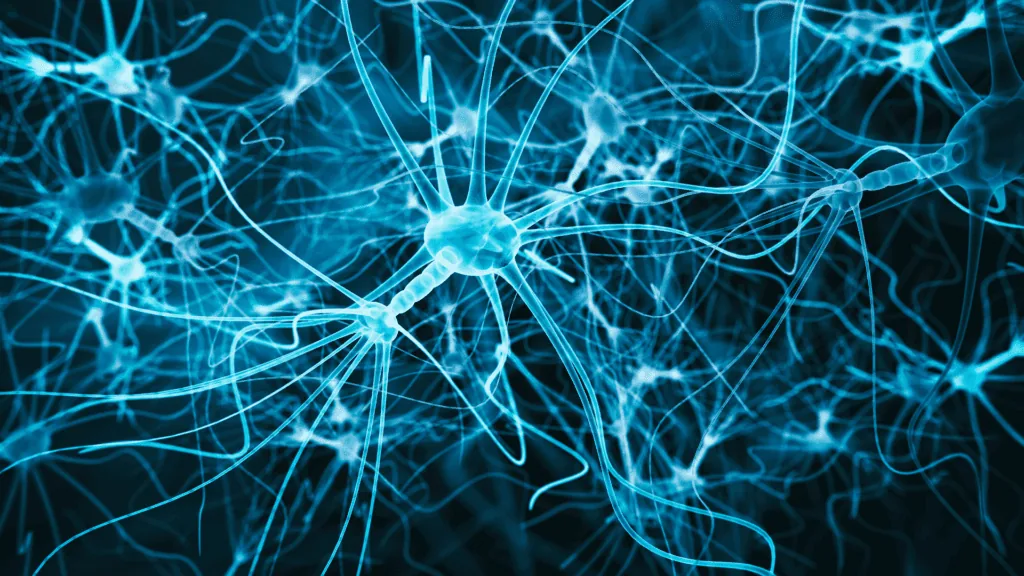
The brain learns through active engagement, strategic repetition, and applying knowledge in varied contexts. A few evidence-based methods reliably outperform the rest.
Spaced repetition
Revisiting material at increasing intervals strengthens memory consolidation far better than cramming. It works with the brain’s natural forgetting curve, reinforcing neural connections so new knowledge holds. You can build it in with review sessions, digital flashcards, and periodic self-testing.
Interleaving
Instead of mastering one skill before moving to the next, mixing topics within a session builds cognitive flexibility. Alternating between subjects forces the brain to retrieve and apply information in different contexts, which produces deeper understanding and genuine adaptability.
Active application
Hands-on learning, where you apply a concept rather than passively read it, produces far higher retention because it strengthens the circuits behind problem-solving and decision-making. Three ways to put it to work:
- Teach it to someone else. Explaining a concept exposes exactly where your understanding is thin.
- Simulate the real situation. Rehearsing a hard conversation or a live problem builds the adaptability you actually need in the moment.
- Write your reflections down. Putting new insight into your own words strengthens how the brain encodes and keeps it.
Stress, Burnout, and the Cost to Your Thinking
Chronic stress is one of the largest obstacles to growth, and it is a physical one. Sustained stress rewires the brain, thinning the prefrontal cortex that handles decision-making and emotional regulation while raising amygdala reactivity, which leaves you more reactive and less adaptable. This is why I treat managing stress as inseparable from building skill. The human brain runs as a network, and the efficiency of information transfer between its regions shapes your cognitive capacity more than the activity of any single area, so protecting that network is protecting your judgment.
The people who sustain high performance treat recovery as seriously as ambition, and it shows up as steadier creativity and stronger relationships. A few brain-based strategies that hold up:
- Cognitive reappraisal. Reframing a challenge as an opportunity rather than a threat retrains the default stress response and builds resilience.
- Physical activity. Regular movement supports neurogenesis and regulates stress hormones, sharpening focus and steadying emotion.
- Restorative sleep. Quality sleep is when memory consolidates and the emotional system resets. It is not optional for cognitive performance.
- Mindful attention. Practicing present-moment awareness lowers amygdala activity and strengthens the regions behind self-awareness and emotional control.
- Real recovery. True recovery is not just time off. It means engaging the brain’s reward system through creative work, time in nature, and genuine social connection.

Decision-Making Under Pressure
Good decisions are career-defining, and their quality depends on the interplay between the prefrontal cortex, the amygdala, and the anterior cingulate cortex. Under chronic stress, cortisol impairs the analytical brain and amplifies the emotional one, producing reactive choices. Confident decision-making under pressure comes from keeping the prefrontal cortex online when it counts. A few ways to strengthen it:
- Build awareness of the cognitive biases quietly shaping your choices.
- Sharpen analytical thinking through structured problem-solving.
- Use a deliberate pause and present-moment awareness to reduce impulsivity.
Risk tolerance matters too. The strongest performers balance calculated risk with real planning, and training the brain to stay steady with uncertainty opens opportunities that fear would otherwise close.
Mentorship and Building Durable Habits
Social learning is powerful because the brain encodes patterns it sees modeled. A good mentor or advisor provides guidance, honest feedback, and perspective that accelerates growth, reinforces goal-setting, and broadens the frameworks you think inside of. It supports neuroplasticity by strengthening positive learning patterns.
Sustained growth ultimately comes down to behavior, and habits form in the basal ganglia through repeated cue-routine-reward loops. The most effective approach layers new behavior onto existing pathways rather than building from nothing:
- Micro-habits. Small, manageable changes that compound over time.
- Accountability. A tracker or a person who reinforces consistency.
- Reward. Marking small wins releases the dopamine that makes a new behavior progressively automatic.
Trying to change too much at once overwhelms working memory and fragments the encoding, which is exactly why focused, sequential skill-building beats sprawling programs. Neural pathways behind learning and performance strengthen measurably when you adopt a growth-oriented framework, with effects visible in both behavior and brain imaging.
Toward a More Intentional Career
Development grounded in neuroscience is not about acquiring more skills. It is about rewiring the brain to adapt, decide, and lead. That framework produces growth that is both sustainable and genuinely transformative.
When I work with executives, high-stakes traders, and people in demanding environments, the focus is usually on decision-making under pressure, cognitive agility, and resilience. They process enormous amounts of information, adapt fast, and hold performance while managing stress. By working with the underlying neuroscience, they learn to regulate their nervous systems, sharpen problem-solving, and sustain the mental endurance those careers demand.
I apply the same principles with people early in their careers, those changing industries, or professionals stuck in patterns of self-doubt and stagnation. For them, the work is less about adding skills and more about retraining the brain to embrace growth, tolerate uncertainty, and build a mindset that makes the work fulfilling over the long run. Whether you are a seasoned leader or just starting out, cognitive flexibility, emotional intelligence, stress management, and better decision-making are what make development practical and lasting.
About the Author
Founder & CEO of MindLAB Neuroscience, Dr. Sydney Ceruto is the pioneer of Real-Time Neuroplasticity™: a proprietary methodology that durably rewires the neural pathways driving behavior, decisions, and emotional responses.
Dr. Ceruto holds a PhD in Behavioral & Cognitive Neuroscience (NYU) and Master’s degrees in Clinical Psychology and Business Psychology (Yale University). Lecturer, Wharton Executive Development Program, University of Pennsylvania.
If the patterns in this article sound like your own experience, the next step is a working conversation about the specific neural architecture driving them, and what it would take to change it. Book a Strategy Call.
How does neuroplasticity apply to professional development and career growth?
Neuroplasticity is the brain’s ability to reorganize its neural pathways in response to new learning and experience. Every time you practice a new professional skill, public speaking, strategic thinking, difficult conversations, the corresponding neural circuits strengthen through repeated activation. This means professional development is not about adding external knowledge but about physically rewiring the brain’s architecture. The same mechanism that lets you master a language lets you build leadership presence, provided the learning conditions align with how the brain actually encodes and consolidates new patterns.
Why do most professional development programs fail to produce lasting change?
Traditional programs rely heavily on information transfer, workshops, seminars, reading lists, which engages declarative memory but rarely reaches the procedural and emotional circuits that drive real-world behavior. Under stress or cognitive load, the brain defaults to its established neural patterns regardless of what was learned in a classroom. Lasting professional growth requires encoding new behaviors into the basal ganglia and prefrontal cortex through spaced repetition, emotional engagement, and real-time practice under pressure, conditions most conventional programs never create.
What role does emotional intelligence play in professional success according to neuroscience?
Emotional intelligence operates through specific neural networks, the insula for self-awareness, the anterior cingulate cortex for conflict monitoring, and the ventromedial prefrontal cortex for social decision-making. Research consistently shows that EQ predicts professional success more reliably than IQ because workplace performance depends heavily on navigating interpersonal dynamics, regulating emotional reactions, and reading social signals accurately. These are trainable neural competencies. Strengthening the circuits that govern emotional recognition and regulation produces measurable improvements in leadership effectiveness, team collaboration, and decision quality.
How can neuroscience-based strategies improve decision-making at work?
Decision-making quality depends on the interplay between the prefrontal cortex (analytical reasoning), the amygdala (emotional weighting), and the anterior cingulate cortex (error detection). Under chronic stress, excessive catecholamine signaling, amplified by cortisol, impairs prefrontal function and heightens amygdala influence, producing reactive rather than strategic decisions. Neuroscience-based professional development strengthens prefrontal regulation so the analytical brain stays online during high-pressure moments. Techniques like cognitive load management, strategic pausing, and interoceptive awareness train the brain to integrate emotional data without being hijacked by it.
What is the most effective way to build new professional habits according to brain science?
Habit formation occurs in the basal ganglia, where repeated behaviors become automated through a cue-routine-reward loop. The most effective approach is layering new professional behaviors onto existing neural pathways rather than trying to build from scratch. Spaced repetition with increasing intervals strengthens memory consolidation during sleep. Dopamine release at the moment of small wins reinforces the reward circuit, making the new behavior progressively more automatic. Attempting too many changes simultaneously overwhelms working memory and fragments the encoding process, which is why focused, sequential skill-building outperforms broad development programs.
References
- Dweck, C. S. (2016). Mindset: The New Psychology of Success. Ballantine Books.
- Kolb, B. and Gibb, R. (2014). Searching for the principles of brain plasticity and behavior. Cortex, 58, 251-260. https://doi.org/10.1016/j.cortex.2013.11.012