
Key Takeaways
- The prefrontal cortex keeps maturing into the mid-twenties, which is why early-career decisions feel harder.
- Dopamine drives the reward system toward wanting more than enjoying, explaining the knowing-doing gap.
- Career and identity uncertainty activate the HPA axis and recalibrate the amygdala‘s threat sensitivity.
- Your twenties are peak neuroplasticity, the highest-leverage decade for building habits, beliefs, and self-schema.
- Generic advice rarely changes behavior because lasting change happens in neural circuitry, not willpower.
If your twenties feel like trying to steer a high-performance vehicle whose dashboard is still being wired, that sensation is real, and it is biological. The brain you bring to your first jobs, your first apartment, your first real decisions about who you want to become is still finishing its most sophisticated construction. The regions responsible for long-range planning, weighing trade-offs, and overriding the easy impulse are among the very last to mature. This is not a flattering metaphor; it is one of the most robust findings in modern developmental neuroscience. And once you understand the mechanism, the early-career struggle stops looking like a personal failing and starts looking like exactly what it is: a brain in the final, most powerful phase of its rewiring.
The Early-Career Brain Is Still Under Construction
For most of the twentieth century, scientists assumed the human brain was essentially finished by adolescence. Neuroimaging dismantled that idea. We now know the brain matures from the back to the front, and the prefrontal cortex (the seat of executive function, sitting just behind your forehead) is the final region to come fully online. Its development continues well into the mid-twenties, and for some people, a little beyond.
Two processes drive this late maturation. The first is synaptic pruning: throughout childhood the brain over-produces connections, and adolescence into early adulthood is a period of strategic editing, in which frequently-used circuits are strengthened and unused ones are eliminated. The principle is efficiency: a leaner, faster, more specialized network. The second process is myelination, the wrapping of neural pathways in a fatty insulating sheath of myelin that can accelerate signal transmission dramatically. The dorsolateral prefrontal cortex (central to working memory, abstract planning, and holding a goal in mind while resisting distraction) is among the last areas to complete this myelination.
Here is why that matters in practice. When you are weighing a long-term career move against an immediate temptation, the slower-maturing prefrontal cortex is competing with deeper, faster, fully-developed emotional and reward circuitry. The hardware for impulse and emotion finished first; the hardware for deliberation is still being upgraded. So if planning, follow-through, and resisting the short-term pull feel disproportionately hard in your early career, that is not evidence of weak character. It is a developmental mechanism, one that also happens to be a profound opportunity, because a system still finishing construction is a system uniquely open to being shaped.
Dopamine and the Architecture of Motivation
If there is one molecule that governs the texture of early-career life, it is dopamine. It is widely misunderstood as the “pleasure chemical,” but the research tells a more interesting story. The work of neuroscientists Kent Berridge and Terry Robinson drew a sharp and now-foundational distinction between wanting and liking. Dopamine primarily fuels wanting (the pursuit, the craving, the motivational push toward a goal), which is a separate system from the liking that registers actual enjoyment once you arrive.
That distinction explains one of the most frustrating experiences of your twenties: the gap between knowing what to do and doing it. You can fully understand that the long-term project matters more than the notification on your phone, yet the phone wins. The reward system releases dopamine most powerfully in anticipation and around novelty and uncertainty, and the unpredictable, instantly-rewarding pings of modern work and life are engineered to exploit exactly that. Meanwhile, the meaningful career investment whose payoff is months away offers your reward system very little in the moment.
Why Novelty Hits Harder Now
Early career is saturated with novelty and uncertainty: new roles, new cities, new relationships, an open-ended future. Because the reward system is especially responsive to the unfamiliar and the unpredictable in this stage of life, the same conditions that make your twenties exhilarating also make sustained, unglamorous effort harder to engineer. The solution is not more willpower applied against the current. It is understanding the current well enough to build habits that recruit your reward system rather than fight it: wiring small, reliable signals of progress into work whose ultimate payoff is distant.
Stress, Uncertainty, and the Threat-Calibration System
Few life stages stack as much genuine uncertainty as the early career years: unstable income, ambiguous expectations, comparison with peers, and the unsettling open question of who you are becoming. Your brain has a dedicated system for metabolizing that uncertainty, and understanding it changes how you relate to the pressure.
At the center sits the amygdala, a structure that rapidly appraises situations for threat and tends to weight ambiguity itself as something to be wary of, which is why an unanswered email or an unclear future can register as a low-grade alarm. When the amygdala flags a threat, it helps trigger the HPA axis (hypothalamic-pituitary-adrenal), the cascade that releases cortisol. In short, calibrated bursts, this stress response is genuinely useful: it sharpens attention and mobilizes energy for a deadline or a high-stakes conversation. The relevant variable tends to be not whether the system activates, but how chronically.
The early-career brain is also still calibrating where its threat thresholds sit, which means this period is plausibly formative for how you will appraise pressure for years to come. That cuts both ways. Persistent, unmanaged uncertainty can bias the system toward over-reactivity. But the same plasticity means deliberate, repeated experiences of facing ambiguity and finding it survivable can help recalibrate that threshold in the other direction, toward a brain that reads uncertainty as navigable rather than dangerous.
Identity Formation: Why This Is the Highest-Leverage Decade
Underneath the question of what to do with your career sits a deeper one: who you take yourself to be. Neuroscience has a candidate for where that self-model lives. The default mode network (a set of interconnected regions most active when you are not focused on the outside world) is heavily involved in self-referential thought: autobiographical memory, imagining your future, and maintaining the running narrative of identity, your self-schema.
In your twenties, that self-schema is unusually unsettled, and unusually malleable. You are actively assembling the story of who you are, which careers fit you, what you are capable of. Because the underlying circuitry is still consolidating, the beliefs you build now are not just passing thoughts; they are laying down structure. A self-schema that includes “I am someone who follows through” or “I can become capable at hard things” is, at the neural level, a pattern being reinforced into the architecture.
This is the deep reason the early-career decade carries such leverage. Neuroplasticity (the brain’s lifelong capacity to rewire in response to experience) never disappears, but it is especially pronounced during this window of identity consolidation. The same plasticity that makes your twenties feel destabilizing is precisely what makes them the most efficient time you will ever have to install durable patterns of belief, behavior, and self-concept. Change is possible at every age. It is simply cheaper now.
Why Generic Advice Doesn’t Change Behavior, and What Does
If insight alone rewired behavior, the avalanche of productivity content would have transformed an entire generation. It hasn’t, and the reason is mechanistic. In my work with early-career professionals, I consistently see the same pattern: they arrive having read everything and changed almost nothing. Reading advice engages comprehension; it does not, by itself, restructure the circuits that actually drive what you do. Behavior lives in physical neural pathways, and those pathways change through targeted, repeated activation, not through being told the right answer once.
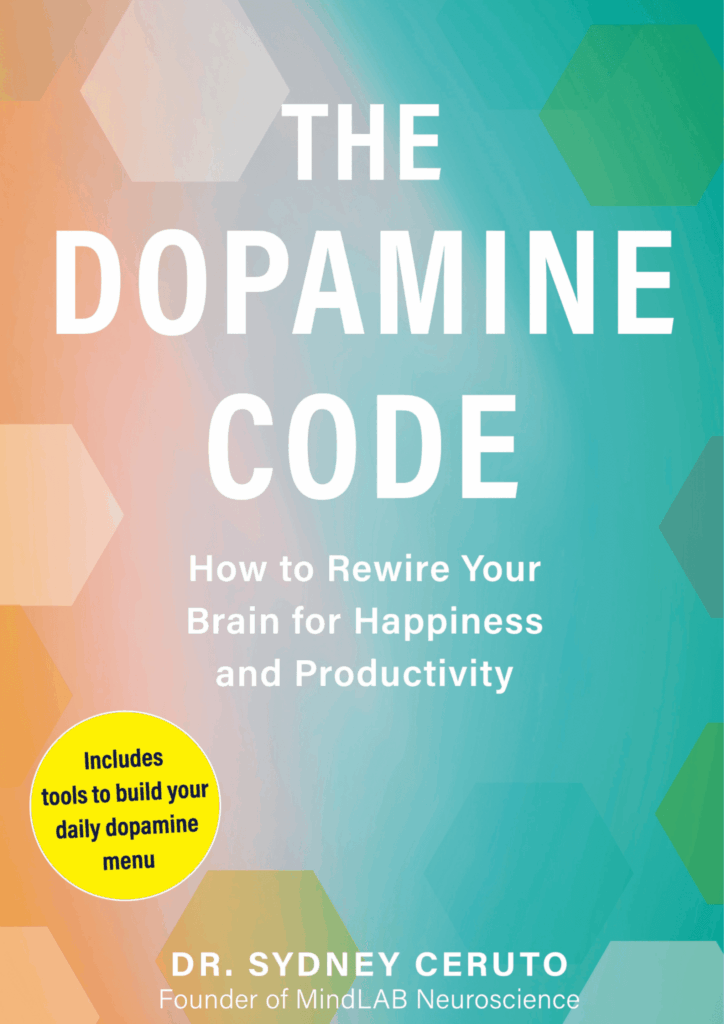
This is where the distinction between information and intervention becomes decisive. Lasting change requires working directly with the brain’s own mechanisms: engaging the reward system so new behaviors become self-reinforcing, building self-efficacy through structured experiences of capability, and leveraging the heightened neuroplasticity of this decade to consolidate new patterns before old ones reassert themselves. This is the territory of Real-Time Neuroplasticity™, the method developed by Dr. Sydney Ceruto, Neuroscientist & Author, holder of a PhD in Behavioral & Cognitive Neuroscience from NYU, Founder & CEO of MindLAB Neuroscience, and author of The Dopamine Code (Simon & Schuster, June 2026). It is an approach built around how the brain actually rewires, applied to the precise decade when rewiring is most powerful.
The young professional who understands these mechanisms gains something more valuable than another list of tips: a working model of their own operating system, at the exact moment that system is most open to being deliberately shaped. The neuroscience programs at MindLAB are built on that premise, as is the broader work on strategic career architecture for early-career professionals.
Understanding how your brain works is the first move. Applying that understanding deliberately, in real time, is where the change actually happens. When you’re ready to apply this to your own brain, you can book a strategy call with Dr. Ceruto.
References
- Gogtay N, Giedd JN, Lusk L, et al. Dynamic mapping of human cortical development during childhood through early adulthood. Proceedings of the National Academy of Sciences. 2004;101(21):8174-8179. https://doi.org/10.1073/pnas.0402680101
- Berridge KC, Robinson TE. What is the role of dopamine in reward: hedonic impact, reward learning, or incentive salience? Brain Research Reviews. 1998;28(3):309-369. https://doi.org/10.1016/S0165-0173(98)00019-8
- McEwen BS. Protective and damaging effects of stress mediators. New England Journal of Medicine. 1998;338(3):171-179. https://doi.org/10.1056/NEJM199801153380307
- Raichle ME, MacLeod AM, Snyder AZ, Powers WJ, Gusnard DA, Shulman GL. A default mode of brain function. Proceedings of the National Academy of Sciences. 2001;98(2):676-682. https://doi.org/10.1073/pnas.98.2.676
- Draganski B, Gaser C, Busch V, Schuierer G, Bogdahn U, May A. Neuroplasticity: changes in grey matter induced by training. Nature. 2004;427(6972):311-312. https://doi.org/10.1038/427311a
Is it true my brain isn’t fully developed in my twenties?
In a specific, well-documented sense, yes. The prefrontal cortex (responsible for planning, judgment, and impulse regulation) continues maturing into the mid-twenties through synaptic pruning and myelination. Faster emotional and reward circuitry matures earlier. This timing gap is why deliberate, long-range decisions can feel disproportionately effortful early in your career, a developmental mechanism, not a flaw.
Why do I know what I should do but still not do it?
Because dopamine drives wanting more than liking, a distinction established by researchers Berridge and Robinson. Your reward system responds most to novelty, anticipation, and immediate payoff, so a buzzing phone outcompetes a distant career goal in the moment. Closing the gap is less about willpower and more about engineering small, immediate signals of progress that recruit the reward system toward what matters.
Why does early-career uncertainty feel so stressful?
Your amygdala appraises situations for threat and tends to read ambiguity itself as risky, which can make an unclear future register as a quiet alarm. It engages the HPA axis to release cortisol. Brief activations sharpen focus and are useful; the variable that tends to matter is chronicity. Because threat thresholds are still calibrating in your twenties, repeated, survivable experiences of ambiguity can help retune the system toward resilience.
Are your twenties really the best time to change?
It is plausibly the most efficient time. Neuroplasticity persists throughout life, so change is possible at any age, but it is especially pronounced during the identity-consolidation window of your twenties. The default mode network that maintains your self-schema is still settling, so beliefs and behaviors you build now lay down structure more readily. Change is always possible; it is simply cheaper to install durable patterns during this decade.
Why hasn’t reading productivity advice changed my behavior?
Because comprehension and circuitry are different things. Reading advice engages understanding but does not restructure the neural pathways that actually drive behavior; those change through targeted, repeated activation. Durable change comes from working with the brain’s mechanisms directly: engaging the reward system, building self-efficacy through structured experiences, and using heightened neuroplasticity to consolidate new patterns. Insight starts the process; deliberate rewiring completes it.
The brain you bring to your first jobs, your first apartment, your first real decisions about who you want to become is still finishing its most sophisticated construction.