





Life Coach in Bergen County

In Bergen County's high-velocity ecosystem, the pressure to perform never pauses. The pattern is consistent: accomplished professionals hitting a ceiling.

Personal development services in Bergen County range from accountability-focused programs to accountability-adjacent conversations that feel productive but don't shift behavior. I work differently. My methodology is built on four trainable dimensions of well-being with measurable neural correlates: awareness, connection, insight, and purpose. When you work with me, you're accessing a neuroscientist who specializes in how the highest-performing brains learn, adapt, and perform under real-world pressure.
Schedule a Strategy Call

Personal Development Coaching

Personal development coaching is about recalibrating your internal framework—the set of beliefs, habits, and thought patterns that shape how you interpret opportunity and constraint. High-performers often have outdated mental models inherited from earlier career stages. As your context changes—leadership scope expands, stakes rise, team complexity grows—the strategies that got you here can become invisible limiting factors.

Real-time neuroplasticity targets the default mode network and anterior cingulate cortex, two regions that shape self-concept and identity. Pavesi et al. (2023, Brain Sciences) demonstrate that adult neuroplasticity remains trainable throughout life, meaning your sense of self isn’t fixed. My programs activate the neural substrates of flexible thinking so you can upgrade your internal operating system without losing the strengths that built it.

Learn more about Personal Development Coaching in Bergen County →

Career Coaching

Career coaching addresses a specific pressure: the gap between ambition and clarity about direction. I regularly see that Bergen County’s high-performers often know what they’ve achieved but not what they actually want next. This isn’t indecision—it’s the neural signature of operating at the threshold of your current context.

The orbitofrontal cortex and ventromedial prefrontal cortex govern decision-making under uncertainty, particularly when stakes are personal and complex. Rolls (2023, Brain Structure and Function) maps how these regions integrate value signals to guide choice. My methodology doesn’t tell you what to choose; it trains the neural mechanisms that let you choose with confidence and speed, even with incomplete information.

Learn more about Career Coaching in Bergen County →

Confidence Coaching

Confidence isn’t personality. It’s a learnable neural mechanism grounded in self-efficacy and the brain’s ability to predict successful outcomes. Many high-performers carry a core doubt—a sense that their success is provisional or luck-dependent—despite objective evidence to the contrary. This isn’t imposter syndrome as pop psychology frames it; it’s a mismatch between actual capability and the brain’s model of self.

Greental et al. (2022, Nature Mental Health) identified the corticostriatal circuit as the neural substrate of self-efficacy and confidence. This circuit can be trained. What I observe across clients is that shifting confidence isn’t about affirmations; it’s about building new neural associations between action and outcome so your brain’s predictive model catches up to your actual track record.

Learn more about Confidence Coaching in Bergen County →

Mindset Coaching

Mindset—the difference between fixed beliefs (“I’m not a math person,” “I’m not a public speaker”) and growth-oriented framing—has profound neural consequences. de los Angeles et al. (2022, npj Science of Learning) identified the neural circuitry of growth mindset: the dorsal anterior cingulate (dACC), striatum, and hippocampus work in concert to support learning and adaptation.

More recent research: Zeng (2025, Brain Sciences) conducted a scoping review of 15 studies on growth mindset neural correlates, confirming that belief systems about your capacity to learn are neurobiologically real. A pattern I encounter: Bergen County’s entrepreneurs and executives who’ve built significant outcomes sometimes resist upgrading their mindset because “I got here with what I have.” But stagnation isn’t stability—it’s a decision to stop learning.

Learn more about Mindset Coaching in Bergen County →

Stress Management Coaching

Chronic stress isn’t a feeling; it’s a neurobiological state with measurable structural consequences. McEwen & Davidson (2012, Nature Neuroscience) landmark research established that sustained stress increases amygdala volume and reduces prefrontal-amygdala connectivity—exactly the pattern that makes threat-reactivity automatic and executive control sluggish.

The good news: this is reversible. Sandman et al. (2020, Behaviour Research and Therapy) demonstrated that structured interventions change amygdala-prefrontal connectivity, with improvements predicting sustained outcomes six months out. High-performers in Bergen County often interpret their stress response as normal—”this is just the cost of playing at this level”—rather than as actionable neuroscience.

Learn more about Stress Management Coaching in Bergen County →

Leadership Coaching

Leadership is a neurocognitive skill. It requires managing your own emotional state while reading and influencing others’ emotional states—a process grounded in prefrontal-limbic connectivity and the social brain. Friedman & Robbins (2021, Neuropsychopharmacology) identified five core executive functions the prefrontal cortex governs: working memory, attention, inhibition, planning, and flexibility.

All five are compromised under chronic stress. All five are trainable. The recurring pattern: leadership challenges—miscommunication, team tension, decision bottlenecks—often reflect neural dysregulation rather than strategy gaps. A leader with cortisol chronically elevated can’t access the neural bandwidth for perspective-taking or nuanced judgment.

Learn more about Leadership Coaching in Bergen County →

Executive Life Coaching

Executive coaching in Bergen County often focuses on strategy and stakeholder dynamics. That’s necessary, not sufficient. Executives operate across multiple high-stakes domains simultaneously—financial pressure, team dynamics, family expectations, personal legacy concerns—and the cognitive load is real.

Singh et al. (2022, Nature Communications) demonstrated that mastering cognitively demanding tasks produces lasting prefrontal plasticity and improved executive capacity across domains. This isn’t about learning more techniques; it’s about training the brain’s executive control network itself. What emerges across engagements is that the highest-performing executives aren’t the ones with the most advanced strategies—they’re the ones who’ve built the neural capacity to operate clearly across complexity.

Learn more about Executive Life Coaching in Bergen County →

Resilience Coaching

Resilience isn’t toughness. It’s a learnable capacity to maintain prefrontal function under pressure. Klumpers et al. (2021, Nature Human Behaviour) identified anterior PFC activity as the strongest predictor of resilience—specifically, the brain’s ability to maintain forward-looking perspective and meaning-making even when stress is high.

Roeckner et al. (2021, Translational Psychiatry) outlined the three-circuit resilience model: the ventromedial prefrontal cortex (linking emotional experience to meaning), the hippocampus (maintaining context and narrative), and the anterior cingulate cortex (guiding sustained effort toward values). All three can be trained. Across clients, Bergen County’s most resilient professionals aren’t the ones who never struggle; they’re the ones whose nervous systems recover quickly and whose brains stay oriented toward opportunity even under real adversity.

Learn more about Resilience Coaching in Bergen County →

Decision Making Support

Decision fatigue is a real neurobiological phenomenon. As the number and complexity of decisions mount, the prefrontal cortex’s capacity to integrate information and weigh values depletes. High-performers in Bergen County—managing complex business portfolios, navigating real estate markets, leading teams—make dozens of significant decisions weekly.

Rolls (2023, Brain Structure and Function) maps the orbitofrontal cortex, amygdala, and anterior cingulate as the core decision-making network, particularly under uncertainty. The pattern is consistent: the quality of decisions drops not because people lack intelligence, but because their neural decision-making machinery is operating on fumes.

Learn more about Decision Making Support in Bergen County →

Emotional Intelligence Coaching

Emotional intelligence—the capacity to recognize, interpret, and use emotional signals to guide thought and action—is grounded in specific neural networks. Morawetz & Berboth (2021, Neuropsychologia) identified amygdala-prefrontal connectivity as the core substrate of emotional intelligence, particularly the ability to modulate emotional reactivity while maintaining access to emotional data.

Many high-performers suppress emotions rather than integrating them, which costs them information and authentic connection. Across engagements, executives and entrepreneurs who’ve built major outcomes often have uneven emotional intelligence: sharp strategic awareness paired with limited ability to read subtlety in relationships.

Learn more about Emotional Intelligence Coaching in Bergen County →

Work Performance Coaching

Work performance—sustained productivity, focus, execution quality—isn’t about willpower or time management. It’s about optimizing the neural systems governing attention, motivation, and reward processing. Weinstein (2023, Frontiers in Behavioral Neuroscience) mapped the dopaminergic reward circuitry driving career motivation and performance persistence.

When this system is dysregulated—when you’re chasing external validation or operating from depletion rather than genuine motivation—performance becomes unsustainable. High-performers often burn out not from lack of drive, but from a mismatch between their external goals and their internal reward circuitry.

Learn more about Work Performance Coaching in Bergen County →

Burnout Prevention Coaching

Burnout isn’t failure of character. It’s the predictable endpoint when the brain’s stress-buffering systems—primarily the prefrontal cortex and its connections to the limbic system—are chronically overtaxed. Heim et al. (2024, Frontiers in Endocrinology) demonstrated that socio-emotional training reduced cortisol levels by 51%, a shift that predicted sustained burnout prevention.

Many Bergen County professionals interpret burnout warning signs as confirmation they’re playing at the right level. I regularly see that the professionals who sustain high performance over decades aren’t the ones who push the hardest; they’re the ones who’ve learned to calibrate stress, recover actively, and maintain the neural clarity that lets them say no strategically.

Learn more about Burnout Prevention Coaching in Bergen County →

Communication Skills Coaching

Communication clarity at the level you need—influencing boards, retaining talent, managing up—requires real-time coordination between your intention-setting prefrontal networks and the social brain regions that decode audience response and adjust in real time. Valk et al. (2020, eLife) demonstrated that structural plasticity in the social brain can be built through targeted socio-affective training.

Technical experts and successful entrepreneurs often communicate as if explaining to themselves, not to their audience. This isn’t a style issue; it’s a neural mapping issue—the gap between internal clarity and audience reception.

Learn more about Communication Skills Coaching in Bergen County →

Change Management Coaching

Organizational change fails not because strategies are poor, but because the neural substrate required to sustain behavior change during disruption is usually missing. Uddin (2021, Nature Reviews Neuroscience) outlined the frontoparietal control network as the system governing cognitive flexibility and the ability to update mental models when circumstances shift.

A pattern I encounter: leaders who navigate change most successfully aren’t the ones with the best change management frameworks; they’re the ones whose nervous systems can stay steady and creative during volatility. Their teams sense this, which is why change adoption accelerates.

Learn more about Change Management Coaching in Bergen County →

Public Speaking Confidence

Public speaking engages distinct neural phases with different constraints. Kuai et al. (2020, Brain Imaging and Behavior) identified two distinct phases: anticipation (driven by amygdala reactivity and threat assessment) and delivery (when prefrontal attention networks dominate). Most people’s public speaking challenge occurs in the anticipation phase—and that’s trainable.

The evidence is consistent: confident public speakers aren’t people without anxiety; they’re people whose amygdala-prefrontal connectivity is tuned so that as delivery begins, the shift is automatic. Their nervous system has learned to treat the moment as an opportunity, not a threat.

Learn more about Public Speaking Confidence in Bergen County →

Breakthrough Sessions

Breakthrough moments—the “aha” insights that shift understanding or untangle persistent problems—have a distinct neural signature. Oh et al. (2020, NeuroImage) identified breakthrough insights as involving a prefrontal gamma burst combined with orbitofrontal reward signal activation. Tik et al. (2018, Human Brain Mapping) used ultra-high-field fMRI to show that these “aha” moments activate the dopaminergic midbrain and hippocampus.

Clients don’t need someone to think for them; they need structured conditions that allow their own intelligence to make new connections. Breakthrough sessions are precision interventions designed to activate the neural mechanisms underlying insight so you arrive at clarity rather than being told it.

Learn more about Breakthrough Sessions in Bergen County →
Dr. Sydney Ceruto, PhD — Founder, MindLAB Neuroscience

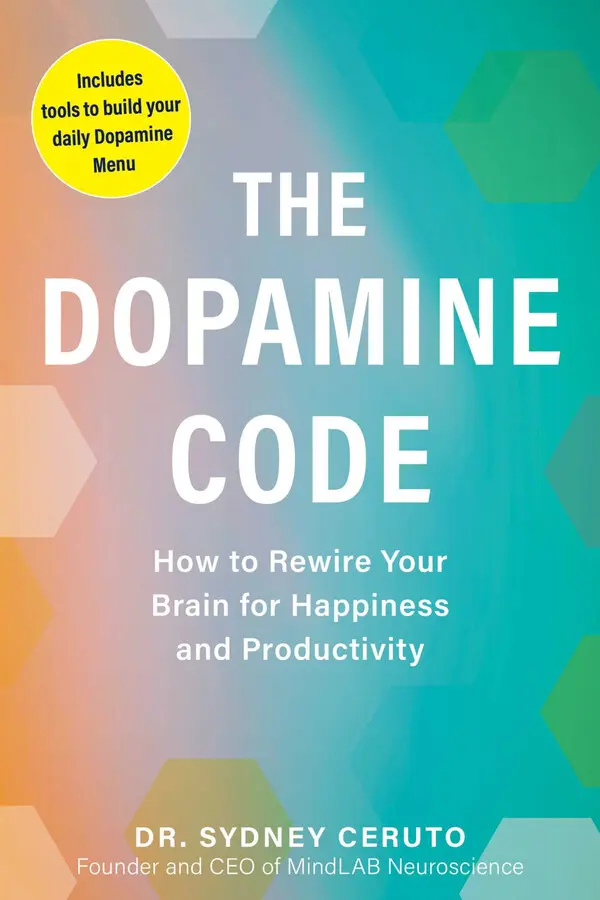
Dr. Sydney Ceruto holds a PhD in Behavioral & Cognitive Neuroscience from NYU and Master’s degrees in Clinical Psychology and Business Psychology from Yale University. She is a Lecturer in the Wharton Executive Development Program at the University of Pennsylvania, an Executive Contributor to Forbes Coaching Council, and an inductee in Marquis Who’s Who in America. Dr. Ceruto founded MindLAB Neuroscience in 2000 and has spent more than 26 years developing and refining her proprietary methodology, Real-Time Neuroplasticity™. She is the author of The Dopamine Code (Simon & Schuster, June 2026).

References

Diamond, A. (2013). Executive functions. Annual Review of Psychology, 64, 135–168. https://doi.org/10.1146/annurev-psych-113011-143750

Ochsner, K. N., & Gross, J. J. (2005). The cognitive control of emotion. Trends in Cognitive Sciences, 9(5), 242–249. https://doi.org/10.1016/j.tics.2005.03.010

Pascual-Leone, A., Amedi, A., Fregni, F., & Merabet, L. B. (2005). The plastic human brain cortex. Annual Review of Neuroscience, 28, 377–401. https://doi.org/10.1146/annurev.neuro.27.070203.144216

Success Stories

“Every system, every supplement, every productivity method I tried collapsed within weeks — and nothing held because nothing addressed why my attention kept fragmenting. Dr. Ceruto identified the dopamine regulation pattern that was hijacking my prefrontal cortex every time I needed sustained focus. She didn't give me another workaround. She restructured the architecture underneath. My brain holds now. That's not something I ever thought I'd be able to say.”

Derek S. — Film Producer Beverly Hills, CA

“My body had simply stopped knowing when to sleep. Crossing time zones weekly for over two years had broken something fundamental, and every protocol, supplement, and device I tried couldn't hold longer than a few days. Dr. Ceruto identified the disruption at the level of my suprachiasmatic nucleus and recalibrated the signaling pattern driving the dysfunction. Within weeks, my circadian rhythm locked back in. I sleep now. Consistently. Regardless of where I land.”

Jonathan K. — Diplomat Geneva, CH

“Anxiety and depression had been running my life for years. Dr. Ceruto helped me see them not as permanent conditions but as neural patterns with identifiable roots. Once I understood the architecture, everything changed.”

Emily M. — Physician Portland, OR

“From our first meeting, Sydney made me think about what I actually wanted and helped me change my perspective. She immediately put me at ease. I’ve only been working with her a short time, but I already have a more positive outlook — for the first time, I really see that I can find a career I’ll be happy in. What I like most is her honesty and ability to make you examine what’s holding you back in a way that doesn’t make you feel judged.”

Nyssa — Creative Director Berlin, DE

“When the demands of my career began negatively impacting my quality of life, I knew I needed help beyond my usual coping mechanisms. I landed on Dr. Ceruto’s name and couldn’t be happier. Her credentials are impeccable, but upon meeting her, all uneasiness dissipated immediately. She has an innate ability to navigate the particulars of your profession no matter how arcane it may be. By the middle of the first session, you’re talking to a highly intelligent and intuitive friend. She is simply that good.”

Norine D. — Attorney Newport Beach, CA

“Dr. Ceruto delivers results. I’ve worked with her at two different points in my career. By the end of the introductory consultation, I knew I’d found the right person. She pointed out the behaviors and thought distortions holding me back, then guided me through the transformation with direct, practical recommendations I could apply immediately. She supplemented our sessions with valuable reading materials and was available whenever I needed her. I am a better leader and a better person because of our work together.”

Leeza F. — Serial Entrepreneur Austin, TX

Frequently Asked Questions About Neuroscience-Based Personal Transformation

How is MindLAB Neuroscience different from conventional personal development programs?

Conventional programs work at the behavioral level — setting goals, building habits, and creating accountability structures. These approaches produce temporary changes that revert under pressure because they do not alter the neural architecture generating the behaviors. Dr. Ceruto works at the circuit level — restructuring the prefrontal, limbic, and reward systems that produce the patterns you want to change. When the architecture changes, the behavioral change is self-sustaining because the brain's default processing has shifted.

What types of personal challenges does this neuroscience-based approach address?

The scope spans any persistent pattern that has resisted conventional approaches: emotional regulation, relationship dynamics, self-sabotage, motivation and drive, confidence and self-assessment, decision-making under pressure, stress response, communication patterns, and the gap between potential and performance. The common thread is not the content of the pattern but its persistence — if it has resisted insight-based and behavioral approaches, the resistance is architectural.

How long does the process typically take before I notice meaningful changes?

Most individuals notice measurable shifts in how they process situations within weeks of beginning targeted work. The timeline depends on how deeply encoded the patterns are and how many neural systems are involved. Changes in stress response and emotional regulation are typically noticed first, followed by shifts in decision-making, relationship patterns, and the more deeply embedded aspects of identity architecture.

Do I need a specific diagnosis or condition to benefit from this work?

No. This is not a medical practice and Dr. Ceruto does not provide diagnoses. The work addresses persistent patterns — regardless of whether they have been labeled with a formal diagnosis. Many individuals who seek this work have no diagnosable condition; they simply have neural architecture that produces patterns they want to change and that have not responded to conventional approaches.

How does Dr. Ceruto determine which neural systems are maintaining my patterns?

The initial assessment maps the relationship between your presenting patterns and the neural systems most likely maintaining them. This involves understanding not just what the pattern looks like but when it activates, what triggers it, how it has responded to prior intervention attempts, and what maintains it despite genuine effort to change. This mapping identifies the specific circuits — threat response, reward architecture, identity systems, executive function — that require targeted intervention.

Can this work be done remotely, or do I need to be in person?

Dr. Ceruto works with clients both in-person and via phone. The Strategy Call is a phone conversation — not a video call — because eliminating visual stimuli activates deeper processing pathways and creates conditions for greater clarity. Ongoing work can be conducted remotely, allowing clients worldwide to access Dr. Ceruto's methodology without geographic constraint.

What should I expect from the Strategy Call?

The Strategy Call is a one-hour phone conversation designed to map the neural landscape of the patterns you want to address. It is not a sales conversation — it is a precision assessment that identifies which neural systems are maintaining your patterns and whether Dr. Ceruto's methodology is the appropriate intervention. You will leave the call with a clear understanding of what is driving your patterns at the neurological level.

How does this approach ensure lasting change rather than temporary improvement?

Lasting change requires restructuring the neural circuits that generate the pattern — not layering strategies on top of unchanged architecture. When the brain's default mode network updates its self-model, when threat-detection thresholds recalibrate, when reward architecture realigns with genuine priorities, the changes persist because the biological system producing the old behavior has been genuinely altered. This is the fundamental difference between neural architecture work and behavioral modification.

Ready to Perform at Your Highest Level?

Miami demands a specific kind of cognitive endurance — the pressure of Brickell's financial corridors, the complexity of cross-border business, and the relentless social performance this city rewards. If the gap between your external results and your internal experience is widening, the solution operates at the neural level where the pattern began.

Schedule a Strategy Call
MindLAB Neuroscience consultation room

The Dopamine Code

Decode Your Drive

Why Your Brain Rewards the Wrong Things

Your brain's reward system runs every decision, every craving, every crash — and it was never designed for the life you're living. The Dopamine Code is Dr. Ceruto's framework for understanding the architecture behind what drives you, drains you, and keeps you locked in patterns that willpower alone will never fix.

Published by Simon & Schuster, The Dopamine Code is Dr. Ceruto's framework for building your own Dopamine Menu — a personalized system for motivation, focus, and enduring life satisfaction.

Order Now

Ships June 9, 2026

The Dopamine Code by Dr. Sydney Ceruto — Decode Your Drive
Locations

The Intelligence Brief

Neuroscience-backed analysis on how your brain drives what you feel, what you choose, and what you can’t seem to change — direct from Dr. Ceruto.