Imposter Syndrome in New York City

The doubt that says you do not belong is a learned prediction, not the truth about you. Real-Time Neuroplasticity™ rewires it by phone, anywhere in New York City.

In a city that runs on visible achievement, imposter syndrome is one of the quietest and most common experiences there is. You can be good at what you do, respected by the people around you, and still feel one meeting away from being found out. In my practice I work with people across New York City, by phone, to change the pattern underneath that feeling instead of just talking about it.

Schedule a Strategy Call
ForbesUSA TodayHuffPostNewsweekAssociated PressCosmopolitanBusiness InsiderForbesUSA TodayHuffPostNewsweekAssociated PressCosmopolitanBusiness Insider

What Imposter Syndrome Actually Feels Like

Imposter syndrome rarely looks like it feels. From the outside you appear capable and composed. On the inside there is a running commentary that says the praise is a mistake, the success was luck, and the moment someone looks closely they will see you do not really belong here.

In New York City the feeling has more to feed on. The work is visible, the comparison is constant, and everyone around you seems to be moving faster and doubting less. So you overprepare, you rehearse ordinary conversations, and you hold back the idea or the ask because putting it out there feels like inviting exposure.

The exhausting part is that doing well does not turn it off. A promotion, a win, a room full of people who trust you: none of it lands, because the doubt was never really about your competence in the first place.

Why Your Brain Keeps Predicting You Will Be Found Out

Your brain is a prediction machine. To save energy, it learns patterns early and then runs them automatically, so that a familiar situation triggers a familiar response before you have consciously decided anything.

Somewhere along the way, often long before your current work, your brain learned to pair achievement with the threat of exposure. Now, when the stakes rise, the brain’s threat-detection system fires first and floods you with the same old warning: do not get comfortable, they are about to find out.

That is why logic does not fix it. You can list your accomplishments all day, but the reaction is running underneath thought, in the fast, automatic layer that reacts before the reasoning part of the brain can weigh in. The feeling arrives already formed, and then your mind writes a story to explain it.

It Is Not a Character Flaw. It Is a Prediction.

Here is what changes everything: the doubt is not evidence about who you are. It is a learned prediction your brain is making, and predictions can be updated. The vast majority of high performers report the same private sense of not measuring up, which tells you it tracks pressure and pattern, not some hidden deficit in you.

Once you see the feeling as an old circuit doing its job a little too well, the goal stops being to argue with it or push through it. The goal becomes to teach the brain a new prediction, so the alarm stops firing in the rooms where it was never needed.

How Real-Time Neuroplasticity™ Rewires the Pattern

In my practice I do not spend months collecting the backstory of where the doubt came from. I work with what is happening in the live moment, when the prediction is actually firing, because that is the only time the circuit driving it is open to change.

Unlike conventional coaching, which works on behavior and accountability from the outside, Real-Time Neuroplasticity™ operates at the neural-circuit level, the substrate underneath the behavior. That is why the change holds instead of fading once motivation runs out. We catch the imposter reaction as it happens, name what the brain is predicting, and give it new information in the moment that contradicts the old warning.

All of this happens by phone. There is no camera to perform to, so people settle in quickly and the full hour goes to the work rather than to managing how they look. Wherever you are in New York City, from a home office in Brooklyn to a stairwell between meetings in Manhattan, the conversation reaches you.

Neuroscience consultation, rosewood table with crystal brain sculpture and branded journal for strategy call preparation

What Changes When the Prediction Updates

When the old prediction loses its grip, the difference is not that you suddenly feel invincible. It is quieter than that. The pause before you speak gets shorter. You stop rehearsing the email. You take the meeting without the pre-game dread, and you notice the praise landing instead of sliding off.

People often tell me the biggest change is how much attention they get back. The energy that went into monitoring for exposure returns to the actual work, the relationships, and the life outside the job. That is the point of working at the level of the brain. The goal is not to manage the feeling forever, but to change what your brain expects, so belonging stops being something you re-earn every morning.


Why Imposter Syndrome Matters in New York City

New York City runs on being seen to succeed. The pace is relentless, the comparison never stops, and there is always someone in the room who looks like they have it figured out. For a brain already primed to expect exposure, that environment does not create imposter syndrome, but it turns the volume all the way up.

It shows up the same way across the five boroughs and across every kind of work. You see it in the person who cannot celebrate the raise, the one rehearsing before every call, the parent sure that everyone else has it handled. Different lives, the same prediction running underneath. Because the work happens by phone, none of it depends on where you are or on carving a commute out of a day that has no room for one.

MindLAB works with people all over New York City by phone, so the work fits around a demanding schedule instead of competing with it. For those who want a neighborhood anchor, the same work is available at MindLAB’s two Manhattan offices. You can begin at the Wall Street office, in the Financial District, or at the Midtown Manhattan office. Both connect to the same practice and the same Real-Time Neuroplasticity™ methodology.

The work is the same wherever you are. The feeling that follows you into every room can be changed at the level of the brain, whether you take the call from Staten Island, the Bronx, or a quiet corner of Midtown.

Dr. Sydney Ceruto, PhD, Neuroscientist & Author, MindLAB Neuroscience

About Dr. Sydney Ceruto

Dr. Sydney Ceruto, PhD, is a Neuroscientist & Author and the founder of MindLAB Neuroscience. She is the pioneer of Real-Time Neuroplasticity™, a proprietary methodology that durably rewires the neural pathways driving behavior, decisions, and emotional responses.

Dr. Ceruto holds a PhD in Behavioral & Cognitive Neuroscience from NYU and Master’s degrees in Clinical Psychology and Business Psychology from Yale University. She is a Lecturer in the Wharton Executive Development Program at the University of Pennsylvania and an Executive Contributor to the Forbes Coaching Council. She brings 26+ years of founding and leading MindLAB Neuroscience to her work with clients.

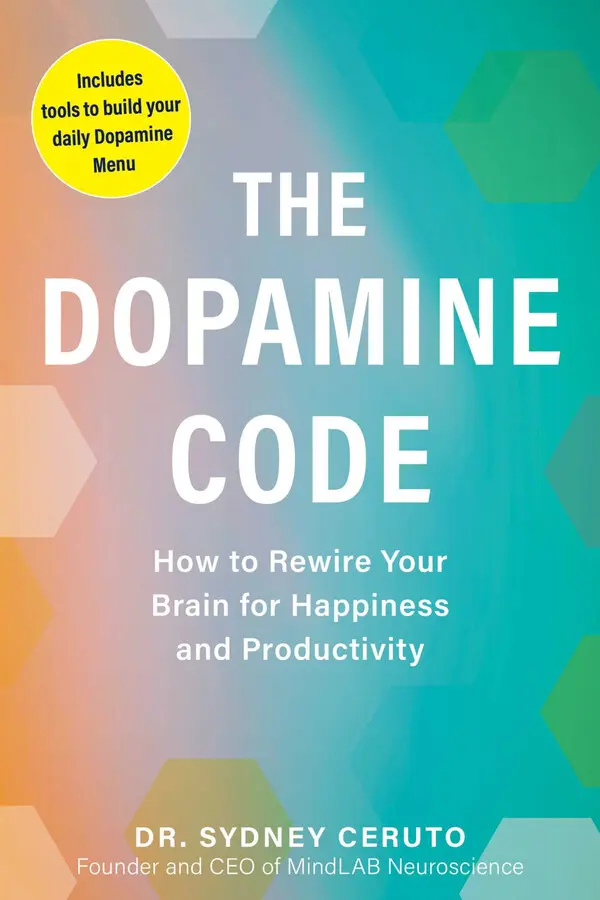
She is the author of The Dopamine Code: How to Rewire Your Brain for Happiness and Productivity (Simon & Schuster, June 2026), Rewire for Resilience: Heal Your Anxious Brain in 30 Days (MindLAB Press), and The Dopamine Code Workbook (Simon & Schuster, October 2026). A Neuroscience Advisor and the Founder & CEO of MindLAB Neuroscience, Dr. Ceruto is regularly featured in Forbes, USA Today, Newsweek, The Huffington Post, Business Insider, Fox Business, Associated Press, and CBS News.

References

Bandura, A. (1977). Self-efficacy: Toward a unifying theory of behavioral change. Psychological Review, 84(2), 191-215. https://doi.org/10.1037/0033-295X.84.2.191

Northoff, G., & Bermpohl, F. (2004). Cortical midline structures and the self. Trends in Cognitive Sciences, 8(3), 102-107. https://doi.org/10.1016/j.tics.2004.01.004

Draganski, B., Gaser, C., Busch, V., Schuierer, G., Bogdahn, U., & May, A. (2004). Changes in grey matter induced by training. Nature, 427(6972), 311-312. https://doi.org/10.1038/427311a

Success Stories

“I came to Dr. Ceruto thinking I needed help with my career, but she quickly recognized that the real roadblocks were the relationships I was choosing and how I dealt with conflict. With her support, I finally left unhealthy situations I’d struggled to end for years. She helped me identify deep-seated patterns I didn’t realize were holding me back. I never feel rushed, and she follows up with detailed written insights I reflect on for weeks. She uncovered major blockers I would never have spotted alone.”

Rachel L., Meta New York, NY

“When I first started with Dr. Ceruto, I’d felt at a standstill for two years. Over several months, we worked through my cognitive distortions and I ultimately landed my dream job after years of rejections. She is both gentle and assertive. She tells it like it is, and you’re never second-guessing what she means. Most importantly, she takes a personal interest in my mental, emotional, and physical wellbeing. I have no doubt I’ll be in touch with Dr. Ceruto for years to come.”

Chelsea A., Chief Marketing Officer, Logistics Company Dublin, IE

“Every afternoon I'd hit a wall so hard I could barely think straight, and I assumed it was just part of running the business. Dr. Ceruto got me to see the afternoon dip as something tied to how I was structuring my days, not a willpower issue. Once that pattern was corrected, the wall stopped showing up.”

Elias D., Founder, Outdoor Apparel Brand

“My kids had been sleeping through the night for three years, but my brain hadn't caught up. I was still waking every ninety minutes like clockwork, no amount of sleep hygiene or supplements touched it. With Dr. Ceruto, I got at the constant alertness that had set in during those early years, and we dismantled it at the source. I finally stopped bracing for something that was long over. I sleep through the night now without effort.”

Catherine L., General Counsel, Private Equity Greenwich, CT

“Four hours a night for over two years. That was my ceiling. Supplements, sleep protocols, medication, nothing touched it because nothing addressed why my brain wouldn't shut down. Dr. Ceruto worked with me on the stress cycle that was keeping me wound up around the clock, and we took it apart. I sleep now. Not because I learned tricks, but because what was driving the sleeplessness finally eased.”

Adrian M., Portfolio Manager, Citadel New York, NY

“I'd relocated internationally before, but this time my nervous system wouldn't settle. Everything unfamiliar registered as danger, new people, new routines, even the sound of a different language outside my window. Pushing through it only deepened the pattern. Dr. Ceruto helped me see that I had started reading anything unfamiliar as danger, and we worked on that response at its source. The world stopped feeling hostile. I stopped bracing.”

Katarina L., Multinational Pharma Zurich, CH

Common Questions About Imposter Syndrome in New York City

How is this different from working with a coach or a therapist?

Conventional coaching and therapy work on your thoughts and behavior from the outside, asking you to notice the doubt and respond to it differently. Real-Time Neuroplasticity™ works one level down, at the neural circuit that produces the doubt in the first place. Instead of managing the feeling after it arrives, we change what your brain predicts, so it stops firing the alarm where it was never needed.

What actually causes imposter syndrome?

Your brain runs on prediction. Early on, it learned to link achievement with the risk of being exposed, and now it runs that pattern automatically whenever the stakes rise. The feeling is not a fact about your ability. It is an old prediction firing faster than conscious thought, which is exactly why reassurance and logic never fully switch it off.

I am objectively doing well, so why do I still feel like a fraud?

Because the doubt was never really measuring your competence. It tracks pressure and pattern, not performance, which is why the vast majority of high performers report the exact same private sense of not belonging. Success does not turn it off, because the prediction runs underneath the evidence. Changing the prediction is what quiets it.

What happens on the Strategy Call?

It is a focused phone conversation with Dr. Ceruto. You talk through where the doubt shows up, what it costs you, and what you want to be different. She listens for the pattern underneath the story and explains how the work would target it. By the end you have a clear read on what is driving the feeling and how Real-Time Neuroplasticity™ would rewire it.

How quickly does anything actually change?

Faster than most people expect, because we work with the reaction while it is live rather than talking about it in retrospect. Many people notice the first shift within the initial sessions: a pause before the old spiral, a meeting that does not trigger the usual dread. Rewiring a lifelong prediction takes repetition, but the direction of change tends to be clear early.

Can this really work over the phone, and does it matter where I am in the city?

Yes on both. The work happens at the level of the brain, so it does not depend on being in the same room, and it reaches you anywhere in New York City. Phone is a deliberate choice: with no camera to perform to, people settle in quickly and the full hour goes to the work instead of to how they look.

Is imposter syndrome a real thing, or am I just being dramatic?

It is real, common, and well described. It is not a character flaw and it is not a label to be stuck with. It is a learned pattern in a prediction-driven brain, and a pattern that was learned can be rewired. That is exactly what this work does.

Who is this work for?

Anyone in New York City who feels like an imposter despite real evidence they are capable. It does not matter whether the pressure comes from a career, a creative field, parenting, school, or a role you were handed before you felt ready. If the doubt runs on regardless of what you achieve, it is a prediction, and it can be changed.

Do I have to dig through my whole past to fix this?

No. The old backstory can help explain how the pattern formed, but it is not where the change happens. Real-Time Neuroplasticity™ works with the reaction in the live moment, when the circuit driving it is actually open to change, so the focus stays on what is happening now rather than on years of history.

Also available in: Miami · Wall Street · Midtown Manhattan · Beverly Hills · Lisbon

Ready to Stop Feeling Like an Imposter?

Schedule a Strategy Call with Dr. Sydney Ceruto, a focused phone conversation about the pattern underneath the doubt and how Real-Time Neuroplasticity™ rewires it. Wherever you are in New York City, the work reaches you.

Schedule Your Strategy Call
MindLAB Neuroscience strategy call setting

The Dopamine Code

Decode Your Drive

Why Your Brain Rewards the Wrong Things

Your brain's reward system runs every decision, every craving, every crash, and it was never designed for the life you're living. The Dopamine Code is Dr. Ceruto's framework for understanding the architecture behind what drives you, drains you, and keeps you locked in patterns that willpower alone will never fix.

Published by Simon & Schuster, The Dopamine Code is Dr. Ceruto's framework for building your own Dopamine Menu, a personalized system for motivation, focus, and enduring life satisfaction.

Order Now!

Available now

The Dopamine Code by Dr. Sydney Ceruto, Decode Your Drive
Locations
Secret Link