








Career Coaching for Professionals in Greenwich, CT

Restructure the neural architecture that constrains career performance where hedge fund analysis meets executive ambition.

Greenwich's concentration of hedge fund, wealth management, and executive talent brings career pressures in which habit and stress can matter as much as skill. MindLAB Neuroscience uses Real-Time Neuroplasticity™ on the cognitive circuits that govern risk assessment, executive performance, and career trajectory at their source.

Book a Strategy Call
ForbesUSA TodayHuffPostNewsweekAssociated PressCosmopolitanBusiness InsiderForbesUSA TodayHuffPostNewsweekAssociated PressCosmopolitanBusiness Insider

Key Points

  1. Years of specialized practice can make you excellent in one domain while leaving the skills senior roles require underused.
  2. Real-Time Neuroplasticity™ is applied to the neural patterns that govern professional motivation.
  3. Where outsized achievement is ordinary, your own progress can stop feeling like progress.
  4. Dr. Sydney Ceruto maps your specific neural architecture during the Strategy Call to identify the circuits creating your career ceiling.
  5. MindLAB's methodology can produce durable structural change.

When the Work Is Good and the Career Stands Still

“On Greenwich Avenue, the habits behind sharp quantitative thinking can be the ones that resist the ambiguity of leading.”

Your reviews say you exceed expectations. You are the person people call when something breaks, and you have been doing the bigger job, unofficially, for a year or more. Then the promotion goes to someone else, or the conversation about it still hasn’t happened.

Most people read that as a strategy problem: the wrong plan, too little visibility, the wrong network. So they fix the plan, and often the career stays where it was. What often holds it there is a set of habits your brain learned while you were succeeding, still running in a role that now asks for something else.

What the Brain Learns While You Succeed

The brain can automate what it repeats. Behavior that pays off again and again (saying yes, fixing it yourself, keeping your head down and delivering) can move from choice to habit. From there it is thought to run through the basal ganglia, the brain’s habit circuitry, largely outside awareness. That is how you got good at your job. It is also why the same habits can keep firing after the job has changed: they were learned in one role, and they can keep running in the next one.

Life coaching and personal development, neural pathway restructuring with copper fragments dissolving as new connections form

Pressure can strengthen the pull. Under stress, people tend to shift from deliberate, goal-directed choices toward habit. Even mild stress, when you cannot control it, can rapidly impair the prefrontal cortex, the part of the brain that plans. The review, the offer and the case for the bigger role are high-pressure moments, and they are when old habits are likely to take over.

Why Asking for More, or Moving On, Feels Harder Than the Work Itself

Being judged by others, in a situation you cannot control, is among the strongest psychological triggers of the body’s stress hormones. A salary conversation, a case for promotion and a visible bet on a new direction all put you in that position. The stress of that kind of moment can also take longer than most to settle.

A move also means giving something up. People typically weigh a possible loss more heavily than a gain of the same size. So the known role, even one you have outgrown, can keep winning against a better one.

None of this makes you the problem. A capable brain learns what its conditions reward, and many careers reward saying yes and delivering for years before those habits start to cost anything. A learned response can be retrained.

How Dr. Ceruto Works With Professionals

The work begins by mapping which of your patterns are holding the career in place. That means what you default to under pressure, what you put off, and what happens in you when you are the one under review. In the first conversations Dr. Ceruto looks past the presenting problem (a stalled promotion or a move you cannot decide on) to the habit underneath it.

Neuroscience consultation, rosewood table with crystal brain sculpture and branded journal for strategy call preparation

Real-Time Neuroplasticity™ then goes to work in the moments where those patterns fire. Dr. Ceruto is there for them: the week before a review, the call with a recruiter, the meeting where you have to argue for yourself instead of for the project. A response learned under the pressure that sets off the old habit can hold when that pressure returns.

The first target is the moment you are the one on the line. You can begin to notice the old habit before it takes over and choose the response the role now needs. The plan follows from that, and it is yours, built around the career you want. Career coaching works on the plan, while this works on the habits and reactions that decide whether you can carry the plan out.

The first step is a Strategy Call, an hour by phone with Dr. Ceruto, to map what is holding your career in place and what it would take to change it.


Marker Traditional Approach Neuroscience-Based Approach Why It Matters
Stalled Advancement A new plan, more visibility, a wider network Mapping the habits that run when your career is on the line A habit from one role can persist into the next
Self-Advocacy Scripts and rehearsal for the conversation Working on your stress response to being judged Being judged without control ranks among the strongest psychological stress triggers
Pressure Time management and prioritizing Working on your default moves under load Stress can push the brain from deliberate choice toward habit
Career Moves Lists of pros and cons, and networking calls Working on how a move registers as a possible loss A possible loss typically weighs more than an equal gain
Decision Quality Frameworks for weighing options Working on the state you decide in Even mild stress you cannot control can impair planning
Durability Accountability check-ins over time Live-moment work aimed at durable change A response learned under pressure can hold the next time that pressure comes

Why Career Coaching for Professionals Matters in Greenwich, CT

Greenwich, Connecticut draws a heavy concentration of financial and executive talent: hedge fund managers along Greenwich Avenue, wealth management professionals near the waterfront, and corporate executives near the top of their industries. The standards for performance here are high, and so is what it can cost to meet them. A hedge fund principal’s analysis can produce strong returns while the career plateaus, if the habits behind sharp quantitative thinking do not extend to the relational leadership the next level asks for. A wealth management executive can have excellent client relationships and still not turn that skill into influence inside the firm. A corporate leader can reach a role just below the top and stall there for reasons they cannot name despite years of reflection.

Years of focused practice can turn analysis into habit, and habits tend to take over under pressure. The work senior leadership adds (reading people, handling office politics, tolerating ambiguity, building relationships) lacks a portfolio’s measurable feedback, and habits built on that feedback can steer attention away from it. A portfolio manager on Round Hill Road whose ceiling is invisible to everyone except the people who decide promotions may be strong at what can be measured and less practiced at what cannot. On Greenwich Avenue, a hedge fund executive whose career has hit a ceiling because leadership brings an ambiguity their analytical habits resist would work on that resistance. A wealth management professional who needs visibility inside the firm but keeps putting off anything without an immediate, measurable result would work on that habit of putting things off.

The backdrop in Greenwich is great wealth. Accomplishments that would stand out anywhere else can register as merely adequate here. A raise or a promotion can then feel like keeping pace rather than getting ahead.

Dr. Sydney Ceruto, PhD, Neuroscientist & Author, MindLAB Neuroscience

Dr. Sydney Ceruto, PhD, Neuroscientist & Author, MindLAB Neuroscience

Dr. Ceruto holds a PhD in Behavioral & Cognitive Neuroscience from NYU and Master’s degrees in Clinical Psychology and Business Psychology from Yale University. She lectures at the Wharton Executive Development Program at the University of Pennsylvania and has been an Executive Contributor to the Forbes Coaching Council since 2019. Dr. Ceruto is the author of The Dopamine Code (Simon & Schuster, June 2026). She founded MindLAB Neuroscience in 2000 and has spent over 26 years leading it, pioneering Real-Time Neuroplasticity™, a methodology that durably rewires the neural pathways driving behavior, decisions, and emotional responses.

Success Stories

“I kept waiting to feel proud of what we'd built, and it never came, no matter how many milestones we hit. Standard advice about gratitude and celebrating wins changed nothing. Dr. Ceruto showed me how years of high output with no recovery had worn down my ability to feel anything about it. We worked on rebuilding that. I felt genuinely proud of something for the first time in years.”

Trevor N., VP of Engineering, Cloud Infrastructure Seattle, WA

“What I appreciate about Dr. Ceruto is her candid, direct approach, truly from a place of warmth and support. Every week delivered concrete value, and I never felt like I was wasting time the way I had with traditional methods. She draws from her academic expertise to dig deeper into the roots of issues. She helped me make enormous progress after a year of personal loss, including getting my faltering career back on track. She follows up after every session with additional materials.”

Eric F., Vice President, Technology Startup Coral Gables, FL

“When the demands of my career began negatively impacting my quality of life, I knew I needed help beyond my usual coping mechanisms. I landed on Dr. Ceruto’s name and couldn’t be happier. Her credentials are impeccable, but upon meeting her, all uneasiness dissipated immediately. She has an innate ability to navigate the particulars of your profession no matter how arcane it may be. By the middle of the first session, you’re talking to a highly intelligent and intuitive friend. She is simply that good.”

Norine D., Director of Strategy, Real Estate Group Newport Beach, CA

“I'd relocated internationally before, but this time my nervous system wouldn't settle. Everything unfamiliar registered as danger, new people, new routines, even the sound of a different language outside my window. Pushing through it only deepened the pattern. Dr. Ceruto helped me see that I had started reading anything unfamiliar as danger, and we worked on that response at its source. The world stopped feeling hostile. I stopped bracing.”

Katarina L., Multinational Pharma Zurich, CH

“When my youngest left for college, I didn't just feel sad. I felt erased. My entire sense of self had been wired to caregiving for two decades, and I didn't know who I was without it. Years of talk-based approaches hadn't touched it. Dr. Ceruto and I worked on the identity that had fused with the role, and she helped me rebuild it. I didn't find a new purpose. I found the one that had been underneath the whole time.”

Diane L., Senior Partner, Management Consulting Chicago, IL

“A car alarm, a raised voice, even certain kinds of silence could put me on edge for hours, and I'd stopped questioning why. Dr. Ceruto took on the constant alertness rooted in an earlier period of my life and worked through it directly rather than just teaching me to manage it. The edge is gone. I didn't realize how much of my day it had been quietly running.”

Anouk T. London, UK

Frequently Asked Questions About Career Coaching for Professionals

Why do elite Greenwich professionals experience career stagnation?

Work measured in hard numbers can make the less measurable parts of senior leadership feel less rewarding, and the habits of a long analytical career can take over when those parts come due. Those less measurable parts, such as reading people and tolerating ambiguity, are much of what the next level asks for.

How does neuroscience help financial professionals advance beyond technical excellence?

Dr. Ceruto starts with the habits an analytical career builds and the moments they take over: a meeting that calls for reading people, a decision with no clear data, a conversation about your role. MindLAB works on those habits as they fire, so that technical skill and leadership capacity can work together rather than compete.

Can this approach address the persistent dissatisfaction that accompanies success?

Yes. Constant comparison with people who are doing very well can make your own accomplishments stop registering as satisfying, and it can feel like being judged, which can set off the body's stress response. Dr. Ceruto works on how you measure your own progress, in the moments where it undercuts you.

What happens during the Strategy Call?

The Strategy Call is a focused phone conversation with Dr. Ceruto. She maps the specific neural mechanisms constraining your professional trajectory and determines whether MindLAB's methodology fits your situation. It replaces guesswork with a neuroscientific account of your career pattern.

Is this approach available to professionals in the Greenwich area?

Yes. MindLAB Neuroscience works with professionals throughout Greenwich, Old Greenwich, Riverside, Cos Cob, and the broader Fairfield County area. The Strategy Call is conducted by phone to begin the process.

Also available in: Miami · Wall Street · Midtown Manhattan · Beverly Hills · Lisbon

Take the First Step

The Strategy Call is a focused conversation with Dr. Sydney Ceruto that maps the specific neural mechanisms constraining your career trajectory and determines the right path forward.

Book a Strategy Call
MindLAB Neuroscience strategy call setting

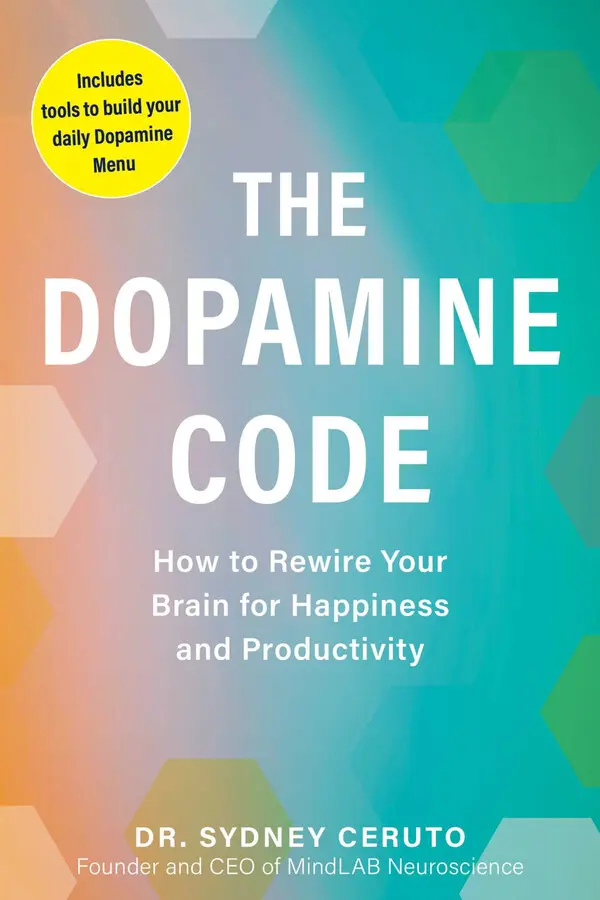
The Dopamine Code

Decode Your Drive

Why Your Brain Rewards the Wrong Things

Your brain's reward system runs every decision, every craving, every crash, and it was never designed for the life you're living. The Dopamine Code is Dr. Ceruto's framework for understanding the architecture behind what drives you, drains you, and keeps you locked in patterns that willpower alone will never fix.

Published by Simon & Schuster, The Dopamine Code is Dr. Ceruto's framework for building your own Dopamine Menu, a personalized system for motivation, focus, and enduring life satisfaction.

Order Now!

Available now

The Dopamine Code by Dr. Sydney Ceruto, Decode Your Drive
Locations