






Customer Acquisition Neuroscience on Wall Street

Wall Street's buyers commit capital and trust on their own timeline. Dr. Sydney Ceruto applies Real-Time Neuroplasticity™ to rewire how you read them before the mandate is decided.

Customer Acquisition Neuroscience works on the brain doing the selling. On Wall Street that is how you read a financial buyer, how you hold up when a mandate is on the line, and how you design acquisition around the way capital and trust are committed.

Book a Strategy Call
ForbesUSA TodayHuffPostNewsweekAssociated PressCosmopolitanBusiness InsiderForbesUSA TodayHuffPostNewsweekAssociated PressCosmopolitanBusiness Insider

Key Points

  1. Targets the neural patterns governing buyer perception and acquisition strategy
  2. Designed for Wall Street's institutional and high-net-worth acquisition demands
  3. Works on the read you form of a financial buyer while the mandate is still open
  4. Works to sharpen the capacity to read committee dynamics and commitment triggers
  5. Grounded in Dr. Ceruto's 26 years of Real-Time Neuroplasticity™ methodology

Why the Best Pitch in the Room Can Still Lose the Deal

“A mandate is rarely won in the pitch. It is decided in the quiet weeks after, in what the committee concluded about you when you were not in the room.”

You walked out of the meeting certain it was closed. The buyer leaned in, asked the right questions, and used the word “when.” Three weeks later the thread has gone quiet, and nothing you send gets more than a polite reply.

Most people read that silence as a pricing problem or a timing problem, and it’s usually neither. A buying decision is made by a brain weighing risk against reward long before the buyer can explain it, and most of that weighing happens outside their awareness. What you saw in the room was the part they could put into words.

Customer acquisition neuroscience starts from that fact, and it starts with the brain doing the reading, which is yours.

What Happens in a Buyer’s Brain Before They Say Yes

Every prospect carries a built-in threat detector, the amygdala, that scans a new vendor the way it scans any unfamiliar situation: could this cost me? Money, standing, time, the embarrassment of a bad call. Until that question settles, the case you are making is being filed rather than weighed.

Business growth consulting and founder coaching, copper neural scaffolding under active construction representing development architecture

Commitment arrives when the reward side of the brain, which predicts how an outcome will feel, wins the argument. That prediction is built from trust, familiarity, and the buyer’s read of you, far more than from the feature list.

The false belief in most acquisition playbooks is that buyers decide with the part of the brain you are talking to. They decide with the part you are not.

What Happens in Yours

Your brain runs the same machinery, and acquisition puts it under load. When a quarter is short or a pitch matters, stress hormones rise and attention narrows. The prefrontal cortex, which plans and reads other people, has less to work with. You start hearing what you need to hear.

That is how experienced people push while a buyer is still scanning for risk, promise more than the buyer asked for, or read a pause as a loss and rush to fill it. Each move feels like effort. Each one lowers the buyer’s sense of safety another notch.

Rejection does its own damage. A lost deal registers as a loss, and the brain weighs a loss more heavily than a gain of the same size, so the pattern it leaves shapes how you walk into the next room. Avoiding the follow-up call, over-preparing, or going flat on the third pitch of the week are not character flaws. They are learned responses, and a learned response can be retrained.

How Dr. Ceruto Works With Acquisition Leaders

The work begins by mapping which of your own patterns are costing you accounts. In the first conversations Dr. Ceruto looks past the presenting problem, a soft pipeline or one stalled enterprise deal, to the perceptual habit underneath it. Where does your reading of buyers go wrong, and what does your nervous system do when a decision is on the line?

Real-Time Neuroplasticity™ then works on those patterns in the moments where they fire. Dr. Ceruto is present for the live moments: the hour before a pitch, the debrief after a buyer went cold, the call where a founder has to hold a silence instead of offering a discount. A new response learned under the same pressure that trained the old one can hold when that pressure comes back.

The first thing the work goes after is perception. You can begin to notice when a buyer’s threat detector is still up and give it something to settle on. You can hear the difference between a question and an objection, and stop reading a quiet week as a verdict. The strategies follow from that, and they are yours, built for your market rather than borrowed from a script.

Mahogany desk with crystal brain sculpture and MindLAB journal in warm lamp light surrounded by leather-bound volumes in institutional Wall Street study

Sales training and coaching work on what you do, while this works on how you see, at the level of the circuitry that decides what you notice first.

It starts with a Strategy Call: an hour by phone with Dr. Ceruto, in which she maps what is driving your acquisition results and what it would take to change them.


Marker Traditional Approach Neuroscience-Based Approach Why It Matters
Reading the Buyer Persona profiles and scripted discovery questions Perceiving the buyer's live risk and reward signals Most of the decision forms before the buyer can explain it
Stalled Deals Follow-up cadences and a re-pitch of the value Locating the risk the buyer's brain is still guarding against A stall is usually a threat response, not a scheduling problem
Pressure in the Room Rapport techniques and closing frameworks Rewiring the seller's own stress response, live Stress narrows attention and you stop reading the room
Rejection Motivation and pipeline volume to absorb losses Retraining how a lost deal registers in the brain One no can quietly shape the next ten conversations
Trust Formation Reputation, references and social proof Working from how a buyer's brain decides who is safe A buyer's sense of safety forms before the weighing starts
Durability Techniques practiced and refreshed over time Patterns rewired in the moments where they fire A response learned under pressure can hold when it returns

Why Customer Acquisition Neuroscience Matters in Wall Street

Everything above plays out at higher stakes on Wall Street, where the buyer is committing capital and a committee is deciding.

Acquisition Neuroscience for Wall Street’s Client-Driven Economy

Wall Street’s client acquisition has its own shape. Institutional investors evaluate fund managers from Broad Street offices, corporate treasurers select banking partners from Brookfield Place, and high-net-worth individuals choose wealth advisors near Water Street. Each commits through psychological processes that conventional business development barely addresses.

In the Financial District’s investment banking firms, winning mandates requires understanding the psychology behind how CFOs and boards select advisors. The decision is rarely purely analytical: it involves trust architecture, status signaling, and commitment psychology that operates below conscious awareness. The professionals who perceive those dynamics accurately hold an edge over the ones relying on relationship-building alone.

Dr. Ceruto works with Wall Street professionals who recognize that acquisition success depends on perceiving buyer psychology accurately. Real-Time Neuroplasticity™ works on the cognitive patterns that limit that perception, at the point where they fire. A more accurate read of buyer motivation and of the barriers to commitment can come first, and the acquisition strategy is designed from that read.

The wealth advisors in the Seaport District and along Fulton Street face buyer psychology specific to high-net-worth individuals: clients whose decision framework combines rational analysis with deeply personal trust evaluation. In the fintech firms near the Financial District, customer acquisition at scale requires understanding the psychological triggers that drive adoption, engagement, and long-term platform commitment.

For capital markets professionals and fund managers raising assets from Lower Manhattan, acquisition neuroscience means understanding what drives allocator commitment beyond returns data. That means the psychological framework of institutional trust, the decision architecture of investment committees, and the neural habits that decide whether a meeting converts into a mandate. Dr. Ceruto’s methodology works on the capacity to perceive those processes while the committee is still deciding.

Dr. Sydney Ceruto, PhD, Neuroscientist & Author, MindLAB Neuroscience

Dr. Sydney Ceruto, PhD, Neuroscientist & Author, MindLAB Neuroscience

Dr. Ceruto holds a PhD in Behavioral & Cognitive Neuroscience from NYU and Master’s degrees in Clinical Psychology and Business Psychology from Yale University. She lectures at the Wharton Executive Development Program at the University of Pennsylvania and has been an Executive Contributor to the Forbes Coaching Council since 2019. Dr. Ceruto is the author of The Dopamine Code (Simon & Schuster, June 2026). She founded MindLAB Neuroscience in 2000 and has spent over 26 years leading it, pioneering Real-Time Neuroplasticity™, a methodology that durably rewires the neural pathways driving behavior, decisions, and emotional responses.

Success Stories

“I struggled with debilitating anxiety for years, trying countless therapies and medications with little success. Finding Dr. Ceruto and her neuroscience-based approach was truly life-changing. From our very first session, her deep knowledge of brain science and how it applies to anxiety gave me real hope. What sets her apart is that perfect blend of expertise and compassion. She genuinely cared about my progress and responded quickly even outside of our scheduled sessions. Social situations are far easier for me now, and so is work.”

Brian T., Managing Director, Software Company Chicago, IL

“I came to her for help with feeling stuck, and dissatisfied with where I was in my life. I wanted change, but every time I tried to do something different, somehow would talk myself out of it. Sydney brought me so much clarity and insight into my brain and what was actually happening. This was a huge wake up call, and through our 90 days of work, my entire life changed.”

Isaiah B., Chief Marketing Officer, Manufacturing Company Zurich, CH

“Shopping had become a private ritual I couldn't explain to anyone, not the items themselves, just the moment right before buying. Therapy treated it as a willpower problem for years. Working with Dr. Ceruto, it became clear that the anticipation was driving the behavior, separate from the purchase itself. Once we worked on that directly, the urge eased.”

Sofia R., Creative Director Milan, IT

“Color-coded calendars, alarms, accountability partners. I'd built an entire scaffolding system just to stay functional, and none of it addressed why my brain couldn't sequence and prioritize on its own. Dr. Ceruto got me to look at why sequencing and prioritizing kept breaking down, and we rebuilt how I approach it. I don't need the scaffolding anymore. My brain actually does what I need it to do.”

Jordan K., VP of Product, Enterprise SaaS San Francisco, CA

“I used to be held back by self-doubt and low self-esteem, always feeling unworthy of chasing my dreams. Dr. Ceruto’s empathetic and intuitive guidance helped me see my own worth and potential. She encouraged me to embrace my uniqueness and nurture my self-confidence. Today, I believe in myself more than ever and am finally living the life I’ve always desired.”

Erik K., Chief Revenue Officer, Vimeo Manhattan, NY

“I took the first step in admitting that I needed help, I needed help getting realigned mentally, emotionally & especially after COVID turned my life upside down. With her professional knowledge, decades of experience, understanding & her nurturing, motherly, natural instinct as a woman, she came to my rescue. I realized that she was so great at understanding & relatable because she has gone through things in her own life. She was so personally invested and available whenever I needed her, that she’s more than my mentor, more than my doctor, she’s family.”

Johnny C. New York, NY

Customer Acquisition Neuroscience on Wall Street: FAQ

How does this apply to financial client acquisition?
Financial buyers make commitment decisions through psychological processes that go beyond analytical evaluation. Dr. Ceruto targets the neural patterns governing how you perceive those processes, and an acquisition strategy built on that read can rest on how the buyer decides, not on the analysis alone.
Can this help me win institutional mandates?
Directly. Mandate decisions involve committee psychology, trust architecture, and commitment patterns that most business development approaches address superficially. Real-Time Neuroplasticity™ is applied to how you read a committee while it is still deciding, which is where a mandate is usually settled.
I'm a wealth advisor acquiring high-net-worth clients. Is this relevant?
Highly relevant. High-net-worth acquisition involves understanding the psychology of personal trust combined with analytical evaluation. Dr. Ceruto's work reaches the neural capacity to perceive both frameworks at once, which is the difference between hearing a question about fees and hearing a question about you.
What distinguishes this from business development coaching?
BD coaching teaches approaches. Dr. Ceruto's work sits underneath that, on what you notice in a financial buyer before any approach is chosen, and the read you form there can survive a change of approach.
How does this help with fund raising and allocator acquisition?
Allocator acquisition requires understanding institutional decision architecture: how investment committees evaluate, what drives commitment beyond returns, and the psychological barriers to allocation. Dr. Ceruto works to build that perceptual capacity.
Can this improve customer acquisition for fintech platforms?
Yes. Platform acquisition depends on understanding the psychology of adoption, trust, and engagement at scale. Real-Time Neuroplasticity™ is applied to the cognitive patterns you use to read how a user decides, and the acquisition system is designed to fit that decision afterward.
How quickly do Wall Street professionals see results?
There is no fixed answer. Reading a committee's hesitation differently can happen within the first weeks of the work, before any pipeline moves. Whether and when that shows up in mandates won depends on your market and its cycle, and Dr. Ceruto does not set a timeline for it.
Is this relevant for commercial banking client acquisition?
Directly. Commercial banking acquisition involves understanding corporate decision-making psychology: how treasurers evaluate partners, what drives long-term banking commitments, and how to differentiate on psychological dimensions.
How does this address client acquisition during market downturns?
Downturns change buyer psychology: risk aversion increases, trust thresholds rise, and commitment barriers shift. Dr. Ceruto's work reaches your perception of those shifts as they happen, which is when adapting to them is still possible.
What is Dr. Ceruto's background?
Dr. Ceruto holds a PhD in Behavioral & Cognitive Neuroscience from NYU, two Master's degrees from Yale, and lectures at the Wharton Executive Development Program. She founded MindLAB Neuroscience in 2000 and has led it for over 26 years.

Also available in: Miami · Midtown Manhattan · Beverly Hills · Lisbon

Take the First Step

One hour with Dr. Sydney Ceruto. You leave knowing which neural pattern is actually driving this, and what to do about it.

Book a Strategy Call
MindLAB Neuroscience strategy call setting

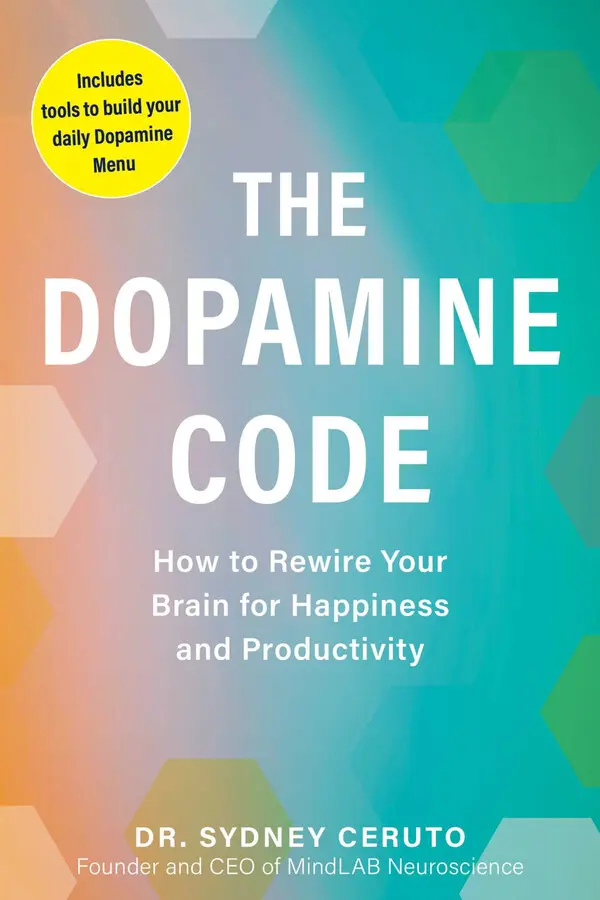
The Dopamine Code

Decode Your Drive

Why Your Brain Rewards the Wrong Things

Your brain's reward system runs every decision, every craving, every crash, and it was never designed for the life you're living. The Dopamine Code is Dr. Ceruto's framework for understanding the architecture behind what drives you, drains you, and keeps you locked in patterns that willpower alone will never fix.

Published by Simon & Schuster, The Dopamine Code is Dr. Ceruto's framework for building your own Dopamine Menu, a personalized system for motivation, focus, and enduring life satisfaction.

Order Now!

Available now

The Dopamine Code by Dr. Sydney Ceruto, Decode Your Drive
Locations