

Entrepreneurial Mindset Development on Wall Street

Wall Street founders build where finance meets innovation, where one miscalibrated decision can cost millions and the pressure to decide fast rarely lets up.

MindLAB Neuroscience works with Financial District founders on capital and risk calls made under heavy scrutiny, where the old habit and the new information often pull in different directions.

One hour with Dr. Ceruto
ForbesUSA TodayHuffPostNewsweekAssociated PressCosmopolitanBusiness InsiderForbesUSA TodayHuffPostNewsweekAssociated PressCosmopolitanBusiness Insider

Key Points

  1. In a regulated business, the habit behind a costly decision may be older than the company itself.
  2. Battery Park family offices and Park Avenue venture firms keep investor meetings close at hand.
  3. Hiring engineers against large banks means making offers before the whole picture is clear.
  4. Work with Dr. Sydney Ceruto happens in the live moment, such as a term sheet due by evening or a board call that goes badly.
  5. Founders in payments, lending and securities carry compliance work into every product decision.

A Bigger Company, the Same Decisions

“In Lower Manhattan, a founder may get only an afternoon to answer a term sheet, with the facts still incomplete.”

You started the company on instinct and speed, and both served you well. Now there are investors, a team that waits on your call, and decisions where the information you need is not in yet. Some of those calls keep getting made the same way, with the same result, quarter after quarter.

Most founders respond by adding structure, from operating plans to advisors to a standing weekly review. It helps, up to a point. The calls that keep coming back often trace to something structure does not touch: moves practiced so often in the early years that they now run by themselves.

Habits Built in the Early Days

Habits form around what you do over and over. A routine repeated often enough can become automatic, and the basal ganglia, a set of deep structures tied to habit, are thought to carry much of that work, mostly below conscious attention. A founder who decided alone through the first hundred hires may still reach for that move at the three hundredth.

Business growth consulting and founder coaching, copper neural scaffolding under active construction representing development architecture

A bad quarter also changes the conditions the brain is working in. Stress you cannot control, even in small amounts, can quickly weaken the planning work of the prefrontal cortex. In one experiment, people put under stress before learning a task went on repeating it after its payoff had lost value, a sign that habit had taken over from goal-directed choice.

Deciding Without the Odds

A founder rarely knows the odds. In one study, activity in the amygdala, a structure deep in the brain, rose as more of the information behind a choice was missing. People’s choices were affected as well, although in theory missing odds should make no difference.

A pitch puts two things together: a room forming a view of you, and an outcome you cannot control. In laboratory studies, tasks that combined those two produced the largest stress-hormone responses. Recovery afterward was slowest, too.

A product line you have defended for two years can be hard to cut, even when the numbers say it should go. One general reason: in decisions, people respond more strongly to a possible loss than to an equal gain. Responses like these can still change with practice.

Working on Decisions Where They Happen

Take a founder who rewrites the plan after every hard board meeting. The rewrite is the visible part. The hour after the meeting ends is where Dr. Ceruto works with the founder, while the reflex behind it is live. Real-Time Neuroplasticity™ is applied to that reflex as it fires. Repeated over later board cycles, a different response can become the founder’s own, and durable change can build that way.

Begin with a Strategy Call: a one-hour phone conversation with Dr. Ceruto about the decisions that keep coming back.


Marker Traditional Approach Neuroscience-Based Approach Why It Matters
Repeated Decisions Better planning templates Finding the decision habits that keep repeating Repeated routines can become automatic habits
Pressure Blocking time on the calendar Noticing which moves take over on heavy days Under stress, habit tends to win over deliberate choice
Missing Information Gathering more data before every call Working on how uncertainty registers when you decide Choices tend to shift when information is missing
Pitches and Boards Polishing the deck Practicing composure while an audience judges you Lab tasks pairing judgment and low control raised stress hormones most
Changing Course A spreadsheet of options Separating the cost of letting go from the merits Possible losses tend to register more than equal gains
Holding Under Pressure Quarterly goal reviews New responses rehearsed in the real moment A response repeated across real moments can become the default

Entrepreneurial Cognition in the Financial Capital

Building a company in the shadow of Wall Street’s largest financial institutions means working under heavy scrutiny. Founders here, whether they are launching fintech platforms, alternative investment vehicles or financial data companies, face regulators and competitors who leave little room for error. In Lower Manhattan, the urgency that drives growth and a constant state of alert can blur together.

Mahogany desk with crystal brain sculpture and MindLAB journal in warm lamp light surrounded by leather-bound volumes in institutional Wall Street study

Being close to institutional capital is an advantage for Wall Street founders, and it can also become a trap. Family offices near Battery Park, venture firms along Park Avenue and angel networks throughout the Financial District mean there is always another meeting to take. Investor meetings can turn into a cycle of seeking approval that pulls attention from the operational work that builds the company.

Founders in FiDi also compete hard for talent. Hiring engineers and analysts against large banks and well-funded rivals means every offer carries outsized weight. Choosing people is a decision made with much of the information missing, and pressure tends to push such calls toward habit. In a startup’s first two years, those hiring calls can decide whether the company survives.

A founder who came up through finance roles may reach for one more data pull before every call. In a product decision, that habit can hold up a launch while the team waits for numbers that are not coming. Some FiDi founders find their analytical strength crowding out the instinct that sets a startup apart from incumbents.

The regulatory environment around Financial District startups adds a layer of overhead that never quite lifts. Founders in payments, lending, insurance and securities have to keep compliance in view while pushing the product forward. The strain is often filed under time management, when part of it may be the stress of rules the founder cannot control.

The pace of dealmaking in Lower Manhattan also asks founders to make consequential decisions with incomplete information on compressed timelines. A term sheet that arrives at noon may need a response by end of day. A partnership opportunity discussed over lunch at Brookfield Place may require a strategic pivot by the following week. Decisions made this fast, with information missing, are where old habits can take over. Real-Time Neuroplasticity™ is applied in those compressed hours, to the habits that step in.

Dr. Sydney Ceruto, PhD, Neuroscientist & Author, MindLAB Neuroscience

Dr. Sydney Ceruto, PhD, Neuroscientist & Author, MindLAB Neuroscience

Dr. Ceruto holds a PhD in Behavioral & Cognitive Neuroscience from NYU and Master’s degrees in Clinical Psychology and Business Psychology from Yale University. She lectures at the Wharton Executive Development Program at the University of Pennsylvania and has been an Executive Contributor to the Forbes Coaching Council since 2019. Dr. Ceruto is the author of The Dopamine Code (Simon & Schuster, June 2026). She founded MindLAB Neuroscience in 2000 and has spent over 26 years leading it, pioneering Real-Time Neuroplasticity™, a methodology that durably rewires the neural pathways driving behavior, decisions, and emotional responses.

Success Stories

“I told myself I just needed less sleep than most people, until the fatigue caught up with everything else in my life. Dr. Ceruto looked at how long my sleep had been breaking down, and she worked with me to rebuild it. I wake up rested now, which I genuinely didn't think was possible for me anymore.”

Ingrid L., Senior Consultant, Management Consulting

“Sydney’s astute guidance and unwavering, non-judgmental support transformed moments I once found unbearable into challenges I can now easily manage. Her ability to uncover hidden insights and shine light on new perspectives has impacted my life in unimaginable ways, fostering continuous growth and deep gratitude.”

Benjamin P., Business Oversight Compliance, Dribbble New York, NY

“Dr. Ceruto's neuroscience-based program changed how I handle what had been a constant struggle. She helped me see it not as something permanent but as a pattern I could work with, and taught me how to reframe my thoughts and adopt healthier coping strategies. Once I understood that, everything changed. Now I'm happier and more in control of my emotions than ever.”

Emily M., SVP Global Marketing, Adidas Portland, OR

“I could perform at the highest level professionally and still feel hijacked emotionally in my closest relationships, and no conventional approach had ever explained why those two realities coexisted. My work with Dr. Ceruto surfaced an imprint from childhood that was running every intimate interaction I had. She didn't just help me understand it better. We took it apart. The reactivity isn't something I have to manage anymore. What was generating it has changed.”

Natasha K., Chief of Staff, Venture Capital Beverly Hills, CA

“Slower processing, foggier recall, decisions that used to be instant taking longer than they should. I'd been accepting it all as inevitable decline for two years. Dr. Ceruto worked with me on what was behind the change I'd been noticing. The sharpness came back. Nothing I'd tried before even addressed the right problem.”

Elliott W., General Partner, Andreessen Horowitz Atherton, CA

“Every metric was green and I felt nothing. Conventional approaches told me I was 'burned out' or needed gratitude practices, none of it touched the actual problem. Dr. Ceruto helped me see that constant reward-chasing had raised the bar so high that normal achievement couldn't register anymore. We worked on that directly. I didn't need more success. I needed my brain to actually experience the success I already had.”

Rafael G., Chief Revenue Officer, Enterprise Software New York, NY

Frequently Asked Questions About Entrepreneurial Mindset Development

How does working near Wall Street create distinct cognitive pressures for founders?

In the Financial District, a regulator's question can arrive while a large bank is outbidding you for an engineer, and neither will wait. Calls made under that much scrutiny are when decision habits tend to decide for you, which is where this work begins.

What makes MindLAB's approach different from executive coaching for entrepreneurs?

Where executive coaching tends to address behavior and goals, Dr. Ceruto's work begins with a single decision, such as a risk call made under scrutiny, and uses Real-Time Neuroplasticity™ as that call is being made.

Can this help fintech founders dealing with regulatory stress?

It can. Regulatory demands are a steady source of stress that the founder only partly controls, and that kind of stress can make planning harder. Compliance then competes with product and growth for the same hours of attention. Dr. Ceruto may start with one product decision that a filing deadline is squeezing right now.

Is this relevant for founders who came from banking or finance careers?

Often, yes. A founder who spent ten years checking every model before signing off may find a startup asking for a decision by Friday with half the numbers. The work aims to keep that analytical care while loosening the reflex to wait for certainty.

How long does the entrepreneurial mindset program take?

No two engagements run the same length. Dr. Ceruto builds each one around the decisions in front of you and the pace of your business, and length is a fair question to raise on the Strategy Call.

Do I need to be located in Lower Manhattan?

No. A phone line is all it takes, so the work can follow you between offices, investor meetings and travel.

How does this help with investor negotiations?

Investor negotiations compress big decisions into short windows, often with terms still moving. Dr. Ceruto's work happens around live negotiations, while the term sheet is still open.

Can this address the burnout that comes from competing against well-funded incumbents?

Competing against well-funded incumbents can keep a founder in a constant state of comparison, reacting to each move a rival makes. That strain differs from plain overwork, since much of it comes from events the founder does not control. With Dr. Ceruto, a founder can look at those reactions one rival move at a time, while the news is fresh.

What does the Strategy Call involve?

Dr. Ceruto spends about an hour with you by phone, going through your hardest recent calls and the habits that seem to drive them. Together you decide whether MindLAB's approach suits your goals.

How do Wall Street founders typically schedule sessions?

A call can fit around a deal calendar: early in the morning, after the market closes, from your FiDi office, in transit to a pitch meeting or while working remotely.

Also available in: Miami · Midtown Manhattan · Beverly Hills · Lisbon

Take the First Step

One hour with Dr. Sydney Ceruto. You leave knowing which neural pattern is actually driving this, and what to do about it.

One hour with Dr. Ceruto
Two navy leather armchairs face a marble table with a glass brain sculpture in a dark wood-paneled room under a copper lamp

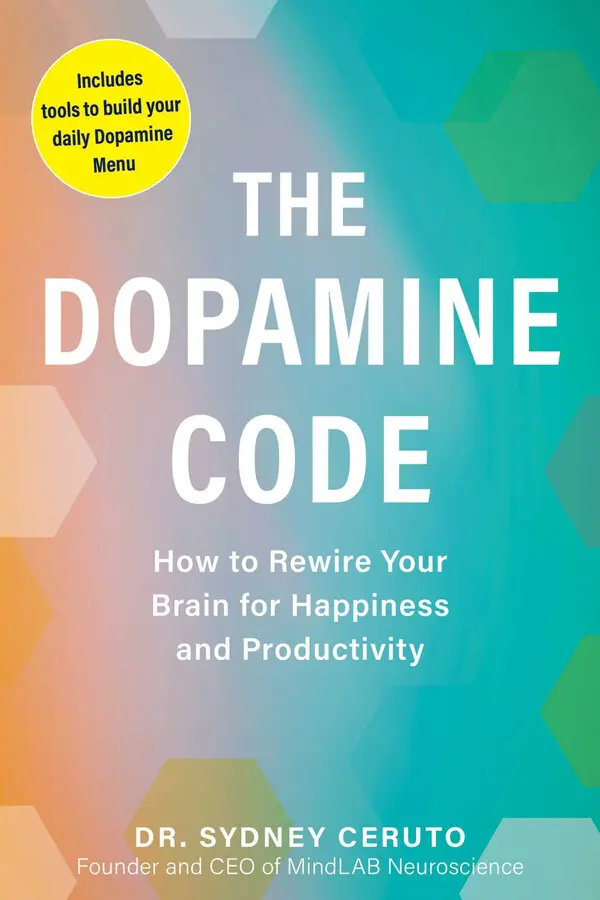
The Dopamine Code

Decode Your Drive

Why Your Brain Rewards the Wrong Things

Your brain's reward system runs every decision, every craving, every crash, and it was never designed for the life you're living. The Dopamine Code is Dr. Ceruto's framework for understanding the architecture behind what drives you, drains you, and keeps you locked in patterns that willpower alone will never fix.

Published by Simon & Schuster, The Dopamine Code is Dr. Ceruto's framework for building your own Dopamine Menu, a personalized system for motivation, focus, and enduring life satisfaction.

Order Now!

Available now

The Dopamine Code by Dr. Sydney Ceruto, Decode Your Drive
Locations