

Entrepreneurial Mindset Development in Midtown Manhattan

Midtown founders build next to media giants, advertising agencies and corporate headquarters, and every week brings more meetings and decisions than there is time to weigh.

In Midtown, a founder's decisions are spread across meeting after meeting. Shortcuts that creep in once attention runs short can be durably restructured.

One hour with Dr. Ceruto
ForbesUSA TodayHuffPostNewsweekAssociated PressCosmopolitanBusiness InsiderForbesUSA TodayHuffPostNewsweekAssociated PressCosmopolitanBusiness Insider

Key Points

  1. Media, advertising and fashion firms between 34th and 59th Streets make up much of the competition.
  2. In an attention economy, a founder's own focus is under steady pull from alerts and requests.
  3. Dr. Sydney Ceruto has run MindLAB Neuroscience since founding it in 2000.
  4. Recruiting against large firms can push a lean startup into hurried offers.
  5. Manhattan operating costs add background stress to many Midtown decisions.

A Bigger Company, the Same Decisions

“Next door to Midtown's media and advertising giants, a young company's founder can feel ambitious and out of place in the same week.”

You started the company on instinct and speed, and both served you well. Now there are investors, a team that waits on your call, and decisions where the information you need is not in yet. Some of those calls keep getting made the same way, with the same result, quarter after quarter.

Most founders respond by adding structure, from operating plans to advisors to a standing weekly review. It helps, up to a point. The calls that keep coming back often trace to something structure does not touch: moves practiced so often in the early years that they now run by themselves.

Habits Built in the Early Days

Habits form around what you do over and over. A routine repeated often enough can become automatic, and the basal ganglia, a set of deep structures tied to habit, are thought to carry much of that work, mostly below conscious attention. A founder who decided alone through the first hundred hires may still reach for that move at the three hundredth.

Business growth consulting and founder coaching, copper neural scaffolding under active construction representing development architecture

A bad quarter also changes the conditions the brain is working in. Stress you cannot control, even in small amounts, can quickly weaken the planning work of the prefrontal cortex. In one experiment, people put under stress before learning a task went on repeating it after its payoff had lost value, a sign that habit had taken over from goal-directed choice.

Deciding Without the Odds

A founder rarely knows the odds. In one study, activity in the amygdala, a structure deep in the brain, rose as more of the information behind a choice was missing. People’s choices were affected as well, although in theory missing odds should make no difference.

A pitch puts two things together: a room forming a view of you, and an outcome you cannot control. In laboratory studies, tasks that combined those two produced the largest stress-hormone responses. Recovery afterward was slowest, too.

A product line you have defended for two years can be hard to cut, even when the numbers say it should go. One general reason: in decisions, people respond more strongly to a possible loss than to an equal gain. Responses like these can still change with practice.

Working on Decisions Where They Happen

Take a founder who rewrites the plan after every hard board meeting. The rewrite is the visible part. The hour after the meeting ends is where Dr. Ceruto works with the founder, while the reflex behind it is live. Real-Time Neuroplasticity™ is applied to that reflex as it fires. Repeated over later board cycles, a different response can become the founder’s own, and durable change can build that way.

Begin with a Strategy Call: a one-hour phone conversation with Dr. Ceruto about the decisions that keep coming back.


Marker Traditional Approach Neuroscience-Based Approach Why It Matters
Repeated Decisions Better planning templates Finding the decision habits that keep repeating Repeated routines can become automatic habits
Pressure Blocking time on the calendar Noticing which moves take over on heavy days Under stress, habit tends to win over deliberate choice
Missing Information Gathering more data before every call Working on how uncertainty registers when you decide Choices tend to shift when information is missing
Pitches and Boards Polishing the deck Practicing composure while an audience judges you Lab tasks pairing judgment and low control raised stress hormones most
Changing Course A spreadsheet of options Separating the cost of letting go from the merits Possible losses tend to register more than equal gains
Holding Under Pressure Quarterly goal reviews New responses rehearsed in the real moment A response repeated across real moments can become the default

Starting a Company Among Midtown’s Giants

Midtown Manhattan packs a great deal of corporate power into a few dozen blocks. Founders here compete with other startups and with the pull of the established media, advertising, fashion and professional services firms clustered between 34th and 59th Streets. Working beside that much institutional scale can fuel ambition. It can also set off a sense of not belonging that quietly erodes strategic confidence.

Walnut credenza with crystal brain sculpture and MindLAB journal in diffused dusk light suggesting high-floor Midtown Manhattan private office

The media and advertising world around Madison Avenue and Times Square brings its own opportunities and strains. Founders in adtech, martech and content platforms work in an attention economy, where the product competes for the same focus the founder needs to run the company. Their working days are full of interruption.

Midtown is also a meeting town, and founders here can spend whole days in back-to-back rooms. One day might run from an investor breakfast at the Plaza to a product review in Hudson Yards and a client dinner in Koreatown. The toll of switching that often builds up without much notice. By the client dinner, a founder may be weighing a major decision after a full day of other ones.

The real estate economics of Midtown are a pressure in their own right. Manhattan operating costs keep a steady hum of financial worry running under every decision. That background stress can take up room a founder would otherwise give to creative problem-solving and planning.

Midtown’s talent pool poses a puzzle for founders: strong candidates are within commuting distance, and so are employers that can outbid any startup. Recruiting against large firms while running a lean organization can push hiring toward fear of losing a candidate rather than fit. Offers then get made in a hurry, before the founder is sure of the fit.

Information moves through Midtown quickly, too. Market signals, competitor moves and industry news arrive all day, and a founder has to sort what matters from what does not. Under sustained pressure, that sorting tends to default to the familiar, so familiar sources keep getting the attention even when the news is elsewhere.

Dr. Sydney Ceruto, PhD, Neuroscientist & Author, MindLAB Neuroscience

Dr. Sydney Ceruto, PhD, Neuroscientist & Author, MindLAB Neuroscience

Dr. Ceruto holds a PhD in Behavioral & Cognitive Neuroscience from NYU and Master’s degrees in Clinical Psychology and Business Psychology from Yale University. She lectures at the Wharton Executive Development Program at the University of Pennsylvania and has been an Executive Contributor to the Forbes Coaching Council since 2019. Dr. Ceruto is the author of The Dopamine Code (Simon & Schuster, June 2026). She founded MindLAB Neuroscience in 2000 and has spent over 26 years leading it, pioneering Real-Time Neuroplasticity™, a methodology that durably rewires the neural pathways driving behavior, decisions, and emotional responses.

Success Stories

“Falling asleep was never the problem, staying asleep was. I'd wake at 3am every night with my mind fully alert for no reason I could find. What Dr. Ceruto and I landed on was that my body had locked into waking at that hour, on a schedule of its own. Once we addressed that pattern directly, I started sleeping through the night for the first time in over a decade.”

Toby H., Senior Portfolio Manager, Hedge Fund

“We were on the verge of calling it quits, but Dr. Ceruto’s warm and understanding approach helped us turn the tide. Our marriage was riddled with toxicity and contempt and resentment. She showed us the importance of effective communication and taught us how to express our needs and emotions in a way that brought us closer together, not further apart. Our relationship has never been better, and we owe our newfound happiness to Dr. Ceruto’s invaluable guidance.”

Ira & Debra W. Chicago, IL

“After working with Dr. Ceruto for just a few months, I can honestly say the changes in my life have been profound. Her ability to break things down using neuroscience helped me understand how my brain works and why I was stuck in certain patterns. She didn’t just give me advice. She taught me how to rewire the way I think. I’ve gained a level of confidence and mental clarity I didn’t think was possible.”

Sumit S. Dublin, IE

“I was running the day on caffeine and adrenaline and crashing by 3pm without fail, and I'd accepted that as the cost of the role. Dr. Ceruto had me look at how far my daily rhythm had drifted out of sync with my actual schedule, and we corrected it at the source. My energy is steady now in a way it hadn't been in years.”

Renata F. Tenafly, NJ

“I came to her for help with feeling stuck, and dissatisfied with where I was in my life. I wanted change, but every time I tried to do something different, somehow would talk myself out of it. Sydney brought me so much clarity and insight into my brain and what was actually happening. This was a huge wake up call, and through our 90 days of work, my entire life changed.”

Isaiah B., Chief Marketing Officer, Manufacturing Company Zurich, CH

“I found Dr. Ceruto at a time when I needed to change my thinking patterns to live a happier, healthier life, after trying multiple forms of therapy that weren't resonating. She goes above and beyond to personalize your experience and wastes no time addressing core issues. Sessions aren't limited to conventional one-hour weekly time slots. They're completely centered around your specific needs. She's always available for anything that comes up between sessions, and for me, that was huge. The progress came faster than I expected.”

Palak M., Head of Operations, Technology Startup Toronto, ON

Frequently Asked Questions About Entrepreneurial Mindset Development

What makes Midtown Manhattan uniquely challenging for entrepreneurs?

On Madison Avenue, a two-year-old company can share a block with a media giant and still face Manhattan rents. Few days there leave much quiet time for the hardest calls.

What makes MindLAB's approach different from executive coaching for entrepreneurs?

The two work on different things. Executive coaching often offers frameworks for time and priorities, while this work goes to the default moves a founder makes when a meeting turns tense, practiced as those moments happen.

Can this help with the constant context-switching that defines founder life in Midtown?

It can. Each change of setting asks a founder to pick up a new problem with a different cast, and across a day of back-to-back meetings the strain adds up. Between those meetings is where Real-Time Neuroplasticity™ gets used, on the habits that take over as the day goes on.

How long does the program take?

Duration differs from founder to founder. Dr. Ceruto tailors each engagement to the patterns in play and the business context, so no standard schedule applies; ask about it on the Strategy Call.

Is this relevant for founders in media or advertising specifically?

Often, yes. Founders in attention businesses build products that compete for focus while trying to protect their own. Adtech and media founders can work with Dr. Ceruto on the habits that hand their attention to every interruption, with the aim of giving strategy more of the day.

Do I need to come to an office in Midtown for sessions?

No. The work takes place by phone, which lets it fit between dense meeting blocks.

How does this help with imposter syndrome around established corporations?

Working among status and scale can leave a founder feeling measured against the companies next door. When the companies next door are Fortune 500 firms, their scale can feel like the yardstick in the moment. That comparison is something a founder can catch with Dr. Ceruto inside everyday calls, like pricing a contract or making an offer.

Can this address decision fatigue from managing a high volume of meetings?

It can help. Late in a long day of meetings, many founders find their decisions sliding toward the most familiar move. Those default moves are where Real-Time Neuroplasticity™ is applied, with the aim that judgment holds up better through Midtown's pace.

What does the Strategy Call involve?

On the Strategy Call, you and Dr. Ceruto spend an hour by phone going through the challenges in front of your company. She points to the patterns that appear to be driving them and what working on them would involve, and by the end you may have a sense of whether the fit is right.

How quickly can I expect results?

Dr. Ceruto does not promise a timeline, because the pace depends on the founder and on which habits are in play. The work builds over the course of the engagement, and the Strategy Call is the place to talk about a realistic course for you.

Also available in: Miami · Wall Street · Beverly Hills · Lisbon

Take the First Step

One hour with Dr. Sydney Ceruto. You leave knowing which neural pattern is actually driving this, and what to do about it.

One hour with Dr. Ceruto
Two navy leather armchairs face a marble table with a glass brain sculpture in a dark wood-paneled room under a copper lamp

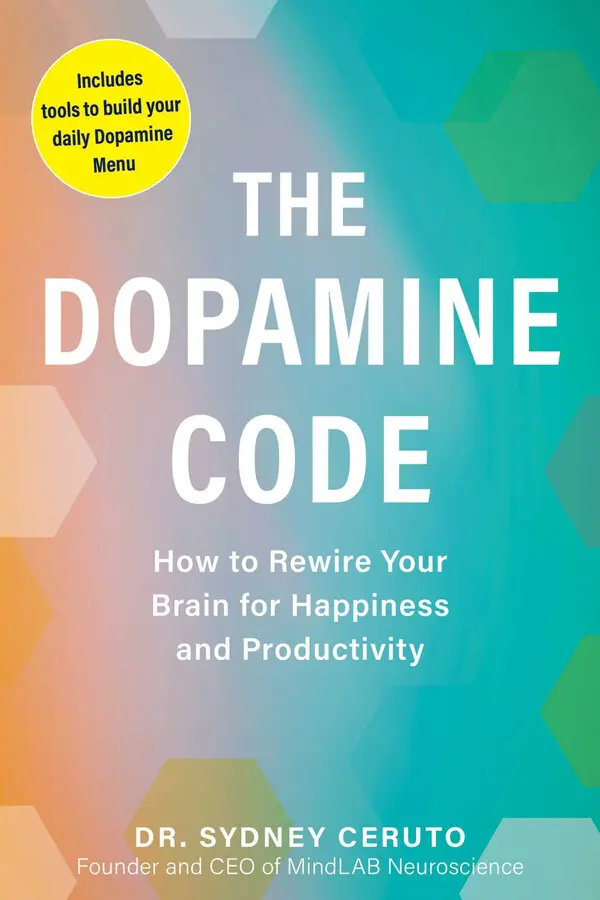
The Dopamine Code

Decode Your Drive

Why Your Brain Rewards the Wrong Things

Your brain's reward system runs every decision, every craving, every crash, and it was never designed for the life you're living. The Dopamine Code is Dr. Ceruto's framework for understanding the architecture behind what drives you, drains you, and keeps you locked in patterns that willpower alone will never fix.

Published by Simon & Schuster, The Dopamine Code is Dr. Ceruto's framework for building your own Dopamine Menu, a personalized system for motivation, focus, and enduring life satisfaction.

Order Now!

Available now

The Dopamine Code by Dr. Sydney Ceruto, Decode Your Drive
Locations