Chronic stress flattens your cortisol rhythm, fragments sleep, and feeds a self-reinforcing loop. The neuroscience of the stress-sleep cycle and...
Read article : Circadian Rhythm and Cortisol: The Stress-Sleep Loop
Circadian Rhythm
Biological timing dictates performance. Optimize your sleep-wake cycles and hormonal release windows to maximize energy, alertness, and recovery.
21 articlesThe Master Clock
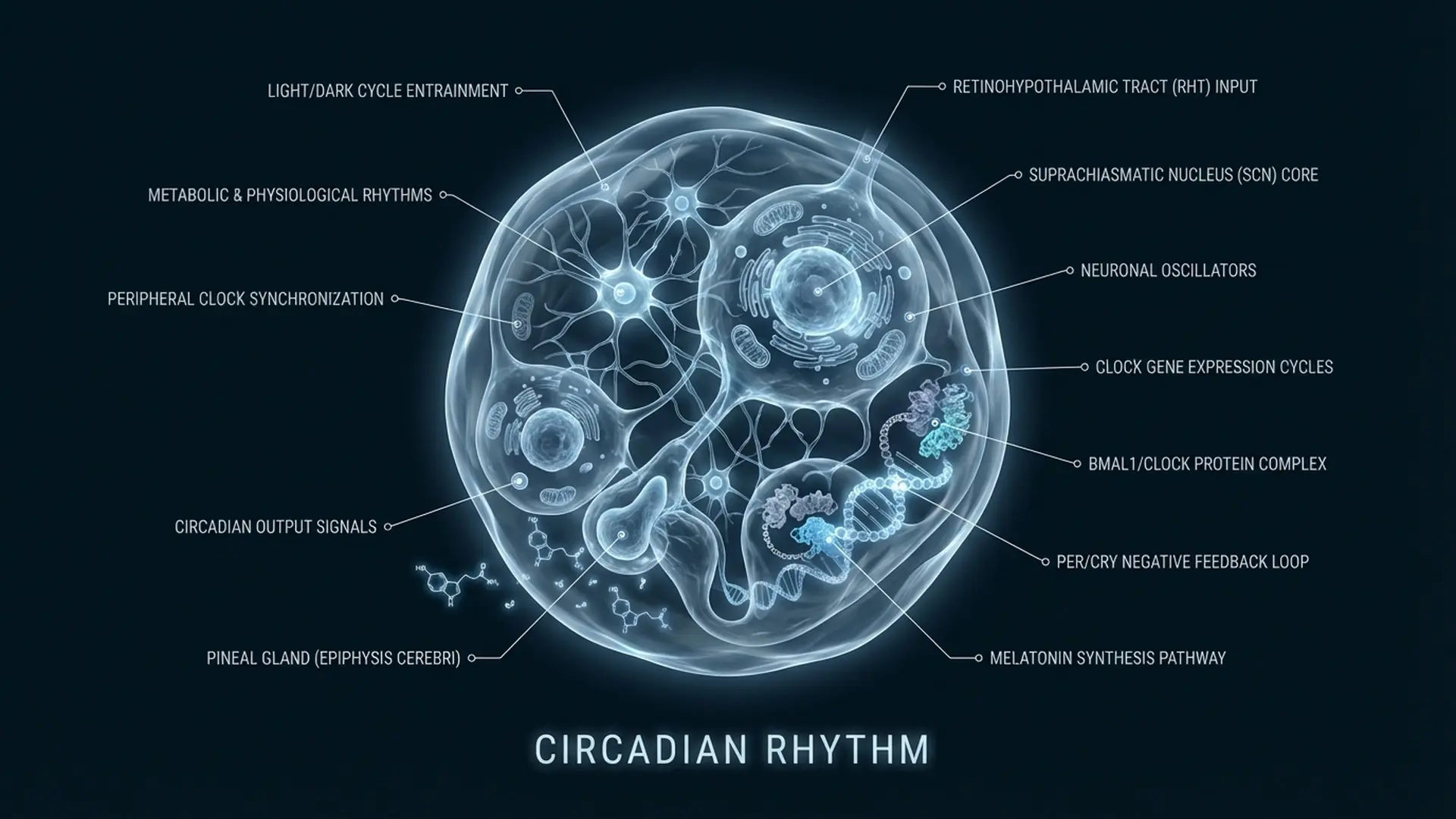
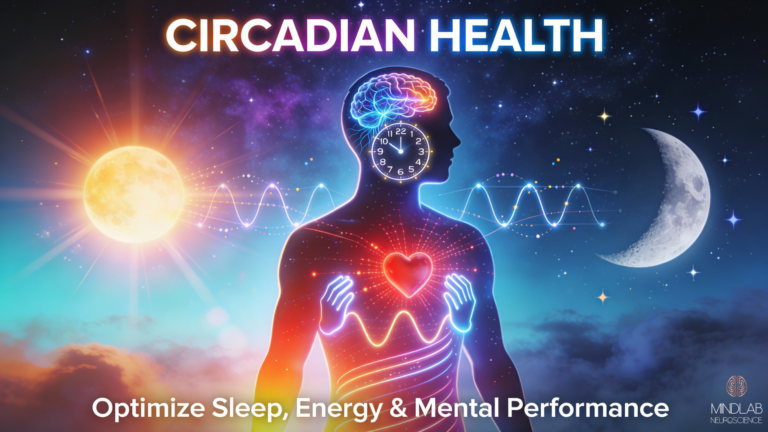
Your Circadian Rhythm is the 24-hour internal clock running in the background of your brain, specifically in the Suprachiasmatic Nucleus (SCN). It regulates not just sleep, but every biological system: hormone release (cortisol/melatonin), body temperature, digestion, and cognitive alertness.
Biological Timing (Chronobiology)
Performance is not linear; it is cyclical.
-
The Peak: For most people, cognitive acuity peaks in the late morning. This is the window for high-demand analytical work (“The Highlight”).
-
The Trough: In the early afternoon, there is a natural dip in core body temperature and alertness. Pushing against this biology with caffeine often leads to diminishing returns.
-
The Rebound: Early evening often brings a second wind for creative or recovery tasks.
Entrainment Protocols
Light is the primary “Zeitgeber” (time-giver) that sets your clock.
-
Morning Anchor: Viewing bright sunlight within 30-60 minutes of waking triggers a cortisol pulse that sets the timer for melatonin release 12-14 hours later.
-
Darkness Protocol: Artificial blue light after sunset tricks the SCN into thinking it is still noon, suppressing melatonin and delaying sleep onset.

Latest Articles
Nap length decides which brain systems benefit, from alertness to memory to motor learning. The science of strategic napping and...
Read article : Napping and Neural Performance: What the Science ShowsJet lag and shift work misalign the brain's master clock. A neuroscientist explains how timed light, meals, and melatonin resynchronize...
Read article : Jet Lag, Shift Work, and Circadian ResynchronizationSleep architecture, not just sleep duration, decides what your brain remembers. How deep NREM, spindles, and REM theta consolidate different...
Read article : How Sleep Architecture Shapes Memory ConsolidationYour chronotype is set by clock genes and your SCN, not willpower. How to schedule your highest-stakes cognitive work for...
Read article : Chronotype Science: Optimizing Your Day for Your BrainHow evening blue light hits ipRGCs and the SCN to suppress melatonin and delay sleep, plus the light-hygiene changes that...
Read article : Blue Light, Melatonin, and the Suprachiasmatic NucleusUnlock the secrets of mental exhaustion and reclaim your cognitive vitality. Discover cutting-edge neuroscience insights and practical strategies to combat...
Read article : Addressing Mental Exhaustion: A Neuroscience Approach to Optimize Cognitive VitalityWhy do energy levels crash and sleep patterns falter? The answer often lies in your circadian health. Discover the science...
Read article : Circadian Health 101: How to Optimize Sleep & Energy LevelsFeeling weighed down by the holiday blues? Discover neuroscience-based life coaching strategies to reframe negative thoughts, combat anxiety, and rediscover...
Read article : Holiday Blues: 7 Powerful Neuroscience-Based Tips to Address Seasonal Sadness