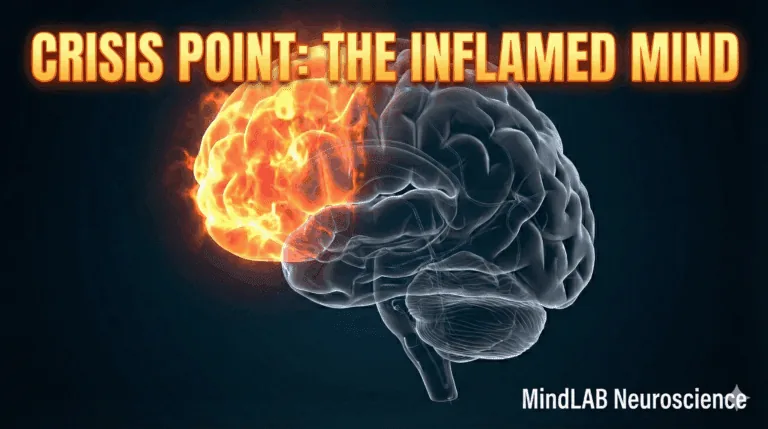
Inflammatory depression starts with cytokines that suppress dopamine in the brain's drive circuit, not low serotonin. See why anti-inflammatory routes...
Read article : Inflammatory Depression: The Cytokine-Dopamine LinkInflammation
The silent killer of cognitive speed. Learn how systemic inflammation crosses the blood-brain barrier to cause brain fog, depression, and slowed processing.
8 articlesThe Silent Performance Killer
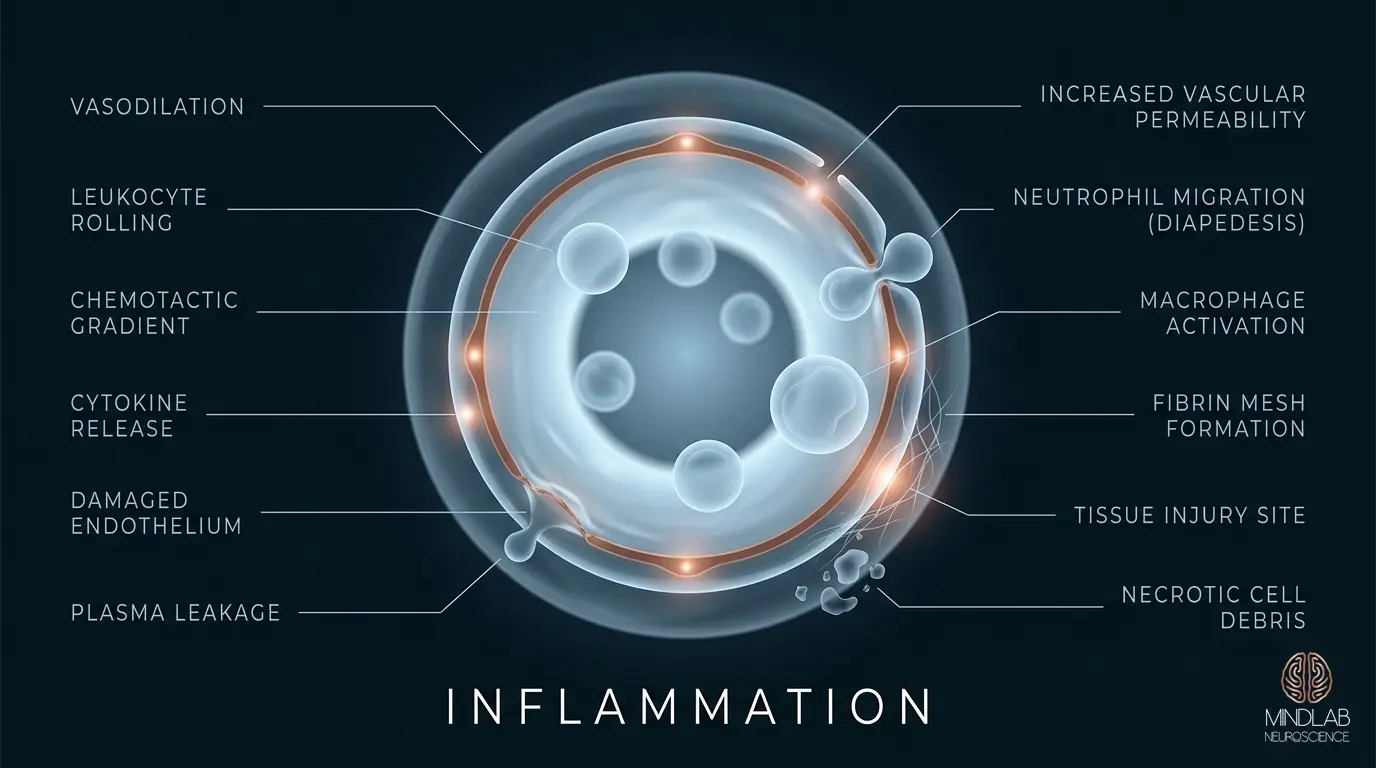
While acute inflammation is a healthy immune response to injury, Systemic Chronic Inflammation is a metabolic disaster for the brain. It is the root cause of many “psychological” issues, including depression, brain fog, and fatigue.
The Gut-Brain Axis
The majority of your immune system resides in your gut.
-
Leaky Gut, Leaky Brain: When the gut lining is compromised (by processed food, alcohol, or stress), inflammatory cytokines enter the bloodstream. These cytokines cross the Blood-Brain Barrier and activate the brain’s immune cells (Microglia).
-
Sickness Behavior: Activated Microglia shut down dopamine production and serotonin pathways to force the body to rest. In a modern context, this feels like unexplainable lack of motivation or low mood.
Anti-Inflammatory Strategy
Cognitive clarity often returns when you remove the inflammatory insult.
-
Elimination: Removing seed oils, refined sugars, and known allergens reduces the cytokine load.
-
Cold Therapy: Brief exposure to cold reduces systemic inflammation and increases norepinephrine.

Latest Articles
Loneliness and inflammation run on the same switch: Cole's CTRA rewires immune cells to flood the body with IL-6 and...
Read article : Loneliness and Inflammation | MindLAB NeuroscienceNeuroinflammation symptoms in the brain start with IL-6, not CRP. Learn which inflammatory markers actually predict cognitive decline.
Read article : Neuroinflammation Symptoms: IL-6, TNF & CRP | MindLABChildhood experiences play a significant role in an individual's vulnerability to depression. Research shows that experiencing traumatic events or neglect...
Read article : Understanding and Addressing the Factors Contributing to DepressionSuicidal thoughts emerge from complex neurobiological changes in brain structure, chemistry, and function. Understanding the neuroscience of suicidal ideation reveals...
Read article : The Neuroscience Behind Suicidal Ideation: Understanding the Brain’s Role in Crisis and the Path to Recovery