Key Takeaways
- The inner critic is a repetition-reinforced default mode network pattern, not a character flaw.
- The critic’s content comes from early relationships, internalized as neural patterns still firing in adulthood.
- Suppressing the critic triggers the rebound effect: holding it in working memory strengthens the circuit.
- Competing-circuit activation beats prevention: build a self-acknowledgment pattern that can outpace the critical one.
- The critic evolved as protection: rewiring keeps the evaluative function while removing the identity-threat charge.
As many of us do, I’ve grappled with my own critical inner voices and negativity. This insidious inner critic thrives on negativity, spewing the neuroscience of self-doubt and insecurity and criticizing every action, no matter how minute. Overcoming this negative inner voice may seem daunting. However, after twenty years of academic studies in several areas of psychology and neuroscience, I have pioneered a process that has unequivocally helped thousands of my clients do so.
Your Critical Inner Voice Fueled by Negativity
Your critical inner voice is a well-integrated pattern of destructive thoughts toward yourself and others. Neural research confirms this inner critic consolidates early relational experiences into automatic self-evaluative loops that fire without conscious initiation. Recognizing these patterns and their triggers gives you the insights needed to overcome your negative inner voice and master criticism for lasting self-confidence and begin building more supportive internal dialogue.
Understanding the Origins
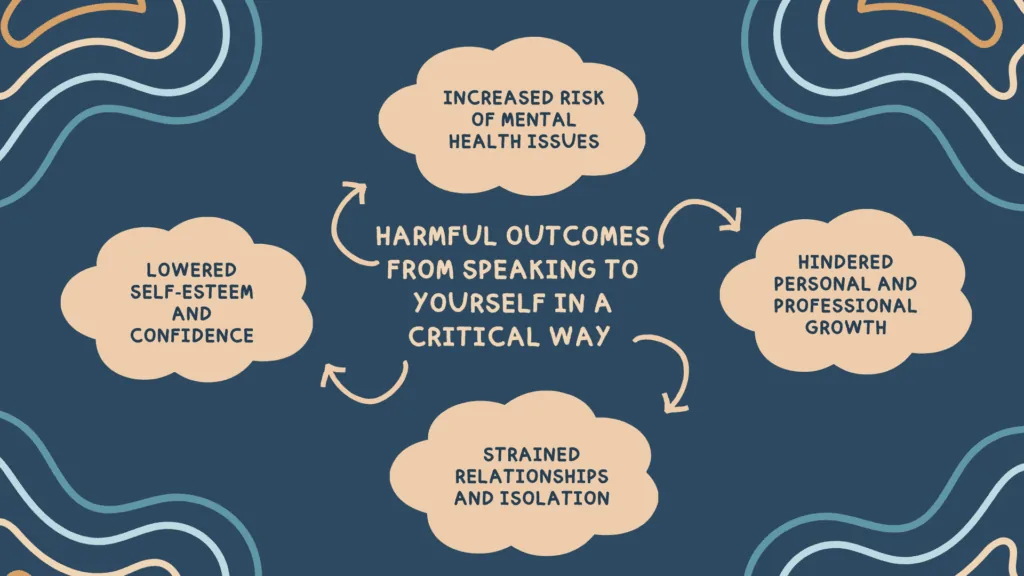
Your critical inner voice is not a reflection of reality. It is a viewpoint you adopted based on destructive early life experiences. Understanding this provides a strong starting point for silencing the critical inner voice and developing positive self-talk through neuroscience .
Harnessing the Power of Neuroplasticity
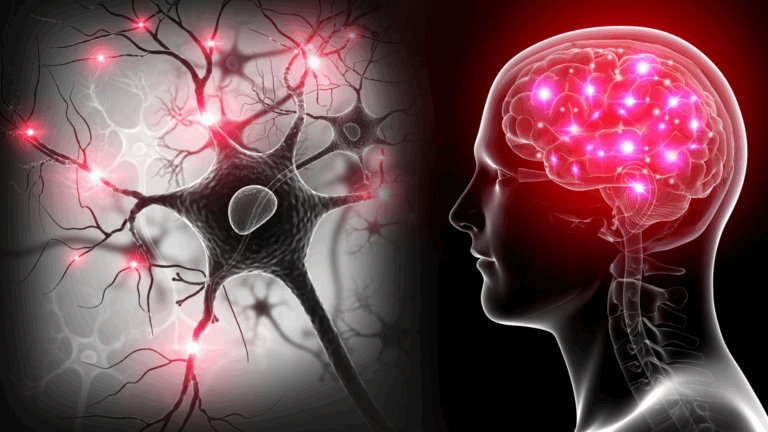
Understanding the concept of neuroplasticity – your brain’s natural ability to form new connections and change its structure in response to learning – is integral to silencing your critical inner voice. According to Davidson, this incredible brain attribute enables us to overwrite the negative messages of the critical inner voice with positive, supportive self-talk.
Developing Positive Self-Talk Through Neuroscience
Using neuroscience to develop positive self-talk has transformative potential. Knowing that your brain can forge new, healthier pathways, we work together to replace negative self-talk with affirmative messages. You consciously shift to positive affirmation whenever your inner critic attempts to undermine you.
Practical Strategies for Silencing Your Inner Critic
Silencing your critical inner voice requires consistent effort and a range of targeted strategies applied across different contexts and trigger conditions. Together, we challenge your self-critical thoughts and address the underlying feelings these thoughts cause. Multiple brain regions contribute to this process through synchronized neural firing patterns that.
- Confront the Critic: Confronting your critical inner voice involves responding to the attacks and criticisms it hurls at you. You need to recognize that this voice is not your point of view but an alien one you choose not to listen to.
- Understand the Defense: This voice can be tricky and becomes louder as you get closer to personal goals. We identify when your voice uses an old, destructive defense mechanism and work to keep you on your path.
- Foster Self-Compassion: You’ll learn to regard yourself with the same kindness and understanding you would extend to others.
- Focus on the Present: We’ll work on maintaining presence, focusing on what you can change now rather than dwelling on past errors or future anxieties.
Utilizing the Myriad Benefits of Neuroscience-Based Neuroscience Practice
Neuroscience-based neuroscience practice utilizes the insights of neuroscience to facilitate transformational behavioral changes and has proven to be quite effective in abolishing negativity in one’s self-talk. By understanding how our brain processes our thoughts, emotions, and behaviors, we can effectively reshape and direct them toward more positive and productive pathways.

Making Peace with Your Inner Self
A significant part of overcoming negativity involves making peace with yourself. Recognizing that everyone has faults and making an active decision not to let your inner critic magnify these faults is a significant step in your journey. Remember, the aim is not to eliminate all self-criticism but to foster a kinder, more realistic view of yourself.
When the Inner Critic Attacks Your Relationship
The same critical inner voice that erodes your self-image also turns on your closest relationships, and it does so in two directions. First it undermines you, flooding you with picky judgments about how you look, how you speak, and whether you are worthy of love, until you grow self-conscious and pull away. Then it attacks your partner, exaggerating their flaws and feeding the cynical conviction that they will never change. Both directions push toward the same outcome: defensive withdrawal from the very connection that would calm the threat signal driving the voice. This is core work inside building emotional intelligence in relationships.
A simple exercise exposes how external these attacks really are. Write down the harsh thoughts as you actually experience them in the first person (“I always say the wrong thing,” or “they are so careless”), then rewrite each statement in the second person (“you always say the wrong thing”). Said aloud, the second-person version sounds like an accusation from someone else, because that is precisely what it is: an internalized voice, not your own considered point of view. Once you can hear the attack as separate from yourself, you can choose not to act on it. Staying affectionate, holding eye contact, and continuing to communicate when the voice urges retreat each create competing evidence that vulnerability did not produce the catastrophe the critic predicted, gradually weakening its hold.
The Journey Continues…..
Overcoming your negativity and critical inner voice is not a one-time event but a continual journey. Despite the challenges and occasional setbacks, the strides in silencing your critical inner voice will significantly improve your self-esteem, self-confidence, and overall well-being. The underlying neural mechanisms involve coordinated activity across cortical.
Embarking on your journey toward developing positive self-talk and ridding your mind of negativity through neuroscience will bring newfound peace, confidence, and greater control over your thoughts and feelings. This journey with me will give you the tools and techniques to conquer your critical inner voice and instill a more positive, encouraging internal dialogue.
To take the first step on this transformative journey to rid yourself of negativity and harmful self-talk, I invite you to look around my website, which contains informative content and easy-to-understand descriptions of this one-of-a-kind process I developed over two decades ago. If you are genuinely ready to break the habit of being yourself, I look forward to consulting with you. Together, we can tap into the incredible potential of your brain, leverage neuroplasticity, and navigate your path toward a more positive, self-supportive inner dialogue.
Let’s tap into the incredible power of neuroscience and my proprietary Neuroscience-Based Neuroscience Practice techniques to replace self-doubt, negativity, and that obnoxious critical inner voice with unremitting SELF-CONFIDENCE!
, , , , , , ,
The patterns described in this article were built through thousands of neural repetitions, and they require targeted intervention to rewire. Real-Time Neuroplasticity™ provides the mechanism: intervening during the live moments when the pattern activates, building new neural evidence that a different response is architecturally possible.
| Approach to Inner Critic | What It Does Neurologically | Outcome |
|---|---|---|
| Suppression (“stop thinking that”) | Activates rebound effect; holding thought in WM to suppress strengthens the circuit | Temporary relief followed by intensification |
| Arguing with it (“that’s not true”) | Engages the same self-referential DMN network; treats the critic as a valid debating partner | Exhausting; critic often wins because it has 10,000 hours of practice |
| Observing it (“there it is again”) | Activates the prefrontal observer circuit; creates mild distance without engaging the content | Reduces intensity without eliminating the pattern; useful first step |
| Competing circuit activation (acknowledging actual evidence against the critic’s claim) | Builds the alternative neural pathway using the same activation conditions the critic uses | Over time, the acknowledgment circuit fires faster than the critical one in trigger contexts |
| Behavioral disconfirmation (acting against the critic’s prediction) | Accumulates evidence that the critic’s threat assessment is inaccurate; updates ACC threat calibration | Most durable: reduces the critic’s activation threshold by updating its underlying predictions |
The inner critic is not you. It is a neural pattern you inherited from the critical voices in your formative environment, consolidated, automated, and now firing without any external voice attached. Silencing it is not about becoming less discerning. It is about separating the evaluative function from the identity-threat charge it carries.
Where that voice comes from evolutionarily, and why it keeps running long after the mistake ended, is covered in a case study of the self-punishment loop.
Where does the inner critic come from?
The inner critic is primarily a consolidation of evaluative feedback received from significant early relationships (parents, teachers, peers, and siblings) that the developing brain internalized as self-monitoring patterns. Children’s brains in high-plasticity states absorb repeated critical evaluations from important figures, creating strong neural circuits in the default mode network. Over time, the external voice is no longer necessary: the circuit runs internally, applying the same evaluative lens to the self’s ongoing performance.
Is the inner critic useful, or is it purely harmful?
The inner critic serves a genuine function: monitoring performance against standards and motivating correction of gaps, which is neurologically useful and socially adaptive. The problem is not the evaluative function but the threat charge attached to it: the inner critic interprets performance gaps as evidence of fundamental inadequacy, triggering amygdala responses disproportionate to the actual issue. The goal of rewiring is to retain the gap-noticing function while removing the automatic identity-threat response.
Why does ignoring the inner critic not work?
Ignoring the inner critic requires the same cognitive resources as suppressing it: the prefrontal cortex must actively not-engage with the default mode network’s self-referential output, which is energetically costly and typically unsustainable. The inner critic activates precisely under conditions of stress and novel challenge, when prefrontal resources are most committed to the task at hand and least available for active ignoring. The alternative is activating a different circuit rather than attempting to ignore the existing one.
What is the difference between self-criticism and self-accountability?
Self-accountability is the prefrontal function of assessing performance against standards and identifying corrective action. Self-criticism is the amygdala-mediated response to perceived performance gaps that adds an identity-threat charge to the assessment. Self-accountability sounds like: “This didn’t go well; what would I do differently?” Self-criticism sounds like: “What is wrong with me?” The first engages problem-solving; the second triggers shame-avoidance circuits that impair performance rather than improving it.
Can the inner critic be durably reduced?
The default mode network’s self-evaluative circuit cannot be eliminated: it is part of the normal self-monitoring architecture of the human brain. What changes through targeted work is its dominance: the frequency with which it activates, the intensity of its charge, and the speed with which a more balanced response can be introduced.
What is the critical inner voice and where does it come from?
The critical inner voice is an internalized pattern of negative self-talk that originates from early life experiences, particularly critical or dismissive messages absorbed from caregivers and social environments. These messages become encoded in the brain’s neural networks and replay automatically, often feeling like one’s own thoughts rather than echoes of past external criticism.
How does the critical inner voice affect the brain and nervous system?
The critical inner voice activates the brain’s stress response system, triggering cortisol release and amygdala activation just as an external threat would, because the brain cannot distinguish between real danger and self-generated negative narratives. This chronic internal stress impairs prefrontal cortex function, reduces emotional resilience, and can create a persistent state of low-grade fight-or-flight activation.
What neuroscience-based strategies help silence the critical inner voice?
Effective strategies include externalizing the voice by writing it down or speaking it aloud in the second person, which activates different neural pathways and creates psychological distance from the criticism. Practicing self-compassion activates the brain’s caregiving system, releasing oxytocin that directly counteracts the stress response triggered by harsh self-judgment.
Can the critical inner voice ever be completely eliminated?
While the neural patterns underlying the critical inner voice may never be entirely erased, their influence can be dramatically reduced by building stronger competing pathways of self-compassion and realistic self-assessment. Over time, consistent practice weakens the automatic activation of self-critical circuits and strengthens the brain’s ability to recognize and redirect these patterns before they escalate.
Understanding your inner critic is the first step toward lasting change. The questions below address the most common concerns individuals bring to this work, covering where the inner critic originates, how it functions neurologically, and what evidence-based approaches can reduce its dominance over time.
About the Author
Founder & CEO of MindLAB Neuroscience, Dr. Sydney Ceruto is the pioneer of Real-Time Neuroplasticity™: a proprietary methodology that durably rewires the neural pathways driving behavior, decisions, and emotional responses.
Dr. Ceruto holds a PhD in Behavioral & Cognitive Neuroscience (NYU) and Master’s degrees in Clinical Psychology and Business Psychology (Yale University). Lecturer, Wharton Executive Development Program, University of Pennsylvania.
Understand the neuroscience. Apply it to your life. Work directly with Dr. Ceruto to build a personalized strategy.. Book a Strategy Call
References
- Davidson, R. J. (2012). The Emotional Life of Your Brain. Penguin Books.
- Porges, S. W. (2011). Polyvagal Theory: Neurophysiological Foundations of Emotions, Attachment, Communication, and Self-Regulation. W. W. Norton.
- Doidge, N. (2007). The Brain That Changes Itself: Stories of Personal Triumph from the Frontiers of Brain Science. Penguin Books.