"Discover the profound impact of infidelity on a woman's self-esteem and confidence in my latest article. I delve into the...
Read article : From Betrayal to Empowerment: How Cheating Impacts Self-Esteem In A WomanInner Critic
The default mode network gone rogue. Learn to interrupt automatic negative thought loops and install a more accurate, supportive internal dialogue.
27 articlesThe Default Mode Network Gone Rogue
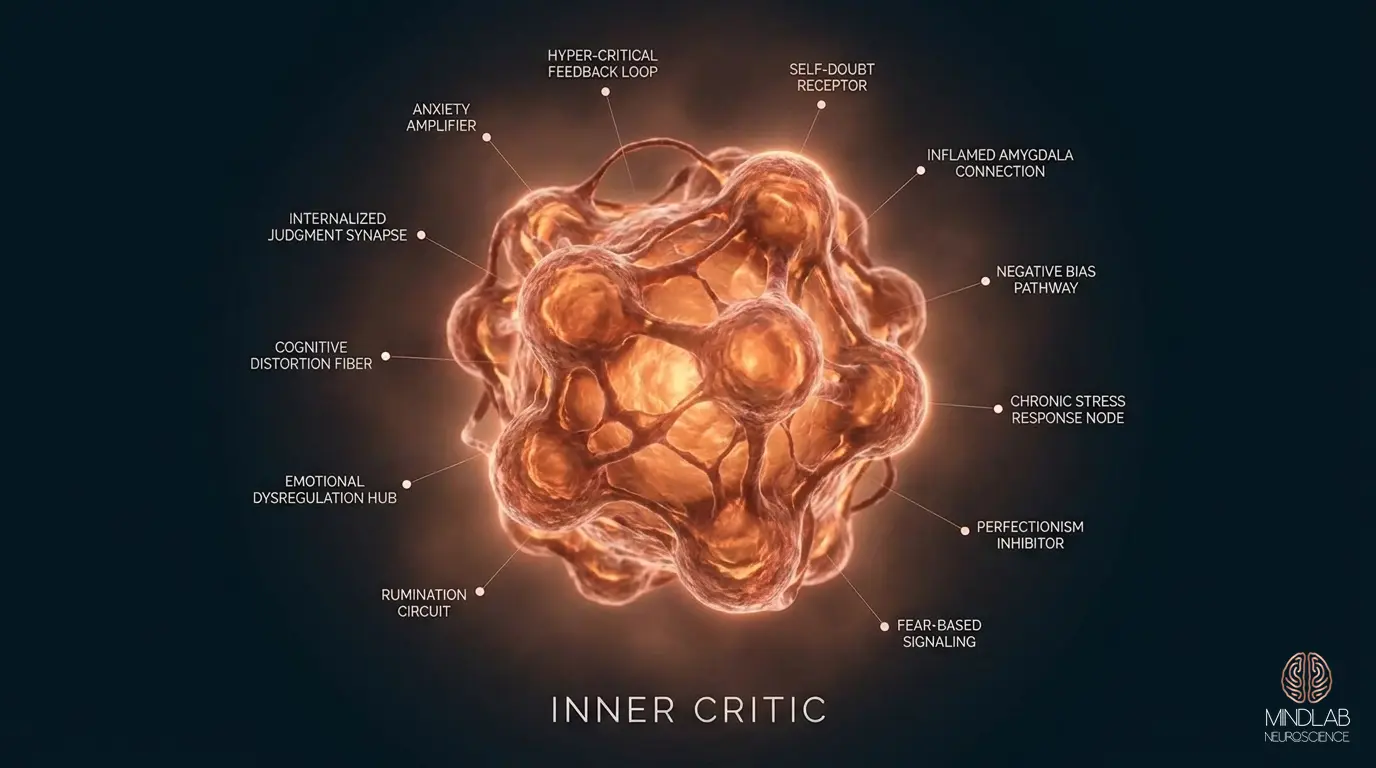
The “Inner Critic” is not a moral failing; it is a repetitive neural loop. It usually stems from hyperactivity in the Default Mode Network (DMN), specifically the pathways linking the self-referential centers to the amygdala (fear).
The Negative Bias
The brain is wired for survival, not happiness. It has a Negativity Bias, prioritizing the detection of mistakes over the celebration of wins. The Inner Critic is essentially an over-zealous error-detection system trying to keep you “safe” from social rejection by pointing out every flaw before anyone else does.
Silencing the Loop
-
Distancing: Give the critic a name (e.g., “The Audit”). When the voice starts, say, “The Audit is loud today.” This separates the thought from the thinker.
-
The “And” Technique: Instead of fighting the thought (“I’m not stupid”), add to it: “I feel stupid right now, AND I am capable of learning this.” This validates the emotion while re-engaging the Prefrontal Cortex.

Latest Articles
Here's an excerpt for your blog on negative self-talk and mental health, optimized for SEO and readability: Negative Self-Talk: The...
Read article : Optimizing Mental Well-being: Addressing the Impact of Negative Self-TalkKey Takeaways
Read article : Addressing the Impact of Negative Thoughts on Career GrowthDiscover the transformative power of neuroscience-based life coaching to overcome limiting beliefs and unlock your true potential.
Read article : Limiting Beliefs Neuroscience: Why They Persist and How the Brain Actually Changes ThemThe pursuit of greatness can lead to insecurity, narcissism, and decreased performance. Learn how to counter these trends and foster...
Read article : The Dark Side of Perfectionism: How the Pursuit of Greatness Can Lead to Insecurity and Decreased PerformanceUncover the neuroscience behind imposter syndrome and self-doubt. As a neuroscientist and life coach, I reveal how these feelings affect...
Read article : Unmasking Imposter Syndrome: A Neuroscience Guide to Addressing Self-DoubtWe explore the evolutionary neuroscience of self-hatred to reveal why shame is not a flaw but a survival mechanism. From...
Read article : The Evolutionary Neuroscience of Self-Hatred: Why Your Brain Turns on YouWhen you ask “Am I a loser?”, your brain isn’t giving you truth—it’s firing an outdated survival code. Neuroscience shows...
Read article : Neuroscience-Based Strategies to Resolve Self-Doubt and Optimize MotivationThe neuroscience of insecurity reveals why self-doubt and anxiety are so common in relationships. Dive into the brain science behind...
Read article : Neuroscience of Insecurity: Why Your Brain Craves the Dopamine Rush of UncertaintyAre you questioning who you truly are? As a neuropsychologist, I've identified 5 key signs that indicate you might be...
Read article : 5 Signs of a Self-Identity CrisisKey Takeaways
Read article : The Neuroscience of Self-Sabotage: Why We Are Our Own Worst EnemyExplore the transformative power of vulnerability in creating deep, meaningful connections and living authentically. Learn why it's challenging, its evolutionary...
Read article : The Power of Vulnerability: Embracing Our True Selves