In this thought-provoking blog post, we delve into the profound question of self-acceptance and its significance in our lives. Drawing...
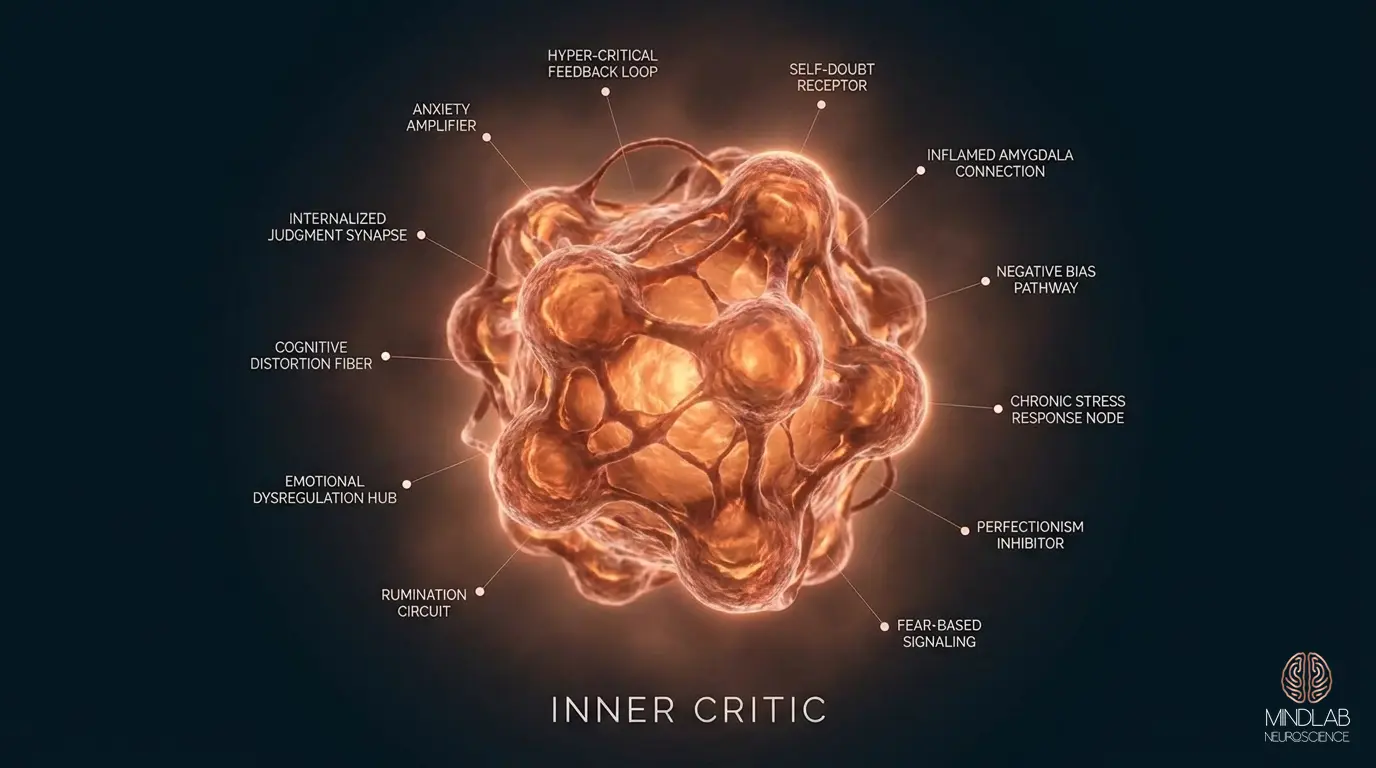
Read article : 7 Powerful Strategies to Unlock Self-Acceptance: A Neuroscience-Based ApproachInner Critic
The default mode network gone rogue. Learn to interrupt automatic negative thought loops and install a more accurate, supportive internal dialogue.
27 articlesThe Default Mode Network Gone Rogue
The “Inner Critic” is not a moral failing; it is a repetitive neural loop. It usually stems from hyperactivity in the Default Mode Network (DMN), specifically the pathways linking the self-referential centers to the amygdala (fear).
The Negative Bias
The brain is wired for survival, not happiness. It has a Negativity Bias, prioritizing the detection of mistakes over the celebration of wins. The Inner Critic is essentially an over-zealous error-detection system trying to keep you “safe” from social rejection by pointing out every flaw before anyone else does.
Silencing the Loop
-
Distancing: Give the critic a name (e.g., “The Audit”). When the voice starts, say, “The Audit is loud today.” This separates the thought from the thinker.
-
The “And” Technique: Instead of fighting the thought (“I’m not stupid”), add to it: “I feel stupid right now, AND I am capable of learning this.” This validates the emotion while re-engaging the Prefrontal Cortex.

Latest Articles
Discover how neuroscience can help you handle criticism constructively, maintain self-confidence, and turn feedback into growth opportunities. Explore the brain's...
Read article : How to Optimize Your Response to Criticism: A Neuroscience Approach to Unshakeable Self-ConfidenceDiscover how to silence your critical inner voice and transform your relationships. Learn practical strategies to overcome self-doubt and build...
Read article : Critical Inner Voice and Relationships: Strategies to Address NegativitySeeking genuine confidence? Dive into 18 transformative tips for being confident that resonate from the core. Begin a journey of...
Read article : 18 Strategies to Cultivate Inner ConfidenceCognitive distortions in the workplace operate below conscious awareness, systematically skewing the data that professionals use to make critical decisions.
Read article : Navigating Cognitive Distortions in the Workplace: A Comprehensive GuideSelf-esteem, our intrinsic sense of self-worth, can be profoundly influenced by cognitive distortions—those skewed perceptions and irrational beliefs that deviate...
Read article : Cognitive Distortions and Self-EsteemLimiting beliefs, those self-imposed barriers that constrain our potential, are not just psychological constructs but also have deep roots in...
Read article : Overcome Limiting Beliefs: A Fusion of Life Coaching and NeuroscienceDo you often find yourself trapped in a cycle of self-doubt, feeling like an actor waiting for the curtain to...
Read article : From Doubt to Success: How Career Coaching Can Help You Resolve Imposter SyndromeAre you tired of your own negativity? Discover the power of positive thinking in our latest article, 'Overcoming Negative Self-Talk.'...
Read article : Optimizing Your Internal Dialogue: Addressing Negative Self-Talk and Cultivating PositivityIn a world where our minds are constantly bombarded with external noise, the most insidious voice often comes from within....
Read article : How to Silence Your Critical Inner Voice: Optimizing Inner DialogueDiscover the complexities of perfectionism, including its traits, conditions, and how it impacts well-being. In this article, we explore the...
Read article : Understanding and Addressing PerfectionismSelf-Doubt and Build Confidence is an essential aspect of our lives that affects every decision we make and every interaction...
Read article : Overcome Self-Doubt Neuroscience: Brain-Based Confidence Building