






Pre-Marital Guidance in Greenwich, CT

Wealth, social expectation and demanding careers can put quiet pressure on Greenwich marriages. Dr. Sydney Ceruto works on what it sets off in each partner.

In Greenwich, a marriage can look settled from the outside while something harder goes unsaid at home. Pre-Marital Guidance at MindLAB Neuroscience examines how each partner deals with disagreement, money and vulnerability. Dr. Ceruto uses Real-Time Neuroplasticity™ to work on the patterns most likely to create distance, so they can be durably restructured.

Book a Strategy Call
ForbesUSA TodayHuffPostNewsweekAssociated PressCosmopolitanBusiness InsiderForbesUSA TodayHuffPostNewsweekAssociated PressCosmopolitanBusiness Insider

The Argument You Have Had Before

“You can look like the perfect couple at a benefit and still ride home in silence.”

It starts with something small: a late reply, a family plan, a bill nobody mentioned. Ten minutes later neither of you is talking about the bill. One of you is pressing for an answer, and the other has gone quiet or left the room.

It looks like a communication problem, so the usual advice is about communication: listen, use “I” statements, take a break. Those skills are useful. The trouble is that the argument happens in a state where they are harder to reach.

What Happens in Two Brains During a Fight

A remark from your partner that lands as criticism is a moment of being judged, by the person whose judgment matters most. Being judged, in a situation you cannot control, is among the strongest psychological triggers of the body’s stress hormones. And even mild stress, when it is out of your control, can rapidly impair the prefrontal cortex, the brain’s center for planning and self-control.

Under stress, people also tend to shift away from deliberate choices and toward habit. So in the middle of an argument, each of you tends to do what you learned to do first. One pattern that research on couples has studied closely is demand and withdraw: one partner presses with requests, complaints or criticism, and the other retreats into defensiveness or silence. Which role you take often depends on which of you wants the change.

Many of those first moves were learned long before you met. How each of you handles closeness was likely shaped in part by your earliest relationships, which is part of why an argument with the person you love can feel older than the argument itself. None of this makes either of you the problem. Each move can be read as a brain protecting itself the way it learned to, and a learned response can be retrained.

Why Before the Wedding

Stress from outside a relationship can make what happens inside it count for more. In a study that followed couples over four years, everyday moments with a partner weighed more heavily on how satisfied each spouse felt when their stress ran higher than usual. The years after a wedding add more to carry: a shared home, shared money, careers that move, families that grow and need care. Preparing before the wedding means working on the loop the two of you make before those years add weight to it.

A partner can also be a source of calm. In a small study of married women, holding a husband’s hand quieted the brain’s response to a threat, and the effect was larger in stronger marriages. Part of the work is learning to reach for that calm instead of the old move.

How Dr. Ceruto Works With Couples

The work begins by mapping what each of you brings: the move you make under pressure, what sets it off, and how your two patterns feed each other. In the first conversations Dr. Ceruto looks past the topic you argue about (money, family, time) to the loop underneath it. She decides with you whether the work runs with both of you, with one partner, or with each of you in turn.

Real-Time Neuroplasticity™ then works on those patterns in live moments: the money conversation you keep postponing, the family visit that ends badly, the argument that starts over something small. A new response practiced in the heat of a disagreement can hold when the next one comes. Pre-marital counseling teaches the skills of a good conversation, while this works on what happens in each of you in the seconds before you reach for them.

It starts with a Strategy Call: an hour by phone with Dr. Ceruto, in which she maps the pattern the two of you keep repeating and what it would take to change it.

Marker Traditional Approach Neuroscience-Based Approach Why It Matters
Recurring Arguments Communication skills and turn-taking Working on each partner's reaction in the moment Even mild stress you cannot control can impair planning
Demand and Withdraw Agreements about how to disagree Mapping the loop your two patterns make together The role each partner takes often shifts with who wants the change
Family Patterns Discussing roles and expectations Tracing the reactions each partner learned early Adult closeness is likely shaped in part by early relationships
Outside Stress Scheduling time together Working on how a hard week carries into the relationship Outside stress can make everyday moments weigh more
Feeling Safe Reassurance and shared routines Working on how each of you reads the other under stress Wives holding a husband's hand showed quieter threat responses
Durability Skills practiced between disagreements Patterns worked on during disagreements, as they happen A response practiced mid-argument can hold next time

Why Greenwich Couples Need Neuroscience-Based Pre-Marital Guidance

Greenwich marriages sit where great wealth, demanding careers and a social world meet, and the appearance of a perfect partnership can be as carefully kept as the house. Many people here work in settings that reward performance and penalize vulnerability. Left unexamined, that pressure can weigh on a marriage from the start.

Neuroscience consultation, rosewood table with crystal brain sculpture and branded journal for strategy call preparation

In Greenwich, money can set the terms of a marriage early. When there is a large wealth gap between partners, patterns around power, contribution and self-worth can quietly run the marriage. Often neither partner chose those patterns, and unexamined, they can grow stronger with each year.

Greenwich’s social life compounds this. The country club, the benefit circuit and the school community each expect a version of the marriage that may differ from what happens at home. In a busy season, those obligations can fill more evenings than the two of you spend alone.

Behind the Surface for Greenwich Couples

At home, the habits each partner brings can take recognizable forms. A habit of staying composed can show up as control, emotional distance, or difficulty being vulnerable. A partner may carry patterns of perfectionism, image-keeping and conflict avoidance that leave little room to show what they feel.

In Greenwich, the patterns worth a closer look can include financial power, where money has become a stand-in for control or worth. They can also include intimacy in the wider sense: openness, trust, and the willingness to be fully known by another person. If one partner hears vulnerability as weakness, that reading can be durably rewired. If the other avoids conflict until honest conversation stops, the work takes on that avoidance too. The aim is a partnership that can hold up in private, not only in public.

The Marriage Behind Closed Doors

The polished distance some couples settle into, performing closeness without feeling it, often grows out of patterns that can be durably restructured before you marry. When a bad stretch at work spills into the evenings, a response practiced beforehand can keep it from turning into withdrawal. A disagreement about the children’s education can stay a conversation.

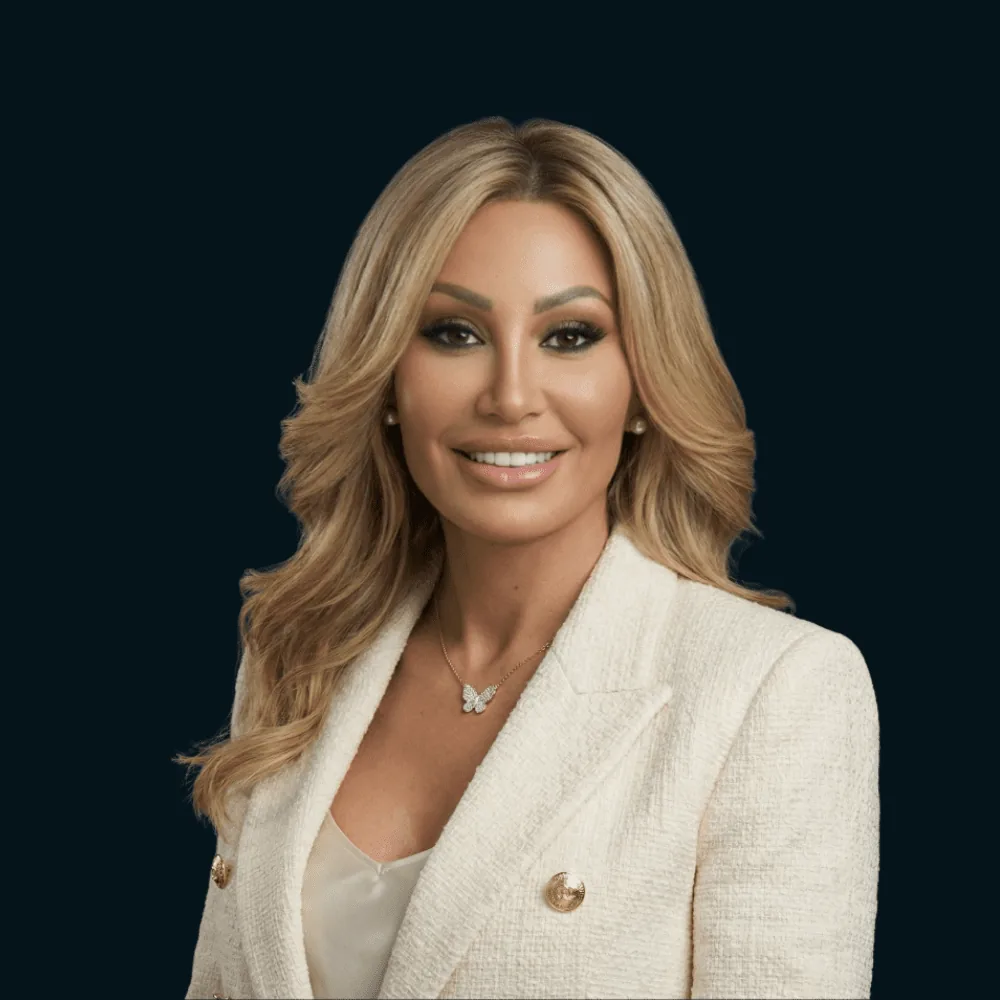
Dr. Sydney Ceruto, PhD, Neuroscientist & Author, MindLAB Neuroscience

Dr. Sydney Ceruto, PhD, Neuroscientist & Author, MindLAB Neuroscience

Dr. Ceruto holds a PhD in Behavioral & Cognitive Neuroscience from NYU and Master’s degrees in Clinical Psychology and Business Psychology from Yale University. She lectures at the Wharton Executive Development Program at the University of Pennsylvania and has been an Executive Contributor to the Forbes Coaching Council since 2019. Dr. Ceruto is the author of The Dopamine Code (Simon & Schuster, June 2026). She founded MindLAB Neuroscience in 2000 and has spent over 26 years leading it, pioneering Real-Time Neuroplasticity™, a methodology that durably rewires the neural pathways driving behavior, decisions, and emotional responses.

Success Stories

“Dr. Ceruto's neuroscience-backed methods transformed me from an accomplished executive struggling with presence to a visionary CEO. She sharpened my negotiation instincts, built mental resilience I didn't know I was missing, and fostered genuine likability. The difference shows up in how my team responds to me: trust, respect, and a willingness to follow I'd tried to manufacture for years. I stopped trying to project authority and started operating from it.”

Victoria W., WeWork New York, NY

“I could perform at the highest level professionally and still feel hijacked emotionally in my closest relationships, and no conventional approach had ever explained why those two realities coexisted. My work with Dr. Ceruto surfaced an imprint from childhood that was running every intimate interaction I had. She didn't just help me understand it better. We took it apart. The reactivity isn't something I have to manage anymore. What was generating it has changed.”

Natasha K., Chief of Staff, Venture Capital Beverly Hills, CA

“Dr. Sydney Ceruto transformed me from an overwhelmed Managing Director with leadership blind spots to a venerated leader with purpose and balance. Her insights and guidance honed my self-awareness, equipped me with situational leadership skills, and cultivated a magnetic executive presence, enabling me to master high-stakes conversations and leave a lasting leadership legacy. The way I process high-pressure interactions is fundamentally different now.”

Matteo R., Director of Investment Banking, Morgan Stanley London, UK

“The same relational patterns my mother and grandmother lived through kept repeating in my own life, the hypervigilance, the emotional shutdown, the inability to feel safe even when nothing was wrong. Talking through it changed nothing. Dr. Ceruto and I worked on the inherited patterns I had been carrying, and she helped me rebuild them. The cycle that ran through three generations stopped with me.”

Gabriela W., Managing Partner, Immigration Law Miami, FL

“Every close relationship I had eventually hit the same wall. I'd flood emotionally and shut down or explode, and nothing I'd tried gave me real control over it. Dr. Ceruto helped me see that I was dropping straight into fight-or-flight the moment real intimacy was on the line. She didn't give me coping tools. She helped me rebuild that default. The flooding eased because what set it off had changed.”

Simone V., Executive Director, Arts Nonprofit New York, NY

“The way I was processing decisions under pressure had a cost I couldn't see, until I worked with Dr. Ceruto. We worked through how I react in high-stakes situations and rebuilt my approach from the ground up. I don't just perform better under pressure now. I think differently under pressure. The shift was structural, not incremental.”

Rob W., Goldman Sachs Manhattan, NY

Frequently Asked Questions About Pre-Marital Guidance

What does Pre-Marital Guidance at MindLAB actually address?
It targets the neural patterns each partner brings into the marriage: the pathways governing how your brain handles conflict, financial dynamics, emotional vulnerability, and intimacy. Dr. Ceruto works on these patterns so they can support a partnership that is lived rather than performed.
How is this different from pre-marital counseling?
Pre-marital counseling teaches communication strategies and conflict exercises. Dr. Ceruto's methodology works on the neural architecture that produces conflict and emotional distance. The change it works toward is structural and durable.
My partner works in finance and shuts down emotionally after stressful weeks. Can this help?
Yes. Shutting down after a stressful week can be a learned pattern more than a choice. Dr. Ceruto maps the pattern behind the withdrawal and works on it, so a hard week at work can stop turning into distance at home.
We have significant wealth disparity. Will this address power dynamics?
Yes. When one partner brings much more money into the marriage, questions of worth, control and autonomy can follow. Dr. Ceruto works with both partners on the patterns behind those questions, so a difference in money does not have to become an imbalance in the relationship.
Do both partners need to participate?
Not necessarily. On the Strategy Call, Dr. Ceruto hears what is happening between you and recommends where the work should begin. One partner's work alone can shift the pattern between you.
What happens during the Strategy Call?
The Strategy Call lasts an hour, by phone, and Dr. Ceruto spends it on the dynamics between you and your partner. She maps the neural mechanisms driving your friction points and determines whether this protocol is the right path forward.
We are planning a Greenwich wedding this fall. Is there enough time?
Dr. Ceruto checks your date during the Strategy Call and paces the protocol to it. Starting sooner means the work can use the months of planning, and the pressure that comes with them, rather than racing the calendar.
We value discretion. How private is this process?
Dr. Ceruto works personally with every client. There are no group sessions, no junior associates, and no institutional infrastructure that could compromise privacy. Your information remains between you and Dr. Ceruto.
Can this help us avoid the pattern we see in other Greenwich marriages?
That is one of the things it is for. The polished distance and quiet disconnection some couples fall into can grow out of patterns, and Dr. Ceruto works on them before the wedding, so the marriage can rest on connection rather than managed performance.
Is Dr. Ceruto the practitioner for every couple?
Yes. Dr. Ceruto personally conducts every Strategy Call and designs every protocol. MindLAB Neuroscience does not delegate to associates or junior practitioners. You work directly with Dr. Ceruto, a neuroscientist with a PhD from NYU, who founded MindLAB Neuroscience in 2000 and has led it for over 26 years.

Also available in: Wall Street · Midtown Manhattan · Beverly Hills · Lisbon

Take the First Step

One hour with Dr. Sydney Ceruto. You leave knowing which neural pattern is actually driving this, and what to do about it.

Book a Strategy Call
MindLAB Neuroscience strategy call setting

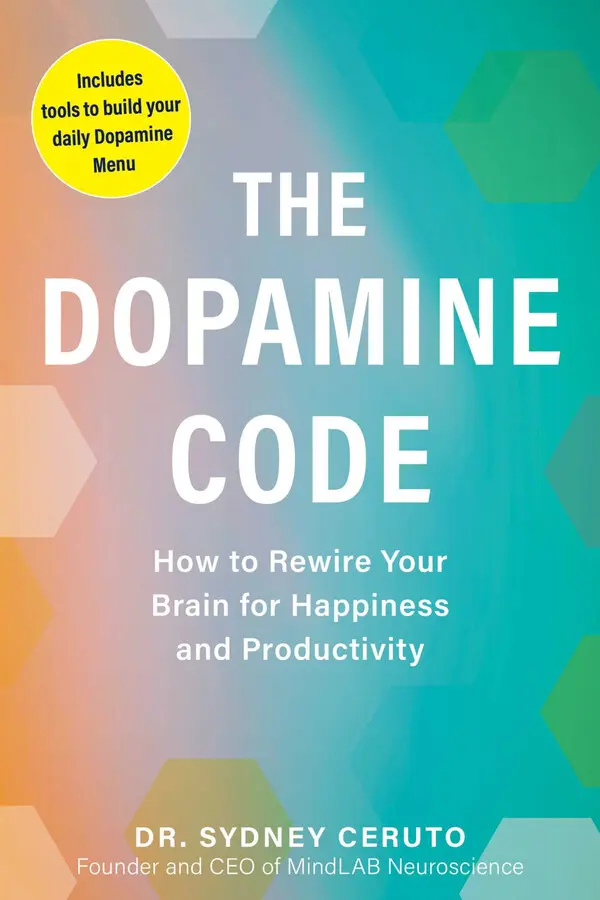
The Dopamine Code

Decode Your Drive

Why Your Brain Rewards the Wrong Things

Your brain's reward system runs every decision, every craving, every crash, and it was never designed for the life you're living. The Dopamine Code is Dr. Ceruto's framework for understanding the architecture behind what drives you, drains you, and keeps you locked in patterns that willpower alone will never fix.

Published by Simon & Schuster, The Dopamine Code is Dr. Ceruto's framework for building your own Dopamine Menu, a personalized system for motivation, focus, and enduring life satisfaction.

Order Now!

Available now

The Dopamine Code by Dr. Sydney Ceruto, Decode Your Drive
Locations