





Entrepreneurial Mindset Development in Westchester County

Westchester founders balance the ambition of building high-growth companies with the complexities of operating outside Manhattan's infrastructure while competing at its level.

Building outside a major metro core brings its own pressures on how a founder decides, and those pressures are where this work starts.

Book a Strategy Call
ForbesUSA TodayHuffPostNewsweekAssociated PressCosmopolitanBusiness InsiderForbesUSA TodayHuffPostNewsweekAssociated PressCosmopolitanBusiness Insider

Key Points

  1. Building outside Manhattan means every investor and partner meeting has to be planned on purpose.
  2. E-commerce companies in Rye and professional services firms in White Plains share the county with biotech.
  3. Many founders here are raising families in the towns where they build.
  4. Calls with Dr. Sydney Ceruto take place by phone, on decisions still in motion, wherever the week takes them.
  5. Coworking spaces in downtown White Plains and new biotech incubators point to a county still changing.

A Bigger Company, the Same Decisions

“Keeping investors in Manhattan, clients around the tristate region and a team in Tarrytown means no connection can be left to chance.”

You started the company on instinct and speed, and both served you well. Now there are investors, a team that waits on your call, and decisions where the information you need is not in yet. Some of those calls keep getting made the same way, with the same result, quarter after quarter.

Most founders respond by adding structure, from operating plans to advisors to a standing weekly review. It helps, up to a point. The calls that keep coming back often trace to something structure does not touch: moves practiced so often in the early years that they now run by themselves.

Habits Built in the Early Days

Habits form around what you do over and over. A routine repeated often enough can become automatic, and the basal ganglia, a set of deep structures tied to habit, are thought to carry much of that work, mostly below conscious attention. A founder who decided alone through the first hundred hires may still reach for that move at the three hundredth.

Business growth consulting and founder coaching, copper neural scaffolding under active construction representing development architecture

A bad quarter also changes the conditions the brain is working in. Stress you cannot control, even in small amounts, can quickly weaken the planning work of the prefrontal cortex. In one experiment, people put under stress before learning a task went on repeating it after its payoff had lost value, a sign that habit had taken over from goal-directed choice.

Deciding Without the Odds

A founder rarely knows the odds. In one study, activity in the amygdala, a structure deep in the brain, rose as more of the information behind a choice was missing. People’s choices were affected as well, although in theory missing odds should make no difference.

A pitch puts two things together: a room forming a view of you, and an outcome you cannot control. In laboratory studies, tasks that combined those two produced the largest stress-hormone responses. Recovery afterward was slowest, too.

A product line you have defended for two years can be hard to cut, even when the numbers say it should go. One general reason: in decisions, people respond more strongly to a possible loss than to an equal gain. Responses like these can still change with practice.

Working on Decisions Where They Happen

Take a founder who rewrites the plan after every hard board meeting. The rewrite is the visible part. The hour after the meeting ends is where Dr. Ceruto works with the founder, while the reflex behind it is live. Real-Time Neuroplasticity™ is applied to that reflex as it fires. Repeated over later board cycles, a different response can become the founder’s own, and durable change can build that way.

Neuroscience consultation, rosewood table with crystal brain sculpture and branded journal for strategy call preparation

Begin with a Strategy Call: a one-hour phone conversation with Dr. Ceruto about the decisions that keep coming back.

Marker Traditional Approach Neuroscience-Based Approach Why It Matters
Repeated Decisions Better planning templates Finding the decision habits that keep repeating Repeated routines can become automatic habits
Pressure Blocking time on the calendar Noticing which moves take over on heavy days Under stress, habit tends to win over deliberate choice
Missing Information Gathering more data before every call Working on how uncertainty registers when you decide Choices tend to shift when information is missing
Pitches and Boards Polishing the deck Practicing composure while an audience judges you Lab tasks pairing judgment and low control raised stress hormones most
Changing Course A spreadsheet of options Separating the cost of letting go from the merits Possible losses tend to register more than equal gains
Holding Under Pressure Quarterly goal reviews New responses rehearsed in the real moment A response repeated across real moments can become the default

Entrepreneurial Cognition in Westchester County

Westchester County has quietly built a varied entrepreneurial scene in the greater New York region. Biotech startups work out of the Westchester Biotech Center, professional services firms out of White Plains, e-commerce companies out of Rye, and healthcare innovators near New York Medical College in Valhalla. Founders across these industries have chosen to build outside Manhattan’s density, and many feel the strain of that choice only after months of it. Their companies are expected to perform at a Manhattan level while sitting some distance from the city’s capital, talent and deal flow.

Geography gives Westchester founders a particular load around their networks. Keeping investor relationships in Manhattan, client meetings across the tristate area and a local team in White Plains or Tarrytown takes steady logistical planning. Founders here cannot count on running into partners by chance, so every connection has to be deliberate. That can sharpen strategic thinking, and over a long week it can also wear it down.

Some Westchester founders are serial entrepreneurs or former executives from companies headquartered along the I-287 belt, such as PepsiCo in Purchase, Mastercard in Harrison and IBM in Armonk. Running a division inside a large company asks for consensus-building and careful risk control, and a person who did both daily for years may find them running as habits. Entrepreneurship tends to reward speed, conviction and comfort with ambiguity instead. Founders making that move often notice it first in how long their decisions take.

Many founders here are also raising families, in communities where professional and personal identity are closely woven together. Stress from either side adds to the same load, and under heavy stress people tend to fall back on habit in both places. Evenings and weekends can carry both, with board preparation and school events on the same calendar.

Westchester’s innovation landscape is still changing. Growing investment in biotech incubators, coworking spaces in downtown White Plains and industry clusters near major medical centers points to a county economy that is still shifting. Moving early in a market like that means investing before demand is proven, with much still unknown.

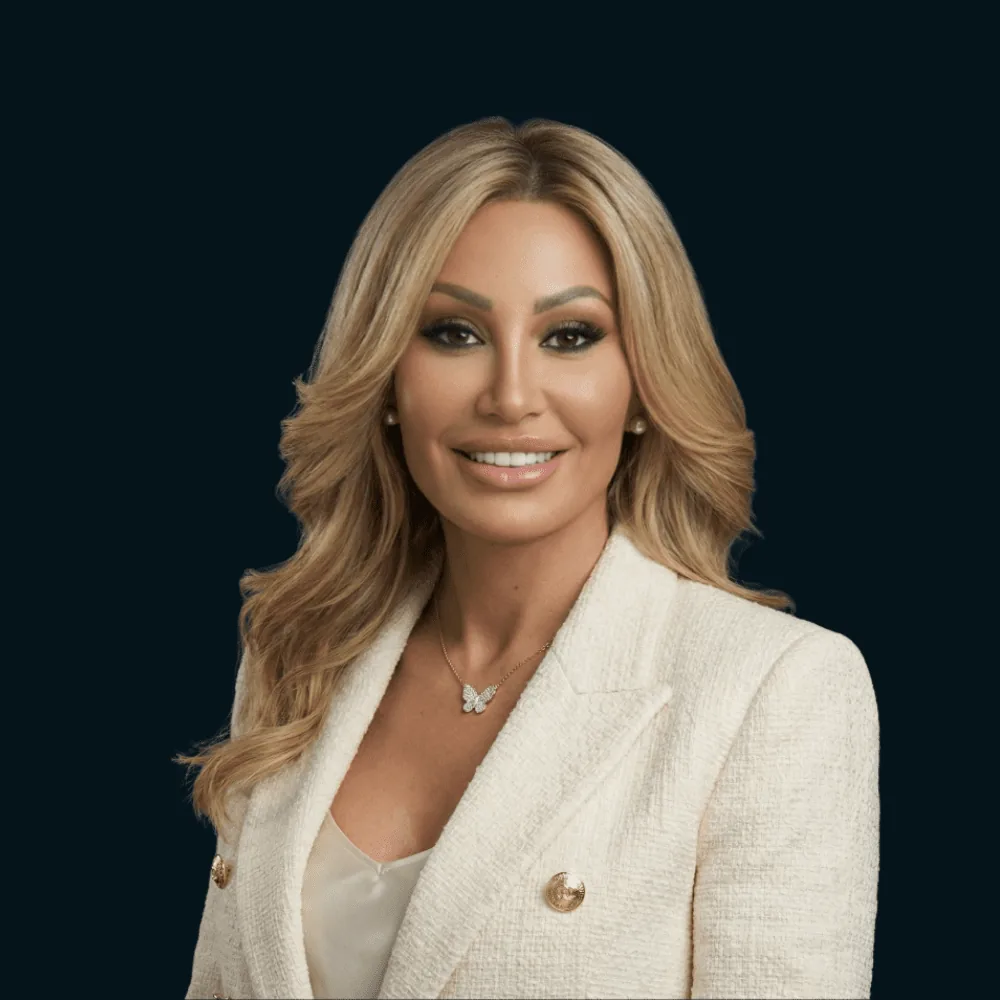
Dr. Sydney Ceruto, PhD, Neuroscientist & Author, MindLAB Neuroscience

Dr. Sydney Ceruto, PhD, Neuroscientist & Author, MindLAB Neuroscience

Dr. Ceruto holds a PhD in Behavioral & Cognitive Neuroscience from NYU and Master’s degrees in Clinical Psychology and Business Psychology from Yale University. She lectures at the Wharton Executive Development Program at the University of Pennsylvania and has been an Executive Contributor to the Forbes Coaching Council since 2019. Dr. Ceruto is the author of The Dopamine Code (Simon & Schuster, June 2026). She founded MindLAB Neuroscience in 2000 and has spent over 26 years leading it, pioneering Real-Time Neuroplasticity™, a methodology that durably rewires the neural pathways driving behavior, decisions, and emotional responses.

Success Stories

“I told myself the second glass of wine every night was just how I unwound, until it became impossible to sit still without it. Nothing I tried, dry months, accountability apps, addressed why the urge kept resetting. What I saw with Dr. Ceruto was that it was already building the moment my workday ended, long before I ever poured anything. Once that anticipation was addressed head on, the ritual lost its pull. The wine is still in the house. I don't reach for it anymore.”

Marcus T., Chief Financial Officer, Renewable Energy

“A car alarm, a raised voice, even certain kinds of silence could put me on edge for hours, and I'd stopped questioning why. Dr. Ceruto took on the constant alertness rooted in an earlier period of my life and worked through it directly rather than just teaching me to manage it. The edge is gone. I didn't realize how much of my day it had been quietly running.”

Anouk T. London, UK

“A series of personal setbacks left me, once a rising star in finance, doubting my capabilities and feeling lost. Dr. Ceruto’s guidance became my beacon of hope, helping me rediscover my strengths and build a roadmap to success that reignited my career.”

Tash M., Brand Marketing and Content for Wellness, Viome New York, NY

“Unfortunate consequences finally forced me to deal with my anger issues. I’d read several books and even sought out a notable anger specialist, but nothing was clicking. Then I found Sydney’s approach and was intrigued. Her insightfulness and warm manner helped me through a very low point in my life. Together we worked through all my pent-up anger and rage, and she gave me real tools to manage it going forward. I now work to help others learn how to control their own anger.”

Gina P. Naples, FL

“Excellent experience working with Dr. Ceruto. Very effective method that gave me the results I was looking for to improve my professional relationships. I loved the neuroscience woven into the art of higher-level communication and relationship building. Dr. Ceruto is extremely astute and does not require you to go back in history over and over to understand what’s going on. Her attention to detail, dedication to follow-up, and breadth of knowledge in my industry is truly unparalleled. I can’t recommend her highly enough.”

Dan G., Director of Strategy, Technology Startup Greenwich, CT

“Dr. Ceruto’s program transformed me from a corporate leader grappling with self-doubt and team disconnect to one who leads with clarity and authenticity. Her expertise in emotionally intelligent leadership elevated my confidence and built a deep bond of trust with my team, leading to our company’s flourishing success.”

Michael A., Co-Founder, Axios Arlington, VA

Frequently Asked Questions About Entrepreneurial Mindset Development

What cognitive challenges are unique to Westchester County entrepreneurs?

A Westchester founder may drive to White Plains for a team meeting, take the train to Manhattan for investors and still be expected home for dinner in Rye. All three stops count, and the travel between them eats into the time a founder has for thinking.

What makes MindLAB's approach different from executive coaching?

Career and leadership development are typical ground for executive coaching. This work aims at something narrower: the reactive calls a founder makes under hiring and fundraising pressure, taken on in the live moment.

Can this help former corporate executives who are now building startups?

Yes. A former executive may still circulate a decision for sign-off that nobody at a twelve-person startup needs to give. Moments like that, where a habit from the old role takes over, can slow a young company down. They are also the moments Dr. Ceruto works in, as they occur.

How does balancing family life and entrepreneurship affect founder cognition?

Running a company and a household at the same time means strain arrives from both directions. When it piles up, work and family decisions alike are more likely to run on habit.

How long does the program take?

That is set founder by founder, according to what needs to change. Dr. Ceruto plans each engagement around your business demands, not a preset schedule, and a first plan takes shape on the Strategy Call.

Are sessions conducted in person in Westchester?

No. It all happens over the phone, which can make it easier to fit between local operations and meetings in Manhattan. The structure is set during the Strategy Call.

Is this relevant for founders in biotech or healthcare?

Yes. Biotech and healthcare founders face regulatory complexity, long development timelines and heavy capital needs. Holding strategic patience while executing with urgency is a hard balance, and the work goes to whatever tips it too far either way.

How does this address the isolation that suburban founders sometimes experience?

Working without a dense startup community nearby can leave a founder with fewer chances to test ideas and steady their conviction. Some founders find themselves drifting toward self-doubt and safer decisions as a result. That drift is where Dr. Ceruto comes in, so a founder can keep making bold calls wherever the office is.

What does the Strategy Call involve?

Think of it as a phone call of about an hour with Dr. Ceruto, focused on the decisions that matter most to your company right now. She looks for the neural patterns that may be behind them and talks through whether the work suits your goals.

Can this help with the stress of competing for talent against Manhattan companies?

Competing for talent with Manhattan companies means making hiring decisions under pressure and with incomplete information. Under that pressure, hiring can turn reactive, driven by the worry of losing someone good. An open offer is a practical place to start: the founder and Dr. Ceruto can look at what is pushing it while the candidate is still deciding.

Also available in: Miami · Wall Street · Midtown Manhattan · Beverly Hills · Lisbon

Take the First Step

One hour with Dr. Sydney Ceruto. You leave knowing which neural pattern is actually driving this, and what to do about it.

Book a Strategy Call
MindLAB Neuroscience strategy call setting

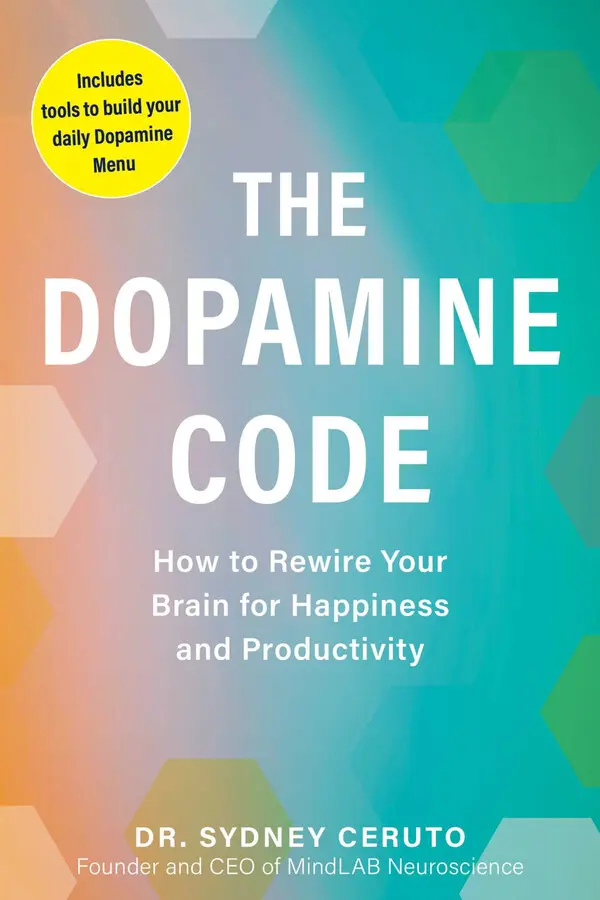
The Dopamine Code

Decode Your Drive

Why Your Brain Rewards the Wrong Things

Your brain's reward system runs every decision, every craving, every crash, and it was never designed for the life you're living. The Dopamine Code is Dr. Ceruto's framework for understanding the architecture behind what drives you, drains you, and keeps you locked in patterns that willpower alone will never fix.

Published by Simon & Schuster, The Dopamine Code is Dr. Ceruto's framework for building your own Dopamine Menu, a personalized system for motivation, focus, and enduring life satisfaction.

Order Now!

Available now

The Dopamine Code by Dr. Sydney Ceruto, Decode Your Drive
Locations