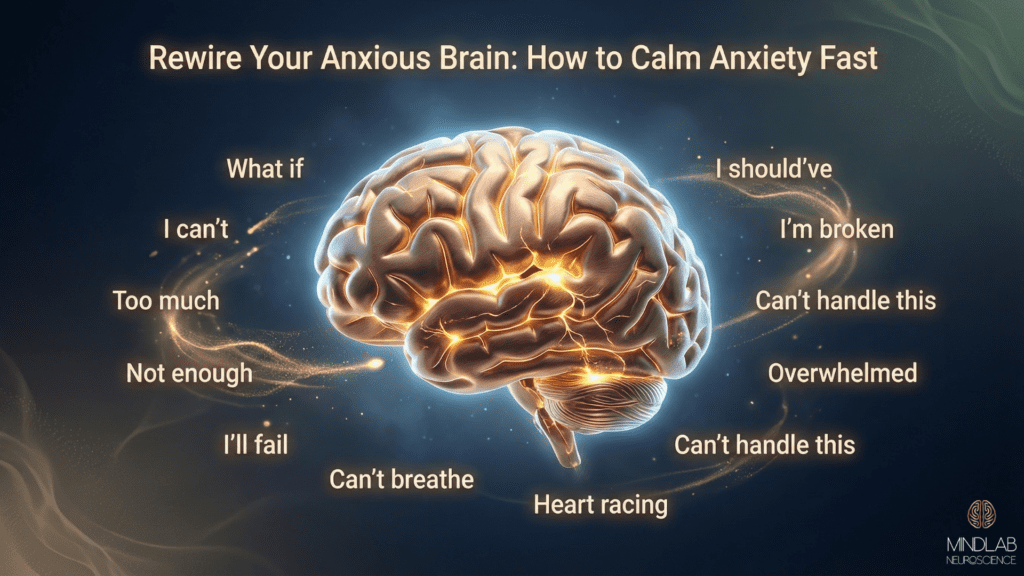
If your brain feels like it is always on high alert, like danger is always around the corner, you are not alone. The feeling of constant worry, along with a tight chest, a racing heart, and persistent thoughts, indicates that your brain is stuck in survival mode. This is what an anxious brain looks like. The beneficial news is that your brain is not broken. It is just wired for fear, and that wiring can be changed.
This article will show you how to rewire your heightened arousal state using simple neuroscience tools. You will learn what an anxious brain really looks like, how anxiety and panic attacks work, and practical steps to calm your nervous system. This is not about managing anxiety forever. This is about changing your brain so anxiety stops running your life.
What Is an Anxious Brain?
An anxious brain is not a weak brain. It is a brain that learned to see threats everywhere. In the past, this ability helped humans survive. Fast heartbeats, sharp senses, and a mind that quickly anticipates the worst-case scenarios kept people alive when real danger was imminent. Today, that same system fires for emails, deadlines, relationships, and uncertainty.
Your overactive threat system is not lazy or dramatic. It is doing what it was designed to do: protect you. The problem is that it is overprotective. It treats small stress as life-or-death. That is why anxiety feels so big, even when the situation is not truly dangerous.
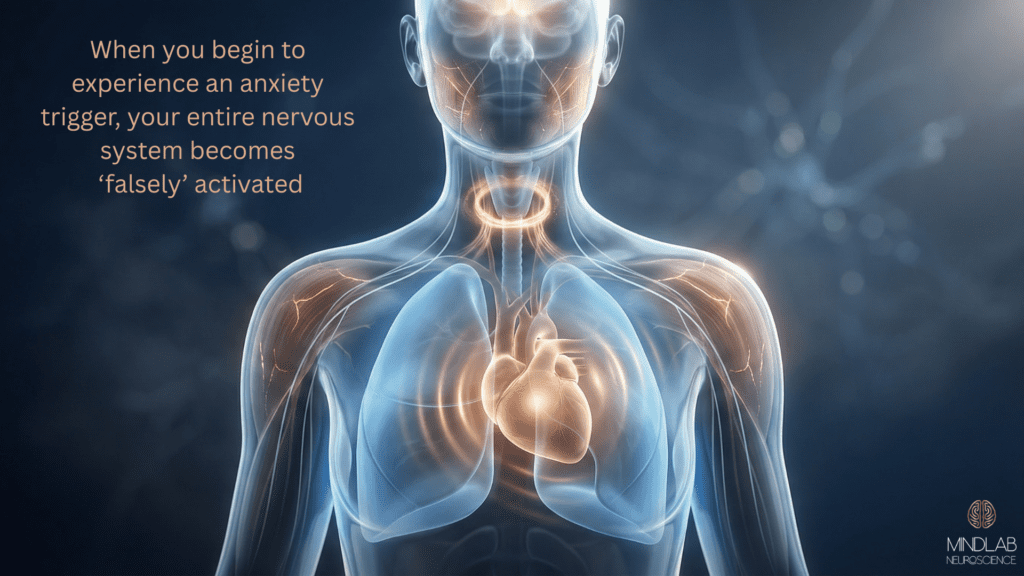
What Does an Anxious Brain Look Like?
If you could see a hypervigilant nervous system, you would notice a few key things. The amygdala, the brain’s alarm center, is very active. It fires quickly, sending signals that something is wrong. The prefrontal cortex, the part that thinks clearly and makes beneficial decisions, is quieter. It is like having a loud alarm and a weak off switch.
Physically, a threat-scanning system shows up as
- Fast heartbeat or chest tightness
- Shallow breathing or feeling like you cannot get enough air
- Muscle tension, especially in the neck, shoulders, and jaw
- Trouble sleeping or waking up with a sense of dread
- Racing thoughts that loop and do not stop
Emotionally, it feels like:
- Constant worry about the future
- Fear of making mistakes or being judged
- Feeling overwhelmed by small tasks
- Avoiding things that feel stressful
- A sense of doom, like something bad is about to happen
This is what an anxious brain looks like. It is not a character flaw. It is a pattern that can be changed.

Anxiety, Anxiety Symptoms, and Panic Attacks
Anxiety is more than just feeling nervous. It is a whole-body, whole-mind response. Anxiety symptoms include:
- Restlessness or feeling on edge
- Trouble concentrating
- Irritability
- Fatigue
- Trouble sleeping
- Stomach issues or headaches
A panic attack is a sudden wave of intense fear or discomfort. It can feel like:
- Heart racing or pounding
- Sweating, shaking, or feeling dizzy
- Chest pain or tightness
- Feeling like you are choking or cannot breathe
- Feeling detached from yourself or the world
- Fear of losing control or dying
Panic attacks are terrifying, but they are not dangerous. They are your nervous system in overdrive. The more you understand them, the less power they have.
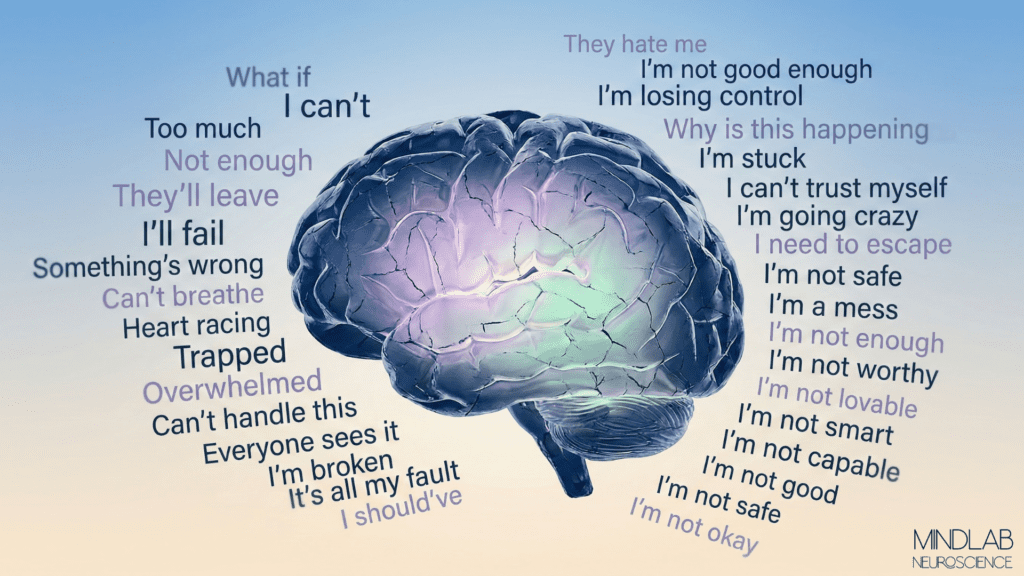
How to Rewire Your Anxious Brain
Rewiring your anxious brain means changing the patterns that keep you stuck in fear. You are not trying to get rid of anxiety completely. You are teaching your brain that it can be safe, even when stress is present.
Here is how to rewire your alarm-driven brain in simple steps:
1. Understand Your Brain’s Wiring
Your brain is not broken. It is just wired for survival. Anxiety is not a sign of weakness. It is a sign that your nervous system is trying to protect you. When you see anxiety this way, you stop fighting it and start working with it.
Think of your brain like a computer. It runs old programs that were useful in the past but are no longer helpful. Rewiring means installing new programs that help you feel calm and in control.
2. Calm the Alarm System
The first step to rewiring your anxious brain is to calm the alarm system. When your amygdala is on high alert, your brain cannot learn new patterns. You need to bring your nervous system back to a calm state.
Simple tools to calm your alarm system:
- Slow, deep breathing: Inhale through your nose for four counts, exhale through your mouth for six counts. Do this for a few minutes.
- Grounding: Notice five things you can see, four things you can touch, three things you can hear, two things you can smell, and one thing you can taste.
- Movement: Walk, stretch, or shake your body to release tension.
Use these tools when you feel anxiety rising. They help your brain shift from fight-or-flight to a state of calm and safety.
3. Strengthen the Thinking Brain
Your prefrontal cortex is your thinking brain. It helps you make good decisions, solve problems, and stay calm under pressure. When anxiety is high, this part of your brain gets quieter—rewiring your overprotective brain circuitry means strengthening this part.
Simple ways to strengthen your thinking brain:
- Pause before reacting: When anxiety hits, take a breath and ask, “Is this a real threat or a false alarm?”
- Challenge anxious thoughts: Ask, “What is the evidence for this thought? What is the evidence against it?”
- Focus on what you can control: Make a short list of small actions you can take right now.
The more you practice these steps, the more your thinking brain becomes the boss, not your alarm system.
4. Create New Neural Pathways
Neuroplasticity is the brain’s ability to change. Every time you practice a new response, you are creating new neural pathways. Rewiring your anxious brain means practicing calm reactions until they become automatic.
Daily practices to rewire your brain:
- Morning routine: Start the day with a few minutes of deep breathing or a short walk.
- Mindful moments: Pause several times a day to notice your breath and body.
- Evening reflection: Write down one thing that went well and one thing you learned.
Consistency is more important than perfection. Showing up every day, even for a few minutes, is what rewires your brain.
Anxiety Management: Daily Tools
Anxiety management is not about never feeling anxious. It is about having tools so anxiety does not control your life. Here are simple, practical tools you can use every day.
1. Body-Based Tools
Your body and mind are connected. When your body is calm, your mind is more likely to be quiet.
Body tools:
- Deep breathing: Practice slow, deep breaths when you feel anxious.
- Progressive muscle relaxation: Tense and relax each muscle group, from feet to head.
- Cold exposure: Splash cold water on your face or hold an ice pack to your chest to calm your nervous system.
2. Thought-Based Tools
Anxious thoughts can feel very real, but they are not always true. Anxiety management means learning to work with your thoughts, not against them.
Thought tools:
- Label the thought: Say, “This is an anxious thought,” instead of believing it.
- Reframe the thought: Change “I cannot handle this” to “This is hard, and I can handle hard things.”
- Focus on the present: Ask, “What do I need to do right now?” instead of worrying about the future.
3. Behavior-Based Tools
What you do shapes how you feel. Anxiety management means taking small actions that build confidence and reduce avoidance.
Behavior tools:
- Break tasks into small steps: Focus on one small step at a time.
- Schedule worry time: Set aside 10–15 minutes a day to write down worries. Outside that time, gently redirect your mind.
- Do one thing that feels slightly uncomfortable: This teaches your brain that discomfort is not dangerous.
How to Rewire an Anxious Brain Step by Step
Rewiring a threat-sensitive brain is not a one‑time fix. It is a daily practice. Here is a simple step‑by‑step plan to get started.
Step 1: Notice the Pattern
Start by noticing when anxiety shows up. What triggers it? What does it feel like in your body? What thoughts run through your mind? Write this down so you can see the pattern clearly.
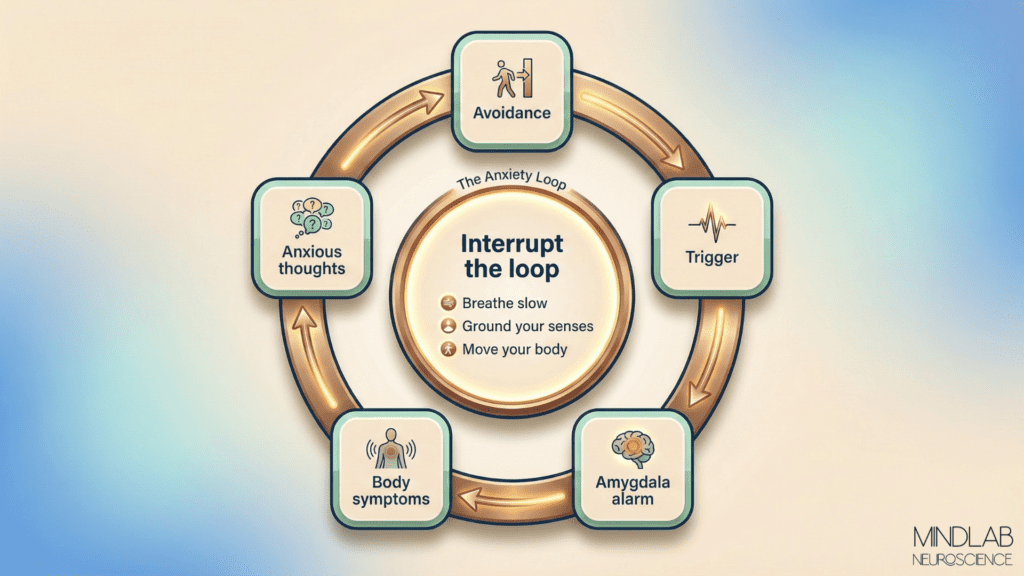
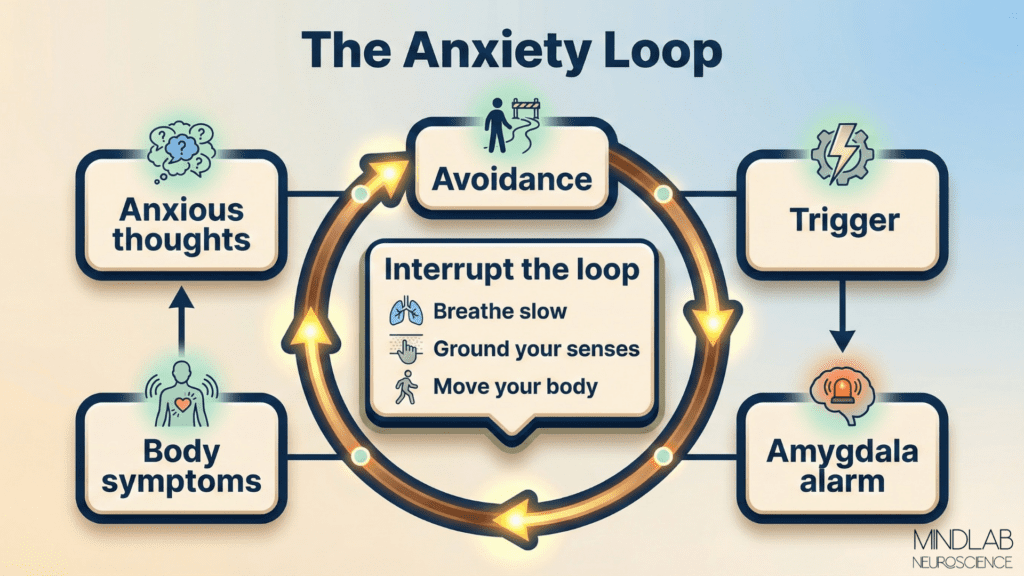
Step 2: Interrupt the Cycle
When anxiety hits, interrupt the cycle with a body‑based tool. Breathe deeply, ground yourself, or move your body. This breaks the automatic fear response, giving your thinking brain space to come online.
Step 3: Choose a New Response
Instead of avoiding or fighting anxiety, choose a new response. This could be:
- Taking a small action
- Using a thought reframe
- Practicing self‑compassion
Each time you select a new response, you are rewiring your brain.
Step 4: Repeat and Reinforce
Rewiring takes repetition. Practice these steps every day, even when you do not feel anxious. The more you practice, the more automatic the new patterns become.
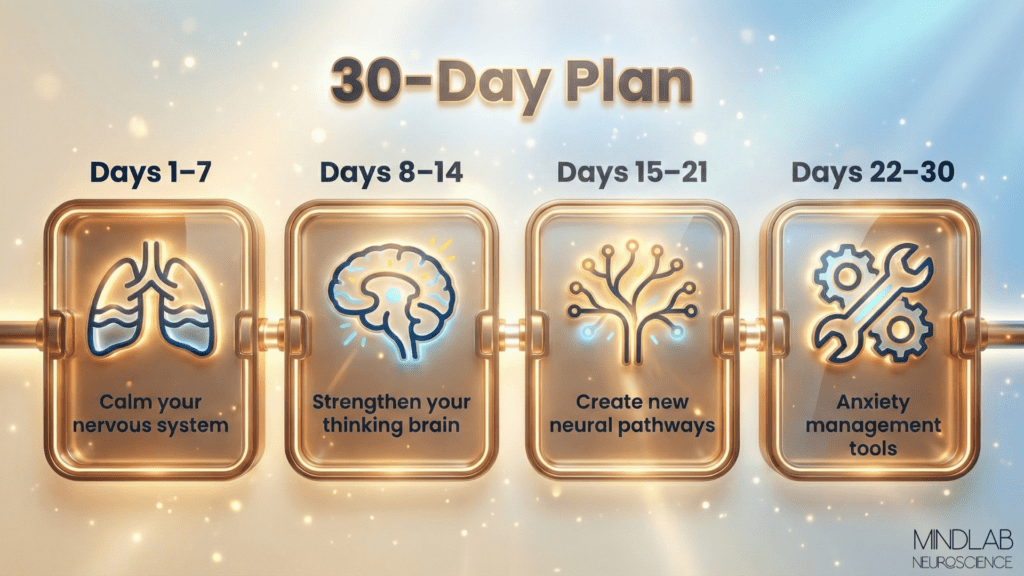
Rewiring the Anxious Brain: A 30‑Day Plan
If you want a clear, step‑by‑step plan to rewire the high-alert mind-body system, a 30‑day protocol works best. Each day, focus on one small practice that builds on the last.
A simple 30‑day plan:
- Days 1–7: Focus on calming your nervous system (breathing, grounding, movement).
- Days 8–14: Focus on strengthening your thinking brain (thought labeling, reframing, problem solving).
- Days 15–21: Focus on creating new neural pathways (daily routines, mindful moments, reflection).
- Days 22–30: Focus on anxiety management (body tools, thought tools, and behavior tools).
This plan is not about being perfect. It is about showing up, learning, and changing your brain over time.
How to Rewire Your Anxious Brain for Long‑Term Change
Long‑term change comes from consistency, not intensity. Here is how to rewire your anxious brain so the changes last.
1. Make It a Habit
Choose one or two tools that work best for you and make them a daily habit. For example:
- 5 minutes of deep breathing every morning
- 10 minutes of journaling every evening
Small, consistent actions create significant changes over time.
2. Track Your Progress
Keep a simple log of:
- When anxiety shows up
- What tools you used
- How you felt before and after
This helps you see what is working and build confidence.
3. Be Kind to Yourself
Rewiring your survival-mode nervous system is not about never feeling anxious again. It is about changing your relationship with anxiety. Be kind to yourself when it feels hard. Progress is not linear.

What Does an Anxious Brain Look Like in Real Life?
In real life, an anxious brain might look like this:
- Waking up with a heavy chest and racing thoughts
- Avoiding social events because of fear of judgment
- Overworking to feel in control
- Constantly check for problems at work or in relationships.
- Feeling exhausted even when nothing major is happening
This is not a weakness. This is a nervous system that learned to protect you. The good news is that it can learn new ways of being.
Why I Understand This So Deeply
Long before there were degrees or a neuroscience practice, there was a little girl who could not understand why her body felt like it was on fire every day. As a child and teenager, anxiety was not an idea—it was the air I breathed.
I remember running across a highway in panic because I was sure something terrible would happen to my parents if I did not reach them. I remember leaving ballet class in tears, climbing down a fire escape, and breaking my leg because the fear of being abandoned felt worse than any physical pain. As a teenager, I struggled with a persistent knot in my stomach, anxiety before school, and a nervous system that never seemed to calm down.
For years, I was told I would just have to manage it, that this was how my brain was wired. I did therapy, took the medications, and followed every “standard” path, but nothing created the profound shift I needed. That is what pushed me into the work I do now. I also created a downloadable guide called Rewire For Resilience because I wanted people to have the exact step-by-step structure that helped me retrain my own nervous system. It includes a simple 30-day reset you can follow when your brain is stuck on high alert, plus the same calming and rewiring tools I teach clients who need relief fast. If you want a clear plan you can return to on hard days, that guide is designed to make the process feel doable and steady.
The science you are reading about is not just academic; it is the exact process I used to retrain my own nervous system and move from panic to purpose.
When I discuss rewiring patterns, calming the alarm system, and building a new baseline, I am not speaking solely from theory. I am speaking as someone who has known what it is like to wake up every day with dread and who has also experienced what it feels like when your brain finally learns a new way to live. That is why this work exists, and why I refuse to accept the story that you are “just an anxious person” and always will be.
Anxiety Management for High Achievers
If you are a high achiever, anxiety often shows up as
- Fear of failure or not being good enough
- Overworking to feel safe
- Difficulty relaxing or taking breaks
- Relationship stress from being in constant performance mode
Anxiety management for high achievers means:
- Setting boundaries around work and rest
- Practicing self‑compassion instead of self‑criticism
- Using neuroscience tools to stay calm under pressure
Rewiring Your Anxious Brain: Your Next Step
If you are ready to rewire your stress-reactive brain network, the next step is simple. Start with one small practice today. Breathe deeply, ground yourself, or write down one anxious thought and reframe it.

For a complete, step‑by‑step plan, my downloadable book, Rewire for Resilience, includes a 30‑day neural reset protocol. It shows you exactly how to rewire your anxious brain using neuroscience tools that work.
If you want direct guidance, you do not have to do these exercises alone. You can book a Strategy Call with me, where we will map your unique patterns, identify what keeps your anxiety locked in place, and design a precise plan to retrain your brain. One conversation can become the turning point that your future self is grateful you chose.

FAQ: Questions and Answers
How do I rewire your anxious brain if I need to calm anxiety fast?

Start by calming your body first so your brain can learn. Use slow exhale breathing (inhale 4, exhale 6) for 2–3 minutes, then ground your senses and take one small action you can control. This sequence reduces the alarm response and helps you rewire your dysregulated stress response in real time.
What does an anxious brain look like in the moment?
Anxious neural patterning looks like an overactive alarm system paired with weaker regulation. The “danger” circuits fire quickly, while the thinking systems that evaluate reality go quieter, making small stress feel like a significant threat.
What are the most common anxiety symptoms that signal survival mode?
Common anxiety symptoms include chest tightness, shallow breathing, muscle tension, racing thoughts, irritability, fatigue, and trouble sleeping. These symptoms are your nervous system preparing for danger, even when the threat is not real.
How can I calm anxiety fast when I can’t breathe, and my heart is racing?
First, lengthen your exhale: breathe in through your nose for four counts and out through your mouth for 6–8 counts. Then do a quick grounding scan (5 things you see, four you touch, three you hear, two you smell, and one you taste). This combination calms anxiety fast by signaling safety to your nervous system.
How do panic attacks work, and are panic attacks dangerous?
Panic attacks are sudden surges of intense fear triggered by the nervous system going into overdrive. They feel dangerous because of body sensations (racing heart, dizziness, and chest tightness), but panic attacks are not harmful—your body is reacting as if there is a threat.
How do I stop racing thoughts at night with anxiety management tools?
Use a body-first approach: slow breathing for 2 minutes, then progressive muscle relaxation from feet to jaw. After that, do a short “worry dump” on paper and choose one calming cue (dim lights, cool room, no phone). These anxiety management tools reduce arousal, so thoughts lose intensity.
How do I rewire an anxious brain step by step without getting overwhelmed?
Use a four-step loop: notice the pattern, interrupt the body alarm, choose a new response, and repeat. Keep the “new response” small—one breath cycle, one reframed thought, or one tiny action. Repetition is what rewires a fear-conditioned brain.
What is the best way to calm the alarm system in my brain?
Calm the alarm system by working through the body: slow exhale breathing, grounding, and movement. When the body settles, the thinking brain comes back online, and you can make clearer choices.
How do I strengthen the thinking brain when anxiety is high?
Use a short pause, then ask one regulating question: “Is this a real threat or a false alarm?” Next, challenge the thought with evidence for/against and focus on one controllable action. This strengthens the thinking brain, so anxiety stops driving decisions.
Could a 30-day plan effectively help you rewire your anxious brain for long-term change?
Indeed, consistency fosters the development of new neural habits. A 30-day plan works best when it’s structured: first, calm the nervous system; then train thinking skills; then reinforce new pathways with daily repetition. Long-term change comes from steady practice, not intensity.
What daily habits help with anxiety management for high achievers?
High achievers benefit from scheduled downshifts: short breathing resets, boundary cues between work and rest, and one daily exposure to a manageable discomfort. These habits reduce avoidance and teach the brain that stress is not the same as danger.
How do I know if I’m making progress rewiring your anxious brain?
Progress looks like a faster recovery, fewer spirals, and more “space” between the trigger and the reaction. You may still feel anxiety, but it stops running your behavior—and your body returns to baseline more quickly.
What is the fastest way to calm anxiety according to neuroscience?
Extended exhalation breathing activates the vagus nerve, which sends a direct calming signal to the amygdala within seconds. This parasympathetic activation lowers heart rate and cortisol levels, interrupting the anxiety circuit before it can escalate into a full stress response.
How does the amygdala create the feeling of anxiety?
The amygdala acts as the brain’s threat detection center, triggering the release of stress hormones like cortisol and adrenaline even when no real danger is present. In anxious states, the amygdala becomes hyperactive and begins interpreting neutral stimuli as threatening, creating a persistent cycle of false alarms.
Can you permanently rewire an anxious brain?
Neuroplasticity allows the brain to form new, calmer response pathways through consistent practice of anxiety-interruption techniques over several weeks. Research shows that prefrontal cortex engagement during anxious moments gradually strengthens top-down regulation of the amygdala, producing lasting changes in baseline anxiety levels.
Why does anxiety feel so physical if it starts in the brain?
When the amygdala activates the hypothalamic-pituitary-adrenal axis, it triggers a cascade of physiological responses including rapid heartbeat, shallow breathing, and muscle tension throughout the body. These physical sensations are the body’s survival system preparing for action, which is why anxiety feels like a whole-body experience rather than just a thought.