Overthinking in relationships can ruin emotional connections and damage mental health. Learn how to identify the patterns, break the cycle,...
Read article : Overthinking in Relationships: Effects & Strategies to AddressCommunication
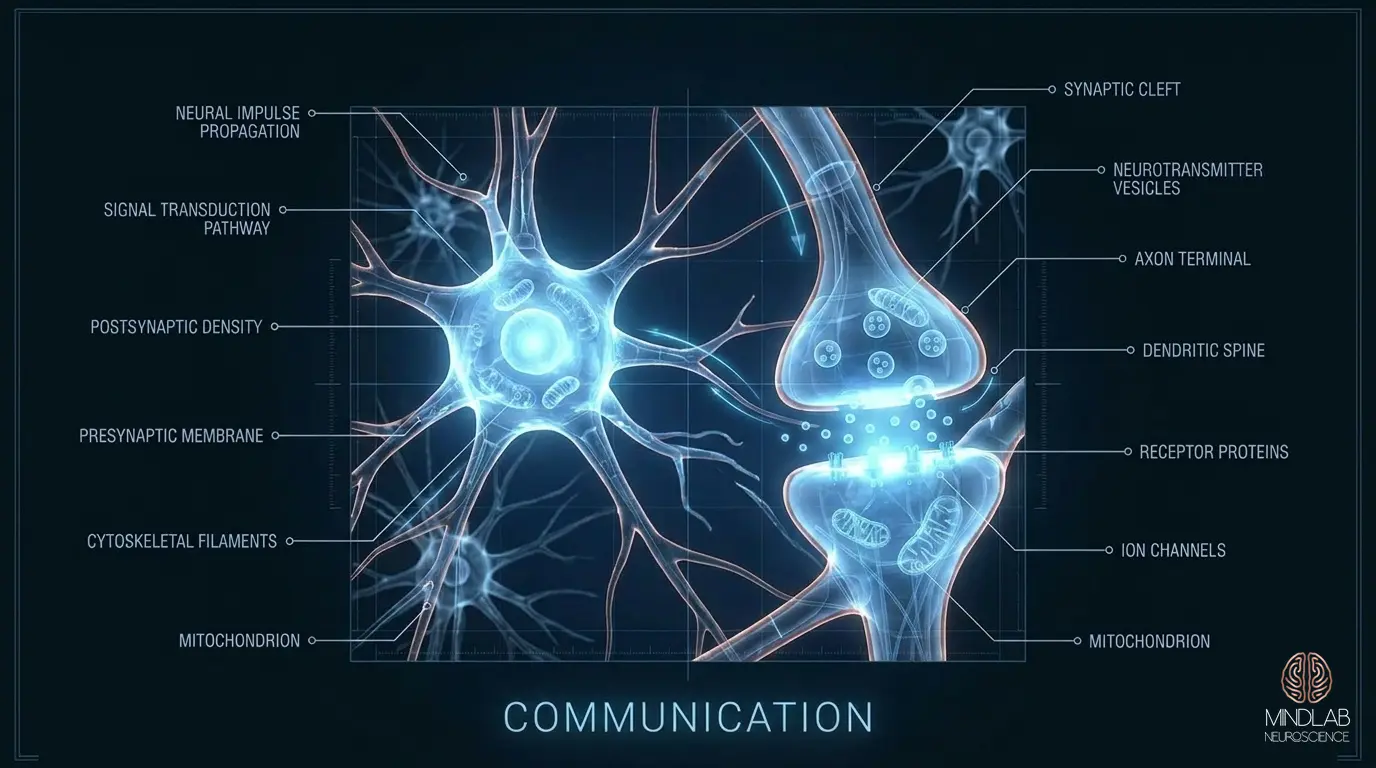
The mechanics of neural coupling. We explore how language synchronizes brain states between speaker and listener, and the specific signaling protocols to maximize clarity, influence, and information transfer.
48 articlesNeural Coupling
Communication is not just the transmission of data; it is the synchronization of two distinct nervous systems. fMRI studies reveal a phenomenon called Neural Coupling: when communication is successful, the listener’s brain activity begins to mirror the speaker’s brain activity with a slight time delay. In high-fidelity storytelling, this delay disappears, and the listener’s brain actually anticipates the speaker’s neural patterns. This synchronization is the biological basis of “understanding.”
The Protocol of Clarity
The brain is a “cognitive miser,” meaning it conserves energy by ignoring complexity. To bypass the brain’s filters, communication must be structured for processing fluency.
-
The “Schema” Hook: People cannot understand new information unless they can attach it to an existing neural map (schema). Effective communication starts with a familiar analogy to activate the relevant neural networks before introducing new, complex data.
-
Processing Fluency: Simple language is not “dumbing it down”; it is biological optimization. Complex sentence structures tax working memory, causing the listener’s prefrontal cortex to disengage. High-impact communication reduces cognitive load to keep the listener’s attention online.
Non-Verbal Gating
The brain processes non-verbal signals (tone, posture, micro-expressions) faster than semantic content via the amygdala and limbic system.
-
Congruence: If your words (cortical) match your body language (limbic), the listener’s brain signals “trust.”
-
Incongruence: If there is a mismatch (e.g., saying “I’m happy” with a flat tone), the listener’s brain detects a “prediction error,” triggering a threat response that blocks the absorption of the actual message.

Latest Articles
Lying is more than just deception—it’s a complex neurological process that shapes human behavior. In this article, we delve into...
Read article : Why Your Brain Makes You Lie: The Neuroscience of DeceptionEcho chambers leverage the brain's natural craving for affirmation, making it difficult to embrace diverse perspectives. By tapping into our...
Read article : Powerful Insights: How Echo Chambers Affect the Brain and Polarize SocietyIn a world where avoidance reigns, mastering confrontation is your secret weapon. This guide revolutionizes your approach to conflict, transforming...
Read article : How to Master Confrontation: Learn to Argue EffectivelyA sexless marriage can take a heavy toll on a relationship. In this post, we explore the common causes of...
Read article : Sexless Marriage: The Neuroscience Behind Lost Intimacy and How to Rebuild ConnectionEver caught yourself basking in the glow of your own reflection a bit too long? You might be scratching the...
Read article : Addressing Narcissistic Traits: 10 Neuroscientific Insights for Self-DiscoveryInstantly learn how to use Emotional Intelligence (EI) to diffuse conflicts. Explore how emotional intelligence can enhance conflict resolution through...
Read article : Emotional Intelligence for Effective Conflict Resolution: A Neuroscience PerspectiveDiscover how neuroscience can help you handle criticism constructively, maintain self-confidence, and turn feedback into growth opportunities. Explore the brain's...
Read article : How to Optimize Your Response to Criticism: A Neuroscience Approach to Unshakeable Self-ConfidenceThere aren’t too many of us out there who enjoy being resented or avoided. The desire to be well-liked and...
Read article : Enhance Your Likability: 11 Neuroscience-Backed Ways to Transform Your Reputation TodayDiscover 12 neuroscience-backed strategies to strengthen your relationships. Learn how brain science can enhance your social connections, emotional intelligence, and...
Read article : 12 Neuroscience-Backed Secrets to Building Stronger Interpersonal RelationshipsBuilding and maintaining healthy relationships is crucial for our overall well-being and happiness. The quality of our connections with family,...
Read article : 10 Proven Strategies for Building Healthy RelationshipsEmotional intelligence is not fixed. It is not a trait you were born with or a capacity that stops developing...
Read article : Emotional Intelligence (EQ): The Neuroscience-Based Blueprint to Optimize Life and Relationships