Key Takeaways
- AI and neuroscience converge in brain mapping, neuroadaptive training, and AI-assisted focus, sleep, stress monitoring.
- AI surfaces neural and behavioral patterns humans miss, supporting earlier detection of cognitive decline.
- Neuroadaptive tools pair AI with neuroplasticity, adjusting difficulty live so practice targets the right circuit.
- The same capability raises concerns: data privacy, algorithmic transparency, and equitable access to cognitive-enhancement tools.
- AI amplifies brain change but does not replace its rules: right circuit, right moment, repeated.
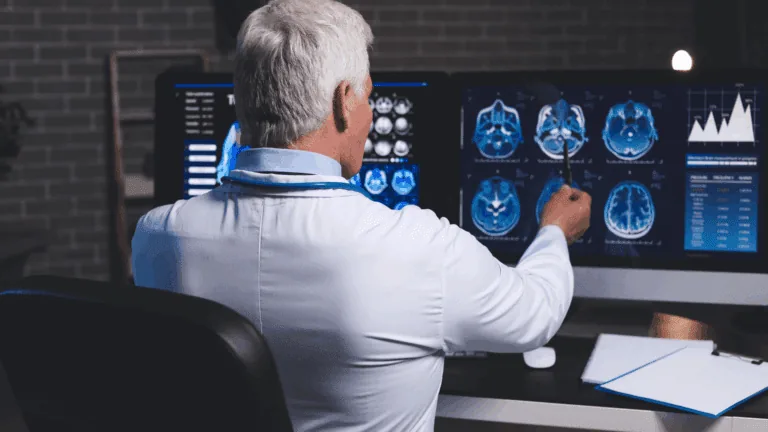
Artificial intelligence is changing what neuroscience can see and do. Where brain science once worked from population averages, AI now helps read an individual brain in real time, flag cognitive decline earlier, and adapt training to the specific circuits behind a person’s focus, memory, and mood. The result is not science fiction; it is a more precise, more personal approach to strengthening how the brain works. But the gap between what these tools can do and what the headlines claim they do is wide, and closing it is most of the value a neuroscientist adds.
What I want to give you here is not another catalog of AI features. It is how I actually read this field from inside a neuroscience-based practice: what is genuinely useful, what is overhyped, and where the real leverage sits once the novelty wears off.
The Synergy of AI and Neuroscience
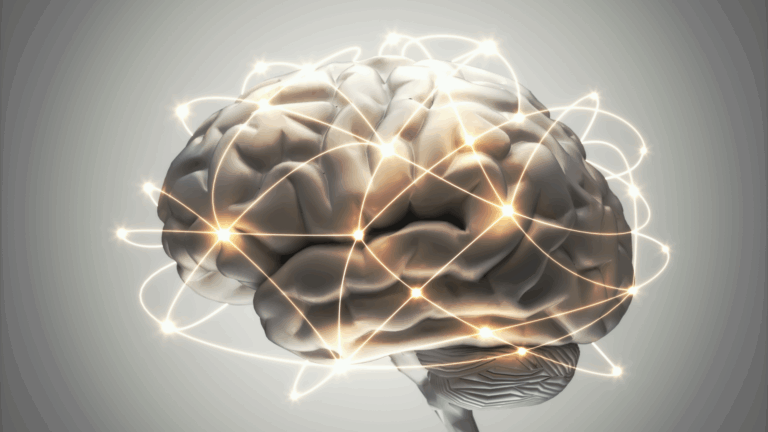
The pairing works because the two disciplines are good at opposite things. Neuroscience understands what the brain’s signals mean; AI is unmatched at finding structure in enormous, noisy datasets. Put them together and you can decode patterns in fMRI, EEG, and behavioral data at a scale and speed no human analyst could match, then interpret those patterns through what we already know about circuits and plasticity. That combination is what makes genuinely personalized intervention possible, applying the science of cognitive flexibility and thought patterns to one specific brain rather than an average one.
As someone deeply immersed in neuroscience, I believe the future of AI-driven cognitive optimization is just beginning. With the right ethical guardrails, we can use AI to improve focus, learning, and mental resilience in ways that were not previously possible.
The honest caveat is that scale and speed are not the same as understanding. An algorithm that flags a pattern still needs someone who knows what the pattern means and what, if anything, to do about it. That is the seam where these tools succeed or fail, and it is worth keeping in view as the applications get more impressive.
Where AI Genuinely Moves the Needle
Strip away the marketing and the durable applications cluster into three areas. The first is earlier, more precise detection. AI trained on large sets of brain scans and histories can identify subtle shifts in structure and connectivity that precede noticeable symptoms, sometimes by years. For neurodegenerative conditions like Alzheimer’s and Parkinson’s, that matters enormously, because it moves the whole approach from reactive to preventive, opening the window when the brain is still most responsive to change. Machine learning applied to neural activity patterns is what makes that early read possible.
The second is neuroadaptive training. This is where AI and neuroplasticity meet most productively. Instead of a fixed set of brain exercises, an adaptive system watches how a person performs in real time and adjusts difficulty to keep them in the narrow zone where neural growth actually happens, hard enough to demand adaptation, not so hard that the circuit disengages. Done well, this pairs with the brain’s own capacity for rewiring through neuroplasticity to target the specific circuit a person needs rather than exercising the brain in general.
The third is monitoring and feedback. AI-assisted tools can track the physiological signatures of focus, stress, and sleep and translate them into feedback a person can actually use to self-regulate. The value here is not the wearable itself; it is the loop it closes, giving the brain accurate, timely information about its own state so it can learn to shift that state deliberately. This is the same principle at the center of the Stress, Resilience & Regulation work: change follows accurate feedback, not effort alone.
Where the Hype Outruns the Science
Two claims deserve more skepticism than they usually get. The first is that a consumer brain-training app, powered by AI or not, produces broad, transferable cognitive gains. The research here is far more modest than the marketing: improvements tend to be specific to the trained task and transfer poorly to everyday function. AI makes these tools more adaptive, which is a real improvement, but adaptivity does not overturn the underlying limitation that a narrow exercise builds a narrow skill.
The second is the quiet implication that the technology does the work. It does not. AI can surface the pattern, adjust the difficulty, and deliver the feedback, but the change still obeys the ordinary rules of neuroplasticity: the right circuit, engaged at the right moment, with enough consistent repetition to consolidate. Executive functions like working memory, cognitive flexibility, and inhibitory control are supported by overlapping prefrontal circuits that respond to targeted, repeated engagement, not to the sophistication of the tool measuring them. Strip the technology away and that requirement remains.
Ethical Considerations in the Convergence of Neuroscience and AI
As these tools grow more capable, the questions they raise grow sharper, and they are not questions the technology can answer on its own.
Data privacy and security. Brain and behavioral data are among the most personal information that exists. Who owns it, where it is stored, and what prevents its misuse are not secondary concerns; they are preconditions for using these tools responsibly at all.
Equitable access. If the most effective cognitive tools are available only to those who can afford them, the technology risks widening the very gaps it could help close. Preventing a cognitive divide along socioeconomic lines requires deliberate effort, not optimism.
Cognitive liberty. The right to mental self-determination becomes more concrete as tools that can read and influence neural states mature. The same capability that helps someone regulate stress could, without guardrails, be used to nudge or manipulate. Clear consent frameworks and transparent algorithms are what keep the line between assistance and coercion visible.
What I Take From This Field Into the Work
I follow this field closely, and what I take from it is not a device but a sharper set of questions. The research on the neural patterns behind focus, resilience, and cognitive function is what tells me which circuits are worth targeting and when a person is most able to change them. The tools do not do the work of changing a brain, and neither does knowing about them. The actual work is still the deliberate, repeated engagement that rewires a circuit.
My approach is grounded in the belief that our brains remain adaptable throughout life, the principle of neuroplasticity. Whether the work is to rewire an entrenched thought pattern or to guide focus and behavioral change, the goal is the same: a change the person can actually feel and keep. To talk through what that would look like for you, you can schedule a strategy call.
As AI continues to evolve, its role in neuroscience and human optimization will only expand. I intend to stay at the front of these advances, and to keep them in their place: not a replacement for the work of changing a brain, but a sharper account of how that work succeeds.
Tools can map and monitor a brain, but knowing which circuit to target, and when, is where real results come from. That judgment is the work of a strategy call.
From the Technology to Your Brain
AI can surface the patterns. In a strategy call, Dr. Sydney Ceruto reads how those patterns show up in your focus, sleep, and stress, and designs a targeted plan for strengthening the specific circuits that matter most to you.
One hour with Dr. CerutoHow is artificial intelligence advancing our understanding of the brain?
What AI genuinely adds is scale. It finds structure in fMRI and EEG data faster than any human analyst could, decoding real-time activity and mapping the neural signatures behind cognition, memory, and decision-making, turning what used to be weeks of manual analysis into rapid, high-resolution neural cartography. In my own reading of the field, that speed only becomes useful once a neuroscientist interprets what a pattern means through what we already know about circuits and plasticity. The machine surfaces the pattern; the understanding of it is still human work.
Can AI help predict cognitive decline before it becomes noticeable?
Yes, and this is where I think the technology earns its promise most clearly. Models trained on large sets of scans and histories can detect subtle shifts in connectivity, processing speed, and activation that precede noticeable symptoms, sometimes by years. The value is not the prediction itself but the window it opens: it moves the whole approach from reactive to preventive, into the period when the brain is still most responsive to change and vulnerable circuits can be strengthened before decline shows up in daily life. The earlier read is only worth having if it is followed by the deliberate work of building cognitive reserve.
What is AI-driven neural monitoring and how does it optimize brain function?
It is real-time tracking of brain activity paired with feedback that adapts to what it sees. Where older protocols were fixed, an AI system reads brainwave patterns continuously and adjusts the feedback to the individual in front of it, closing a loop in which the brain gets accurate, timely information about its own state and learns to shift that state deliberately. It is worth being clear about what this does and does not settle: the gains in focus and regulation still come from the brain repeating a new pattern until it holds, not from the sophistication of the tool measuring it.
How can neuroplasticity be enhanced using AI-powered tools?
The useful version is narrow and specific: AI can help find the timing, intensity, and type of challenge that produces the best adaptation for a given person, since the brain’s capacity for change varies by circuit, time of day, stress level, and prior load. Adaptive systems keep the difficulty in the narrow zone where growth actually happens, hard enough to demand adaptation, not so hard the circuit disengages, which is exactly where a plateau otherwise sets in. What the tool cannot do is repeal the rules of plasticity. The right circuit still has to be engaged at the right moment with enough consistent repetition to consolidate; adaptivity makes that easier to hit, it does not replace it.
What are the ethical considerations of combining AI with neuroscience?
They are not questions the technology can answer on its own, which is why they belong in view whenever these tools are used. Brain and behavioral data are among the most personal information that exists, so who owns it, where it is stored, and what prevents its misuse are preconditions for using it responsibly, not afterthoughts. Access equity matters too: if the most effective tools reach only those who can afford them, the technology widens the very gaps it could help close. And the same capability that helps someone regulate stress could, without clear consent and transparent algorithms, be used to nudge or manipulate. Keeping that line visible is part of the work.
References
- Bassett, D. S. & Sporns, O. (2017). Network neuroscience. Nature Neuroscience, 20(3), 353-364.
- Insel, T. R. (2018). Digital phenotyping: A global tool for psychiatry. World Psychiatry, 17(3), 276-277.
- Diamond, A. (2013). Executive functions. Annual Review of Psychology, 64, 135-168.