
Key Takeaways
- Brain optimization trains the prediction engine: anxiety, depression, ADHD, PTSD are trainable states, not flaws.
- Three systems: regulation (calm after stress), attention (where the spotlight rests), neuroplasticity (circuits you rehearse).
- Anxiety: alarm network overfiring. Depression: dimmed reward. ADHD: fast-flipping attention network. PTSD: stuck threat circuits.
- Willpower-only approaches fail by ignoring chemistry and predictions; repeated safe experiences update the brain’s model.
- Small practices pairing mild stress with deliberate recovery reshape how the brain predicts safety.
Your brain is not a fixed machine. It is a living prediction engine that asks, every second, one question: am I safe or not? Brain optimization is the practice of answering that question on purpose, giving your nervous system repeated, clear experiences that retrain how it predicts and responds, especially when anxiety, depression, ADHD, or the aftermath of trauma are part of daily life.
For more than 26 years, I have worked with founders, executives, traders, physicians, and other high achievers who looked successful on the outside but felt hijacked on the inside, bright, driven people whose brains felt noisy, worn out, or stuck. Many carried uncontrollable anxiety, depression that sapped their energy, ADHD that scattered their focus, or post-traumatic stress that kept them vigilant even in safe rooms. They had already tried insight, mindset work, and endless promises to do better next time, and none of it held when the stakes were high. What changed everything was the shift from treating their reactions as flaws to approaching them as trainable brain states.
Your brain is not a fixed machine. It is a living prediction engine asking one question every second, am I safe or not, and that question is trainable.
What brain optimization really means in neuroscience
Every second, your brain scans your body, your environment, your memories, and your expectations, then decides how much energy to spend, how fast your heart should beat, what thoughts to serve up, and how you should feel. Optimization uses this reality in your favor: instead of waiting for the brain to decide on its own, you give it repeated, clear experiences that say “you are safe enough to think, choose, and connect on purpose.” You are training the prediction system, not talking to yourself in the mirror.
The work rests on three ideas. First, you help the brain and body return to a workable state after stress rather than staying stuck in survival mode, training the systems that control heart rate, breathing, and muscle tone to stand down when the danger has passed. Second, you train attention to rest on signals that matter rather than every alert that passes through; if the spotlight is always on threat you feel anxious, if always on failure you feel depressed, if it jumps constantly ADHD becomes overwhelming. Third, you use neuroplasticity on purpose, when you rehearse panic, avoidance, or shutdown you strengthen those circuits; when you rehearse calm action under mild stress, you strengthen those instead. When these systems are out of tune, the signals show up: anxiety as an alarm that fires too fast, depression as a reward system gone dim, ADHD as attention that won’t hold a target, PTSD as threat circuits that stay on high alert. None of these are “all in your head.” They are real, physical brain states, and they can be trained.

Anxiety: turning the volume down
Anxiety is far more than worry. It is a full-body state in which the brain decides the world is unsafe and pushes you into constant scanning, heart rate up, muscles tight, thoughts racing, logic still present but far away. Rather than arguing with anxious thoughts, this work goes directly to the circuits that generate the alarm, and the goal is not to erase anxiety but to show the nervous system it can feel activation and stay grounded. A client I will call Maya led a large global team, and her anxiety surged before every presentation and even before opening her inbox on Monday mornings; her brain treated each small demand like a major threat. We built short daily drills that paired breath, eye movements, and focused attention with deliberate recovery, all while she stayed in mild, controlled stress. She learned to catch the early signals, a tight jaw, shallow breath, a racing mind, and shift state on purpose, broadening her sensory field and slowing her exhale while staying in the situation rather than fleeing. Over time her brain learned something new: a surge of anxiety no longer meant a total loss of control. The wave would rise and settle, her prefrontal cortex stayed more online, and the siren became a signal she could hear, understand, and answer.
Depression: restarting a dim reward system
Depression often feels like sadness, but in the brain it is closer to numbness, the reward system turns down, activities that once felt joyful go flat, and the brain stops expecting positive outcomes so it stops looking for them. A willpower-only strategy almost always fails here, because the chemistry and the predictions have shifted. A client I will call Erik performed well at work yet felt empty at home; he had a long history of depression and believed it was simply “how he was wired.” We designed tiny, meaningful actions his brain could actually complete and notice, a ten-minute walk, a basic meal, a thoughtful message to someone he cared about. After each one he paused for thirty seconds and made a clear internal note: “I did this.” He was not chasing joy; he was teaching his brain that effort still led to reward. Over weeks and months the dimmer switch began to rise, motivation returned in small bursts, and his evenings slowly made room for connection and genuine rest as his nervous system relearned that the future might hold something worth moving toward.
ADHD: working with a fast brain
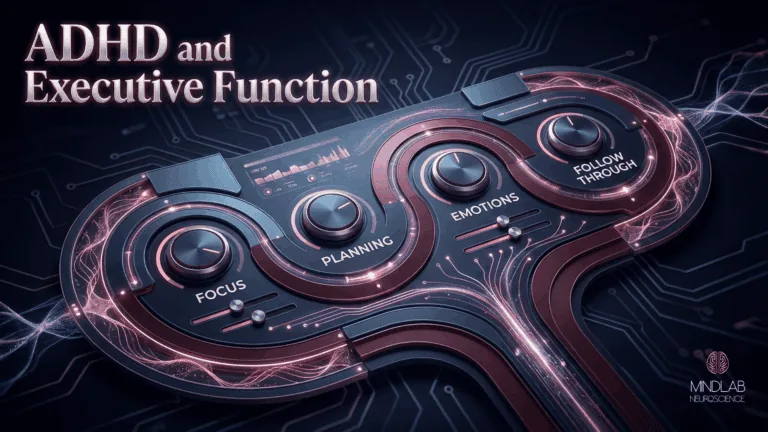
ADHD is so often misread as laziness when it is really a pattern in which attention, impulse control, and time sense are less stable, the brain craves stimulation and switches targets fast, like a crowded room of ideas all talking at once. A willpower-only plan sets that brain up to fail; the better approach builds structures that match its speed and appetite for novelty rather than fighting them. A founder I will call Jonah could close massive deals but forgot small promises, swinging between intense hyperfocus and scattered frustration. We built 90-minute work blocks with a single specific goal written on one card beside him, his phone in another room, and short planned movement breaks, each block ending with a brief note of what he actually completed rather than what he wished he had. Slowly his brain began to expect that focus would bring a sense of progress instead of shame; the self-criticism softened, his team saw fewer dropped balls, and he had a daily system that supported his strengths instead of warring with them.

PTSD: teaching safety to a high-alert brain
Trauma changes the brain’s threat map. Afterward, the protective circuits become overly vigilant, reacting to reminders, places, sounds, expressions, that resemble the original event, so the body relives what happened even when the present is safe, and sleep, trust, and concentration all suffer. Telling a brain in this state to “just calm down” accomplishes nothing, which is why this work focuses on teaching the alarm system new associations through very controlled experiences. A client I will call Lena developed PTSD after a serious accident; sirens, bright lights, and sudden movement pulled her back into raw fear even though she knew she was safe. We began with very short exposures, a recording of sirens at low volume while she held warm tea and felt the chair beneath her, and practiced orienting to the present room, naming what she could see, hear, and feel, with her breath slow and full control over when to stop. With repetition her nervous system collected new data: the sound that once meant life or death now also meant a quiet room and a body that could calm down. Her sleep improved, she startled less, and she could ride in a car without scanning every intersection. You are not erasing the past, you are teaching the brain that the threat circuits can stand down because the present is not the worst day.
The three pillars, and the role of dopamine
To see why this approach helps across anxiety, depression, ADHD, and PTSD, look at its three pillars. Regulation is the ability to return to a steady state after stress, depending on the loops that link your brain to your heart, lungs, and gut; when those loops stay flexible you can move from alert to calm without getting stuck, and you build that flexibility by repeatedly pairing mild stress with deliberate recovery. Attention networks in the frontal and parietal lobes decide what feels important, locking onto threat in anxiety, drifting toward loss in depression, flipping too fast in ADHD, and you retrain them through focused drills like holding a single sound in a noisy room, then shifting that focus on purpose. Plasticity is the reason any of it works: the brain changes with use, building the pathways you repeat and weakening the ones you stop using, which is as true for calm and confidence as it is for panic and shutdown. As McEwen and Morrison’s work on the stressed brain showed, chronic stress can remodel the prefrontal cortex and erode executive function, but that same plasticity runs in both directions, which is why stacking small moments of change gradually reshapes how the brain predicts and responds.
Dopamine sits underneath all of this. It is not the simple “pleasure chemical” people imagine. It is more like the brain’s messenger for what is worth pursuing, what to repeat, and what to ignore, rising when the brain senses progress, novelty, or the chance of a meaningful reward. In depression that signal goes quiet, so effort stops feeling worth it; in ADHD it chases constant stimulation, so dull-but-important tasks feel unbearable; with anxiety and PTSD it can get tied to checking and scanning rather than moving toward what you value. The work makes the dopamine system more accurate, building routines that reward the behaviors you want more of, so steady focus, honest rest, and real connection start to bring reliable signals while empty habits lose their pull. When Erik paused to notice his sense of completion, and when Jonah reviewed what he actually finished, they were not “being positive”. They were retraining dopamine to respond to real effort instead of giving up, which is the chemistry of motivation doing exactly what it evolved to do.
How I work, and how you can begin
At MindLAB Neuroscience I use this framework with every person I work with, whether they arrive with PTSD, depression, anxiety, ADHD, or a mix of all four, because I do not separate emotional life from performance or relationships from decision-making, all of it lives inside one nervous system. The first step is always careful assessment: I listen to the story of your life, but I also listen for patterns in your physiology and behavior, how you sleep, when your energy rises and falls, how you handle risk and feedback, and where you stay stuck repeating the same reaction. From there we co-create a custom protocol: morning drills that calm anxiety before the workday for one person, evening routines that restart a dimmed reward system for another, focused sprints and external cues for ADHD, a slow structured ladder of exposure paired with grounding for PTSD. What makes it different from generic advice is that every exercise has a clear target in the brain, so when you see your sleep change or your reactions soften, you begin to trust the process and it stops being an idea and becomes something you feel.
You do not need to wait for a crisis to start. Begin today by noticing how your brain and body move through a typical day, what spikes your anxiety, deepens your low mood, feeds your restlessness, or trips your alarms; curiosity is the first tool. Then choose one small pattern to work with. If mornings are frantic, open the day with five minutes of steady breathing before you touch your phone. If evenings sink into numbness, commit to ten minutes of deliberate movement or real connection before the couch. If focus is the struggle, try a twenty-minute block with one clear goal on paper and everything else out of reach. Each time you finish, pause, feel your feet on the floor, and note: this is what change looks like. It can feel almost too small to matter, but that is exactly how the brain learns, through repeated, safe experiences of doing something different and being fine. Your brain will never be perfect, and it does not need to be. It is plastic, which means it can change, and when you train it deliberately you become an active partner in teaching your nervous system a steadier way to move through your life.
What does brain optimization actually mean in practical terms?
Brain optimization means training your nervous system to respond to situations based on present reality rather than past wiring. It involves strengthening prefrontal cortex function for clearer decisions, recalibrating the amygdala’s threat detection so it does not fire inappropriately, and rebuilding dopamine-pathway sensitivity so motivation comes from genuine engagement rather than stress-driven urgency. In practice, that means faster recovery from emotional disruption, steadier focus under pressure, and the ability to choose your response rather than being hijacked by automatic patterns. It is not about eliminating difficult emotions. It is about giving the brain the architecture to process them without getting stuck.
How does this approach help with anxiety differently than traditional methods?
Traditional approaches often focus on managing anxiety after it has already escalated. This work operates at the circuit level, recalibrating the amygdala’s threat sensitivity so fewer situations trigger the alarm in the first place. The stress axis that drives the cortisol cascade behind anxious feelings can be retrained through deliberate recovery practices, controlled exposure, and prefrontal strengthening. Over time the regulating connections between the prefrontal cortex and amygdala strengthen, so the rational brain engages faster when a stressor appears. People often describe the shift as their baseline dropping: the same situations occur, but the response is proportionate rather than overwhelming.
Can this approach help someone with ADHD improve focus?
The ADHD brain has a distinct dopamine and norepinephrine profile that affects the prefrontal cortex’s ability to sustain attention on low-stimulation tasks. This work goes with that architecture rather than against it, structuring the environment and reward systems to match how the ADHD brain actually operates. That includes leveraging its capacity for hyperfocus by aligning tasks with engaging reward, using external scaffolding to support working memory, and training attention to filter distraction more effectively. Rather than forcing a fast brain to slow down, it channels that energy into pathways that build executive function over time.
How does this address depression at the neural level?
Depression involves measurable changes including reduced activity in the left prefrontal cortex, diminished dopamine signaling in the reward circuit, and inflammatory shifts that affect mood chemistry. The approach systematically reactivates the reward system through graded behavioral activation, structured, achievable actions that generate small dopamine responses and gradually rebuild sensitivity. Physical movement plays a critical role because it raises brain-derived neurotrophic factor, which supports new growth in the hippocampus. The focus is on restoring the brain’s capacity to anticipate and experience reward, not simply treating low mood as an isolated symptom.
How long does it take to produce noticeable results?
Most people begin noticing shifts in reactivity and baseline regulation within three to four weeks of consistent practice. The brain’s plastic mechanisms start restructuring connections early, but perceptible change requires enough repetition to build competing pathways that outperform the old ones. More deeply entrenched patterns, such as longstanding PTSD-related hypervigilance or years of depressive withdrawal, typically take three to six months of sustained work. The timeline depends on how deeply wired the existing patterns are, the consistency of practice between sessions, and individual factors like sleep, physical activity, and overall nervous-system health.
References
- McEwen, B. S., and Morrison, J. H. (2013). The brain on stress: Vulnerability and plasticity of the prefrontal cortex over the life course. Neuron, 79(1), 16-29. https://doi.org/10.1016/j.neuron.2013.06.028
- Draganski, B., Gaser, C., Busch, V., Schuierer, G., Bogdahn, U., and May, A. (2004). Neuroplasticity: Changes in grey matter induced by training. Nature, 427(6972), 311-312. https://doi.org/10.1038/427311a
- Pascual-Leone, A., Amedi, A., Fregni, F., and Merabet, L. B. (2005). The plastic human brain cortex. Annual Review of Neuroscience, 28, 377-401. https://doi.org/10.1146/annurev.neuro.27.070203.144216
- Maguire, E. A., Gadian, D. G., Johnsrude, I. S., Good, C. D., Ashburner, J., Frackowiak, R. S., and Frith, C. D. (2000). Navigation-related structural change in the hippocampi of taxi drivers. Proceedings of the National Academy of Sciences, 97(8), 4398-4403. https://doi.org/10.1073/pnas.070039597
- Schultz, W., Dayan, P., and Montague, P. R. (1997). A neural substrate of prediction and reward. Science, 275(5306), 1593-1599. https://doi.org/10.1126/science.275.5306.1593
- Berridge, K. C., and Robinson, T. E. (1998). What is the role of dopamine in reward: Hedonic impact, reward learning, or incentive salience? Brain Research Reviews, 28(3), 309-369. https://doi.org/10.1016/S0165-0173(98)00019-8
Crisis & mental-health support resources
If you are in crisis or thinking about harming yourself, support is available right now.
- 988 Suicide & Crisis Lifeline: call or text 988 (24/7, free, confidential).
- Crisis Text Line: text HOME to 741741.
- If you are in immediate danger, call 911 or go to your nearest emergency room.
Your Brain Is Not Broken. It Is Trainable.
PTSD, depression, anxiety, and ADHD are not character flaws. They are brain states that respond to targeted, repeated training. Dr. Sydney Ceruto designs a personalized protocol around your nervous system, with every exercise aimed at a specific circuit. Schedule a strategy call to begin.
Schedule a Strategy Call