
Key Takeaways
- One-chemical-one-function models fail: dysregulation in dopamine, serotonin, GABA, or norepinephrine cascades into the others
- Low dopamine produces motivational paralysis, not sadness: the bridge between wanting and doing collapses
- Serotonin governs social-status security, not happiness: disruption produces rejection sensitivity and inadequacy validation cannot resolve
- GABA deficiency eliminates safety at rest: people function brilliantly under pressure but cannot tolerate stillness
- Recalibration must address the whole neurotransmitter system as interconnected architecture, not chemicals in isolation
What Are Neurotransmitters, and Why Does the Standard Explanation Fail You?
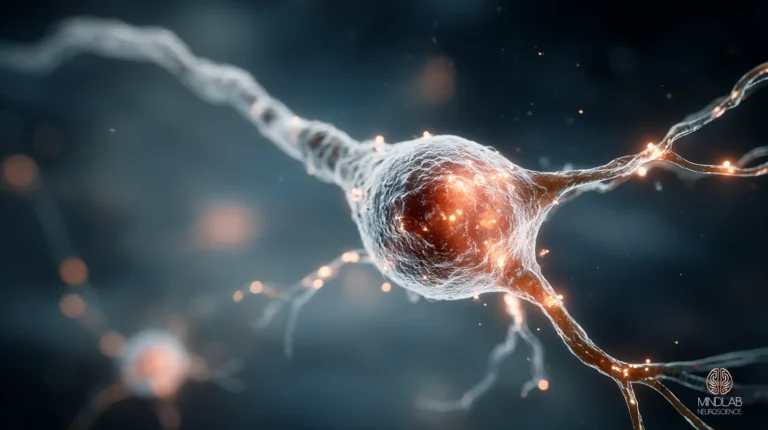
Neurotransmitters are the chemical messengers that cross the synaptic gap between neurons, transmitting every signal your brain generates, from the impulse to reach for your phone to the felt sense of safety sitting across from someone you trust. Yet the standard summary reduces them to on-off switches, obscuring the cascading architecture that governs your mood, motivation, and memory.
The standard account frames dopamine deficiency as depression. That framing misses the neurobiological reality entirely. Low dopamine does not primarily produce sadness. It produces a specific motivational paralysis, the inability to generate forward momentum toward things you genuinely want, even when the desire itself remains fully intact.
In my practice, I consistently observe a specific disconnect. People arrive having read extensively about neurotransmitter function. They can name the molecules. They can describe the receptor mechanics. And yet they remain stuck, because the model they absorbed (dopamine equals motivation, serotonin equals happiness, GABA equals calm) is accurate in the way that knowing the names of instruments tells you something about a symphony. Technically true. Practically insufficient. What I want to offer here is the practitioner’s read: how these systems actually present in a living person’s daily experience, what dysregulation genuinely feels like, and why treating each neurotransmitter in isolation almost always fails.
Why Does Low Dopamine Feel Like Paralysis Instead of Sadness?
Wolfram Schultz’s research at the University of Fribourg established that dopamine neurons fire not in response to reward itself, but in response to the prediction of reward. This distinction is critical. When dopaminergic function degrades, the brain’s capacity to anticipate, to generate that forward-leaning quality of motivation, attenuates. Desire remains intact. The neurological bridge between wanting and doing collapses. This is the core mechanism I explore in understanding dopamine depletion at the neurological level.
What I observe in practice is remarkably consistent across client profiles. A managing director describes it as “being behind glass.” A software architect calls it “watching my own life buffer.” The language varies; the architecture is identical. They know what they want. They can articulate it clearly. The signal that should propel them toward it has gone quiet.
The Behavioral Signatures I Map to Dopaminergic Disruption
Three patterns appear with reliable frequency:
Novelty-dependent activation. The person can initiate new projects with genuine energy but abandons them once the novelty signal decays, typically around 60-70% completion. This is not laziness. It is a brain that has learned to substitute novelty-driven dopamine for the sustained anticipatory signal that carries effort across the finish line.
Stimulation substitution. An increasing reliance on crisis, conflict, or high-intensity inputs as replacements for organic drive. In my work with executives, this often manifests as a paradoxical preference for emergency conditions, they perform brilliantly under pressure because pressure is the only remaining trigger strong enough to activate a depleted anticipatory system.
Anhedonic drift. The gradual flattening of pleasure during experiences that should register as rewarding. A client recently described a vacation she had planned for months: “I was there. I knew it was beautiful. I felt nothing.” The technical term is anhedonia. The lived experience is watching your own satisfaction through a window.
I see this constellation in roughly 60% of clients who describe motivational struggle. The consistent feature across all of them is not absent desire. It is a reward prediction system that has lost signal strength.
What Does Serotonin Actually Govern, and Why Is the “Happiness Chemical” Model Wrong?
Serotonin is the most consistently misunderstood neurotransmitter system I encounter. The popular model, serotonin equals happiness, is not wrong, exactly. It is so incomplete that it misleads. What serotonin more accurately governs, in the behavioral terms I use with my clients, is the experience of social and status-related security.
What serotonin more accurately governs, in the behavioral terms I use with my clients, is the experience of social and status-related security. Michael McGuire’s research on serotonin and social rank in primates demonstrated that serotonin levels rose and fell in direct relationship to perceived social standing, not to the occurrence of pleasurable events. This reframing has substantially more explanatory power when you examine what disrupted serotonin actually produces in a living person.
The Presentation of Serotonergic Dysregulation
When I work with clients whose serotonergic function is compromised, the pattern is distinctive: elevated sensitivity to social signals of rejection or dismissal, an inability to tolerate ambiguity in relationships, ruminative cycling on negative social experiences that is wildly disproportionate to the actual event, and a pervasive difficulty feeling settled. They describe it as a low-frequency hum of inadequacy that they cannot locate, cannot name, and cannot resolve, regardless of what external circumstances might seem to contradict it.
This is neurochemical, not characterological. And it responds to fundamentally different inputs than the motivational deficit of dopaminergic disruption. A client who presents with what looks like “low confidence” may actually be exhibiting a serotonergic system that cannot generate the internal signal of social safety. No amount of achievement or external validation resolves it, because the signal is generated internally, or it is not generated at all. The downstream effects on relational functioning are significant, as I detail in how dopamine shapes relationship brain chemistry.
How Do Neurotransmitter Systems Interact, and Why Does Treating One in Isolation Fail?
This is the question that separates textbook understanding from clinical reality. Neurotransmitter systems are deeply interdependent. Chronic dysregulation in one system almost always cascades into others. Serotonin deficits alter the sensitivity of dopamine receptors. Dopamine dysregulation disrupts cortical inhibitory tone, which implicates GABA, the brain’s primary brake system.
Serotonin deficits alter the sensitivity of dopamine receptors. Dopamine dysregulation disrupts cortical inhibitory tone, which implicates GABA, the brain’s primary brake system. GABA dysfunction, in turn, creates a nervous system that cannot return to baseline, which further destabilizes both dopaminergic and serotonergic function. This cascade is why neuroplasticity-based stress reduction must address the entire system. The cascade is circular, self-reinforcing, and explains why the same person can simultaneously present with motivational deficit, mood instability, and anxiety. They are not experiencing three separate problems. They are experiencing one dysregulated system expressing itself across multiple domains.
GABA and the Architecture of Internal Safety
GABA (gamma-aminobutyric acid) reduces neuronal excitability across the central nervous system and is essential for what I call felt safety, the internal baseline state from which clear thinking, emotional engagement, and sustained effort become possible. Steven Maier’s work at the University of Colorado Boulder documented the mechanisms by which chronic uncontrollable stress depletes inhibitory capacity through GABAergic pathways.
The pattern I see is specific and recognizable: people who function at an exceptional level during crisis or intense demand but who cannot tolerate stillness. The moment external demands reduce, the internal alarm activates. They describe an inability to “turn off,” a restless discomfort with any unoccupied state, and a puzzling experience of feeling most themselves under pressure, because pressure is the only condition under which the deficient inhibitory brake is least conspicuous.
The intervention that matters for this profile is not stress management in the conventional sense. It is the gradual, neurologically-paced re-establishment of the internal experience of safety when nothing bad is happening. The neuroplasticity of cognitive restructuring provides the mechanism through which this baseline can be rebuilt.
How Does Real-Time Neuroplasticity™ Address the Whole Neurotransmitter System?
The reason I developed Real-Time Neuroplasticity™ as a methodology, and the reason it works differently from approaches that target individual neurotransmitter pathways, is precisely because these systems do not operate in isolation. Intervening on dopaminergic function while ignoring serotonergic instability is like adjusting one instrument in an orchestra while the conductor is absent.
What the research does not capture is the composite read, the clinical skill of mapping a person’s entire neurochemical architecture from their behavioral pattern. After 26 years of this work, the behavioral pattern a person presents (how they move through the world, what they seek and avoid, what they can sustain and what they cannot) reads more accurately than any self-reported narrative about why they are the way they are.
The forward-pull deficit of dopaminergic disruption layered over the social hypervigilance of serotonergic imbalance, held in place by a nervous system that cannot achieve the inhibitory baseline GABA provides. Each component reinforces the others. The skill is reading the whole pattern and understanding what the composite is telling you about the underlying neurochemical architecture.
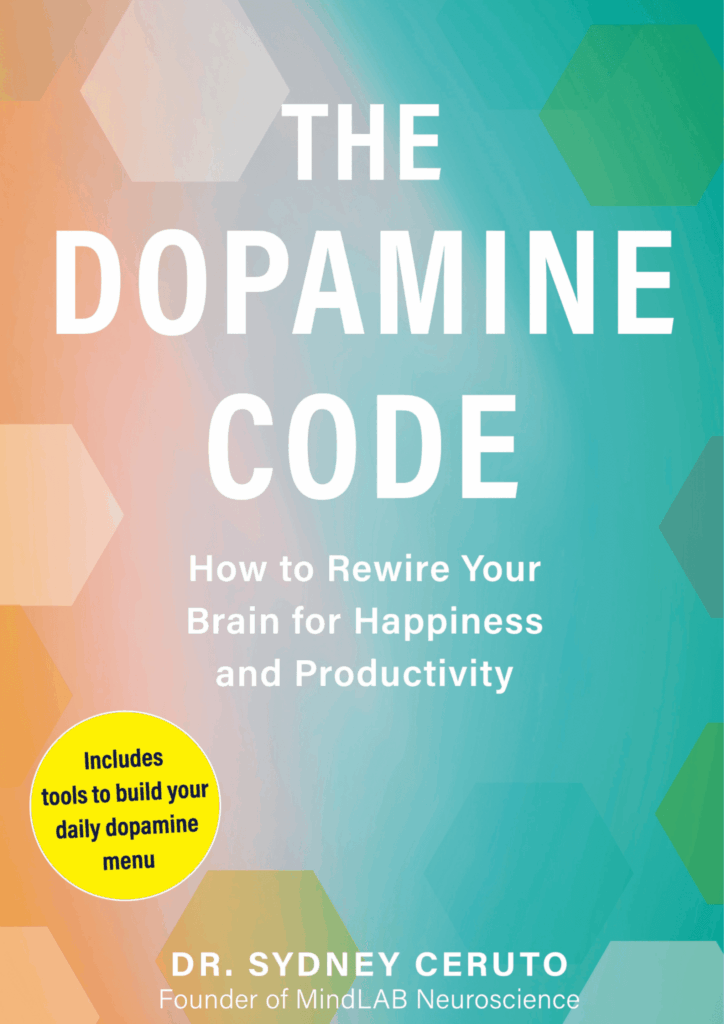
For a complete framework on understanding and resetting your dopamine reward system, I cover the full science in my book The Dopamine Code (Simon & Schuster, June 2026).
That is where the work of genuine neurological recalibration begins: with the pattern, not the story. With the architecture, not the symptom. For a deeper understanding of the brain’s capacity for this kind of structural change, explore the science of neuroplasticity and neural adaptation.
What is the difference between a neurotransmitter and a hormone?
Neurotransmitters are chemical messengers operating within the nervous system, crossing the synaptic cleft between neurons to transmit fast, localized signals. Hormones travel through the bloodstream to act on distant organs, producing slower, more diffuse effects. Some molecules, like oxytocin, function as both.
Can you optimize neurotransmitter function through lifestyle changes alone?
Some optimization is possible, intense physical exertion influences dopamine and serotonin function, sleep quality affects GABA cycling, and nutritional inputs provide neurotransmitter precursors. However, lifestyle changes alone cannot resolve system-level dysregulation where receptor density or reuptake rates have been altered. Meaningful optimization requires identifying the specific compromised neurotransmitter system and targeting that mechanism directly.
Why do standard approaches to brain chemistry focus on one neurotransmitter at a time?
Because single-molecule models are easier to study, explain, and market. The reality is that neurotransmitters operate as an integrated system: serotonin modulates dopamine release, GABA regulates glutamate excitability, and norepinephrine influences acetylcholine availability. Isolating one molecule produces incomplete interventions that often create compensatory shifts elsewhere in the system, generating new imbalances while partially addressing the original one.
Map Your Neurochemical Architecture
These questions address the most common neurochemical concerns that emerge after reading the material above. If you recognize the patterns described here (the motivational paralysis, the social hypervigilance, the inability to tolerate stillness) a strategy call with Dr. Sydney Ceruto maps your specific neurochemical architecture in one conversation and identifies where the cascade begins.
The following references represent the peer-reviewed research base underlying the neurotransmitter analysis presented in this article. Each source was selected for its direct relevance to the neurochemical mechanisms discussed above, and every citation links to its original publication for independent verification.
Maier, S. F., & Seligman, M. E. P. (2016). Learned helplessness at fifty: Insights from neuroscience. Psychological Review, 123(4), 349-367. https://doi.org/10.1037/rev0000033
Cools, R., Nakamura, K., & Daw, N. D. (2011). Serotonin and dopamine: Unifying affective, activational, and decision functions. Neuropsychopharmacology, 36(1), 98-113. https://doi.org/10.1038/npp.2010.121
Schultz, W. (2015). Neuronal Reward and Decision Signals: From Theories to Data. Physiological Reviews, 95(3), 853-951. https://doi.org/10.1152/physrev.00023.2014