Key Takeaways
- Monogamy and infidelity are not character. They are two neurochemical states one brain can occupy.
- Monogamy: oxytocin, vasopressin, prefrontal commitment, calm amygdala. Infidelity: novelty-driven dopamine, weakened inhibitory control.
- Chronic stress most reliably triggers infidelity: prefrontal cortex depletion hands decisions to reward-seeking limbic circuits.
- Infidelity is a temporary neurological state, not a permanent identity: recovery is neurologically possible.
- Rebuilding the monogamous brain takes daily bonding, in-relationship novelty, and nervous-system regulation: months, not days.
Infidelity is a temporary neurological state, not a permanent identity. That distinction is precisely why recovery is possible, because a state can be rewired and an identity cannot.
Monogamy and Infidelity Are Two Brain States, Not Two Kinds of People
When a relationship is broken by infidelity, almost everyone reaches first for morality: good person, bad person, strong character, weak one. Over 26 years of working with couples through betrayal, I have watched that framing keep people stuck longer than the affair itself did. The neuroscience points somewhere more useful, and more hopeful. The monogamous brain and the unfaithful brain are not two kinds of people. They are two states the same brain can occupy, rooted in decades of research and in the wider science of relationship intelligence.
Which state runs the show at any given moment is not decided by willpower or virtue. It is decided by neurobiology: how our brains handle attachment, reward, and decision-making under load. Commitment is built through repeated neural pathways that reinforce bonding and long-term thinking. Infidelity emerges under a different neurochemical setting, one where novelty, dopamine, and weakened inhibition briefly outvote everything the person actually wants for their life. Here is the part that matters most in my work: the balance between these two states can shift. Neither is permanent.
This piece walks through the biological, evolutionary, and cultural machinery underneath fidelity and betrayal, and then through what I actually do with couples who want to rebuild after it. The goal is not to excuse anything. It is to give you a lever that blame never provides. If infidelity is a state and not an identity, then it can be understood, and what can be understood can be rewired.
Why Evolution Built Both a Monogamous Brain and an Unfaithful One
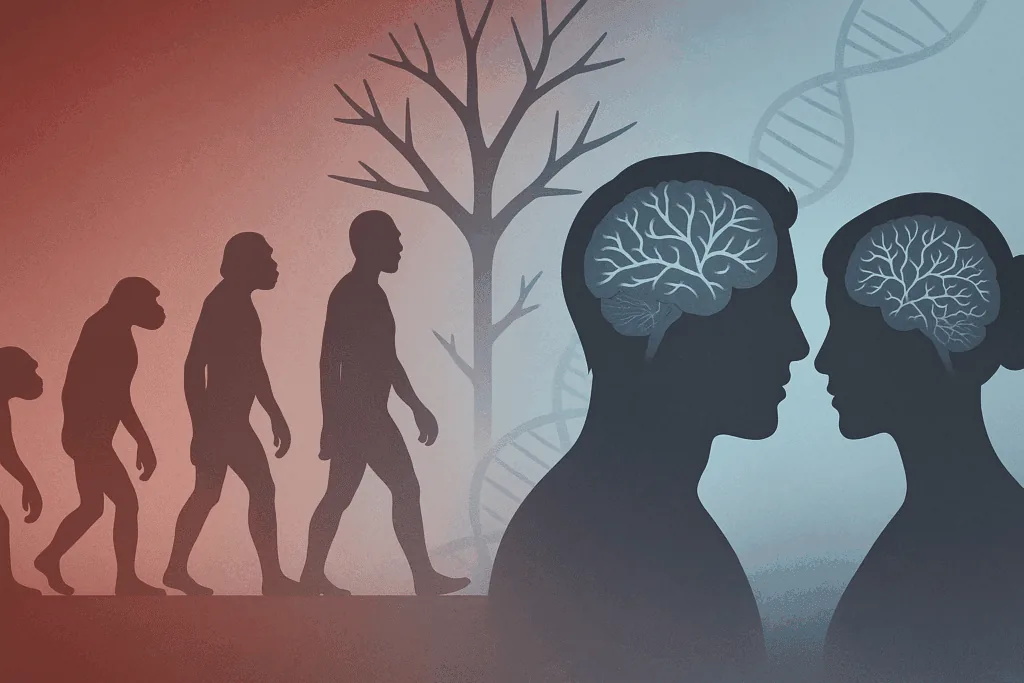
The capacity for commitment did not appear by accident. It developed because long-term pair bonding carried real survival advantages. When two parents stayed together, offspring had more protection, more resources, and higher survival rates. Evolution rewarded the brains that could form and hold a bond.
But we are not purely monogamous creatures. Biologists call humans “socially monogamous,” meaning we form durable pair bonds while retaining the full biological capacity to stray. Both systems live inside the same person. We evolved the machinery for devoted, lifelong partnership, and we kept the machinery that can override it. Neither cancels the other out.
Infidelity, in other words, is not a modern glitch. Across every era of human history, both men and women have pursued relationships outside the primary bond, for reasons ranging from genetic diversity to plain novelty-seeking. The two states are two operating systems running on shared hardware, and which one boots up depends on context: stress, opportunity, connection, and neurochemical state in the moment.
This carries real cultural weight, because we have built entire legal, religious, and social structures on the assumption that monogamy is the natural default. Evolution suggests something more honest: we carry the capacity for both. Understanding when the unfaithful state switches on, and how the monogamous state can be strengthened, is exactly where relationship recovery begins.

How the Monogamous Brain Bonds: Oxytocin, Vasopressin, and the Reward System
The monogamous state runs on a few tightly linked systems. The first is oxytocin, the bonding chemical. When you spend real time with a partner, oxytocin releases and quietly wires your brain toward that specific person. Alongside it works vasopressin, the neuropeptide most closely tied to attachment and, in males especially, to guarding and staying. The animal research here is unusually clean: the density and placement of vasopressin receptors is one of the strongest known predictors of whether a species forms lasting pair bonds at all. It is not only animals, either. In humans, natural variation in a single vasopressin-receptor gene has been linked to measurable differences in pair-bonding and commitment behavior.
The second system is dopamine, and it is almost always misunderstood. Yes, dopamine drives novelty and reward. But a healthy monogamous brain learns to pull dopamine from the familiar. When you know your partner’s body and mind, when you can predict and create pleasure together, that anticipation is dopamine too. The brain becomes efficient at generating reward around the known rather than only the new. This is not a consolation prize. It is a different, sturdier reward circuit that a long relationship can keep feeding.
The third piece is the ventromedial prefrontal cortex, your brain’s values and decision-making center. In someone with a strong monogamous brain, this region lights up around their partner and quietly votes for the relationship through hundreds of small daily choices. It holds the long view when the moment gets loud. When people describe simply “not being tempted,” this is usually the circuit doing its job in the background.
A calm amygdala, your threat-detection center, matters just as much. In a secure bond you do not experience your partner as a threat. What you protect against instead is a threat to the relationship, and that protectiveness is part of what fidelity actually feels like from the inside. Oxytocin reinforces this loop: it tends to bias the reward response toward your own partner over strangers, which is a large part of why a committed brain finds the familiar face genuinely more rewarding than a novel one.
What I want you to take from this section is that none of it is fixed. This balance develops through practice and repeated bonding. Someone raised without secure attachment can build a stronger monogamous brain through deliberate relationship work. Someone with a history of straying can build genuine commitment strength by understanding the conditions that flipped the switch, and rewiring around them. The circuitry is trainable. That is the whole premise of the work I do.

What Actually Activates the Unfaithful Brain
The unfaithful state runs under very different conditions, and again this is neurobiology, not morality. It activates when several factors line up at once: stress, opportunity, weakened inhibitory control, and dopamine tilted hard toward novelty. Any one of these on its own is usually survivable. It is the stacking that decides most affairs.
Start with stress, because it is the quiet driver almost no one names. Under chronic stress, the prefrontal cortex, the part holding your long-term values, becomes depleted. As it goes offline, decision-making authority shifts down to older, faster brain regions in the limbic system. Those systems do not care about your marriage. They care about the reward available right now. The person has not stopped loving their partner. The circuit that translates that love into a decision has simply run out of fuel.
Then add novelty. A new person triggers the brain’s reward-seeking circuitry in a way a long-term partner cannot match, not because the partner is lacking, but because novelty itself is what that circuit is built to chase. This is the same dopamine-driven reward and motivation system that fMRI research has repeatedly found lit up in the earliest, most intense stage of romantic love. It is powerful, ancient, and completely indifferent to your vows.
Now weaken the brakes. Inhibitory control is what normally keeps the reward circuit in check, and it is fragile. Alcohol lowers it. Exhaustion lowers it. Loneliness and emotional dysregulation lower it. In those states the unfaithful brain barely needs an opportunity. A text, a glance, a moment alone, and the pathways that usually keep someone committed get briefly overridden by pathways chasing relief.
Here is the reframe I hold onto in every couple I work with: the unfaithful brain is not the person’s true self surfacing. It is a temporary state where the wrong circuits took the wheel under a specific set of conditions. That distinction is not a loophole for the betrayer. It is the exact thing that makes repair possible, because a state that switched on under known conditions can be recognized, understood, and switched off.
The Cultural Pressure That Keeps the Unfaithful Brain Stimulated
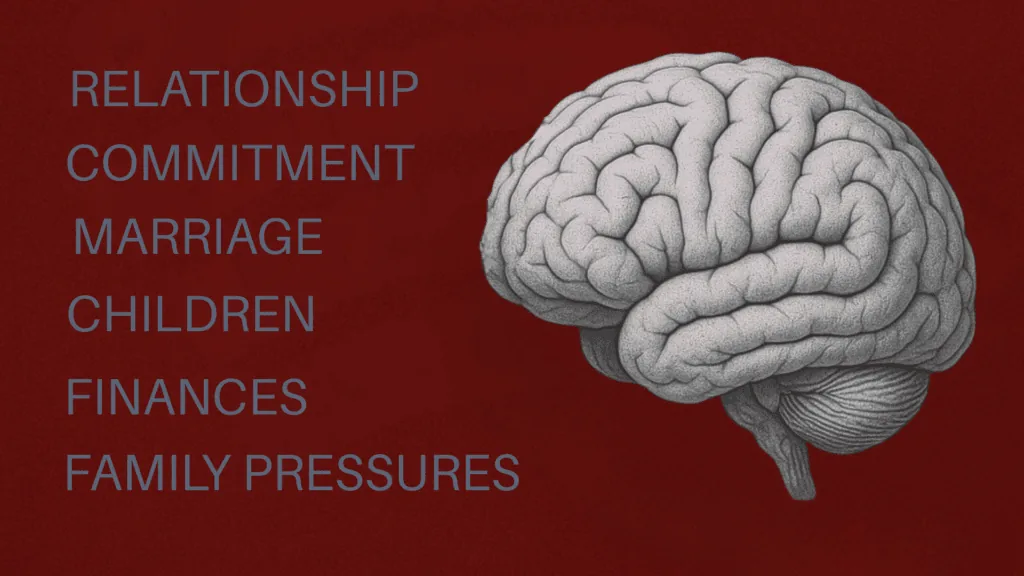
Neuroscience is the primary lens here, but culture sets the conditions the brain has to operate in, so we cannot skip it. Expectations around monogamy vary enormously across societies and eras. In some cultures fidelity is reinforced hard through law and religion; in others the norms are looser. That surrounding pressure shapes how each brain wires itself around commitment.
If you grow up where commitment is celebrated and infidelity is openly condemned, your brain wires differently than someone raised inside looser norms. Part of your monogamous baseline is biological predisposition, and part is decades of cultural reinforcement quietly training the circuit. Neither part is destiny, but both are real.
Modern life is uniquely hard on the monogamous brain, and I say this to couples plainly. We are surrounded by messages about freedom, options, and endless choice. Dating apps deliver the unfaithful brain’s favorite stimulus, novelty, on tap, in a way no prior generation faced. Yet we still hold intense expectations of exclusivity and lifelong commitment. That combination manufactures a genuine neurological conflict: the commitment circuit wants to honor the bond while a culture of infinite options keeps the novelty circuit permanently warm. When someone tells me they feel like they are fighting their own brain, they are describing this exactly, and they are not wrong.
Culture also shapes how the two partners recover, and men and women often arrive with different motivations, different patterns, and different paths back. Naming that keeps the whole framework individual rather than one-size-fits-all, which is where any real repair has to start.
How I Work With Couples After Betrayal
In my practice, infidelity is one of the hardest issues a couple can bring me, and also one where I have seen the most profound turnarounds. What 26 years of this work has taught me is blunt: infidelity does not have to end a relationship. The monogamous brain can be rebuilt. Trust can be restored. But it happens at the level of neural circuitry, not apology, which is why willpower and promises alone almost never hold.
The core of how I work is what I call Real-Time Neuroplasticity™: intervening in the live moment a state is activating, not analyzing it weeks later in retrospect. The pattern I watch for first is not the affair itself but the conditions that preceded it, the stress load, the depletion, the disconnection, the small unmet need that had been building. Where couples get this wrong is treating the betrayal as the beginning of the story. Neurologically, it was the end of a chain, and the chain is where the repair lives.
It starts with the partner who strayed becoming radically honest about the state they were in. We work through it precisely: what conditions were present, what was depleted, what stress and opportunity and loneliness combined to hand the wheel to the reward circuit. And as the betrayed partner comes to understand the neuroscience of their partner’s unfaithful state at this level, something shifts. They stop experiencing the infidelity as proof of their partner’s essence and start seeing it as a state that emerged under specific, nameable conditions. That shift is not forgiveness handed out cheaply. It is understanding that makes forgiveness structurally possible.
From there the work moves through a clear arc. First, we map the neurobiology of what happened. What was alive in the nervous system at the time? Chronic stress state? Substances lowering inhibition? Loneliness and disconnection? The monogamous brain weakens under identifiable conditions, and you cannot rebuild what you have not first mapped.
Second, we rebuild the commitment circuitry directly. The partner who strayed deliberately fires their commitment-based pathways through daily reps: articulating their values in writing, rehearsing the future they actually want, practicing genuine gratitude for their partner, and re-entering deliberate bonding. The monogamous brain strengthens the same way any circuit does, through repetition and intention, and the reps have to be real, not performed.
Third, we treat the betrayed partner’s trauma response as exactly that. Infidelity is a betrayal trauma; the nervous system’s assumption of safety has been shattered. This takes real nervous-system regulation work and the slow rebuilding of felt safety, and it requires the other partner demonstrating changed behavior over months, not days. Fourth, we work toward what I call neurological integration, and what couples usually call moving forward. They cannot pretend it did not happen, and they cannot stay frozen in it. They build a shared account of what the state was, what it revealed, and the intentionality it now takes to protect the bond. Many couples come out the other side more committed than before, precisely because they now understand how fragile commitment is when left on autopilot.
One couple I worked with, married and in their mid-forties, came to me after the husband’s brief affair during an extreme stretch of work stress and marital disconnection. His unfaithful state had switched on in a genuinely vulnerable window; his wife was devastated. Working through the neuroscience together, she came to see it not as evidence that his monogamous brain was broken, but that he had never consciously built one, and now had to. They did the work. He rebuilt around his stress responses and his vulnerability to that state; she rebuilt her own nervous system and her capacity to watch his commitment circuitry come back online. Two years on, the relationship was stronger, because the framework gave them biology and language instead of blame. She understood the betrayal was never his true character, only a temporary neurological state that could be changed.
Dopamine: Why the Familiar Can Feel Flat and the New Feels Electric
Dopamine earns its own section because it sits at the center of the whole dynamic. Most people think dopamine is only about excitement and novelty. It is really about motivation, pursuit, and the anticipation of reward, and that broader definition is what makes it trainable inside a committed relationship rather than a force that only ever pulls people out of one.
In a healthy monogamous brain, dopamine gets redirected toward the partner. When you are secure in a strong bond, your brain learns to anticipate reward from that person. You feel it before you see them, during real connection, in small moments of shared meaning. This is not wishful thinking: brain imaging of people in long-term, still-intense romantic love shows the same dopamine-rich reward regions active that fire in brand-new love. The familiar can keep lighting up the reward system. It just takes intention to keep feeding it.
The unfaithful state hijacks dopamine toward novelty instead. A new person floods the reward circuit in a way a long-term partner rarely will, and in a routine-worn relationship that contrast can feel like proof the relationship is dead. It is not proof of anything. It is the predictable behavior of a novelty circuit doing what novelty circuits do. Mistaking that surge for truth is one of the most common and most costly errors I see.
The practical move follows directly: you can retrain dopamine through neuroplasticity. Couples who keep generating novelty inside the relationship, new experiences, travel, sustained sexual and emotional freshness, continued growth together, teach the reward circuit to fire around the partnership itself. The monogamous brain becomes exciting again on purpose. When the bond instead goes routine and dopamine-starved, the unfaithful state gets more tempting by default. Relationship maintenance, done right, is dopamine management done consciously.
Why Stress Is the Most Reliable Trigger of Infidelity
If I had to name one condition that precedes most of the infidelity I see, it would not be a personality type or a bad marriage. It would be chronic stress. Under sustained stress, the prefrontal cortex, the seat of values and long-term decision-making, becomes structurally and functionally impaired. The very circuit you would rely on to hold the line is the first one stress takes offline.
I have watched this same sequence for 26 years. Someone moves into a high-stress role. Their prefrontal cortex is consumed by work, so the monogamous brain quietly weakens. Then a colleague offers attention, validation, and ease. The unfaithful state activates, not because the person wants to blow up their life, but because the part of the brain that wants the marriage is too depleted to lead. The outcome was shaped by stress long before any decision felt like a decision.
It runs the same way from relational stress. Someone absorbs repeated emotional invalidation at home; chronic relational stress drains the nervous system; then someone elsewhere makes them feel genuinely seen, and the unfaithful state wakes up. Again, this is not a verdict on character. It is a nervous system pushed into a state where the monogamous brain cannot stay in charge.
This should change how we think about prevention. Guarding a relationship is far less about summoning more willpower and far more about protecting the biology that makes fidelity feel effortless: keeping the nervous system regulated rather than chronically dysregulated, and keeping the prefrontal cortex resourced rather than depleted. Fidelity is not mainly a test of virtue. It is downstream of how well someone manages stress and stays connected.
Can the Unfaithful Brain Actually Change?
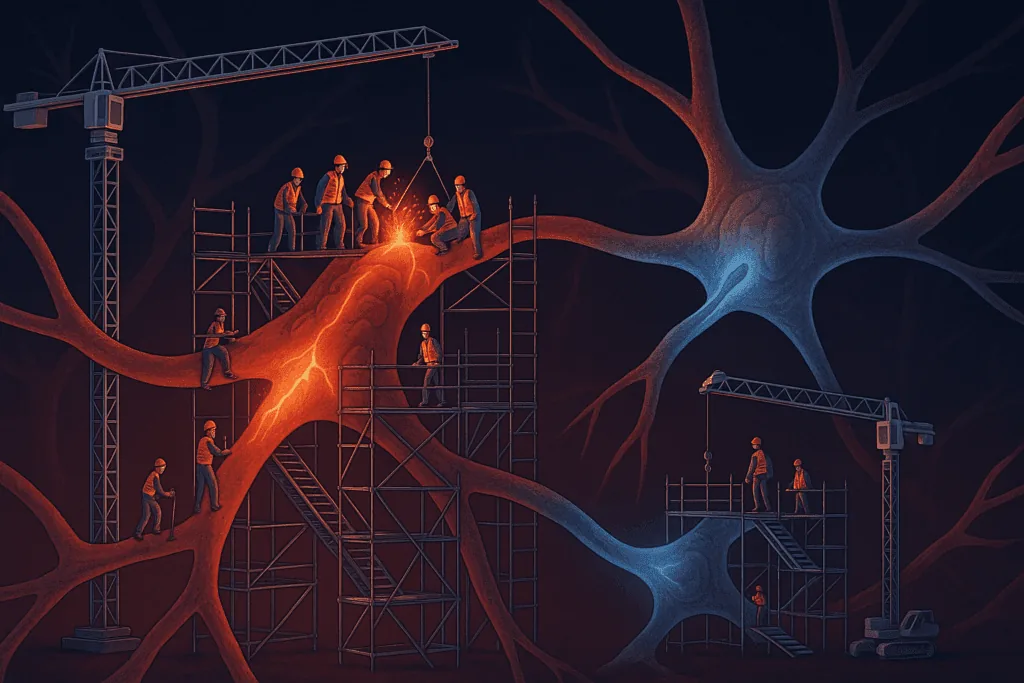
The answer is a clear yes, and this is where neuroplasticity stops being an abstraction and becomes the source of hope. Your brain is not fixed. The pathways that drove the betrayal are not permanent fixtures; they are patterns, and patterns can be rewired with the right conditions and enough repetition.
The process starts by naming the pathways that were active during the infidelity, then deliberately building new ones through repeated different choices, thoughts, and behaviors. This is where Real-Time Neuroplasticity™ does its heaviest work: catching the old state as it starts to activate and choosing differently while the moment is live, rather than mourning it afterward. It takes months, usually six at a minimum. A monogamous brain rebuilt this consciously is often sturdier than one that simply assumed fidelity would take care of itself, because it has been tested and deliberately reinforced.
Neuroplasticity cuts the other way too. The betrayed partner’s brain can also recover. The trauma can be processed, trust can be rebuilt through consistent demonstration of changed behavior, and the nervous system can return to a state where the bond feels safe again. This is not about forgetting the infidelity. It is about integrating it into a larger story of recovery, so it stops running the relationship from the shadows.
Rebuilding the Monogamous Brain as a Daily Practice
Here is what I most want couples to hold onto: the monogamous brain is not something you either have or lack. It is something you practice. Every day, through small choices, you are either strengthening the commitment circuit or handing the unfaithful state a little more access. Fidelity is less a single vow than a daily direction.
Choosing your partner’s company over your phone strengthens the circuit. Making love with real presence strengthens it. Meeting conflict as a committed partner rather than an opponent strengthens it. Paying genuine attention, and letting your partner feel that attention land, strengthens it. Each of these is a rep, and each rep nudges the wiring toward the bond. None of them are dramatic. That is exactly why they work.
The circuit weakens through the opposite: constant distraction, tolerated emotional distance, a partnership that slides down the priority list, a nervous system left dysregulated and a prefrontal cortex left depleted. Those are the conditions the unfaithful state waits for. Prevention is mostly the daily refusal to let them accumulate.
Understanding this gives couples a framework that is both hopeful and honest. Infidelity is not destiny. The monogamous brain can be built and rebuilt. Couples genuinely recover from betrayal, not by pretending it never happened, but by understanding the biology beneath it and deliberately laying down different pathways going forward. Which state runs your relationship is not luck. It is practice.
Commitment Is a Biology You Build Every Day
The monogamous brain and the unfaithful brain are not two fixed opponents locked in battle inside you. They are two operating systems, and which one is in charge depends on your stress levels, your choices, your neurochemical state, and your repeated practices. From an evolutionary view, we carry the capacity for both, because both once served survival, and neither was ever fully switched off.
Biologically, the monogamous brain is built from oxytocin and vasopressin bonding, prefrontal engagement, and a calm amygdala, while the unfaithful state activates under stress, opportunity, and depleted inhibition. Culturally, we live inside mixed messages that keep the novelty circuit stimulated while demanding lifelong exclusivity. None of it is permanent, and all of it responds to how you actually live.
The part that matters most is the part morality misses entirely: infidelity does not have to end a relationship. Couples recover by learning the biology, addressing the nervous-system conditions that let the state switch on, and rebuilding commitment on purpose. The couples I work with who do this deep work come out with stronger monogamous brains, because they made conscious what had been unconscious and assumed.
Your monogamous brain is not a verdict already handed down. It is built through daily practice, through deliberate choices, through nervous-system health, and through understanding that commitment is a biology you are actively creating. The balance is not decided by fate. It is decided by your choices, your awareness, and the pathways you are willing to build, one ordinary day at a time.
If you are living through the aftermath of betrayal, or you are the one who acted in a way you still cannot fully explain, hold onto this: what happened was a neurological state under specific conditions, not a final verdict on who either of you is. States can be rewired. That is the entire reason recovery is possible.
If you are ready to change the pattern underneath, Book a Strategy Call with me at MindLAB Neuroscience. Together we map the specific circuitry that let the unfaithful brain take the wheel, and begin rebuilding the commitment pathways in real time, using brain-based, neuroscience-driven practice and the principles of neuroplasticity.
What is the neuroscience behind why some people stay monogamous while others are unfaithful?
Monogamy and infidelity activate different neurochemical systems in the brain. The monogamous brain relies heavily on oxytocin and vasopressin, which are released during bonding behaviors and strengthen attachment circuits in the nucleus accumbens and ventral pallidum. The unfaithful brain operates under conditions where dopamine-driven novelty seeking in the mesolimbic pathway overrides these attachment signals, and reduced activity in the prefrontal cortex weakens impulse regulation. Neither state is permanent. Receptor density for both bonding hormones and dopamine varies based on experience, stress levels, and deliberate practice, meaning the brain can shift between these patterns depending on what neural circuits are consistently reinforced.
Can a relationship truly recover after infidelity from a brain science perspective?
Yes, and neuroplasticity is the mechanism that makes recovery possible. Infidelity damages the attachment circuits built on oxytocin and vasopressin signaling, and the betrayed partner’s amygdala becomes hypervigilant, interpreting neutral behaviors as potential threats. Recovery involves rebuilding trust through repeated, consistent bonding behaviors that restore oxytocin flow and gradually recalibrate the amygdala’s threat threshold. The prefrontal cortex must also develop stronger inhibitory connections in the partner who was unfaithful, reinforcing commitment-oriented decision-making over novelty seeking. In my work with couples, I’ve seen this neural repair process produce genuine reconnection when both partners commit to the sustained effort rewiring requires.
Does dopamine play a role in infidelity and affairs?
Dopamine is central to understanding infidelity. The mesolimbic dopamine pathway responds powerfully to novelty, and a new romantic or sexual interest triggers massive dopamine surges that can feel overwhelming. This neurochemical flood creates the sensation often described as being unable to resist, but it’s actually a predictable brain response, not an uncontrollable force. Long-term relationships naturally experience declining novelty-based dopamine, which is normal and healthy. The brain shifts toward oxytocin-based bonding instead. Problems arise when someone interprets this natural dopamine shift as evidence that the relationship is dead rather than recognizing it as a normal neurochemical transition that can be navigated through deliberate effort.
How does stress affect fidelity and commitment in relationships?
Chronic stress is one of the strongest predictors of relationship vulnerability because cortisol directly undermines the neural systems that support commitment. Elevated cortisol suppresses oxytocin production, weakening the bonding signals that maintain attachment. Simultaneously, stress degrades prefrontal cortex function, reducing impulse control and future-oriented decision-making. The amygdala becomes hyperactive under chronic stress, shifting the brain toward short-term relief-seeking behaviors. This neurochemical environment makes novelty-driven dopamine hits more appealing and the inhibitory circuits that normally prevent impulsive action less effective. Stress management isn’t a luxury in relationships; it’s a neurological necessity for maintaining the brain architecture that supports fidelity.
Is monogamy natural for the human brain or is it learned behavior?
The human brain evolved with capacity for both monogamous bonding and multiple-partner mating strategies, which is why this question generates so much debate. Oxytocin and vasopressin receptor distribution in the nucleus accumbens supports pair bonding, while dopamine-driven novelty circuits in the mesolimbic pathway support exploration. Evolution didn’t choose one system over the other; it equipped the brain with both because different strategies served survival in different environmental conditions. Modern monogamy involves the prefrontal cortex making a deliberate, values-driven choice to consistently reinforce attachment circuits over novelty circuits. It’s neither purely natural nor purely learned; it’s a neural practice that strengthens with repetition and intention.
References
- Young, L. J., and Wang, Z. (2004). The neurobiology of pair bonding. Nature Neuroscience, 7(10), 1048-1054. https://doi.org/10.1038/nn1327
- Lim, M. M., Wang, Z., Olazábal, D. E., Ren, X., Terwilliger, E. F., and Young, L. J. (2004). Enhanced partner preference in a promiscuous species by manipulating the expression of a single gene. Nature, 429(6993), 754-757. https://doi.org/10.1038/nature02539
- Walum, H., Westberg, L., Henningsson, S., Neiderhiser, J. M., Reiss, D., Igl, W., et al. (2008). Genetic variation in the vasopressin receptor 1a gene (AVPR1A) associates with pair-bonding behavior in humans. Proceedings of the National Academy of Sciences, 105(37), 14153-14156. https://doi.org/10.1073/pnas.0803081105
- Scheele, D., Wille, A., Kendrick, K. M., Stoffel-Wagner, B., Becker, B., Güntürkün, O., Maier, W., and Hurlemann, R. (2013). Oxytocin enhances brain reward system responses in men viewing the face of their female partner. Proceedings of the National Academy of Sciences, 110(50), 20308-20313. https://doi.org/10.1073/pnas.1314190110
- Aron, A., Fisher, H., Mashek, D. J., Strong, G., Li, H., and Brown, L. L. (2005). Reward, motivation, and emotion systems associated with early-stage intense romantic love. Journal of Neurophysiology, 94(1), 327-337. https://doi.org/10.1152/jn.00838.2004
- Acevedo, B. P., Aron, A., Fisher, H. E., and Brown, L. L. (2012). Neural correlates of long-term intense romantic love. Social Cognitive and Affective Neuroscience, 7(2), 145-159. https://doi.org/10.1093/scan/nsq092
- Arnsten, A. F. T. (2009). Stress signalling pathways that impair prefrontal cortex structure and function. Nature Reviews Neuroscience, 10(6), 410-422. https://doi.org/10.1038/nrn2648